
- Release Year: 2016
- Platforms: Android, Oculus Go, Quest, Windows
- Publisher: Pixel Toys Ltd.
- Developer: Pixel Toys Ltd.
- Genre: Action
- Perspective: 1st-person
- Game Mode: Single-player
- Gameplay: Motion control, Shooter
- Setting: Fantasy, Horror
- VR Support: Yes
Description
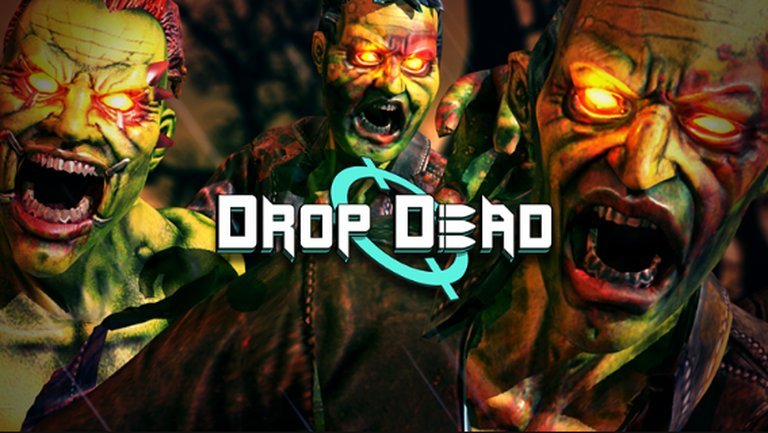
Drop Dead: Dual Strike Edition is a first-person VR shooter that thrusts players into a fast-paced, zombie-infested world. Originally released as Drop Dead for Android (Gear VR), Oculus Go, and Windows (Rift), the Dual Strike Edition expands the experience with additional content, enhanced for platforms like the Oculus Quest. Players battle hordes of zombies using motion-controlled weapons, blending action and horror in a self-aware, cheesy yet adrenaline-pumping setting. The game is designed for immersive VR gameplay, offering intense combat and a lighthearted take on the zombie apocalypse genre.
Gameplay Videos
Drop Dead: Dual Strike Edition Mods
Drop Dead: Dual Strike Edition Guides & Walkthroughs
Drop Dead: Dual Strike Edition Reviews & Reception
rapidreviewsuk.com : Drop Dead feels like the landmark arcade shooter, and, if that arcade experience is something you’ve missed as gaming has become more home-centric and mainstream, then you’re sure to have a blast in this action-packed, fun and sometimes terrifying zombie shooter.
reddit.com : Personally I think this game is an underated masterpiece and doesn’t get anywhere near enough love. If you want to just blow the heads off zombies in a satisfying way then go buy this game.
Drop Dead: Dual Strike Edition – A Definitive Retrospective on VR’s Underrated Zombie Shooter
Introduction: The Last Agent Standing
In the crowded landscape of VR shooters, Drop Dead: Dual Strike Edition (2016–2019) emerges as a curious artifact—a game that never quite achieved the mainstream acclaim of Robo Recall or Population: One, yet remains a cult favorite among Oculus Quest early adopters. Developed by Pixel Toys Ltd., this first-person, on-rails zombie shooter is a love letter to the arcade light-gun shooters of the ’90s, particularly House of the Dead, but reimagined for the immersive potential of virtual reality.
At its core, Drop Dead is a game about visceral, unapologetic fun. It doesn’t aspire to photorealism or narrative depth; instead, it thrives on cheesy voice acting, over-the-top weaponry, and the sheer joy of dual-wielding shotguns while decapitating zombies in slow motion. Yet, beneath its B-movie aesthetic lies a surprisingly polished VR experience—one that, despite its flaws, remains a benchmark for accessible, arcade-style VR shooters.
This review will dissect Drop Dead: Dual Strike Edition in exhaustive detail, examining its development history, narrative quirks, gameplay mechanics, technical execution, and legacy within the VR gaming ecosystem. By the end, we’ll determine whether it’s a hidden gem or a flawed relic of VR’s early days.
Development History & Context: From Gear VR to Quest Stardom
The Birth of a VR Arcade Shooter
Drop Dead began its life in 2016 as a Gear VR exclusive, a time when mobile VR was still in its infancy. Developed by Pixel Toys Ltd., a UK-based studio known for mobile games like Gummy Drop!, the team sought to capitalize on the growing interest in VR by creating a fast-paced, pick-up-and-play shooter that didn’t require high-end PC hardware.
The original Drop Dead was a gaze-based shooter, where players aimed by looking at enemies—a mechanic that, while functional, lacked the tactile satisfaction of physical controls. When the Oculus Rift and Touch controllers launched, Pixel Toys saw an opportunity to rebuild the game from the ground up, introducing motion-controlled dual-wielding and a more immersive combat system.
The Dual Strike Edition: A Quest for Perfection
The 2019 Oculus Quest launch marked a turning point for Drop Dead. The Dual Strike Edition was not just a port—it was a complete overhaul, adding:
– Three full story chapters (expanding the original single-chapter structure).
– Dual-wielding mechanics (a first for the series).
– Horde mode (solo and co-op).
– Enhanced visuals and performance optimizations for standalone VR.
The Quest’s wireless, room-scale tracking proved to be the perfect match for Drop Dead’s arcade sensibilities. Unlike tethered VR experiences, players could physically dodge, duck, and swing melee weapons without worrying about cables—a feature that Road to VR praised as “more at home on the tethered headset with a gun in your hands.”
The VR Landscape in 2019: A Crowded but Promising Market
When Dual Strike Edition launched, the Oculus Quest store was still in its “wild west” phase. Major titles like Beat Saber and Superhot VR dominated discussions, while shooters were often overshadowed by more ambitious experiences. Drop Dead entered this space as a budget-friendly alternative ($14.99 at launch), positioning itself as:
– A casual-friendly shooter (no complex movement systems).
– A party game (thanks to its horde mode).
– A nostalgic throwback (for fans of House of the Dead and Time Crisis).
Yet, despite its strengths, it struggled to break into the top-tier VR shooter conversation, often dismissed as “just another zombie game” in a genre already saturated by Arizona Sunshine and The Walking Dead: Saints & Sinners.
Narrative & Thematic Deep Dive: Cheese, Camp, and Dr. Monday’s Madness
Plot Summary: A B-Movie Apocalypse
Drop Dead’s story is deliberately ridiculous, embracing the campy tone of ’90s arcade shooters. You play as Cipher, the last surviving agent of a shadowy organization tasked with stopping Dr. Monday, a mad scientist who has unleashed a zombie apocalypse via a mysterious virus.
Your allies:
– Billy-Bob – A gruff, former CIA operative with a penchant for one-liners.
– Celia-Jane – His tech-savvy daughter, who provides mission briefings via your high-tech visor.
The narrative unfolds across three chapters, each set in a different time period (a nod to Dr. Monday’s time-manipulation experiments):
1. The Wild West (zombies in cowboy hats).
2. A Haunted Mansion (gothic horror vibes).
3. A Futuristic Lab (cyber-zombies and laser traps).
Themes: Satire, Survival, and the Absurdity of Heroism
While Drop Dead doesn’t take itself seriously, it subtly lampoons classic shooter tropes:
– The “Lone Hero” Cliché – Cipher is the last agent alive, a tired trope that the game lean into with self-aware humor.
– Mad Science Gone Wrong – Dr. Monday is a cartoonish villain, complete with over-the-top monologues and laughably evil schemes.
– Zombie Apocalypse Fatigue – The game doesn’t try to reinvent the undead; instead, it celebrates their absurdity (e.g., zombies that explode into confetti when killed).
Voice Acting & Dialogue: So Bad It’s Good
The voice acting is a polarizing element. Critics and players alike have described it as:
– “Questionable” (Rapid Reviews UK).
– “Cheesy in the best way” (Ruff Talk VR).
– “Breaking immersion” (OQPlay).
Lines like:
“Dr. Monday’s turned the whole dang town into a buffet for the undead!” – Billy-Bob
are delivered with such earnestness that they become memorable in their terribleness. This intentional camp aligns with the game’s arcade roots, where story was always secondary to gameplay spectacle.
Verdict: A Story That Knows Its Place
Drop Dead’s narrative is not why you play it. It’s a vehicle for chaos, a loose framework to justify mowing down waves of zombies with increasingly ridiculous weapons. The writing is deliberately silly, the characters are one-dimensional, and the plot is predictable—but that’s exactly what it should be.
Gameplay Mechanics & Systems: Dual-Wielding, Reloading, and Zombie Slaughter
Core Gameplay Loop: On-Rails, But Not On Autopilot
Drop Dead is an on-rails shooter, meaning:
– Movement is automated (you’re guided through levels).
– Combat is the sole focus (no exploration or puzzles).
– Positioning matters (you must physically dodge attacks).
This design choice is both a strength and a limitation:
✅ Pros:
– Zero motion sickness (ideal for VR newcomers).
– Fast-paced, arcade-style action (easy to jump into).
– Encourages physical engagement (ducking, leaning, swinging).
❌ Cons:
– Limited player agency (no free movement).
– Repetitive level design (some stages feel padded).
– Lack of interactivity (you can’t touch anything but weapons).
Combat: The Art of Dual-Wielding Destruction
The standout feature of Dual Strike Edition is its dual-wielding system, which allows players to:
– Hold two guns (e.g., pistol + shotgun).
– Mix melee and ranged weapons (e.g., axe + machine gun).
– Throw weapons (axes, knives, even baseball bats).
Weapon Variety: From Peashooters to Rocket Launchers
The arsenal includes:
| Weapon Type | Examples | Best For |
|---|---|---|
| Pistols | Default 8-shooter, Magnum | Precision headshots |
| Shotguns | Double-barrel, Auto-shotgun | Close-range crowd control |
| Machine Guns | SMG, Minigun | Sustained fire |
| Explosives | Rocket Launcher, Grenade Launcher | Area denial |
| Melee | Axe, Baseball Bat, Pitchfork | Up-close limb removal |
| Gadgets | Megaphone (stuns zombies) | Crowd control |
Reloading: A Risk-Reward Mechanic
Reloading isn’t just a button press—it’s a mini-game:
1. Drop your weapon (physically lower your controller).
2. Wait for the reload meter to fill.
3. Pull the weapon back up at the right moment for a faster reload.
This system adds tension, forcing players to balance offense and downtime. Misjudge the timing, and you’ll be caught mid-reload as a zombie lunges at you.
Enemy Types: More Than Just Shambling Corpses
Drop Dead features diverse zombie variants, each requiring different strategies:
– Walkers – Standard slow zombies.
– Runners – Fast, aggressive attackers.
– Spitters – Projectile-vomiting nuisances (must bat their attacks back with melee).
– Exploders – Suicide bombers (shoot from a distance).
– Tanks – Heavy, slow, but require sustained fire.
Progression & Difficulty: A Steep Learning Curve
- No traditional “leveling up” (no RPG elements).
- Unlocks are tied to story progression (new weapons appear as you advance).
- Difficulty spikes hard in later chapters (especially Chapter 3’s boss fights).
Some players (like Reddit user assfelch) argue that the final missions are “unwinnable” due to unfair enemy spawns and weapon jamming, though others see this as part of the arcade challenge.
Horde Mode: Endless Zombie Carnage
The solo/co-op horde mode is where Drop Dead shines as a social experience:
– Four arenas (each with unique layouts).
– Waves of increasing difficulty.
– Leaderboards (for competitive players).
However, some players (like David in the Rapid Reviews UK comments) complain that later waves feel “cheap”, with weapon malfunctions and unfair spawns.
Verdict: A Masterclass in VR Arcade Shooting
Drop Dead’s gameplay is tight, satisfying, and endlessly replayable—when it works. The dual-wielding, physical reloading, and enemy variety make it one of the best-feeling VR shooters in its class. However, repetitive level design, occasional jank, and punishing difficulty spikes hold it back from true greatness.
World-Building, Art & Sound: A Cartoonish Apocalypse
Visual Style: Comic Book Zombies in VR
Drop Dead opts for a stylized, almost cel-shaded aesthetic rather than photorealism:
– Zombies are bright green, as if plucked from a comic book.
– Environments are colorful but repetitive (e.g., the same ranch appears multiple times).
– Gore is exaggerated (heads explode in slow-mo, limbs fly dramatically).
This art direction works in the game’s favor:
✅ Runs smoothly on Quest (no performance issues).
✅ Enhances readability (easy to spot enemies).
❌ Lacks immersion (feels more like a theme park ride than a survival horror).
Sound Design: Guns, Groans, and Questionable Voice Acting
- Gunfire is punchy and satisfying (especially the shotgun blasts).
- Zombie groans are appropriately creepy.
- The soundtrack is forgettable (generic action music).
- Voice acting is… an acquired taste (as previously discussed).
Atmosphere: Fun Over Fear
Drop Dead doesn’t aim to be scary—it’s more Evil Dead than Resident Evil. The over-the-top gore, bright visuals, and campy tone make it a party game first, a horror game second.
Reception & Legacy: The Cult Classic That Could’ve Been
Critical Reception: A Mixed Bag
| Source | Score | Verdict |
|---|---|---|
| Road to VR | 7/10 | “Fun shooter that’s easy to pick up, hard to put down.” |
| Rapid Reviews UK | 7/10 (implied) | “A gripping arcade experience, but story is sub-par.” |
| OQPlay | Positive | “One of the better story-based shooters on Quest.” |
| Player Score (MobyGames) | 2/5 | Divisive—some love it, others find it repetitive. |
Why Isn’t It More Popular?
- Overshadowed by Bigger Titles (Robo Recall, Population: One).
- Repetitive Structure (some levels drag on too long).
- Lack of Post-Launch Support (no major updates beyond Meta Avatar integration).
- Difficulty Controversy (some players feel later levels are unfair).
Legacy: A Blueprint for VR Arcade Shooters
Despite its flaws, Drop Dead proved that:
– On-rails shooters can thrive in VR when executed well.
– Dual-wielding is a must-have feature for immersive gunplay.
– Budget VR games can compete with AAA titles if they focus on fun over fidelity.
Games like Pistol Whip and Synth Riders later adopted similar arcade-style, high-score-chasing mechanics, owing a debt to Drop Dead’s accessible design.
Conclusion: A Flawed but Essential VR Experience
Final Verdict: 7.5/10 – “A Blood-Soaked Love Letter to Arcade Shooters”
Drop Dead: Dual Strike Edition is not a perfect game, but it’s one of the most purely enjoyable VR shooters of its era. Its dual-wielding mechanics, satisfying gunplay, and self-aware camp make it a must-play for fans of arcade-style action.
Strengths:
✔ Best-in-class dual-wielding VR combat.
✔ No motion sickness (ideal for VR newcomers).
✔ Great for parties (horde mode is a blast).
✔ Budget-friendly ($14.99 at launch).
Weaknesses:
✖ Repetitive level design.
✖ Questionable voice acting.
✖ Difficulty spikes can feel unfair.
✖ Lack of post-launch content.
Who Should Play It?
- VR arcade shooter fans (if you loved House of the Dead, this is a modern VR equivalent).
- Casual VR players (easy to pick up, no complex controls).
- Co-op enthusiasts (horde mode is great with friends).
Who Should Skip It?
- Those seeking deep storytelling (the plot is an afterthought).
- Hardcore survival horror fans (it’s more Army of Darkness than Resident Evil).
- Players who dislike on-rails shooters (if you want free movement, look elsewhere).
Final Thoughts: A Game That Deserves More Love
Drop Dead: Dual Strike Edition is the kind of game that VR libraries need more of—accessible, fun, and unapologetically silly. While it may never be remembered as a landmark title, it remains a hidden gem in the Oculus Quest’s early catalog—a game that proves sometimes, all you need is two guns, a horde of zombies, and the freedom to go wild.
If you own a Quest and haven’t tried it, do yourself a favor—grab a friend, load up horde mode, and prepare to lose track of time in the best possible way.
🔫 Drop Dead: Dual Strike Edition is available on:
– Oculus Quest/Meta Quest 2
– Oculus Rift (via Dual Strike update)
– SteamVR (Windows)
💬 What’s your take? Did Drop Dead deserve more recognition, or is it a forgotten relic? Sound off in the comments!