
- Release Year: 1999
- Platforms: Windows
- Publisher: Head Games Publishing, Inc.
- Developer: Diversions Software, Inc
- Genre: Simulation, Sports
- Perspective: 1st-person
- Game Mode: Single-player
- Gameplay: Hunting
Description
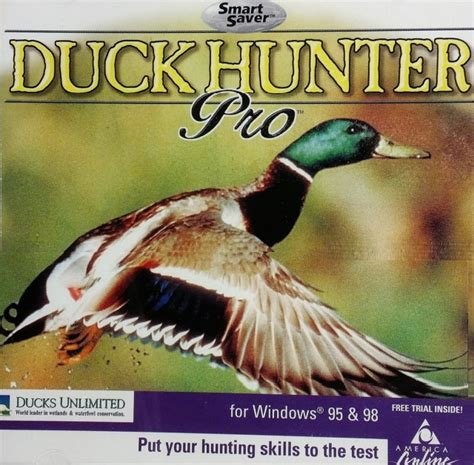
Duck Hunter Pro immerses players in the suspenseful life of a duck hunter, offering a realistic simulation of the sport. Players choose from 16 hunting locations, use decoys and duck calls to attract prey, and carefully decide whether to shoot based on seasonal regulations and duck species. Armed with three shotguns and standard FPS controls, hunters must abide by legal restrictions to avoid penalties. A trusty dog retrieves downed ducks, and points are tallied at the end of each hunt. The game features ten distinct duck types, challenging players to balance skill with ethical hunting practices.
Gameplay Videos
Duck Hunter Pro Free Download
Duck Hunter Pro Patches & Updates
Duck Hunter Pro: A Forgotten Fowl Shot in PC Gaming’s Golden Age
Introduction
In the annals of hunting simulators, Duck Hunter Pro (1999) sits not as a trophy but as a cautionary tale. Released at the tail end of the ’90s PC gaming boom, this Windows-exclusive title promised an immersive, ethical hunting experience but crashed-landed with a dismal 20% critic score and a 1.0/5 player rating. This review dissects how Duck Hunter Pro—a game obsessive in its simulation of waterfowl regulations yet laughably hollow in execution—became a footnote in gaming history, emblematic of an era where ambition often outpaced technical prowess.
Development History & Context
Studio Vision & Technological Constraints
Developed by Diversions Software, Inc. and published by Head Games Publishing, Duck Hunter Pro emerged during a surge in niche simulation games. The late ’90s saw titles like Deer Hunter (1997) capitalize on America’s outdoorsman culture, but Diversions’ approach was paradoxically earnest and naive. The studio aimed to marry realism with accessibility, leveraging CD-ROM storage for 16 hunting locales and motion-captured duck animations (a technical feat for 1999). Yet, constraints bled through: rudimentary 3D graphics, clunky AI pathfinding, and reliance on pre-rendered backgrounds jarred against contemporaries like Half-Life (1998).
The Gaming Landscape
Duck Hunter Pro arrived as PC gaming pivoted toward narrative depth (Planescape: Torment) and refined mechanics (Counter-Strike). Hunting sims, while niche, demanded increasing authenticity; Cabela’s Big Game Hunter (1998) set benchmarks with dynamic ecosystems. Against this backdrop, Duck Hunter Pro’s promise of “suspense-packed” fowl tracking felt archaic—a relic of arcade-light shooters like Duck Hunt (1984), sans the charm.
Narrative & Thematic Deep Dive
“Ethics” as a Crutch
Duck Hunter Pro eschews traditional storytelling, framing its “narrative” through bureaucratic rigor. Players assume the role of an unnamed hunter navigating ten duck species, each governed by real-world seasonal and regional restrictions (e.g., shooting a Mallard in winter penalizes the player). This systems-driven approach inadvertently critiques trophy hunting—a theme ahead of its time—but undermines itself through sterile execution.
Characterization & Dialogue
The hunter is a voiceless entity; his sole companion, a trusty retriever dog, functions as a glorified item-fetching script. No environmental storytelling or NPC interactions exist. The game’s didacticism peaks in its UI pop-ups: “Is this one of the ducks you are allowed to hunt?” reduces ethical hunting to a binary quiz, stripping the act of weight or consequence.
Gameplay Mechanics & Systems
Core Loop: Tedium as Theology
1. Location Selection: 16 zones range from marshes to fields, differentiated only by palette swaps.
2. Preparation: Lay decoys and mimic duck calls via a radial menu—innovative for 1999 but unresponsive.
3. Identification & Shooting: Scan flocks for species (e.g., Snow Goose vs. Pintail), then engage FPS-style aiming. Mistaken identity deducts points.
4. Retrieval: The dog AI frequently glitches, leaving ducks stranded in geometry.
Flaws & Frustrations
– Unforgiving Ballistics: Shotguns lack projectile physics; hits register via dubious hitbox detection.
– Static Ecosystems: Ducks spawn in predictable patterns, nullifying “simulation” claims.
– Progression Void: No unlockables, skill trees, or dynamic weather—just a daily score tally.
UI/UX: Clunky Pedagogy
The interface drowns players in text-based regulations, resembling a digital hunting manual. Mouse input suffers from latency, fatal in time-sensitive shots.
World-Building, Art & Sound
Visuals: A Study in Drabness
Pre-rendered backdrops evoke Windows 95 screensavers, with low-poly ducks resembling paper cutouts. Animations loop jarringly; the dog’s retrieval sequence repeats identical keyframes, breaking immersion.
Sound Design: Ambience as Afterthought
– Duck Calls: Tinny, repetitive quacks lack spatial depth.
– Gunfire: Flat, stock sound effects devoid of punch.
– Music: A single, elevator-style synth loop induces apathy.
The absence of wind, water, or ambient wildlife reduces “nature” to a sterile shooting gallery.
Reception & Legacy
Critical Panning
PC Player (Germany)’s scathing 20% review—“stupid ballerspiel” (“stupid shooter”)—captured consensus. Critics lambasted its slipshod mechanics, while players echoed disappointment (1.0/5 average).
Cultural Impact: A Negative Blueprint
Duck Hunter Pro influenced nothing but served as a cautionary tale:
1. Niche Simulators: Later hunting games (theHunter: Call of the Wild) prioritized organic ecosystems and progression.
2. Ethical Gameplay: Its ham-fisted conservation messaging foreshadowed eco-conscious indies (Never Alone).
3. Meme Culture: Retrospectively mocked as “Deer Hunter’s inbred cousin” in online forums.
Conclusion
Duck Hunter Pro is less a game than a taxidermied relic—a well-intentioned but botched experiment in simulation ethics. Its failures crystallize a pivotal truth: realism without engagement breeds contempt. While historians may note its early dabble in conservation themes, the experience remains a joyless trudge through digital wetlands. For collectors of gaming oddities, it’s a curiosity; for all others, a forgotten ripple in the PC gaming pond. Two decades later, its only legacy is as a reminder: even the noblest prey deserves better hunters.