
- Release Year: 2011
- Platforms: Linux, Macintosh, PlayStation 3, Windows, Xbox 360
- Publisher: D3Publisher of America, Inc., Trendy Entertainment, LLC.
- Developer: Trendy Entertainment, LLC.
- Genre: Action, Strategy, Tactics
- Perspective: Diagonal-down
- Game Mode: Co-op, Online Co-op, Single-player
- Gameplay: Action, Co-op, Leveling, Loot, Multiplayer, Tower defense
- Setting: Fantasy
- Average Score: 85/100
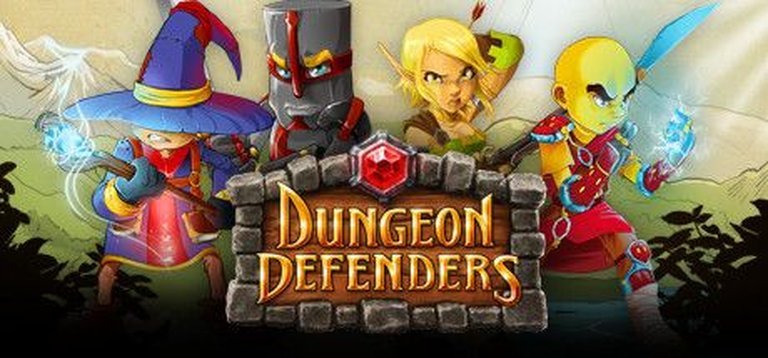
Description
Dungeon Defenders is a hybrid tower defense and action game where players build defenses and actively fight off waves of enemies in a cooperative multiplayer setting. Set in a fantasy world, players choose from four distinct classes, each with unique abilities, to protect their dungeons from invading forces. The game combines strategic planning with real-time combat, offering both cooperative and single-player story modes.
Gameplay Videos
Where to Buy Dungeon Defenders
PC
Dungeon Defenders Free Download
Dungeon Defenders Cracks & Fixes
Dungeon Defenders Patches & Updates
Dungeon Defenders Mods
Dungeon Defenders Guides & Walkthroughs
Dungeon Defenders Reviews & Reception
gizmogames.co.uk (90/100): A paw-some mashup of tower defense and action combat, you’ll be wagging your tail as you build, bite, and bark your way through waves of monsters.
Dungeon Defenders: Review
1. Introduction
In the pantheon of hybrid video games, few titles have achieved the cultural footprint of Dungeon Defenders. Released in 2011, this genre-blending masterpiece from Trendy Entertainment (now Chromatic Games) seamlessly fused the strategic depth of tower defense with the visceral thrill of action RPG combat, creating an experience that defied easy categorization. Its legacy endures not only in its commercial success—over one million copies sold across PC and console platforms by 2012—but in its enduring influence on cooperative multiplayer design and the “loot-driven” gameplay loop that would permeate subsequent titles. At its core, Dungeon Defenders is a testament to the power of synergy: where meticulous strategy meets chaotic action, and where the bonds of friendship forged in virtual dungeons become as valuable as the enchanted loot they hunt. This review will dissect its origins, mechanics, artistry, and impact, arguing that despite its technical quirks and design inconsistencies, Dungeon Defenders remains a landmark achievement in co-op gaming.
2. Development History & Context
- Dungeon Defenders* emerged from an unlikely crucible: an Unreal Engine 3 tech demo titled Dungeon Defense aimed at showcasing the engine’s mobile capabilities. Developer Trendy Entertainment, led by CEO Jeremy Stieglitz who held roles of director, lead designer, and programmer, envisioned a game that would transcend its mobile origins. The studio’s vision was ambitious: to create a genre hybrid that married the cerebral satisfaction of tower defense with the kinetic energy of an action RPG, all wrapped in an accessible, cartoonish fantasy package. This vision was constrained by the technological limitations of the era—particularly on mobile platforms—but also buoyed by the burgeoning digital distribution market on services like Steam and Xbox Live Arcade. The 2011 gaming landscape was ripe for such an innovation: the indie movement was gaining traction, while genres like tower defense (popularized by Orcs Must Die!) and cooperative action RPGs (exemplified by Borderlands) were finding mainstream audiences. Trendy’s decision to port the game from mobile to PC and consoles (Xbox 360, PlayStation 3) in October 2011 was a calculated risk that paid off, capitalizing on the rise of cross-platform play and the growing appetite for “games-as-a-service” models. The development team of 92 individuals, including artists like Morgan Roberts and composers like Afshin Toufighian, worked tirelessly to translate the mobile prototype into a full-fledged console experience, introducing features like split-screen multiplayer and a robust loot system that would define the game’s identity.
3. Narrative & Thematic Deep Dive
The narrative of Dungeon Defenders unfolds as a charmingly predictable yet effective fantasy fable. Set in the realm of Etheria, the story introduces players to the young apprentices of legendary heroes—the Grand Magus, Knight, Elven Archer, and Chi Master—who were tasked with guarding the Eternia Crystals, ancient vessels sealing away the malevolent Old Ones. Bored with mundane castle duties, the apprentices accidentally unleash the dormant evil, forcing them to mature rapidly and defend the crystals against hordes of goblins, orcs, and dark elves. The plot serves primarily as a thematic backdrop for the game’s core mechanics, emphasizing themes of responsibility, growth, and the consequences of youthful recklessness. The characters, while archetypal, are endearing in their simplicity: the cautious Apprentice (wielding staves and lightning magic), the boisterous Squire (brandishing oversized swords and building barricades), the agile Huntress (employing bows and mines), and the wise Monk (specializing in crowd control and buffs). Their interactions, delivered through minimalist dialogue and exaggerated animations, reinforce the game’s lighthearted tone. Thematically, the narrative underscores a powerful dichotomy: the contrast between the innocence of childhood and the grim reality of heroism. By framing players as “child soldiers” defending a world against ancient evils, Dungeon Defenders subtly explores the burdens of legacy and the necessity of stepping into one’s own shoes—a theme resonant with its target audience of cooperative players who must unite to overcome insurmountable odds.
4. Gameplay Mechanics & Systems
The genius of Dungeon Defenders lies in its seamless integration of tower defense and action RPG mechanics. Each match is divided into two phases: the “build phase,” where players strategically place defenses using mana (earned from enemies and chests), and the “combat phase,” where waves of monsters assault players’ Eternia Crystals. This dual-loop structure creates a rhythm of tense planning and frantic action, demanding both strategic foresight and reflexive skill. The game’s four initial hero classes—Apprentice, Squire, Huntress, and Monk—each offer distinct playstyles:
– Apprentice: A glass cannon specializing in magical towers (e.g., lightning beams) and elemental damage, but vulnerable in melee combat.
– Squire: A frontline tank who constructs physical defenses (spikes, barricades) and wields devastating melee weapons.
– Huntress: A ranged DPS hero who deploys mines and excels at targeting high-priority threats from afar.
– Monk: A support class focused on crowd control (stuns, slows) and buffing allies, with balanced combat abilities.
Progression is driven by a robust RPG system: characters gain experience, level up, and equip randomized loot (weapons, armor, pets) that modifies stats like damage, health, and tower efficiency. Mana serves as a universal currency for building, upgrading, and purchasing items, creating a satisfying economic loop. However, the game’s systems are not without flaws. The “first come, first served” loot distribution often breeds frustration, as players may lose rare drops to faster teammates. Solo play is punishing due to difficulty scaling that assumes four-player cooperation, turning early levels into a grind. Technical issues like clunky UI and occasional lag further mar the experience, particularly on console versions. Yet, these shortcomings are eclipsed by the sheer depth of customization: 12 hero classes (including DLC additions like the Barbarian and Summoner) offer endless replayability, with each class’s unique towers and abilities encouraging diverse strategies. The inclusion of “Pure Strategy” mode, which limits heroes to tower management, caters to purists, while Hardcore mode adds stakes by disabling respawns.
5. World-Building, Art & Sound
- Dungeon Defenders‘ world-building is minimal but effective, centering on the conflict between the youthful defenders and the forces of the Old Ones. The game’s environments—from misty forests to volcanic fortresses—are designed as puzzle boxes for strategic defense, with enemy paths and chokepoints meticulously laid out to test players’ ingenuity. The lore, expanded through DLC like the *Quest for the Lost Eternia Shards, hints at a larger universe of immortal evils and legendary champions, though it remains secondary to the gameplay. Artistically, the game employs a vibrant cel-shaded style reminiscent of Team Fortress 2, with bold outlines, exaggerated character designs, and a color palette that pops against dark, monster-filled backdrops. This aesthetic not only enhances accessibility but also reinforces the game’s cartoonish tone, making even gruesome foes like ogres feel whimsical. Sound design is equally crucial: Afshin Toufighian’s score blends orchestral fantasy with electronic beats, escalating during waves to heighten tension. Sound effects—from the clank of a Squire’s sword to the fizz of an Apprentice’s lightning spell—provide satisfying auditory feedback, while the characters’ grunts and exclamations add personality. The tavern, a central hub for matchmaking and customization, doubles as a space for world-building, with its NPCs (like the pun-spouting tavernkeeper) and trophy-filled walls offering glimpses into Etheria’s culture. Together, these elements create an immersive yet approachable fantasy world that feels alive despite its brevity.
6. Reception & Legacy
Upon release, Dungeon Defenders was met with widespread acclaim, holding an aggregate Metascore of 80–81% across platforms. Critics praised its innovative blend of genres, cooperative depth, and addictive loot loop. IGN lauded it as “engaging” but stressed the importance of multiplayer, while Game Chronicles hailed it as “AAA material at a quarter of the cost.” Sales figures underscored its commercial impact, with 250,000 copies sold in its first two weeks and over one million by early 2012. However, the game was not without detractors; GameSpot criticized its “sluggish controls” and “lame action,” highlighting the solo experience’s frustrations. Long-term, Dungeon Defenders fostered a passionate community that sustained its relevance through modding and dedicated servers. The 2014 release of Dungeon Defenders: Eternity attempted to rebalance the game but was panned for its microtransactions and lack of single-player content, leading to its discontinuation. Yet the original’s legacy endures. It directly influenced successors like Orcs Must Die! 2 and Dungeon Defenders II, which adopted its hybrid formula. More profoundly, it popularized the “co-op loot grinder” archetype, paving the way for titles like Warhammer: Chaosbane. The Redux mod, developed by fans and officially endorsed by Chromatic Games, revitalized the PC version in 2020, introducing new content and fixes. Today, Dungeon Defenders is remembered as a pioneer that proved cooperative hybrid games could be both accessible and endlessly deep, cementing its status as a cult classic.
7. Conclusion
- Dungeon Defenders* is a flawed masterpiece, a game whose technical imperfections and design quirks are overshadowed by its sheer brilliance as a cooperative experience. It succeeded where many hybrids faltered by creating a seamless loop where strategy and action feed into one another, supported by a progression system that rewards dedication and camaraderie. Its colorful art, charming characters, and challenging gameplay forged a unique identity in a crowded market. While its solo mode is a slog and its DLC-heavy monetization later tarnished its reputation, the core experience—four friends defending a crystal against overwhelming odds—remains as potent today as it was in 2011. As a historical artifact, Dungeon Defenders represents a pivotal moment in digital gaming, bridging the gap between indie innovation and mainstream appeal. It stands not as a flawless monument, but as a testament to the enduring power of creative risk-taking: a game that dared to be many things at once, and in doing so, carved an indelible niche in the annals of video game history. For those seeking a blend of strategy, action, and friendship, Dungeon Defenders remains not just a relic, but a vibrant, living adventure.