
- Release Year: 2005
- Platforms: Windows
- Publisher: 1C Company, ak tronic Software & Services GmbH, Crimson Cow GmbH, DreamCatcher Interactive Inc., dtp entertainment AG
- Developer: Heuristic Park, Inc.
- Genre: Role-playing, RPG
- Perspective: Behind view
- Game Mode: Online Co-op, Online PVP, Single-player
- Gameplay: Action RPG, Character Creation, Class system, Crafting, Dungeon Crawling, Experience grinding, Magic system, Open World, Puzzle-solving, Side quests, Skill Tree, Turn-based combat
- Setting: Fantasy
- Average Score: 41/100
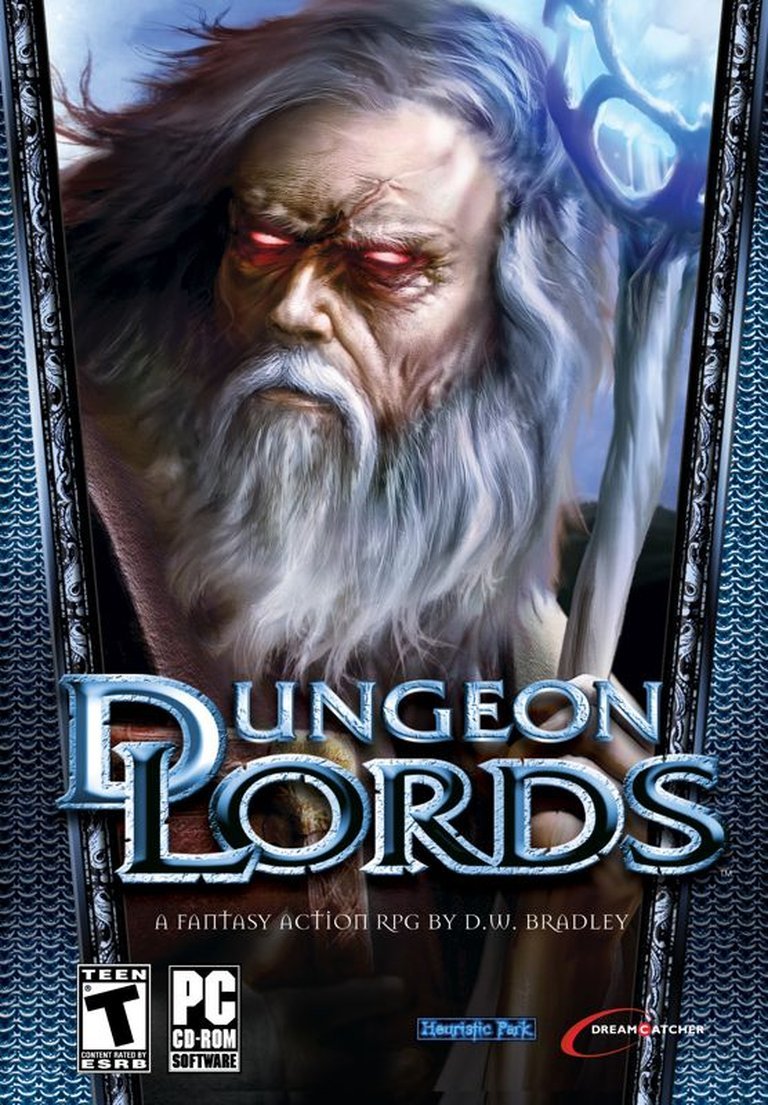
Description
Dungeon Lords is an action role-playing game set in a fantasy world where players create a protagonist from seven unique races and four classes to combat evil forces threatening the land. The game features deep character customization, diverse magic systems, and expansive dungeons filled with treasure and enemies. Players can explore towns, join guilds, and undertake side quests while battling respawnable foes and uncovering a conspiracy within the Circle of Mages.
Gameplay Videos
Where to Buy Dungeon Lords
PC
Dungeon Lords Free Download
Dungeon Lords Patches & Updates
Dungeon Lords Mods
Dungeon Lords Guides & Walkthroughs
Dungeon Lords Reviews & Reception
metacritic.com (45/100): The lack of detail and polish simply killed this game.
en.wikipedia.org (45/100): Dungeon Lords is a disaster.
ign.com (45/100): Lock it up and throw away the key.
archive.rpgamer.com (30/100): It is truly a depressing state of affairs when a company can legitimately push a defective product into a market where the consumer has no recourse to return the mostly useless merchandise.
Dungeon Lords: A Flawed Gem in the Rough
Introduction
Dungeon Lords (2005) is a game that defies easy categorization. On one hand, it is a deeply flawed, bug-ridden mess that was rushed to market in an unplayable state. On the other, it is a passion project from a legendary RPG designer, David W. Bradley, whose ambition and love for the genre shine through its many cracks. This review will explore the game’s tumultuous development, its intricate systems, its underwhelming reception, and its enduring legacy as a cult classic. Whether you see it as a cautionary tale or an underappreciated diamond in the rough, Dungeon Lords remains a fascinating artifact of its time.
Development History & Context
The Vision of David W. Bradley
Dungeon Lords was the brainchild of David W. Bradley, a name synonymous with classic RPGs. Bradley was the mastermind behind some of the most beloved entries in the Wizardry series (Wizardry 6: Bane of the Cosmic Forge, Wizardry 7: Crusaders of the Dark Savant, and Wizardry 8), games renowned for their depth, complexity, and immersive dungeon-crawling experiences. With Dungeon Lords, Bradley aimed to modernize the dungeon-crawling formula by blending it with real-time action combat, a bold departure from the turn-based mechanics of his earlier works.
Bradley founded Heuristic Park in 1995, a studio dedicated to pushing the boundaries of RPG design. Dungeon Lords was intended to be the studio’s magnum opus—a game that would combine the tactical depth of Wizardry with the fluidity of action RPGs like Diablo and the immersive world-building of The Elder Scrolls III: Morrowind. The game was announced in 2003, with early previews promising a revolutionary combat system inspired by console fighting games, a vast open world, and a complex class system that would allow for unprecedented character customization.
Technological Constraints and Ambition
The game was built on a custom engine designed to handle real-time combat, dynamic lighting, and large-scale environments. However, the engine’s development proved to be a significant challenge. The team struggled with optimizing the game’s performance, particularly in rendering detailed 3D environments and handling the physics of real-time combat. The combat system, which relied on mouse-controlled combos and precise timing, required extensive iteration to feel responsive and satisfying.
Despite these challenges, the team pressed forward, driven by Bradley’s vision. The game’s scope was ambitious, featuring:
– A vast, open world with multiple towns, dungeons, and wilderness areas.
– A deep class system with over 30 possible class combinations, allowing players to create hybrid characters like a “shadow ninja” dabbling in nether magic or a heavily armored tank with priestly abilities.
– Four distinct magic systems (celestial, arcane, nether, and rune), each with unique mechanics for spellcasting.
– Real-time combat with combo-based attacks, parrying, and tactical positioning.
– Multiplayer support for up to four players, a rarity in single-player-focused RPGs at the time.
The Rush to Release
The game’s development was plagued by delays, and as the release date loomed, it became clear that Dungeon Lords was not ready. Despite this, DreamCatcher Interactive, the game’s publisher, pushed for a May 2005 release to capitalize on the growing popularity of action RPGs. The decision to rush the game to market would prove disastrous.
Upon release, Dungeon Lords was missing critical features, including:
– An in-game map, making navigation nearly impossible in the game’s sprawling dungeons.
– Functional character customization, with many of the promised appearance options either broken or entirely absent.
– A balanced combat system, with enemies that were either trivial or overwhelmingly difficult.
– Polished quests and NPC interactions, with many side quests feeling repetitive or unfinished.
The game’s launch was met with immediate backlash. Critics and players alike lambasted its buggy state, with some reviewers unable to progress past the first few hours due to game-breaking glitches. The lack of an automap, in particular, was a glaring omission that made the game’s dungeons frustrating to navigate.
Post-Launch Patches and the Collector’s Edition
In the months following the game’s release, Heuristic Park worked tirelessly to address its most egregious issues. A series of patches were released, culminating in version 1.4, which added:
– An automap feature, finally making the game’s dungeons navigable.
– Additional quests and NPCs, fleshing out the game’s world and providing more content.
– Bug fixes, addressing many of the game-breaking issues that plagued the initial release.
– New character customization options, allowing players to tweak their character’s appearance.
In 2006, the Dungeon Lords: Collector’s Edition was released, incorporating all the patches and adding even more content, including new spells, monsters, and a new character class. This version of the game was significantly more polished and playable, though it still retained some of the original’s rough edges.
The Gaming Landscape in 2005
Dungeon Lords arrived at a pivotal moment in the RPG genre. The mid-2000s saw the rise of several landmark titles:
– The Elder Scrolls IV: Oblivion (2006) was on the horizon, promising to redefine open-world RPGs with its vast, dynamic world and improved combat.
– World of Warcraft (2004) had already taken the gaming world by storm, setting a new standard for MMORPGs and drawing players away from single-player experiences.
– Fable (2004) and Jade Empire (2005) were pushing the boundaries of narrative-driven RPGs with their emphasis on player choice and moral consequences.
In this context, Dungeon Lords felt like a relic of an earlier era. Its combat system, while innovative, was clunky compared to the fluidity of Oblivion or the tactical depth of Jade Empire. Its world, though expansive, lacked the polish and immersion of World of Warcraft’s Azeroth. The game’s rushed release only exacerbated these issues, making it difficult for Dungeon Lords to compete in an increasingly crowded market.
Narrative & Thematic Deep Dive
Plot Overview
Dungeon Lords is set in the fantasy kingdom of Fargrove, a land teetering on the brink of war. The game’s story begins with the assassination of Galdryn of the Meadows, a powerful wizard and ally of Lord Davenmor, the ruler of Fargrove. With Galdryn dead, Lord Davenmor struggles to defend his city against the marauding armies of Lord Barrowgrim, a ruthless warlord seeking to conquer the kingdom. In a desperate bid to avoid war, Davenmor promises Barrowgrim the hand of his daughter, Lady Ellowyn, in marriage. However, Ellowyn, whose heart belongs to another, flees, sparking a chain of events that draws the player into the conflict.
The player takes on the role of a lone traveler who arrives in Fargrove just as the city is under siege. As the protagonist, you are tasked with uncovering the conspiracy behind Galdryn’s murder, rescuing Lady Ellowyn, and ultimately liberating the land from Barrowgrim’s forces. Along the way, you’ll encounter a cast of characters, including:
– Lord Davenmor: The beleaguered ruler of Fargrove, struggling to hold his kingdom together.
– Lady Ellowyn: Davenmor’s daughter, whose escape sets the game’s events in motion.
– Lord Barrowgrim: The game’s primary antagonist, a ruthless warlord with designs on Fargrove.
– The Circle of Mages: A secretive organization whose internal betrayals play a central role in the story.
Themes
Dungeon Lords explores several classic fantasy themes, though its execution is often uneven:
1. Betrayal and Conspiracy: The game’s central plot revolves around the betrayal of Galdryn and the conspiracy within the Circle of Mages. This theme is reinforced by the presence of traitors and double-crosses throughout the story, creating a sense of paranoia and mistrust.
2. Love and Sacrifice: Lady Ellowyn’s refusal to marry Barrowgrim, despite the consequences for her kingdom, highlights the theme of love as a driving force for sacrifice. Her actions set the stage for the protagonist’s quest to rescue her and restore peace to Fargrove.
3. Power and Corruption: The Circle of Mages, once a noble organization, has become corrupted by internal strife and ambition. This theme is reflected in the game’s magic systems, where power comes at a cost—whether through the draining of celestial crystals or the dark rituals of nether magic.
4. Heroism and Destiny: The protagonist is an outsider drawn into a conflict not of their making, embodying the classic “hero’s journey” archetype. As the player progresses, they are faced with choices that shape their character’s destiny, from joining guilds to aligning with different factions.
Characters and Dialogue
One of Dungeon Lords’ most significant weaknesses is its underdeveloped cast of characters. While the game’s premise is intriguing, its execution falls short due to:
– Lack of Depth: Most NPCs are little more than quest dispensers, with little personality or backstory. Even key characters like Lord Davenmor and Lady Ellowyn feel underutilized, with their motivations and emotions barely explored.
– Repetitive Dialogue: Many NPCs repeat the same lines of dialogue, making interactions feel stale and unengaging. The game’s lack of voice acting (outside of a few key scenes) further exacerbates this issue, robbing the story of emotional weight.
– Missed Opportunities: The game’s world is ripe for compelling side quests and character-driven narratives, but these are largely absent. The few side quests that do exist are often repetitive, involving little more than fetching items or slaying monsters.
Storytelling and Pacing
The game’s narrative is delivered through a combination of text-based dialogue, quest logs, and occasional cutscenes. While the premise is promising, the storytelling suffers from:
– Poor Pacing: The game’s main quest is linear, with little room for player agency. Key story beats are triggered by specific events, often forcing the player to backtrack or grind through repetitive content to progress.
– Lack of Choices: Unlike modern RPGs, Dungeon Lords offers few meaningful choices that impact the story. The game’s branching class system is its most significant form of player agency, but even this is limited by the game’s linear progression.
– Underwhelming Climax: The game’s final act, while epic in scope, feels rushed and anticlimactic. The confrontation with Lord Barrowgrim lacks the emotional weight or narrative payoff that such a pivotal moment deserves.
The World of Fargrove
Despite its narrative shortcomings, Dungeon Lords’ world is one of its strongest aspects. The kingdom of Fargrove is a classic fantasy setting, filled with:
– Diverse Locations: From the sprawling city of Fargrove to the eerie Shadow Ruins, the game’s environments are varied and atmospheric. The dungeons, in particular, are well-designed, with intricate layouts, traps, and puzzles that reward exploration.
– Lore and History: The game’s world is rich with lore, from the ancient history of the Circle of Mages to the political intrigue of Fargrove’s ruling class. While much of this lore is delivered through text, it adds depth to the game’s setting.
– Atmosphere: The game’s dungeons are its most atmospheric locations, with eerie lighting, haunting sound design, and a sense of danger that keeps players on edge. The Shadow Ruins, in particular, stand out as a masterclass in dungeon design, with their puzzle-based challenges and oppressive atmosphere.
Gameplay Mechanics & Systems
Character Creation and Progression
Dungeon Lords’ character creation system is one of its most ambitious and well-executed features. Players begin by choosing from seven races:
– Humans: Balanced and versatile, suitable for any class.
– Elves: Agile and magical, excelling in ranged combat and spellcasting.
– Dwarves: Sturdy and strong, ideal for melee combat and tanking.
– Urgoth: A humanoid race with a natural affinity for nether magic.
– Wylvan: A forest-dwelling race with stealth and nature-based abilities.
– Zaur: A reptilian race with enhanced strength and durability.
– Thrall: A mysterious race with unique magical abilities.
Each race has its own strengths and weaknesses, influencing the player’s starting attributes and skill affinities. Players then choose from four base classes:
– Fighter: A melee-focused class with high strength and endurance.
– Mage: A spellcasting class with high intelligence and magical affinity.
– Adept: A hybrid class that balances melee combat and magic.
– Rogue: A stealth-focused class with high dexterity and agility.
The game’s class system is where Dungeon Lords truly shines. As players progress, they can join guilds and unlock Tier Two and Tier Three classes, allowing for a staggering 30+ possible class combinations. For example:
– A Fighter can evolve into a Knight (Tier Two) and then a Paladin (Tier Three), gaining access to holy magic and heavy armor proficiencies.
– A Mage can become a Sorcerer (Tier Two) and then an Archmage (Tier Three), unlocking powerful spells and magical enhancements.
– A Rogue can specialize in Assassin (Tier Two) and Shadowblade (Tier Three), focusing on stealth, critical strikes, and poison-based attacks.
This system encourages experimentation and replayability, as players can create vastly different builds with each playthrough. However, the system is not without its flaws:
– Skill Gating: Some skills are gated behind prerequisite skills, forcing players to invest in less useful abilities before unlocking more powerful ones. For example, a fighter must first master light and medium armor before gaining access to heavy armor proficiencies.
– Lack of Specialization: While the class system is deep, it can feel overly complex, with some classes offering little more than minor stat boosts. The lack of meaningful specialization can make some builds feel underwhelming.
Combat System
Dungeon Lords’ combat system is a mix of real-time action and tactical decision-making. The game’s combat is inspired by console fighting games, with an emphasis on combos, parrying, and positioning. Key features include:
– Mouse-Controlled Combos: Players use mouse movements to execute different attacks, such as slashes, thrusts, and overhead strikes. Chaining these attacks together creates combos, which deal increased damage.
– Parrying and Blocking: Timing is crucial in Dungeon Lords’ combat. Players can parry enemy attacks by timing their blocks correctly, opening up opportunities for counterattacks.
– Tactical Positioning: Enemies often attack in groups, requiring players to position themselves carefully to avoid being surrounded. The game’s combat arenas are designed to encourage movement and positioning, with obstacles and environmental hazards adding to the challenge.
While the combat system is innovative, it is also one of the game’s most divisive aspects:
– Clunky Controls: The mouse-controlled combat can feel imprecise, with attacks sometimes failing to connect due to poor hit detection. This can lead to frustrating encounters, particularly against fast-moving enemies.
– Difficulty Spikes: The game’s difficulty is inconsistent, with some enemies feeling trivial while others are overwhelmingly powerful. The lack of a balanced difficulty curve can make combat feel unfair at times.
– Repetitive Encounters: Many combat encounters feel repetitive, with enemies relying on similar attack patterns and strategies. The game’s respawn system, which allows enemies to reappear even while the player is standing still, can also lead to tedious grinding.
Magic Systems
Dungeon Lords features four distinct magic systems, each with its own mechanics and resource management:
1. Arcane Magic: The most traditional of the magic systems, arcane magic relies on scrolls and spellbooks. Players must find or purchase spells, which are then cast using mana. This system is straightforward but lacks the depth of the other magic systems.
2. Celestial Magic: Celestial magic uses star crystals, each of which can cast a specific spell a limited number of times before needing to recharge. This system encourages strategic use of spells, as players must manage their crystal charges carefully.
3. Nether Magic: Nether magic requires players to mix various “katals” (ingredients like bat wings, rat tails, and monster parts) to create spells. This system is the most complex, with players needing to experiment with different combinations to discover new spells.
4. Rune Magic: Similar to nether magic, rune magic involves mixing runes to create spells. However, rune magic is more structured, with specific rune combinations yielding predictable results.
The magic systems are one of Dungeon Lords’ most innovative features, offering a level of depth and customization rarely seen in action RPGs. However, they are also one of the game’s most underutilized aspects:
– Lack of Integration: Magic often feels secondary to melee combat, with many spells being situational or underpowered. The game’s combat system is heavily skewed toward melee, making magic users feel weaker in direct confrontations.
– Resource Management: Managing the different magic systems can be cumbersome, particularly in the heat of combat. Players must juggle multiple resources (mana, crystal charges, katals, and runes), which can be overwhelming.
Exploration and Dungeon Design
Dungeon Lords’ dungeons are its standout feature, offering some of the most well-designed and atmospheric environments in the genre. Key aspects of the game’s dungeon design include:
– Intricate Layouts: The game’s dungeons are labyrinthine, with multiple paths, hidden rooms, and environmental puzzles. The Shadow Ruins, in particular, are a masterclass in dungeon design, with their eerie atmosphere and challenging puzzles.
– Traps and Hazards: Dungeons are filled with traps, from spiked pits to poison gas vents, requiring players to proceed with caution. The game’s trap system is well-implemented, with players needing to disarm traps or find alternate routes to avoid them.
– Treasure and Loot: Dungeons are packed with treasure chests, many of which are trapped or locked. The game’s loot system is generous, with players finding a wide variety of weapons, armor, and magical items.
However, the game’s exploration is hampered by several issues:
– Lack of an Automap: The absence of an in-game map in the original release made navigation nearly impossible, forcing players to rely on external maps or memorization. While later patches added an automap, the damage to the game’s reputation had already been done.
– Repetitive Overworld: The game’s overworld is large but monotonous, with little variation in terrain or landmarks. This makes exploration feel tedious, particularly when traveling between dungeons.
– Limited Side Content: Outside of the main quest and guild missions, there is little to do in the game’s world. The lack of meaningful side quests or NPC interactions makes the world feel empty and lifeless.
User Interface and Quality of Life
Dungeon Lords’ UI is functional but clunky, with several design choices that hinder the player experience:
– Inventory Management: The game’s inventory system is cumbersome, with players needing to manually sort through items and equipment. The lack of a quick-loot system makes managing loot tedious.
– Quest Tracking: The game’s quest log is barebones, with little guidance on where to go or what to do next. This can lead to confusion, particularly in the game’s later stages.
– Save System: The game’s save system is outdated, with no quick-save or quick-load options. Players must exit to the main menu to save or load their game, which is inconvenient and immersion-breaking.
World-Building, Art & Sound
Visual Design
Dungeon Lords’ visual design is a mixed bag. On one hand, the game’s environments are detailed and atmospheric, with a strong sense of place. The dungeons, in particular, are visually impressive, with eerie lighting, intricate architecture, and a sense of decay that adds to their oppressive atmosphere. The game’s character models, while not groundbreaking, are serviceable, with distinct designs for each race and class.
On the other hand, the game’s visuals are held back by several technical limitations:
– Outdated Graphics: By 2005 standards, Dungeon Lords’ graphics were already dated. The game’s textures are muddy, and its animations are stiff, particularly in comparison to contemporaries like Oblivion or Fable.
– Clipping and Glitches: The game is riddled with visual glitches, from enemies floating in mid-air to weapons clipping through walls. These issues detract from the game’s immersion and polish.
– Lack of Variety: The game’s overworld is visually repetitive, with little variation in terrain or landmarks. This makes exploration feel tedious and uninspired.
Sound Design and Music
Dungeon Lords’ sound design is one of its most underwhelming aspects. The game’s audio is sparse, with little in the way of ambient sound or musical accompaniment:
– Lack of Music: The game features almost no in-game music, with only a handful of tracks playing during the main menu and cutscenes. This absence of music makes the game’s world feel hollow and lifeless.
– Repetitive Sound Effects: The game’s sound effects are functional but repetitive, with enemies often repeating the same lines of dialogue or attack sounds. This can become grating over time.
– No Voice Acting: Outside of a few key scenes, the game lacks voice acting, relying instead on text-based dialogue. This further detracts from the game’s immersion and emotional impact.
Atmosphere and Immersion
Despite its technical limitations, Dungeon Lords manages to create a compelling atmosphere, particularly in its dungeons. The game’s dungeons are its strongest asset, with their oppressive lighting, haunting sound design, and intricate layouts. The Shadow Ruins, in particular, are a standout example of how to create a memorable and atmospheric dungeon.
However, the game’s overworld and towns feel lifeless and uninspired. The lack of NPCs, ambient sound, and meaningful interactions makes the world feel empty and sterile. This is a missed opportunity, as the game’s premise and lore are rich enough to support a more immersive and engaging world.
Reception & Legacy
Critical Reception
Dungeon Lords was met with overwhelmingly negative reviews upon its release. Critics lambasted the game for its buggy state, lack of polish, and unfinished features. Key criticisms included:
– Game-Breaking Bugs: Many reviewers encountered bugs that prevented them from progressing, from quest items disappearing to NPCs getting stuck in walls.
– Missing Features: The absence of an automap, functional character customization, and balanced combat were frequently cited as major flaws.
– Repetitive Gameplay: The game’s combat and quests were criticized for being repetitive and lacking depth.
The game’s Metacritic score of 45/100 reflects its poor reception, with many critics calling it one of the worst RPGs of the year. Notable reviews include:
– IGN (4.5/10): “Dungeon Lords is a disaster. It’s an unfinished, unpolished, and un-fun game that I thankfully never have to play again.”
– GameSpot (6.8/10): “A slew of noticeably missing features and other problems may well end up drawing too much of your attention away from the game’s good parts.”
– Computer Gaming World (0/5): “Dungeon Lords has more bugs than a cemetery and more missing features than a medieval skull.”
Player Reception
Despite its critical drubbing, Dungeon Lords developed a small but dedicated fanbase. Players who stuck with the game praised its:
– Deep Class System: The game’s class system was widely regarded as its strongest feature, offering unprecedented customization and replayability.
– Atmospheric Dungeons: The game’s dungeons were praised for their design, atmosphere, and challenge.
– Ambition: Many players appreciated the game’s ambition, even if its execution fell short.
However, the game’s bugs and lack of polish made it difficult for many players to enjoy. The Collector’s Edition and subsequent patches improved the game’s playability, but by then, much of the damage to its reputation had already been done.
Commercial Performance
Dungeon Lords’ commercial performance was modest. While exact sales figures are unavailable, the game is estimated to have sold over one million copies worldwide. However, it failed to make a significant impact on the market, overshadowed by more polished and popular titles like Oblivion and World of Warcraft.
Legacy and Influence
Despite its flaws, Dungeon Lords has left a lasting legacy in the RPG genre. Its innovative class system and dungeon design have influenced later titles, and its ambition continues to inspire indie developers. Key aspects of its legacy include:
– Cult Following: The game has developed a cult following, with fans praising its depth and ambition. Online communities and modding efforts have kept the game alive, with players creating fixes, balance tweaks, and new content.
– Influence on Later Games: Dungeon Lords’ class system and combat mechanics have influenced later RPGs, particularly in the indie space. Games like Grim Dawn and Path of Exile have drawn inspiration from its hybrid class system and skill-based progression.
– Lessons in Game Development: Dungeon Lords serves as a cautionary tale about the dangers of rushing a game to market. Its troubled development and launch highlight the importance of thorough testing, player feedback, and realistic deadlines.
Re-Releases and Remasters
In the years following its initial release, Dungeon Lords has seen several re-releases and remasters:
– Dungeon Lords: Collector’s Edition (2006): This version incorporated all the patches and added new content, including quests, spells, and character customization options.
– Dungeon Lords MMXII (2012): A remastered version of the game, featuring improved graphics, a reworked UI, and multiplayer support for up to eight players.
– Dungeon Lords: Steam Edition (2015): A digital re-release that integrated all updates from MMXII and added Steam-specific features like cloud saves and multiplayer matchmaking.
While these re-releases addressed many of the original game’s issues, they failed to significantly expand its audience. Dungeon Lords remains a niche title, appreciated by a dedicated fanbase but largely overlooked by the broader gaming community.
Conclusion
Dungeon Lords is a game of contradictions. It is simultaneously ambitious and flawed, innovative and outdated, deeply rewarding and frustratingly broken. At its core, it is a passion project from a legendary RPG designer, a game that aimed to push the boundaries of the genre but was ultimately undone by its rushed release and technical limitations.
For all its flaws, Dungeon Lords is not without merit. Its class system is one of the deepest and most customizable in the genre, offering unprecedented replayability. Its dungeons are masterfully designed, with intricate layouts, atmospheric lighting, and challenging puzzles. And its ambition—its sheer determination to innovate and experiment—is admirable, even if its execution falls short.
Yet, it is impossible to ignore the game’s many shortcomings. Its buggy launch, lack of polish, and repetitive gameplay make it a difficult game to recommend, even to hardcore RPG fans. The Collector’s Edition and subsequent patches improved the game’s playability, but they could not erase the damage done by its initial release.
In the end, Dungeon Lords is a game that rewards patience and perseverance. For those willing to look past its flaws, it offers a deeply rewarding experience, a chance to explore a rich and atmospheric world, and a class system that encourages experimentation and replayability. But for those seeking a polished, modern RPG, Dungeon Lords will likely disappoint.
Final Verdict: Dungeon Lords is a flawed gem, a game that could have been great but was ultimately undone by its rushed release. While its class system and dungeon design are standout features, its bugs, lack of polish, and repetitive gameplay make it a difficult game to recommend. For hardcore RPG fans willing to overlook its flaws, it offers a deeply rewarding experience. For everyone else, it remains a cautionary tale about the dangers of rushing a game to market.
Score: 6.5/10 – A deeply flawed but ambitious RPG that rewards patience and perseverance.