
- Release Year: 2016
- Platforms: Macintosh, Windows
- Publisher: New Reality Games
- Developer: Robert Alvarez
- Genre: Action
- Perspective: Side view
- Game Mode: Single-player
- Gameplay: Metroidvania, Platform
Description
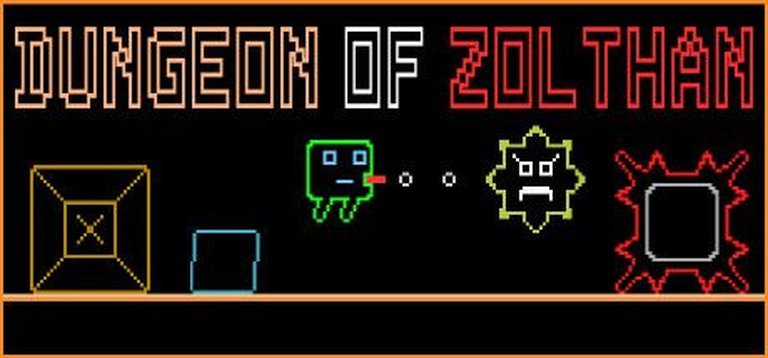
Dungeon of Zolthan is a 2D, side-scrolling metroidvania platformer released in 2016. Players navigate through a dungeon filled with obstacles, puzzles, and enemies, aiming to defeat the powerful mage Zolthan. The game features retro-style challenge, classic platformer mechanics, and explorative elements, with six power-ups and 40 dungeon rooms to conquer.
Gameplay Videos
Where to Buy Dungeon of Zolthan
PC
Dungeon of Zolthan Guides & Walkthroughs
Dungeon of Zolthan: A Retro Metroidvania’s Modest Ambition
Introduction
In an era saturated with indie Metroidvanias, Dungeon of Zolthan (2016) stands as a minimalist, budget-conscious experiment in stripped-down retro design. Developed by solo creator Robert Alvarez and published by New Reality Games, this neon-drenched platformer distills the genre’s essence into a bite-sized package. While its ambition is commendable, Dungeon of Zolthan embodies both the charms and limitations of small-scale indie development—a game that delights in its simplicity but struggles to transcend its Spartan design.
Development History & Context
A Solo Vision in the Indie Boom
Released in May 2016, Dungeon of Zolthan emerged during the indie gaming renaissance, a period marked by the success of titles like Shovel Knight and Axiom Verge. Developed entirely by Robert Alvarez—a prolific creator known for small, experimental projects—the game was born from limited resources. Built for Steam Greenlight (a since-retired platform for indie promotion), it reflects the constraints of solo development: rudimentary pixel art, a tiny file size (20MB), and a focus on core mechanics over polish.
Technological Constraints
The game’s 32-bit architecture, while functional at launch, became a liability. It’s incompatible with macOS Catalina (2019) and later, limiting its longevity. This technical footnote underscores the challenges of preserving small-scale indie titles in an evolving ecosystem.
Narrative & Thematic Deep Dive
A Skeletal Story
Dungeon of Zolthan offers little narrative depth. Players control a nameless, neon-green square tasked with defeating the eponymous Zolthan, a “powerful mage” residing in a labyrinthine dungeon. Dialogue is nonexistent, and lore is reduced to a single Steam blurb. The protagonist’s silence and abstract design (a geometric shape) evoke a deliberate minimalism, prioritizing gameplay over storytelling.
Themes of Isolation and Challenge
Thematically, the game channels classic arcade grit. Its desolate dungeon, devoid of NPCs or lore, frames the player’s journey as a solitary test of skill. The four bosses—Angry Face, Spike Wall, Mega Roller, and Zolthan—serve as obstacles rather than characters, reinforcing a theme of impersonal adversity.
Gameplay Mechanics & Systems
Core Loop: Retro Platforming Meets Metroidvania-Lite
The gameplay revolves around navigating 40 interconnected “rooms,” solving environmental puzzles, and defeating enemies. Players collect six power-ups (e.g., double jumps, enhanced attacks) to backtrack and unlock new areas—a nod to the Metroidvania formula. Combat is simplistic: the protagonist shoots projectiles, and enemies follow basic AI patterns.
Innovations and Flaws
– Progression: The power-up system is functional but lacks depth. Abilities feel utilitarian rather than transformative.
– Puzzles: Environmental challenges involve dodging projectiles and timing jumps, though repetition sets in quickly.
– Bosses: While creatively named (e.g., “Spike Wall”), fights rely on predictable patterns, lacking the dynamism of genre standouts.
– UI/UX: The interface is barebones, with no map system—a frustrating omission for a Metroidvania.
World-Building, Art & Sound
A Neon-Soaked Dungeon
The game’s visual identity hinges on retro minimalism. Environments are monochromatic grids bathed in neon green and purple, evoking a crude cyberpunk aesthetic. Enemy designs—geometric shapes with glowing accents—echo the protagonist’s abstract form. While cohesive, the art direction lacks the detail or variety to sustain engagement.
Sound Design: Functional but Forgettable
The soundtrack features generic chiptune loops, and sound effects are sparse (e.g., rudimentary “pew” noises for attacks). Though serviceable, the audio fails to elevate the experience or build atmosphere.
Reception & Legacy
Mixed Player Sentiment
On Steam, Dungeon of Zolthan holds a “Mostly Positive” rating (78% of 384 reviews). Players praised its low price ($0.99) and nostalgic challenge, while critics cited repetitive gameplay and shallow mechanics. Notably, no professional critics reviewed the game, cementing its niche status.
A Faint Industry Footprint
The game’s legacy lies in its accessibility. As a budget-friendly Metroidvania, it introduced casual players to the genre’s basics but offered little innovation. Its influence is negligible compared to contemporaries like Hollow Knight, though it remains a curiosity for indie completists.
Conclusion
Dungeon of Zolthan is a study in modest ambitions. Its stripped-down design and budget price make it an accessible, if forgettable, entry in the Metroidvania canon. While its lack of depth and polish hinder lasting appeal, the game succeeds as a solo developer’s earnest homage to retro gaming—a proof of concept rather than a masterpiece. For genre enthusiasts, it’s a fleeting diversion; for historians, a snapshot of indie gaming’s democratized potential.
Final Verdict: A functional but flawed tribute to retro Metroidvanias, best suited for curiosity seekers and completionists.