
- Release Year: 2003
- Platforms: Android, Browser, iPhone, webOS, Windows
- Publisher: Robinson Technologies
- Developer: Robinson Technologies
- Genre: Puzzle
- Perspective: 1st-person
- Game Mode: Single-player
- Gameplay: Word construction
- Setting: Fantasy
- Average Score: 75/100
Description
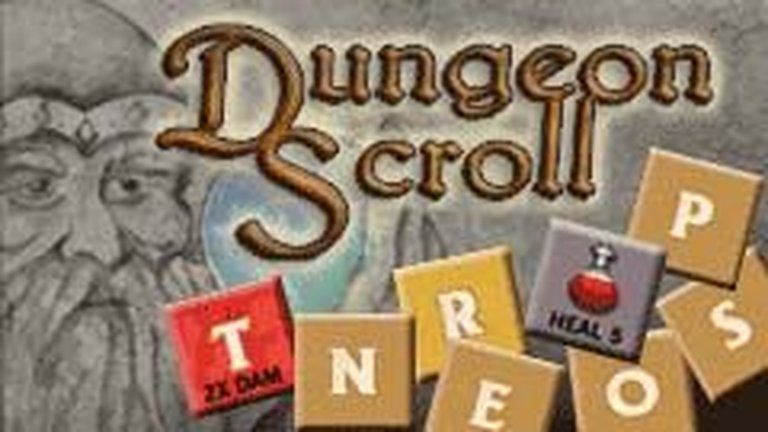
Dungeon Scroll is a innovative puzzle game set in a fantasy dungeon where players embark on a crawl armed only with letters, forming words to defeat monsters across levels using a fixed set of letters without repetition. Longer words inflict more damage, special tiles provide bonuses like healing or multipliers, and completing levels yields items, with three skill levels ensuring accessibility for kids and adults alike.
Gameplay Videos
Dungeon Scroll Free Download
Dungeon Scroll Cheats & Codes
PC
Start the game with the -DEBUG command line parameter. Then, press one of the following keys during game play.
| Code | Effect |
|---|---|
| 5 | Cast “Cheat” spell to damage opponent |
| = | New Opponent |
| + | Dungeon count up |
| – | Dungeon count down |
Dungeon Scroll: Review
Introduction
Imagine plunging into the shadowy depths of a classic dungeon crawler, sword in hand—except your weapon is a rack of jumbled letters, and your spells are everyday words forged in the heat of real-time combat. Released in 2003, Dungeon Scroll by Robinson Technologies boldly fused the cerebral challenge of word puzzles with the pulse-pounding tension of RPG dungeon delving, creating a genre mashup that was as innovative as it was addictive. Developed by indie visionary Seth A. Robinson and his wife Akiko Robinson, this shareware gem earned a finalist spot at the 2004 Independent Games Festival, cementing its status as a darling of the early indie scene. In an era dominated by sprawling MMOs and high-fidelity shooters, Dungeon Scroll proved that simplicity could spark profound engagement. My thesis: This unassuming title isn’t just a novelty—it’s a masterclass in elegant design that rewards linguistic agility, strategic foresight, and quick thinking, earning its place as a timeless underdog in gaming history.
Development History & Context
Robinson Technologies, founded by Seth A. Robinson in 1989 after his BBS door game Legend of the Red Dragon, was already a name in niche circles by the early 2000s, thanks to cult hits like Dink Smallwood. Dungeon Scroll emerged from this indie ethos, designed and coded primarily by Seth and Akiko Robinson in Hiroshima, Japan—a detail that underscores the game’s global, collaborative spirit, with dictionary contributions from linguists across Spanish, Russian, French, Swedish, and Italian locales. The Enhanced North American Benchmark Lexicon (ENABLE) by Alan Beale powered its robust word validation, while a cadre of beta testers (including notables like Geoff Howland, who worked on 51 other games) ironed out bugs.
Launched as shareware in 2003 for Windows—a 3.5 MB download perfectly suited to dial-up era constraints—the game navigated a landscape of post-Diablo II dungeon crawlers and rising casual puzzle titles like Bejeweled. Technological limits were minimal: mouse-driven input, fixed/flip-screen visuals, and real-time pacing on modest PCs emphasized accessibility over graphical spectacle. A Gold edition in 2005 added a progress map for its 25 dungeons, while ports followed: iPhone (2009), Android/webOS (2010), and even a 2018 browser version. Priced at $7.99–$14.95 with free upgrades and global high scores, it epitomized indie sustainability. In the shadow of AAA behemoths, Dungeon Scroll thrived on word-of-mouth and forums, reflecting the era’s shift toward digital distribution and bite-sized innovation.
Narrative & Thematic Deep Dive
Dungeon Scroll‘s narrative is refreshingly minimalist, eschewing verbose lore for pure experiential storytelling—a lone hero’s perilous descent into 25 procedurally challenging dungeons teeming with rats, skeletons, and dragons. There’s no overwrought plot or named protagonist; instead, the “story” unfolds through progression: clear a level’s monsters with your letter rack, claim items, and advance, all tracked in the Gold edition’s map. Boss encounters escalate tension, demanding longer words against tankier foes, evoking classic roguelikes like Dungeon Quest (1979) but with lexical flair.
Characters are archetypal fantasy fodder—lowly rats for quick kills, hulking dragons as climactic threats—but they serve deeper themes. Dialogue is absent, replaced by evocative enemy sprites and health bars that narrate peril wordlessly. Thematically, the game champions intellect as power: words aren’t mere tools but “magic spells,” longer ones unleashing greater havoc, symbolizing how vocabulary expands one’s arsenal. This subverts RPG tropes of brute strength, promoting strategic restraint (no word repeats per level) and adaptability amid real-time pressure. Special tiles like the Oracle (revealing optimal words) nod to divine inspiration, while Refresh evokes rebirth. Broader motifs of addiction and growth shine through: RTsoft’s site boasts it “makes you smarter,” blending education with escapism. In a post-9/11 gaming world craving empowerment, Dungeon Scroll whispers that knowledge conquers darkness—profound in its subtlety.
Gameplay Mechanics & Systems
At its core, Dungeon Scroll deconstructs the dungeon crawler into a taut word-construction loop, blending Scrabble-like anagramming with real-time survival. Each level provides a fixed rack of eight letter tiles (reusable but non-repeatable words), forcing creative permutation against encroaching enemies. Damage scales with word length—e.g., “rat” nicks for 3, while “stardom” devastates for 7—compounded by specials: +10 damage, 2x/10x multipliers, Heal 5, Oracle (auto-best word), and Refresh (new rack). Enemies chip your health relentlessly, creating frantic decisions: spam short words or hunt anagrams?
Progression ties to three difficulties:
– Kid Mode: Double damage, extra health—ideal for novices or families.
– Normal: Balanced baseline.
– Wizard: Starts at Dungeon 4, expert gauntlet.
UI is spartan yet intuitive: drag tiles to form words, mouse-click to cast; a health bar, enemy queue, and used-word log keep focus sharp. Flaws emerge in repetition—letter droughts strand players—and boss fights demand prescience, but innovations like global scores foster replayability. Loops build mastery: early levels teach basics, mid-game punishes repetition, late-game rewards esoterica (e.g., “qat” from awkward Qs). No inventory bloat; items are mere level rewards. This purity elevates it beyond gimmick, demanding cognitive multitasking in a genre often passive.
World-Building, Art & Sound
The fantasy setting is a moody, abstract underworld: flip-screen dungeons evoke Gauntlet or early Dungeon Master, with 1st-person perspective framing foes against stony backdrops. Visuals are “sweet” pixel art—simple sprites for rats (scuttling vermin), skeletons (rattling undead), dragons (fiery behemoths)—prioritizing clarity over detail. Fixed screens flip on progression, building claustrophobic tension without modern 3D sprawl. Atmosphere thrives on implication: murky depths imply eldritch horrors, item pickups hint at lost treasures.
Sound design amplifies immersion—”snazzy” effects punctuate casts (zaps for spells, crunches for kills), with rock-solid pacing underscored by urgent chimes as health dips. No orchestral score, but ambient dungeon hums and monster growls create urgency, syncing perfectly with real-time stress. These elements coalesce into addictive flow: visuals cue threats, audio demands haste, forging a cohesive, treasure-hunting thrill that punches above its indie weight.
Reception & Legacy
Launch reception was glowing in indie circles: Game Tunnel awarded 90/100 (“Puzzle Game of the Year,” worth $19.99), praising friend-friendly fun; AppSpy gave iPhone 60/100 (great for spellers, niche otherwise). MobyGames aggregates 75% critics/4.7/5 players; sites like The Gratis Gamer (9.5/10) and The Underdogs hailed its mechanics. IGF finalist status spotlighted it amid 2004’s innovators, though commercial scale stayed modest—shareware success via RTsoft sales and ports ensured longevity.
Legacy endures: 25 dungeons and ports (up to 2018 browser) sustained a cult via global leaderboards. It influenced word-RPG hybrids (Bookworm Adventures), prefiguring mobile hits like Letter Quest. Robinson’s oeuvre (Growtopia, Dynamite Jack) amplified its indie cred. Today, amid wordlemania, it feels prescient—preserved on Archive.org, a testament to accessible genius.
Conclusion
Dungeon Scroll masterfully weds wordplay’s wit with dungeon delving’s grit, its real-time ingenuity and scalable challenge transcending eras. Minor UI quirks and sparse narrative pale against addictive depth and educational charm. As a 2003 indie pinnacle—IGF-nominated, critically adored, enduringly ported—it claims a vital spot in puzzle-RPG history: proof that bold ideas outlast bombast. Verdict: Essential Classic (9/10)—dust off your lexicon and delve in.