
- Release Year: 2016
- Platforms: Linux, Macintosh, Windows
- Publisher: Humble Hearts LLC
- Developer: Humble Hearts LLC
- Genre: Action, Platformer, RPG
- Perspective: Side view
- Game Mode: Single-player
- Gameplay: Combo system, Exploration, Hack and Slash, Platforming, Quest
- Setting: Anthropomorphic, Fantasy
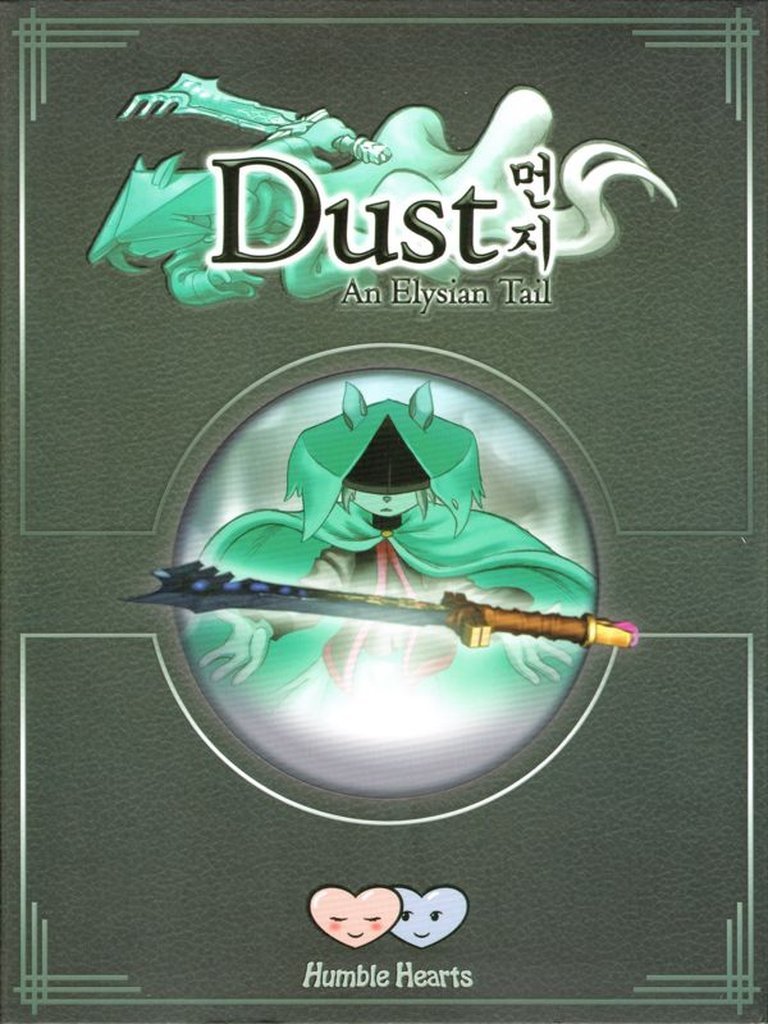
Description
Dust: An Elysian Tail is a 2D action RPG set in a beautiful, hand-painted world. The player assumes the role of Dust, a mysterious warrior who awakens in a forest with no memory of his past. Guided by the sentient sword, Ahrah, and its tiny guardian, Fidget, Dust embarks on an epic quest to discover his own identity while defending the land of Falana from a sinister, ancient threat.
Dust: An Elysian Tail (Limited Edition): Review
In the annals of indie gaming history, few titles shine as brightly or as defiantly as Dust: An Elysian Tail. A game born from a single developer’s Herculean effort, it emerged during a pivotal era for independent development, proving that a small team—or in this case, largely one man—could craft an experience to rival the polish and depth of AAA productions. This review, however, is not solely about the acclaimed 2012 base game. It is a deep, archival dive into its 2016 physical incarnation: the Dust: An Elysian Tail (Limited Edition). This box set, distributed by IndieBox, represents more than just a collection of physical goods; it is a time capsule, a love letter, and a definitive artifact celebrating one of the most remarkable achievements of the Xbox Live Arcade generation.
Introduction
From the moment it launched on Xbox Live Arcade in 2012, Dust: An Elysian Tail was an anomaly. In an industry increasingly dominated by massive teams and budgets, here was a game primarily conceived, animated, and programmed by a single individual, Dean Dodrill. It was a gorgeous, hand-animated metroidvania that wore its heart on its sleeve, boasting a surprisingly deep combat system and a narrative that dared to be earnest in an age of cynicism. The Limited Edition, released four years later, is the ultimate tribute to this achievement. It transforms a digital masterpiece into a tangible heirloom, a box brimming with collectibles that honor every aspect of its creation. This review posits that while the core game remains the star, this Limited Edition is an essential piece for historians and collectors, perfectly encapsulating the passion of its creator and the indie spirit it embodies.
Development History & Context
To understand the significance of this Limited Edition, one must first appreciate the monumental effort behind the original game. Developed by Dean Dodrill under the studio name Humble Hearts, Dust began its life as a submission for Microsoft’s Dream.Build.Play challenge in 2009. Built using the XNA framework, it was a product of a specific technological moment—a time when Microsoft actively fostered indie development on its platform. The gaming landscape was on the cusp of an indie revolution, with games like Braid and Super Meat Boy proving that small projects could achieve critical and commercial success.
Dodrill’s journey was legendary. Initially planned as a short project, development ballooned to nearly four years of solitary, intensive work. He handled the bulk of the programming, art, and animation—reportedly creating over 65,000 frames by hand. This solo development ethos is central to the game’s identity; it is a singular vision made real. The Limited Edition, released in May 2016 by Humble Hearts LLC and distributed by IndieBox, Inc., arrived at a different time. The indie scene had exploded, and services like IndieBox were emerging to satisfy a growing desire for physical media in a digital age. This box wasn’t just a release; it was a preservation effort and a celebration, arriving after the game had already cemented its legacy on Xbox 360, Windows, and Linux.
The IndieBox Phenomenon
IndieBox operated on a subscription model, delivering limited-run, physical collector’s editions of indie games each month. Their product for Dust exemplifies their mission: to provide the tactile, curated experience of a big-box release to deserving indie titles. This context is crucial. This edition exists because of the game’s stature and the community’s demand to own a piece of it beyond a Steam library.
Narrative & Thematic Deep Dive
Dust: An Elysian Tail tells the story of its amnesiac protagonist, Dust, who awakens in a forest with no memory, guided by a mysterious, sentient sword named Ahrah and its tiny, fiery, and often hilarious nimbat guardian, Fidget. The narrative unfolds across the land of Falana, a world inhabited by anthropomorphic animals, as Dust seeks to discover his past and confront the mysterious and tyrannical General Gaius.
The story is a classic tale of identity, redemption, and the moral gray areas between war and peace. Dust’s journey is one of self-discovery, where his lost memories slowly return to reveal a tragic and complex past. He learns he was once a man named Jin, a respected soldier whose actions inadvertently led to a great tragedy, forcing him to confront the weight of his past sins and the person he has become.
Characters and Dialogue
The characters are brought to life through exceptional voice acting, a rarity for indie titles of its time. Lucien Dodge delivers a nuanced performance as Dust/Jin, conveying a deep sense of confusion, resolve, and sorrow. Kimlinh Tran’s Fidget provides impeccable comic relief without becoming annoying, and Edward Bosco gives the blade Ahrah a gravitas that makes his wisdom believable. The supporting cast, including Amber Lee Connors as Ginger and River Kanoff as Gaius, is uniformly strong, lending credibility to the world.
The dialogue is well-written, balancing Fidget’s levity with the heavier themes of the main plot. It explores ideas of guilt—can one atone for sins they don’t remember committing? It questions blind obedience to authority and the cyclical nature of violence. The game doesn’t shy away from dark moments, making its hopeful conclusion feel earned rather than saccharine.
Gameplay Mechanics & Systems
At its core, Dust is a metroidvania, but its genius lies in the seamless fusion of exploration with a deeply satisfying and fluid combat system.
The Core Combat Loop
Combat is built on two primary mechanics: Dust’s blade Ahrah and Fidget’s magic. The player can execute ground and aerial combos with the sword, but the true innovation is the “Dust Storm.” By pressing two buttons, Dust initiates a swirling vortex attack that can be sustained, lifting enemies into the air and allowing for extended combos. The key strategic element is that Fidget’s projectiles are sucked into this vortex, multiplying into a devastating screen-filling barrage. This creates a brilliant risk-reward dynamic: maintaining the storm builds huge combo multipliers for more experience but leaves Dust momentarily stationary and vulnerable.
Progression and Exploration
The progression system is robust. Defeated enemies drop XP and materials. Leveling up increases health, attack, and defense stats. Materials are used at blacksmiths to craft new gear, from armor to trinkets that grant various bonuses, encouraging exploration and backtracking to previously inaccessible areas as new abilities are acquired—a double jump, a wall climb, etc.
The map is vast and interconnected, filled with secrets, side quests, and hidden areas. The UI is clean and intuitive, clearly marking objectives and collectibles. The difficulty is well-balanced, offering a challenge that rewards mastery of its combat systems without ever feeling unfairly punishing. It is a masterclass in game feel; controlling Dust is incredibly responsive, and the kinetic feedback from landing a 1000-hit combo is endlessly gratifying.
World-Building, Art & Sound
This is where Dust separates itself from virtually every other indie title of its generation.
Visual Direction and Art
Dean Dodrill’s background in animation is evident in every frame. The game is a visual marvel, featuring lush, painted backgrounds and beautifully fluid, hand-drawn 2D character animation. The world of Falana is diverse, ranging from serene bamboo forests and sun-drenched meadows to oppressive volcanic caverns and snowy mountain passes. The anthropomorphic character designs are expressive and full of personality. The Limited Edition pays direct homage to this artistry by including a “Cel art print,” mirroring the traditional animation process the game emulates.
Sound Design and Music
The audio landscape is equally magnificent. The soundtrack, composed by HyperDuck SoundWorks (with additional music by Funky Rustic), is orchestral, melodic, and deeply emotive. Tracks like “The Blackmoor Mountains” or “Dawn of a New Time” are unforgettable, perfectly underscoring the epic scope and emotional beats of the journey. The inclusion of two audio CDs of the soundtrack in the Limited Edition is not a mere bonus; it is an acknowledgment that the score is a fundamental pillar of the experience. The sound design is crisp, from the ring of Ahrah slicing through the air to the satisfying thwip of Fidget’s fireballs.
Reception & Legacy
Upon its initial release in 2012, Dust: An Elysian Tail was met with widespread critical acclaim. It won several awards, including the Xbox Live Arcade Game of the Year, and was praised for its stunning visuals, tight combat, and impressive scope from a one-man team. It was a commercial success, standing out in a crowded marketplace and becoming a flagship title for the potential of indie games.
Its legacy is multifaceted. Firstly, it remains a benchmark for solo development ambition. Secondly, it influenced a wave of metroidvanias that followed, demonstrating how a deep, combo-based combat system could be integrated into the genre. While its anthropomorphic world drew some superficial and misguided comparisons to “furry” culture, this critique largely faded in the face of its overwhelming quality and earnest storytelling.
The Limited Edition itself is a part of that legacy. It represents a moment in time when the physical collectible market for indie games blossomed. For a game so deeply cherished by its fans, this box set is the ultimate expression of that devotion. It preserves the game in a physical, DRM-free form (on a uniquely designed USB flash drive shaped like Ahrah) and surrounds it with artifacts—a cloth map, a plush Fidget, a manual—that were once standard in gaming but have now become rare treasures.
Conclusion
Dust: An Elysian Tail is a timeless classic. It is a masterpiece of design, artistry, and heart that continues to resonate over a decade later. The Limited Edition by IndieBox is the definitive way to own and celebrate this achievement. It is more than a box; it is a museum exhibit dedicated to a modern indie legend. Every item inside—from the soundtrack CDs to the certificate of authenticity for the art print—is curated with a deep respect for the source material.
For players, the base game within remains a near-flawless execution of the metroidvania genre. For historians and collectors, the Limited Edition is an invaluable artifact, a beautifully packaged testament to the passion of Dean Dodrill and the vibrant indie culture it helped to elevate. It is a essential piece of video game history, preserving not just a game, but the proof of what a single determined vision can accomplish.