
- Release Year: 2018
- Platforms: G-cluster, PlayStation 4, Windows, Xbox One
- Publisher: Koei Tecmo America Corp., Koei Tecmo Games Co., Ltd.
- Developer: Koei Tecmo Games Co., Ltd., Omega Force
- Genre: Action
- Perspective: Behind view
- Game Mode: Single-player
- Gameplay: Hack and Slash, Open World, RPG elements, Sandbox
- Setting: China (Ancient, Fantasy, Imperial)
- Average Score: 62/100
Description
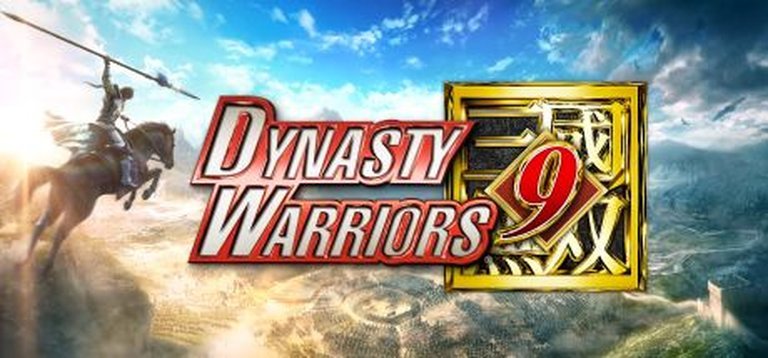
Dynasty Warriors 9 is an action-packed hack-and-slash game set in ancient China, blending historical and fantasy elements. Players engage in large-scale battles across an open-world environment, taking on the roles of legendary warriors from the Three Kingdoms era. The game features RPG elements, allowing for character customization and progression, while delivering the series’ signature intense combat and dramatic storytelling.
Gameplay Videos
Where to Buy Dynasty Warriors 9
Dynasty Warriors 9 Free Download
Dynasty Warriors 9 Cracks & Fixes
Dynasty Warriors 9 Patches & Updates
Dynasty Warriors 9 Mods
Dynasty Warriors 9 Guides & Walkthroughs
Dynasty Warriors 9 Reviews & Reception
metacritic.com (65/100): Koei Tecmo has done a remarkable job of telling the many stories of the many people that make Romance of the Three Kingdoms such a compelling book and period of history.
ign.com (58/100): Open-world doesn’t always mean better.
vg247.com (65/100): Dynasty Warriors 9 is a perfect example of why you should be careful what you wish for.
opencritic.com (62/100): The musou genre needed new ideas – but reinventing it as a shoddy open-world game wasn’t the answer.
wayofthedogg.com : The open-world format initially felt refreshing, but the repetitive missions and performance issues eventually took a toll on my enjoyment.
Dynasty Warriors 9: A Bold but Flawed Evolution of a Legendary Franchise
Introduction
Dynasty Warriors 9 (2018) stands as one of the most ambitious and divisive entries in Koei Tecmo’s long-running Dynasty Warriors series. Developed by Omega Force, this installment sought to revolutionize the franchise by transitioning from its traditional, linear battlefield design to an expansive open-world format. Drawing inspiration from Romance of the Three Kingdoms, the game attempts to immerse players in the tumultuous era of ancient China’s Three Kingdoms period. However, while its aspirations were lofty, the execution was met with mixed reactions, leaving a complex legacy in the annals of gaming history.
This review will dissect Dynasty Warriors 9 across multiple dimensions—its development history, narrative depth, gameplay mechanics, world-building, and reception—to provide a comprehensive analysis of its strengths, weaknesses, and lasting impact.
Development History & Context
The Studio and Vision
Omega Force, the development team behind Dynasty Warriors 9, is renowned for its expertise in crafting hack-and-slash games, particularly within the Warriors franchise. The studio’s previous titles, such as Dynasty Warriors 8 and Samurai Warriors, had established a formula that blended fast-paced combat with historical narratives. However, by the mid-2010s, the franchise faced criticism for stagnation, with many fans and critics arguing that the series had grown repetitive.
In a 2016 interview with Famitsu, Kenichi Ogasawara, a brand manager at Koei Tecmo, acknowledged these concerns, stating that the evolution from Dynasty Warriors 7 to 8 had been “insufficient.” This admission set the stage for Dynasty Warriors 9, which was envisioned as a radical departure from tradition. The game was officially announced in December 2016, with a promise to introduce an open-world format—a first for the series.
Technological Constraints and Challenges
The transition to an open-world design presented significant technical challenges. The Katana Engine, which powered Dynasty Warriors 9, was tasked with rendering a vast, traversable map of ancient China, complete with dynamic weather systems, day-night cycles, and NPC interactions. However, the engine struggled to maintain consistent performance, particularly on base consoles like the PlayStation 4 and Xbox One. Frame rate drops, pop-in textures, and AI pathfinding issues plagued the game, detracting from the immersive experience Omega Force had envisioned.
Additionally, the game’s localization marked a shift from previous entries. For the first time, Dynasty Warriors 9 featured a Chinese voice track alongside Japanese and English options, reflecting Koei Tecmo’s efforts to appeal to a broader, more historically authentic audience. However, the English voice acting was criticized for its lack of enthusiasm, further highlighting the game’s uneven production values.
The Gaming Landscape at Release
Dynasty Warriors 9 launched in February 2018, a period marked by the rise of open-world games like The Legend of Zelda: Breath of the Wild and Horizon Zero Dawn. These titles set high benchmarks for world design, player freedom, and technical polish—standards that Dynasty Warriors 9 struggled to meet. The game’s reception was further complicated by its release alongside other major titles, such as Monster Hunter: World and Shadow of the Colossus (Remake), which overshadowed its launch.
Narrative & Thematic Deep Dive
Plot Structure and Historical Fidelity
Dynasty Warriors 9 retells the epic saga of Romance of the Three Kingdoms, a 14th-century novel that chronicles the power struggles of the late Han Dynasty and the subsequent Three Kingdoms period. The game’s story mode is divided into 13 chapters, each focusing on pivotal events such as the Yellow Turban Rebellion, the Battle of Red Cliffs, and the fall of Shu. Players can experience these events through the perspectives of 90 playable characters, each with their own unique narrative arcs.
The game’s narrative structure is one of its most ambitious features. Unlike previous Dynasty Warriors titles, which often presented disjointed, battle-focused vignettes, Dynasty Warriors 9 attempts to weave a cohesive, continuous narrative. Players can choose to follow the stories of key figures like Liu Bei, Cao Cao, or Sun Jian, with each character’s journey unfolding across multiple chapters. This approach allows for a deeper exploration of the political intrigue, alliances, and betrayals that defined the era.
However, the execution of this narrative is uneven. While the game’s mission structure—where players complete side quests to weaken enemy forces before facing major battles—adds a sense of strategic depth, it also leads to repetition. Many missions involve similar objectives, such as capturing forts or defeating minor generals, which can make the story feel padded and drawn out.
Character Depth and Dialogue
The game’s roster of 90 playable characters is a testament to its ambition, but the depth of characterization varies widely. Longtime favorites like Zhao Yun, Guan Yu, and Zhuge Liang receive substantial screen time and development, while newer or lesser-known characters often feel underutilized. The dialogue, while functional, lacks the emotional weight and nuance of the source material, with many exchanges feeling perfunctory or overly expositional.
One of the game’s most notable narrative choices is its inclusion of female warriors, a departure from historical accuracy. While women like Sun Shangxiang and Zhurong are depicted as formidable fighters, their presence on the battlefield is a fictional embellishment. This creative liberty, while empowering, underscores the game’s prioritization of gameplay variety over historical fidelity.
Themes of Power, Loyalty, and Ambition
At its core, Dynasty Warriors 9 explores themes of power, loyalty, and ambition, mirroring the moral complexities of Romance of the Three Kingdoms. The game’s narrative highlights the contrasting leadership styles of its three central figures:
– Cao Cao, the ruthless but pragmatic warlord of Wei, who believes in ruling through strength and cunning.
– Liu Bei, the benevolent leader of Shu, who values loyalty and justice above all else.
– Sun Quan, the strategic ruler of Wu, who balances diplomacy with military prowess.
These themes are reinforced through the game’s branching storylines, where players’ choices can alter the course of history. For example, completing certain side missions can unlock “hypothetical” scenarios, allowing players to explore alternate outcomes, such as Wei’s victory at the Battle of Red Cliffs.
Gameplay Mechanics & Systems
Core Gameplay Loop
Dynasty Warriors 9 retains the series’ signature “one vs. thousands” combat, where players mow down hordes of enemies with over-the-top attacks. However, the open-world format introduces new mechanics that attempt to blend action with light role-playing elements.
The game’s mission structure is designed to simulate a military campaign, with players completing a series of objectives to weaken enemy forces before facing a final boss. This “mission tree” system allows players to set their own pace, choosing whether to rush toward the main objective or methodically complete side quests to gain experience and reduce the enemy’s strength.
Combat and Character Progression
The combat system in Dynasty Warriors 9 has been overhauled from previous entries. The traditional light/heavy attack combo system has been replaced with a more dynamic setup:
– Flow Attacks: Context-sensitive combos that change based on enemy status (e.g., airborne, stunned).
– Trigger Attacks: Special moves that can stun, knock down, or launch enemies, followed by Flow Attacks for extended combos.
– Reactive Attacks: Counterattacks or finishing moves triggered by pressing the right button at the correct moment.
– Musou Attacks: Powerful, screen-clearing special moves that deplete the Musou gauge.
While these mechanics add depth to combat, they also introduce complexity that may overwhelm newcomers. Additionally, the game’s stamina system, which limits actions like double jumping and wall climbing, can feel restrictive during intense battles.
Character progression is tied to a traditional leveling system, with players earning experience points by completing missions and defeating enemies. Weapons and armor can be upgraded using materials gathered through exploration, fishing, and hunting. However, the lack of meaningful customization options—such as skill trees or branching upgrades—limits the depth of progression.
Open-World Exploration and Activities
The open-world design is Dynasty Warriors 9’s most ambitious feature, allowing players to traverse a vast map of ancient China on foot, horseback, or by boat. The world is divided into regions, each with its own distinct geography, from snow-covered plains to dense jungles. Key locations, such as Luoyang and the Yellow River, are faithfully recreated, adding to the game’s historical immersion.
However, the open world is also one of the game’s biggest weaknesses. Despite its size, the world often feels empty, with repetitive side activities and a lack of meaningful NPC interactions. Cities and villages, while visually impressive, are largely devoid of life, serving primarily as hubs for merchants and fast travel points.
The game includes a variety of side activities, such as:
– Fishing and Hunting: Gathering materials for crafting.
– Hideaways: Customizable safehouses where players can cook, craft, and rest.
– Watchtowers and Waymarks: Revealing nearby resources and fast travel points.
While these activities add variety, they often feel shallow and underdeveloped. For example, fishing and hunting are simplistic mini-games with little depth, and hideaways lack the social interactions found in games like Assassin’s Creed or The Witcher 3.
AI and Enemy Behavior
The game’s AI is another area of concern. Enemy soldiers and generals often exhibit poor pathfinding, with units frequently getting stuck on terrain or failing to respond to player actions. During large-scale battles, the AI’s inability to mount a credible defense—such as failing to man archery towers or gatehouses—breaks immersion and undermines the game’s strategic depth.
World-Building, Art & Sound
Setting and Atmosphere
Dynasty Warriors 9’s open-world design is its most ambitious attempt at world-building, offering players a chance to explore a meticulously crafted version of ancient China. The game’s map spans diverse regions, from the arid deserts of the north to the lush forests of the south, each reflecting the historical and cultural diversity of the Three Kingdoms era.
The game’s day-night cycle and dynamic weather system add to its atmospheric depth. Rainstorms can obscure visibility, while nighttime missions introduce stealth mechanics, allowing players to sneak past enemy patrols. These elements, while impressive in theory, are often underutilized, with weather effects having minimal impact on gameplay.
Visual Direction and Character Design
Visually, Dynasty Warriors 9 is a mixed bag. The game’s character models are detailed and expressive, with each warrior sporting unique armor and weapons. However, the open world suffers from technical limitations, including pop-in textures, low-resolution assets, and inconsistent frame rates. These issues are particularly noticeable on base consoles, where performance drops are frequent during large-scale battles.
The game’s character designs strike a balance between historical authenticity and the series’ trademark flamboyance. While some characters, like Xu Zhu, have been toned down to reflect more realistic proportions, others retain their exaggerated, larger-than-life appearances. This inconsistency can be jarring, particularly for longtime fans accustomed to the series’ more stylized aesthetic.
Sound Design and Music
The sound design in Dynasty Warriors 9 is functional but unremarkable. The game’s soundtrack blends traditional Chinese instrumentation with hard rock and heavy metal, a staple of the Warriors series. While the music is energetic and fitting for large-scale battles, it lacks the memorability of past entries.
The voice acting is another area of inconsistency. The Chinese voice track is a welcome addition, adding authenticity to the game’s historical setting. However, the English voice acting is often criticized for its wooden delivery, with many characters sounding disinterested or overly dramatic.
Reception & Legacy
Critical Reception
Dynasty Warriors 9 received “mixed or average” reviews upon release, with critics praising its ambitious open-world design but criticizing its technical shortcomings. On Metacritic, the game holds scores of 65 (PS4), 56 (Xbox One), and 57 (PC), reflecting its divisive reception.
Praise:
– Narrative Depth: Critics like Digitally Downloaded praised the game’s faithful adaptation of Romance of the Three Kingdoms, calling it “the most perfect realization of everything Koei Tecmo has been aiming for.”
– Open-World Potential: Chalgyr’s Game Room and Hey Poor Player highlighted the open world as a bold evolution for the series, offering new strategic possibilities.
– Combat Variety: The revised combat system, with its Flow and Trigger Attacks, was commended for adding depth to the series’ traditional hack-and-slash gameplay.
Criticism:
– Technical Issues: GameStar and IGN criticized the game’s poor performance, buggy AI, and lackluster visuals, with some calling it “unfinished.”
– Repetitive Gameplay: Worth Playing and Games TM noted that the open world felt empty, with repetitive side quests and a lack of meaningful content.
– Lack of Multiplayer: The absence of cooperative or competitive multiplayer modes, a staple of previous entries, was a significant omission.
Commercial Performance
Despite its mixed reception, Dynasty Warriors 9 performed well commercially, selling over 117,000 copies in its first week in Japan. However, its long-term sales were overshadowed by the more polished Dynasty Warriors 9: Empires (2021), which refined the open-world concept with a greater focus on strategy.
Influence and Legacy
Dynasty Warriors 9’s legacy is one of ambition tempered by execution. While it failed to meet the high standards set by contemporary open-world games, it laid the groundwork for future entries in the series. Dynasty Warriors 9: Empires, for example, built upon its open-world foundation while addressing many of its flaws, such as improved AI and a more focused narrative.
The game’s reception also highlighted the challenges of transitioning a long-running franchise into a new genre. While the open-world format offered fresh possibilities, it also exposed the limitations of the Katana Engine and Omega Force’s inexperience with large-scale world design.
Conclusion
Dynasty Warriors 9 is a flawed but fascinating experiment—a game that dared to redefine a beloved franchise but ultimately fell short of its ambitions. Its open-world design, while innovative, was hampered by technical limitations, repetitive gameplay, and a lack of polish. Yet, beneath its rough edges lies a game that genuinely attempts to honor the epic scale and complexity of Romance of the Three Kingdoms.
For longtime fans of the series, Dynasty Warriors 9 offers a fresh perspective on familiar battles, even if its execution leaves much to be desired. For newcomers, it serves as a gateway to the rich history and mythology of the Three Kingdoms era, albeit one that requires patience and a willingness to overlook its shortcomings.
Final Verdict: 6.5/10 – A Bold but Flawed Evolution
Dynasty Warriors 9 is not the definitive Warriors experience, but it is a necessary step in the franchise’s evolution. Its legacy will be defined not by its flaws, but by the lessons it provides for future entries—a testament to the enduring appeal of the Three Kingdoms saga and the potential of open-world design in historical action games.