
- Release Year: 2022
- Platforms: Nintendo Switch, Windows
- Publisher: Atomic Fabrik, Midnight Works S.r.l.
- Developer: Atomic Fabrik
- Genre: Adventure, Simulation
- Perspective: Behind view
- Game Mode: Single-player
- Gameplay: Open World, Sandbox
- Setting: Fantasy
Description
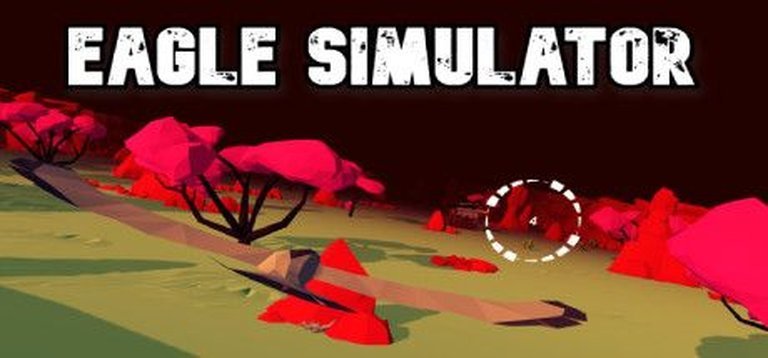
Eagle Simulator is a fantasy-themed adventure and simulation game where players take on the role of an eagle in a sandbox open-world environment. Set in multiple scenic landscapes with dynamically changing weather, the game offers five different eagles to choose from and emphasizes direct flight control, challenging players to achieve speed while avoiding mistakes in their mission.
Eagle Simulator Guides & Walkthroughs
Eagle Simulator: Soaring Ambitions and Turbulent Realities in a Niche Flight Simulator
Introduction: The Allure of the Avian Perspective
In the vast and varied ecosystem of video games, the animal simulator occupies a peculiar and often endearing niche. From the chaotic sandbox of Goat Simulator to the more earnest survival struggles of Wolf Simulator, the genre promises a simple yet profound premise: what is it like to be another creature? Eagle Simulator, released in January 2022 for Windows and later ported to the Nintendo Switch, stakes its claim on this premise with a focus on the majestic, predatory, and notoriously difficult-to-condense experience of a bald eagle. Its official description—”If you’ve ever wondered what it’s like to be a bird, then Eagle Simulator is just for you!”—is both its mission statement and its primary challenge. This review argues that Eagle Simulator is a game of stark, unfulfilled potential. It successfully captures the breathtaking visual perspective and core biological drives of its subject but is ultimately hamstrung by a lack of depth, repetitive mechanics, and a failure to evolve beyond a basic, often shallow, proof-of-concept. Its legacy will likely be that of a curious footnote in the simulator boom of the 2010s–2020s: a title that soars in moments of sublime flight only to crash land under the weight of its own limited scope.
Development History & Context: From a Small Studio’s Nest
The Architects: Atomic Fabrik and a Gluten-Free Promise
Developed by the small, independent studio Atomic Fabrik, with Cristian Manolachi credited, Eagle Simulator bears the hallmarks of a low-budget, passionate project. The studio’s other known work, as hinted by the “Gluten Free Games” mention on the Softonic listing, suggests a developer with a playful, perhaps quirky, identity, unburdened by the expectations of AAA production. The game was built in Unity, the ubiquitous engine of indie development, which provided accessible tools for 3D environments and basic physics but also imposed technological constraints typical of small-team projects.
Release Context: A Crowded Sky
The game emerged in early 2022, a period saturated with both high-profile releases and a thriving indie scene. It directly followed the wave of “quirky simulators” pioneered by Goat Simulator (2014) but leaned more toward the “serious survival” angle seen in titles like TheHunter: Call of the Wild or Minecraft‘s survival mode. Its competition wasn’t other eagle games—the field is virtually nonexistent—but the broader animal simulation genre and the expectation for meaningful open-world experiences. The decision to release simultaneously on Steam (via publisher Atomic Fabrik) and later on the Nintendo Switch (published by Midnight Works S.r.l. in September 2022) indicated a strategy to reach both PC sandbox enthusiasts and the Switch’s casual, portable audience. However, the Switch port’s metadata on sites like NSG Reviews and Switch Scores suggests it was treated as a minor, almost forgotten release, lacking any critic reviews and flagged with a “quality filter” due to the publisher’s track record.
Vision vs. Constraints
The developers’ vision, as per the Steam ad blurb, was singular: to let players experience the speed and peril of an eagle. This focus is both a strength and a critical weakness. The technological constraints of a solo/small team using Unity meant a stylized, low-poly but “colorful” and “HD” (as per marketing) graphical style—prioritizing broad environmental beauty over intricate detail. The “fantasy” setting (per MobyGames) likely refers to the game’s sanitized, game-y version of nature, devoid of true ecological complexity but filled with mission markers and clear objectives. The result is a game that feels less like a documentary simulation and more like an arcadey interpretation of the eagle fantasy.
Narrative & Thematic Deep Dive: The Silent Sky
Plot and Structure: A Mosaic of Missions
Eagle Simulator possesses no traditional narrative. There is no story campaign, no characters with dialogue, and no overarching plot. Its “narrative” is entirely emergent and systemic, composed of a series of discrete missions or objectives hinted at in player guides (“fly through the circles and complete the missions”). The player’s “story” is one of survival and proliferation: find food, find a mate, hatch and raise chicks, and avoid death. This minimalist approach aligns with the “sandbox / open world” and “direct control” interface tags from MobyGames, placing the onus entirely on player-driven goals.
Themes: Freedom, Predation, and the Illusion of Choice
The game explores several primal, albeit simplistic, themes:
1. The Majesty of Flight: The core theme is the exhilaration of soaring. The game’s marketing repeatedly emphasizes this (“soar through the skies,” “feeling the wind in your face”). The act of flying is presented as the primary reward, a digital approximation of avian freedom.
2. The Food Chain as Gameplay: It unflinchingly embraces the eagle’s role as an apex predator. The “pro” listed on Softonic—”Good variety to the gameplay”—includes “catching baby rabbits and other prey and eating it while it is still moving.” This introduces a theme of necessary violence for survival, stripped of moral complication. It’s a mechanic, not a moral dilemma.
3. Family and Legacy: The mechanic of finding a mate, raising chicks, and having them “assist you in combat” introduces a rudimentary legacy system. It transforms the simulation from a solitary life to a familial one, giving the player a longer-term goal beyond immediate survival.
4. Man vs. Nature (or Man as Threat): The inclusion of “hunters and other predators” as hazards (from the Softonic description) adds a layer of external threat. However, given the game’s fantasy, low-stakes presentation, this theme is superficial. Hunters are likely just another NPC obstacle to avoid, not a commentary on conservation.
The dialogue, or lack thereof, is telling. The only “voice” is the game’s systems—pings for hunger/thirst, the beep of a completed mission circle. This silence reinforces the theme of pure, instinctual existence. The game posits that to be an eagle is to do, not to reflect.
Gameplay Mechanics & Systems: The Talons of a Simplified Sim
Core Gameplay Loop: Eat, Mate, Fly, Don’t Die
The loop is elegantly simple, as described across sources:
1. Manage Vital Stats: Health, Hunger, Thirst, Energy (implicit in survival). You must hunt (fish, small mammals) to satisfy hunger and possibly thirst.
2. Fly: The central mechanic. Control involves “balancing your left and right wing” to navigate, suggesting a physics-based or momentum-controlled flight model rather than direct steering. This is where the game’s feel is determined.
3. Complete Missions: “Fly through the circles” implies checkpoint or race-style objectives scattered in the environment, providing structure andXP.
4. Level Up & Customize: “Gain experience by defeating other animals and level up your eagles to increase their health, attack damage, and even unlock new eagle colors!” This introduces a light RPG progression layer.
5. Reproduce: Find a mate, raise chicks, and expand your “flock.” Chicks grow and become hunting aids, scaling the player’s effectiveness.
6. Avoid Threats: Wolves, foxes, bears, and hunters act as enemies requiring evasion or combat using “razor sharp talons” and speed.
Combat and Interaction System
Combat is likely rudimentary. The Steam user tags (“Sports,” “Rhythm”) are bizarrely misleading for a simulator but may hint at a timing-based attack system (like a “rhythm” of diving and striking) or a simplistic, arcade-style collision detection. There is no indication of complex stamina management, grappling, or nuanced predatory tactics. It’s a binary: you are either in a strike position or you are not.
UI and Innovation: Surface-Level Depth
The UI is described functionally: a “handy survival guide for information on enemy animals, a map of the forest, eagle customizations” (from the mobile game listing). This suggests a clean, informative overlay but not an immersive diegetic interface. The main innovation claimed is the family/flock system. While other animal sims have included pack mechanics (e.g., Wolf Simulator), integrating offspring as active combat helpers is a neat, if underdeveloped, twist that adds a comical layer of power fantasy—your eagle family becomes a feathered squadron.
Flaws and Frustrations: Turbulence Ahead
* Repetition: The core loop of hunting, flying to a circle, fighting a predator, is likely to become monotonous without deeper systemic interaction or a compelling mission variety.
* Shallow Ecosystem: The “massive open-world island” (per mobile listing) with “wild animals” sounds like a sparse sandbox. There’s no mention of dynamic animal behavior, day/night cycles affecting prey, or complex environmental storytelling.
* Dizziness Factor: The Softonic review explicitly warns that the “flying motion feels so realistic at times that those who do not have a head for heights may become dizzy.” This is a crucial piece of metacommentary: the game’s primary sensory achievement (realistic flight perception) is also its potential barrier to accessibility.
* Technical Limitations: Being a low-budget Unity title, expect pop-in, basic animations, and potentially simplistic AI. The “stunning and very detailed graphics” claim from Softonic should be taken with a grain of salt; it likely means “sufficiently pretty for a $0.99 title.”
World-Building, Art & Sound: A Pretty, Empty Nest
Setting and Atmosphere
The setting is a stylized fantasy island, blending “soaring mountains” and “sparkling pools of water” with a forest ecosystem. The “fantasy” tag on MobyGames is key—this is not a realistic North American wilderness but a game-ified playground. The atmosphere is one of colorful, relaxing exploration (per Steam user tags), leaning into a “cute” and “family-friendly” (ESRB E rating) aesthetic rather than a harsh survivalist one. The “quickly changes of the weather” feature aim to add dynamic visual variation but likely have minimal impact on core gameplay.
Visual Direction
The art style is low-poly 3D with bright, saturated colors. It prioritizes readability (seeing prey, threats, mission markers) and a cheerful, non-threatening vibe. This aligns with the “Cute,” “Colorful,” and “Family Friendly” tags. It’s a world designed for quick scanning, not immersive appreciation. The beauty is in the sweeping vistas from altitude—the “epic heights”—not in ground-level detail.
Sound Design
The sound design is virtually undocumented in sources, a major omission. We can infer a standard suite: wind noise during flight, predator growls, eagle cries, and perhaps a dynamic, ambient soundtrack that swells during hunting or flight. The lack of mention suggests it’s functional, not exceptional. The absence of a compelling score or nuanced audio landscape further distances the game from the immersive simulators it might aspire to emulate.
Synthesis: Form Over Function, Feeling Over Depth
The audiovisual package successfully sells the fantasy of being an eagle—the speed, the height, the panoramic views. However, it creates a “theme park” simulation. The world is a backdrop for activities, not a living system to be understood and mastered. The beauty is skin-deep, and once the novelty of the perspective wears off, the player is left with repetitive tasks in a visually pleasing but substantively empty world.
Reception & Legacy: A Quiet Plunge
Critical and Commercial Reception: A deafening silence
At launch and to this day, Eagle Simulator exists in a state of near-total obscurity. MobyGames shows it is “Collected By 1 players” and has a “n/a” Moby Score with zero critic reviews. The Kotaku pages are merely placeholder metadata. Steam reviews are scarce: a Player Score of 63/100 from only 8 reviews (5 positive, 3 negative) as of early 2026. The Nintendo Switch version has no critic or member reviews on sites like Switch Scores and NSG Reviews, which have explicitly flagged it. This is not a controversial or divisive game; it is an unnoticed one.
Commercial sales are presumably minimal. The Steam price is a meager $0.99 (often on sale), and its inclusion in “ATOMIC FABRIK BUNDLE” for $2.96 suggests it’s used as a loss-leader or value-add for the studio’s other titles. The “50% OFF” promotion on the mobile listing further indicates a struggle to gain traction.
Evolving Reputation: From Curiosity to Curiosity
Its reputation has not evolved because it never had one to evolve. It remains a niche, curiosity-driven purchase. In community discussions (like the Kotaku article “We Need More Games That Let You Play As Animals”), it is not cited as a prime example, suggesting it failed to capture the imagination even within its target genre. It is seen, if at all, as one of dozens of cheap, quirky simulators on Steam, lacking the polish, humor, or depth of a Goat Simulator or the serious commitment of a Farming Simulator.
Influence on the Industry: None.
Eagle Simulator has had zero discernible influence on the industry. It did not pioneer a new mechanic, spark a trend, or receive enough attention to inspire clones. Its place in the “List of historical video games” from Wikipedia is non-existent, as it is a fantasy simulator, not a historical title. It is a leaf on the wind in the vast forest of indie games—visible to a few, forgotten by the rest. Its legacy is that of a proof-of-concept that found an audience of virtually no one, serving primarily as a data point in the economics of low-cost Steam publishing.
Conclusion: A Flight of Fancy, Grounded by Reality
Eagle Simulator is a game that achieves its most basic, stated goal: it lets you fly like an eagle. For a few minutes, from a high cliff, the control of a majestic bird against a colorful sky is genuinely compelling. This moment of sensation is the game’s entire reason for being, and its greatest success.
However, a video game cannot survive on sensation alone. The moment the novelty wears off, the crumbling foundation of its design is exposed. The missions are repetitive, the world is a pretty but lifeless diorama, the survival mechanics are shallow, and the progression system (leveling up your eagle’s color and stats) feels added as an afterthought to create a vague sense of purpose. It is a simulation of an idea—the idea of being an eagle—rather than a deep simulation of the experience.
In the grand canon of simulator games, Eagle Simulator is not a classic like Microsoft Flight Simulator, nor a beloved oddity like Surgeon Simulator. It is a forgettable, functional artifact from the indie boom. Its value lies entirely in its unique perspective, which is briefly magical but ultimately insufficient. For a dollar, you can buy a fleeting moment of avian fantasy. For a lasting, engaging simulation of the life of a bald eagle, you will have to look elsewhere—perhaps to a documentary, or to the imagination that Eagle Simulator can only superficially stimulate. It is a game that truly never leaves the nest.
Final Verdict: 5/10
Eagle Simulator is an ambitious yet hollow experience. It offers a thrillingly authentic feeling of flight but surrounds it with a shallow, repetitive, and underdeveloped game world. It is a curiosity best enjoyed in short bursts, and a testament to the fact that a compelling core fantasy is not enough to carry an entire game.