
- Release Year: 2014
- Platforms: Android, iPad, iPhone, Macintosh, Windows
- Publisher: Not Doppler Pty Limited
- Developer: Toffee Games
- Genre: Action, Driving, Racing
- Perspective: Side view
- Game Mode: Single-player
- Gameplay: Shooter
- Setting: Fantasy
- Average Score: 73/100
Description
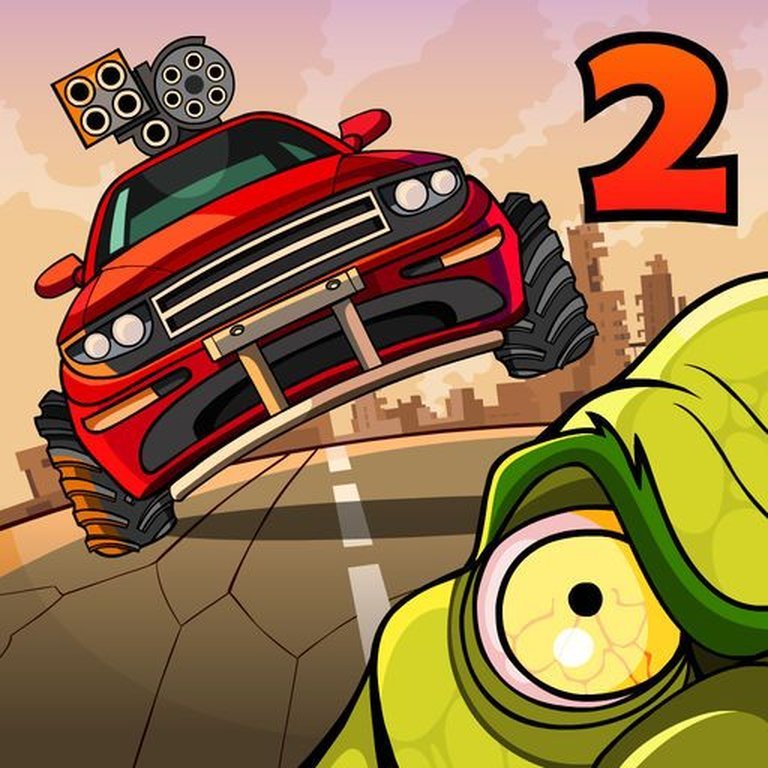
Earn to Die 2 is a side-scrolling action-racing game set in a zombie-infested fantasy world, where players must drive through hordes of the undead to escape. The game features a variety of vehicles that can be upgraded and customized, combining driving mechanics with shooter elements as players smash through zombies and obstacles. With its 2D visuals and repetitive yet addictive gameplay, it offers a mix of strategy and fast-paced action, though some critics note its lack of variety over time.
Gameplay Videos
Where to Buy Earn to Die 2
PC
Earn to Die 2 Free Download
Earn to Die 2 Patches & Updates
Earn to Die 2 Mods
Earn to Die 2 Guides & Walkthroughs
Earn to Die 2 Reviews & Reception
steambase.io (93/100): Earn to Die 2 has earned a Player Score of 93 / 100.
en.wikipedia.org (63/100): Critical reception for Earn to Die 2 has been mixed and the game holds a rating of 63/100 on Metacritic.
metacritic.com (63/100): Earn to Die 2 has a Metascore of 63, signifying mixed or average reviews.
gaminglives.com : The first thing that struck me was how clean the presentation of the graphics was, especially considering it’s a zombie-fuelled Mad Max-styled MacGyver-em-up.
Earn to Die 2 Cheats & Codes
Earn to Die 2012 (Hacked Online Games)
Keyhack
| Code | Effect |
|---|---|
| J | toggle unlimited fuel |
Earn to Die 2012: Part 2 (Hacked Free Games)
Press
| Code | Effect |
|---|---|
| J | toggle infinite fuel |
| K | toggle infinite ammo |
| L | toggle infinite boost |
Earn to Die 2012 – Part 2 (Hacked Online Games)
Keyhack
| Code | Effect |
|---|---|
| J | toggle unlimited fuel |
| K | toggle unlimited ammo |
| L | toggle unlimited boost |
Earn to Die 2: A Zombie-Smashing Odyssey Through the Apocalypse
Introduction
In the crowded landscape of mobile and indie gaming, few titles have carved out a niche as distinctive as Earn to Die 2. Released in 2014 by Russian indie studio Toffee Games and published by Not Doppler, this sequel to the 2011 Flash hit Earn to Die transformed a simple premise—driving through hordes of zombies—into a surprisingly deep and addictive experience. With its blend of vehicular mayhem, strategic upgrades, and a darkly comedic take on the zombie apocalypse, Earn to Die 2 stands as a testament to how iterative design and polished execution can elevate a seemingly straightforward concept into something memorable.
This review will dissect Earn to Die 2 from every angle: its development history, narrative and thematic underpinnings, gameplay mechanics, artistic and auditory design, critical reception, and lasting legacy. By the end, we’ll determine whether this game is a forgotten gem of the mid-2010s mobile gaming boom or a repetitive grind fest that failed to live up to its potential.
Development History & Context
The Rise of Toffee Games and Not Doppler
Earn to Die 2 was developed by Toffee Games, a Siberian indie studio founded in 2010. The original Earn to Die, released in 2011 as a Flash game, was a surprise hit, amassing over 155 million plays worldwide. Its success prompted Not Doppler, an Australian publisher with a strong footprint in the Flash gaming scene since 2005, to collaborate on a mobile adaptation in 2012. The original game’s simplicity—driving through a desert overrun by zombies to reach an evacuation point—resonated with players, but it was Earn to Die 2 that expanded the formula into a full-fledged narrative-driven experience.
Technological and Design Evolution
The transition from Flash to mobile and PC platforms required a shift in technology. While the original game was built using Adobe Flash, Earn to Die 2 leveraged the Unity engine, allowing for smoother cross-platform development, enhanced physics, and more dynamic environments. This move was crucial for the game’s expanded scope, which included:
- Multi-tiered levels (highways, tunnels, factories)
- Fully destructible vehicles with ragdoll physics
- A story mode ten times longer than the original
The development team, though small, focused on iterative playtesting to refine vehicle handling and zombie AI, ensuring that the gameplay loop—drive, smash, upgrade, repeat—remained engaging.
The Gaming Landscape in 2014
Earn to Die 2 launched into a mobile gaming market dominated by free-to-play titles with aggressive monetization strategies. Games like Clash of Clans and Candy Crush Saga were setting the standard for how mobile games could generate revenue through in-app purchases (IAPs). However, Earn to Die 2 took a different approach:
- iOS (2014): Paid upfront ($1.99) with no IAPs.
- Android (2015): Free-to-play with optional IAPs for faster progression.
- PC/Mac (2016): Premium release ($4.99) with enhanced features like 60 FPS and controller support.
This dual-model strategy allowed the game to cater to different audiences while maintaining accessibility. The PC version, in particular, was a standout, offering full HD graphics, Steam achievements, and controller support, making it a rare mobile-to-PC success story.
Narrative & Thematic Deep Dive
Plot Overview: A Cross-Country Escape
Earn to Die 2 shifts the setting from the isolated deserts of its predecessor to a cross-country trek across a zombie-infested United States. The protagonist, a lone survivor, begins their journey on the West Coast, scavenging a rundown car to escape the initial waves of the undead. The ultimate goal? Reach the Exodus base, a military outpost in Florida where the last evacuation ship awaits.
The narrative is divided into 10 episodic levels, each representing a leg of the journey through increasingly hazardous environments:
- Barren Wastelands (West Coast)
- Decaying Highways (Midwest)
- Urban Ruins (East Coast cities)
- Industrial Zones (Factories, tunnels)
- Final Onslaught (Exodus base)
Each level introduces new vehicles, escalating zombie threats, and environmental hazards like crumbling overpasses and exploding barrels. The story is light on dialogue and character development, instead focusing on the thrill of survival through vehicular destruction.
Themes: Survival, Progression, and the Futility of Escape
At its core, Earn to Die 2 is a satirical take on the zombie apocalypse genre. Unlike games that emphasize horror or emotional storytelling (The Last of Us, Dying Light), Earn to Die 2 leans into absurdity and dark humor. The protagonist’s journey is less about emotional resilience and more about mechanical persistence—each failed attempt is a step toward eventual success.
Key themes include:
-
The Illusion of Progress:
- Players start each new level with a brand-new vehicle, stripping away all previous upgrades. This forces a cycle of repetition, mirroring the Sisyphean struggle of survival in a post-apocalyptic world.
- The game’s upgrade system reinforces this theme—players must grind for currency to improve their vehicles, only to lose everything when progressing to the next level.
-
Consumerism in the Apocalypse:
- The garage, where players spend earned cash on upgrades, is a microcosm of capitalism. Even in the end times, survival is commodified—better engines, armor, and weapons are sold, not scavenged.
- The game’s free-to-play model on Android further emphasizes this, with optional IAPs tempting players to skip the grind.
-
The Absurdity of Survival:
- The protagonist’s journey is ridiculous by design. Driving an ice cream van through a zombie horde or a fire truck through a collapsing tunnel underscores the game’s tongue-in-cheek tone.
- The lack of character development or emotional stakes reinforces the idea that survival is mechanical, not meaningful.
Characters and World-Building
Earn to Die 2 is notably devoid of named characters or dialogue. The protagonist is a faceless survivor, and the zombies are little more than obstacles to be crushed. This minimalist approach allows the game to focus on gameplay and progression rather than narrative depth.
However, the world-building is surprisingly rich for a mobile game:
-
Environmental Storytelling:
- Each level’s design tells a story of collapse. Crumbling highways, abandoned gas stations, and zombie-filled factories paint a picture of a society that fell quickly and violently.
- The shift from rural wastelands to urban decay mirrors the progression of the apocalypse, with later levels featuring denser zombie hordes and more hazardous terrain.
-
Vehicle as Character:
- The 10 unlockable vehicles (sports cars, SUVs, fire trucks, ice cream vans) each have distinct personalities. The Lamborghini Diablo is fast but fragile, while the Caterpillar 773D dump truck is slow but nearly indestructible.
- Upgrading a vehicle feels like nurturing a companion, only for it to be discarded at the start of the next level—a deliberate design choice that reinforces the game’s themes of impermanence.
Gameplay Mechanics & Systems
Core Gameplay Loop: Drive, Smash, Upgrade, Repeat
Earn to Die 2 is built around a simple but addictive loop:
- Drive: Navigate through a zombie-infested level, smashing through hordes and avoiding obstacles.
- Smash: Use your vehicle’s weight, speed, and weapons to plow through zombies. Ragdoll physics ensure satisfying collisions.
- Upgrade: Spend earned cash on vehicle improvements (engine, armor, weapons, fuel capacity).
- Repeat: Retry the level with upgraded vehicles until you reach the checkpoint.
This loop is repeated across 10 levels, with each level introducing new vehicles and resetting progression.
Vehicle Handling and Physics
The game’s physics engine is its standout feature. Vehicles handle differently based on their weight, speed, and upgrades:
- Light Vehicles (e.g., Dune Buggy):
- High speed, low durability.
- Excel at evasion but struggle with dense zombie hordes.
- Heavy Vehicles (e.g., Dump Truck):
- Slow acceleration, high durability.
- Ideal for ramming through obstacles but consume fuel quickly.
The ragdoll physics for zombies and destructible environments add to the chaos. Zombies fly realistically when hit, and vehicles can lose parts (e.g., doors, bumpers) without failing entirely.
Upgrade System: Strategic Depth or Grind?
The upgrade system is where Earn to Die 2 shines—and where it falters. Players can upgrade:
- Engine: Increases speed and acceleration.
- Armor: Reduces damage from zombie collisions.
- Tires: Improves traction on rough terrain.
- Fuel Tank: Extends range between refuels.
- Weapons: Roof-mounted guns or flamethrowers for clearing paths.
- Boost: Temporary speed bursts for escaping tight situations.
Pros of the Upgrade System:
– Encourages Experimentation: Players must balance offense (weapons) and defense (armor) based on their playstyle.
– Risk vs. Reward: Failed runs still yield cash, allowing incremental progress.
Cons of the Upgrade System:
– Repetitive Grind: Later levels require excessive grinding to afford upgrades, leading to frustration.
– Forced Resets: Starting each level with a new, unupgraded vehicle undermines progression, making early attempts feel punishing.
Level Design: Variety or Monotony?
The game’s levels are visually distinct but mechanically similar:
- Early Levels (Desert/Wasteland):
- Open roads with scattered zombies.
- Focus on speed and fuel management.
- Mid-Game (Urban/Industrial):
- Tight corridors, tunnels, and ramps.
- Requires precision driving and weapon use.
- Late Game (Exodus Base):
- Dense zombie hordes and environmental hazards.
- Demands fully upgraded vehicles.
Criticism:
– Lack of Innovation: Despite the visual variety, the core gameplay remains unchanged—drive, smash, upgrade.
– Artificial Difficulty: Later levels feel unfairly difficult due to the forced vehicle resets, requiring players to grind cash before making meaningful progress.
Control Schemes: Mobile vs. PC
- Mobile (Touch Controls):
- Simple but effective: accelerate, steer left/right, boost.
- Optional tilt controls are clunky and unnecessary.
- PC (Keyboard/Controller):
- More precise with WASD or arrow keys.
- Controller support adds a console-like feel, making it ideal for couch play.
World-Building, Art & Sound
Visual Design: Cartoonish Chaos
Earn to Die 2 adopts a hand-drawn 2D art style reminiscent of Metal Slug or Shoot Many Robots. The visuals are:
- Bright and Clean: Despite the apocalyptic setting, the game avoids the grimy aesthetic of titles like The Walking Dead. Instead, it opts for a cartoonish, almost playful look.
- Destructible Environments: Buildings, crates, and zombies react dynamically to collisions, adding to the chaos.
- Vehicle Customization: Upgrades visually alter vehicles, from armored plating to roof-mounted guns, reinforcing the sense of progression.
Sound Design: The Symphony of Smashing
The audio in Earn to Die 2 is minimalist but effective:
- Engine Roars and Crashes: The sound of a vehicle plowing through zombies is viscerally satisfying, with crunching metal and squishing undead.
- Background Music: A pulsing, upbeat soundtrack keeps the energy high, though it lacks memorability.
- Ambient Sounds: Zombie groans, exploding barrels, and screeching tires add to the immersion.
While the sound design doesn’t break new ground, it complements the gameplay perfectly, enhancing the sense of speed and destruction.
Reception & Legacy
Critical Reception: Mixed but Mostly Positive
Earn to Die 2 received mixed reviews from critics, with a Metacritic score of 63/100 for the iOS version. Praise and criticism were polarized:
Positive Aspects:
– Addictive Gameplay Loop: Critics like TouchArcade and Modojo praised the satisfying progression system and zombie-smashing mechanics.
– Visual Polish: The clean, cartoonish art style was highlighted as a standout feature.
– Vehicle Variety: The 10 distinct vehicles added replayability.
Negative Aspects:
– Repetitive Grind: Pocket Gamer and Apple’N’Apps criticized the tedious grinding required to progress.
– Forced Resets: The loss of upgrades at the start of each level was seen as punishing and unnecessary.
– Lack of Innovation: Some reviewers felt the game didn’t evolve enough from its predecessor.
Commercial Success and Player Feedback
Despite mixed reviews, Earn to Die 2 was a commercial success:
- Over 100 million downloads on mobile (as of 2025).
- Steam rating of “Very Positive” (93% approval from 2,000+ reviews).
- Active modding community, with players creating custom missions and vehicles.
Player feedback highlights:
– Satisfying Progression: Many players enjoyed the upgrade system and the thrill of smashing zombies.
– Frustration with Grinding: The slow cash earn rate in the free version pushed some players toward IAPs.
– Nostalgia Factor: The game has maintained a cult following, with players revisiting it years after release.
Influence on the Genre
Earn to Die 2 helped popularize the “zombie-smashing driving” subgenre, inspiring titles like:
- Earn to Die 3 (2018): Introduced infinite fuel and chasing zombie vehicles.
- Earn to Die Rogue (2022): Added on-foot combat and roguelike elements.
- Zombie Road Trip (2015): A similar premise with more emphasis on weapons.
While not a revolutionary title, Earn to Die 2 proved that simple mechanics, polished execution, and a strong upgrade system could create an engaging experience.
Conclusion: A Flawed but Fun Zombie-Smashing Classic
Earn to Die 2 is a game of contradictions. It’s simple yet deep, repetitive yet addictive, frustrating yet rewarding. Its greatest strength—the upgrade and progression system—is also its biggest flaw, as the forced resets and grinding can make later levels feel like a chore.
However, its satisfying physics, varied vehicles, and darkly comedic take on the zombie apocalypse ensure that it remains a standout title in the mobile and indie racing genres. While it may not have redefined gaming, it perfected a niche formula that continues to resonate with players.
Final Verdict:
– For Fans of: Zombie games, vehicular mayhem, upgrade-driven progression.
– Avoid If: You dislike repetitive grinding or prefer narrative depth.
– Legacy: A cult classic that inspired sequels and imitators, proving that sometimes, smashing zombies with a fire truck is all you need.
Score: 7.5/10 – A flawed but fun romp through the apocalypse.