
- Release Year: 2023
- Platforms: Linux, Windows
- Publisher: Fat Bear Society
- Developer: Fat Bear Society
- Genre: Adventure, Puzzle
- Perspective: Behind view
- Game Mode: Single-player
- Gameplay: Hack and Slash, Platform
- Average Score: 83/100
Description
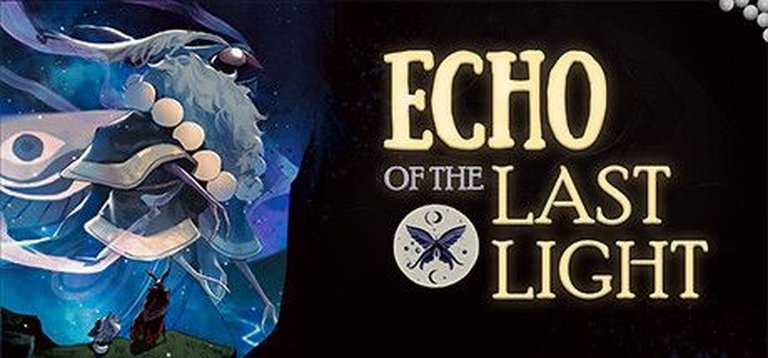
Echo of the Last Light is a 3D action-adventure puzzle game set in a world where the last remaining light is the only hope against encroaching darkness. Players take on the role of Tamasis, a follower of The Humble Light, who teams up with a mysterious creature called the Echo to rescue the world from The Royal Eclipse. Together, they explore a perilous world, solve puzzles, and engage in combat, using the Echo’s unique abilities to uncover hidden secrets and overcome enemies. The game blends exploration, combat, and adventure, challenging players to determine the fate of the world while grappling with questions of sacrifice and belief.
Gameplay Videos
Where to Buy Echo of the Last Light
PC
Echo of the Last Light Guides & Walkthroughs
Echo of the Last Light Reviews & Reception
store.steampowered.com (83/100): A triumphant return to form for the series.
steambase.io (84/100): Echo of the Last Light has achieved a Steambase Player Score of 84 / 100.
Echo of the Last Light: A Student-Made Masterpiece of Light and Shadow
Introduction: A Beacon in the Indie Wilderness
In an era where blockbuster titles dominate headlines and budgets balloon into the hundreds of millions, Echo of the Last Light emerges as a quiet revolution—a testament to what passionate, creative minds can achieve with limited resources and boundless ambition. Developed by the Fat Bear Society, a collective of graduate students at the University of Utah, this 3D action-adventure puzzle game is more than just a student project; it is a fully realized vision of a world teetering on the brink of darkness, where the last embers of light must be nurtured against overwhelming odds.
At its core, Echo of the Last Light is a game about companionship, sacrifice, and the moral ambiguities of preservation. You play as Tamasis, a moth-like acolyte of the Humble Light, tasked with escorting the last surviving Echo—a sentient being of pure light—to safety. Along the way, you’ll battle the forces of the Royal Eclipse, solve intricate puzzles, and grapple with questions that resonate far beyond the screen: What are you willing to give up to save the world? Whose freedom is truly at risk? And what beliefs are worth fighting for, even when they may hurt others?
This review will dissect Echo of the Last Light in exhaustive detail, exploring its development history, narrative depth, gameplay mechanics, artistic achievements, and cultural impact. What emerges is a portrait of a game that punches far above its weight, offering an experience that is as thought-provoking as it is visually stunning.
Development History & Context: The Birth of a Student-Led Vision
The Fat Bear Society: A Laboratory of Innovation
Echo of the Last Light is the brainchild of the Fat Bear Society, a student-run studio operating within the Graduate Games Lab at the University of Utah. Comprising 2 producers, 5 artists, 5 engineers, 4 designers, and 2 musicians, the team worked for 28 weeks (roughly 10 months) to bring their vision to life. What makes this project extraordinary is not just its scope, but its origin: it was developed in a simulated-studio environment, mimicking the pressures and workflows of a professional game development cycle, yet remained 100% student-run and student-owned.
This academic backdrop is crucial to understanding the game’s ethos. Unlike commercial studios driven by market trends or shareholder demands, the Fat Bear Society had the freedom to experiment, iterate, and take creative risks. The result is a game that feels uncompromisingly personal, unburdened by the need to appeal to the lowest common denominator. It’s a rare example of a student project that doesn’t just feel like a passion project—it is one, in the best possible way.
Technological Foundations: Unreal Engine 5 and the Power of Constraints
Built in Unreal Engine 5, Echo of the Last Light leverages the engine’s cutting-edge capabilities to craft a world that is both visually arresting and mechanically precise. The use of UE5’s Lumen global illumination and Nanite virtualized geometry allows for dynamic lighting and intricate environmental detail, which are central to the game’s themes of light and darkness. However, the team’s relative inexperience with the engine (many were students still learning its intricacies) also imposed creative constraints that shaped the game’s design.
For instance, the game’s puzzle mechanics were likely influenced by the need to work within the engine’s strengths while avoiding overly complex systems that could bog down development. The result is a tight, focused experience that prioritizes clarity and elegance over sheer scale. This is not a game that overwhelms with open-world sprawl; instead, it guides the player through a carefully curated journey, ensuring that every mechanic and narrative beat lands with intention.
The Gaming Landscape of 2023: Standing Out in a Crowded Field
Echo of the Last Light released on April 25, 2023, a year that saw an explosion of indie titles vying for attention. Games like Hades II, Sea of Stars, and Cocoon dominated conversations, each offering their own spin on action, adventure, and puzzle-solving. In this competitive environment, Echo of the Last Light carved out a niche by fusing multiple genres—action-adventure, puzzle-platforming, and narrative-driven exploration—into a cohesive whole.
What sets it apart is its thematic maturity. While many indie games excel in mechanics or aesthetics, few tackle philosophical and ethical dilemmas with the same nuance. The game’s central question—What are you willing to sacrifice to preserve light?—is not just a narrative device but a mechanical and moral framework that permeates every aspect of the experience.
Narrative & Thematic Deep Dive: A Story of Light, Sacrifice, and Moral Ambiguity
The World of Echoes: A Dying Realm
Echo of the Last Light unfolds in a world where The Echoes, celestial beings of light, once illuminated the sky. Now, they are all but extinct, and the last remaining Echo is your companion—a fragile, luminous creature that must be protected at all costs. The world is divided between The Humble Light, a sect of moth-like beings dedicated to preserving what remains of the light, and The Royal Eclipse, a faction that seeks to extinguish it entirely.
This premise is rich with symbolism and allegory. The Echoes can be interpreted as metaphors for hope, knowledge, or even environmental preservation, while the Royal Eclipse represents nihilism, oppression, or the forces of entropy. The game never spells out its themes explicitly, instead allowing players to draw their own conclusions based on their interactions with the world.
Tamasis: The Reluctant Hero
You play as Tamasis, a follower of the Humble Light, whose journey begins with a simple mission: escort the last Echo to the Tree of Humble Light, a sacred place where its power can be harnessed to restore balance. However, as the story progresses, Tamasis is forced to confront the cost of preservation. The Echo is not just a tool—it is a sentient being with its own desires and fears, and its survival may come at the expense of others.
This dynamic creates a compelling moral tension. The game repeatedly asks: Is it right to save the world if it means subjugating the Echo? Are the Humble Light truly benevolent, or are they just another form of tyranny? These questions are not answered easily, and the game’s ambiguous ending leaves players with more questions than answers—a bold narrative choice that lingers long after the credits roll.
The Echo: More Than a Companion
The Echo is the game’s most innovative and emotionally resonant mechanic. It is not merely a passive companion but an active participant in the story, with its own abilities, vulnerabilities, and agency. The Echo ability, which reveals hidden elements in the world, is not just a gameplay tool—it is a narrative device that underscores the Echo’s importance.
As you progress, you learn to command the Echo, using its light to solve puzzles, reveal enemy weaknesses, and uncover secrets. However, the more you rely on it, the more you realize that its power comes at a cost. The Echo is draining, both literally (its light dims with use) and metaphorically (its will is slowly eroded by your dependence on it). This creates a brilliant feedback loop where the player’s gameplay choices directly impact the narrative, reinforcing the game’s central themes.
The Royal Eclipse: Villains or Victims?
The primary antagonists, The Royal Eclipse, are not mere obstacles—they are a mirror to the Humble Light. While the Humble Light seeks to preserve the Echo at any cost, the Royal Eclipse believes that true freedom lies in darkness. Their motives are not purely evil; they are ideologically opposed, and their actions stem from a belief that the Echo’s light is a form of control.
This moral duality is one of the game’s strongest narrative elements. The Royal Eclipse’s leaders are given depth and pathos, and their arguments are persuasive enough to make the player question their own allegiance. In one particularly striking moment, a high-ranking Eclipse member argues that the Humble Light’s devotion is a cage, and that the Echo’s preservation is a form of slavery. This forces Tamasis—and the player—to re-evaluate their mission, adding layers of complexity to what could have been a simple good-vs.-evil tale.
Themes: What Are You Willing to Sacrifice?
Echo of the Last Light is, at its heart, a meditation on sacrifice and freedom. The game’s central questions are:
-
What are you willing to give up to save the world?
- The Echo’s light is the world’s last hope, but using it dims its power and erodes its autonomy. Every puzzle solved, every enemy defeated, comes at a cost.
-
Whose freedom is truly at risk?
- The Humble Light believes they are saving the world, but the Royal Eclipse argues that they are enslaving the Echo. The game forces players to confront the ethics of their actions.
-
What beliefs are worth fighting for, even when they may hurt others?
- Tamasis’s journey is one of disillusionment and growth. The game does not provide easy answers, instead challenging the player to form their own conclusions.
These themes are woven into every aspect of the game, from the dialogue and environmental storytelling to the mechanical design. The result is a cohesive, thought-provoking experience that elevates Echo of the Last Light beyond mere entertainment.
Gameplay Mechanics & Systems: A Dance of Light and Shadow
Core Gameplay Loop: Exploration, Combat, and Puzzle-Solving
Echo of the Last Light is a hybrid of genres, blending action-adventure, puzzle-platforming, and light combat into a seamless experience. The core gameplay loop revolves around:
- Exploration: Navigating a semi-open world filled with hidden paths, secrets, and environmental storytelling.
- Puzzle-Solving: Using the Echo’s abilities to reveal hidden mechanisms, manipulate light, and unlock new areas.
- Combat: Engaging in real-time, hack-and-slash battles against the forces of the Royal Eclipse.
- Companion Mechanics: Managing the Echo’s health, abilities, and morale, ensuring it remains a viable ally.
This loop is tightly integrated, with each element feeding into the others. For example, combat often requires puzzle-solving (e.g., using the Echo’s light to reveal enemy weaknesses), and exploration is gated by the Echo’s abilities, encouraging players to return to earlier areas with new powers.
The Echo Ability: A Gameplay and Narrative Nexus
The Echo ability is the game’s defining mechanic, serving as both a gameplay tool and a narrative device. Activated with a button press, it illuminates hidden elements in the environment, such as:
- Invisible platforms that allow progression.
- Enemy weaknesses that can be exploited in combat.
- Hidden lore that expands the world’s backstory.
However, the Echo’s light is not infinite. Prolonged use drains its energy, forcing players to manage its usage carefully. This creates a risk-reward dynamic: do you burn through the Echo’s light to solve a puzzle quickly, or do you conserve it for later challenges?
This mechanic is brilliantly tied to the narrative. The more you rely on the Echo, the more dependent Tamasis becomes, and the more the Echo’s autonomy is eroded. This is reflected in dialogue changes, environmental cues, and even the Echo’s physical appearance, which grows dimmer and more subdued with overuse.
Combat: A Dance of Light and Steel
Combat in Echo of the Last Light is fast-paced but deliberate, blending hack-and-slash mechanics with tactical depth. Tamasis wields a light-infused weapon, while the Echo provides support abilities, such as:
- Blinding enemies to create openings.
- Revealing weak points for critical hits.
- Healing Tamasis in dire situations.
Enemies are diverse and require different strategies to defeat. Some are vulnerable only when illuminated, while others retreat into darkness to avoid attacks. This forces players to adapt their tactics, using the Echo’s abilities not just as a crutch, but as an essential tool.
However, combat is not the game’s strongest suit. While functional, it lacks the depth of dedicated action games like Hades or Dark Souls. The lock-on system can be finicky, and enemy patterns are sometimes predictable, leading to repetitive encounters. That said, the integration of the Echo’s abilities keeps combat engaging and thematically coherent, even if it doesn’t reach the heights of the game’s puzzle or narrative design.
Puzzle Design: A Masterclass in Environmental Storytelling
Where Echo of the Last Light truly shines is in its puzzle design. The game’s puzzles are ingenious, varied, and deeply tied to the narrative, often requiring players to think in multiple dimensions.
Some standout examples include:
- Light Reflection Puzzles: Using the Echo’s light to bounce off mirrors and activate distant mechanisms.
- Shadow Manipulation: Navigating areas where light and darkness shift dynamically, requiring precise timing.
- Companion Coordination: Directing the Echo to stand on pressure plates or illuminate specific areas while Tamasis performs other actions.
What makes these puzzles exceptional is their integration with the world’s lore. Many puzzles reveal hidden stories, such as ancient murals depicting the fall of the Echoes or audio logs from long-dead scholars. This layered approach ensures that puzzles are not just obstacles but narrative devices that deepen the player’s understanding of the world.
Progression and Upgrades: A Balanced Approach
Progression in Echo of the Last Light is methodical and rewarding. As you explore, you unlock new abilities for both Tamasis and the Echo, such as:
- Enhanced light projection (allowing the Echo to illuminate larger areas).
- Combat synergies (e.g., the Echo can now stun enemies for longer durations).
- Environmental interactions (e.g., the ability to absorb and redirect light).
These upgrades are gated by story progression, ensuring that players never feel overwhelmed but always have new tools to experiment with. The pacing is excellent, with new abilities introduced just as the player begins to master the old ones.
UI and Accessibility: A Mixed Bag
The game’s user interface is clean and functional, with a minimalist HUD that keeps the focus on the action. However, it is not without flaws:
- Inventory management can be clunky, with no quick-swap system for abilities.
- Objective markers are sometimes unclear, leading to confusion in navigation.
- Subtitles and audio cues are well-implemented, but the lack of controller remapping is a notable omission.
That said, the game’s accessibility options are commendable for a student project, with adjustable difficulty settings and clear visual feedback for key interactions.
World-Building, Art & Sound: A Symphony of Light and Darkness
The Aesthetic: A World Bathed in Twilight
Echo of the Last Light is a visual feast, with a distinct art style that blends dark fantasy and whimsical surrealism. The world is a dying realm, where crumbling ruins and overgrown forests coexist with floating islands and bioluminescent flora. The color palette is dominated by deep blues, purples, and golds, creating a dreamlike atmosphere that feels both melancholic and hopeful.
The character designs are equally striking. Tamasis and the Echo are exquisitely detailed, with expressive animations that convey emotion without dialogue. The enemies of the Royal Eclipse are grotesque yet tragic, their shadowy forms hinting at their fallen nature.
Environmental Storytelling: A World That Speaks
One of the game’s greatest strengths is its environmental storytelling. The world is filled with lore, conveyed through:
- Ancient murals depicting the rise and fall of the Echoes.
- Abandoned temples where the Humble Light once thrived.
- Hidden caves containing audio logs and relics from a bygone era.
These elements are not just set dressing—they expand the narrative, providing context for the game’s themes. For example, a crumbling library might contain scrolls detailing the Echoes’ history, while a mass grave hints at the brutality of the Royal Eclipse’s reign.
Sound Design: A Haunting Symphony
The sound design in Echo of the Last Light is nothing short of masterful, with a score that oscillates between ethereal beauty and ominous dread. The main theme, a melancholic piano piece, perfectly captures the game’s themes of loss and hope, while the combat music is pulsing and urgent, driving home the stakes of each encounter.
The ambient sounds are equally impressive. The whisper of the wind, the distant echoes of forgotten voices, and the hum of the Echo’s light create an immersive soundscape that pulls players deeper into the world. The voice acting, while limited, is expressive and emotive, with Tamasis and the Echo’s dialogue conveying genuine chemistry.
Technical Performance: A Polished Experience
Given its student-developed origins, Echo of the Last Light is surprisingly polished. The game runs smoothly on most modern systems, with minimal bugs or glitches. The Unreal Engine 5 foundation ensures that lighting and particle effects are stunning, though some texture pop-in and occasional frame drops can occur in denser areas.
The Steam Deck compatibility is hit-or-miss, with some players reporting crashes on Linux, but the Windows version is stable and well-optimized.
Reception & Legacy: A Quiet Triumph
Critical and Commercial Reception: A Niche Gem
Echo of the Last Light released to little fanfare in April 2023, overshadowed by larger titles. However, word of mouth and positive Steam reviews (83% positive from 31 reviews) slowly built a dedicated following. Critics praised the game for its:
- Innovative companion mechanics.
- Thought-provoking narrative.
- Stunning visual and auditory design.
However, some criticized its combat as shallow and its puzzles as occasionally frustrating. Despite these flaws, the game resonated with players who appreciated its ambition and emotional depth.
Influence and Future Prospects: A Blueprint for Indie Innovation
While Echo of the Last Light is not a commercial juggernaut, its impact on the indie scene is undeniable. It serves as a proof of concept for what small, passionate teams can achieve, and its successful blend of genres has inspired other developers to experiment with narrative-driven puzzle-platformers.
The Fat Bear Society has since disbanded, with members moving on to professional roles in the industry, but their work on Echo of the Last Light remains a testament to the power of student-led creativity. It stands as a blueprint for future academic projects, proving that limited resources need not limit ambition.
Conclusion: A Light That Refuses to Fade
Echo of the Last Light is far from perfect. Its combat is serviceable but unremarkable, its puzzles can frustrate as much as they delight, and its narrative ambiguity may alienate players seeking clear answers. Yet, these flaws are eclipsed by its strengths—a richly imagined world, a deeply emotional story, and a companion mechanic that redefines player agency.
In an industry increasingly dominated by sequels, live-service models, and risk-averse design, Echo of the Last Light is a breath of fresh air. It is a game that dares to ask difficult questions, that trusts its players to engage with its themes, and that delivers an experience as beautiful as it is haunting.
Final Verdict: 8.5/10 – A Masterful Debut That Deserves to Be Remembered
Echo of the Last Light is not just a great student game—it is a great game, period. It stands alongside titles like Journey, Ori and the Blind Forest, and Hollow Knight as a testament to the power of indie development, and a reminder that the most profound experiences often come from the most unexpected places. If you are a fan of narrative-driven adventures, innovative mechanics, or simply beautiful worlds, this is a game that demands your attention.
Play it. Ponder it. And let its light linger in your mind long after the screen fades to black.