
- Release Year: 2021
- Platforms: Windows
- Publisher: Slug Disco Studios Limited
- Genre: Simulation
- Perspective: 3rd-person (Other)
- Game Mode: Single-player
- Average Score: 100/100
Description
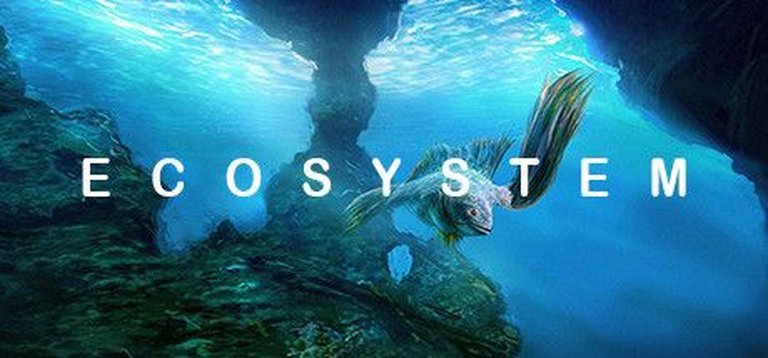
Ecosystem is a simulation game developed by Slug Disco Studios Limited where players design and manage custom ecosystems. Using a third-person perspective and menu-based interface, players sculpt terrains, populate them with diverse creatures like the amphibious Lish, and must maintain ecological balance to prevent systemic collapse. The game features Steam Workshop integration, allowing players to share and download community-created terrains and creatures for endless gameplay variations.
Gameplay Videos
Where to Buy Ecosystem
PC
Ecosystem Free Download
Ecosystem Guides & Walkthroughs
Ecosystem Reviews & Reception
thewolfepackden.com (100/100): Ecosystem was expected to be a hit in our house. And it did not disappoint!
Ecosystem: The Digital Darwin – A Comprehensive Historical Analysis of a Living Simulation
Introduction: The Sea of Possibility
In the vast ocean of video game development, where predetermined narratives and scripted events often dominate, Ecosystem emerges not as a game with a story, but as a game that generates stories. Released into Steam Early Access on March 16, 2021, by the singular vision of developer Tom Johnson under the Slug Disco Studios banner, it represents a daring and technically audacious experiment: a god-game where the divine hand sculpts the world, but the life within it writes its own history through the immutable laws of simulated evolution and physics. This review posits that Ecosystem is not merely a successful indie simulation but a landmark achievement in procedural generation and artificial life, a title that prioritizes systemic depth over handcrafted content, creating a unique niche that bridges the gap between scientific simulation, artistic sandbox, and emergent narrative generator. Its legacy is already being defined by a dedicated community that treats its save files not as completed adventures, but as biological specimens and curated dioramas.
1. Development History & Context: One Man, One Vision, an Ocean of Code
The genesis of Ecosystem is a-story of indie development purism. The project was conceived and built almost entirely by Tom Johnson, a Swedish developer with a pedigree in the industry (having worked on Ghostbusters: The Video Game at Terminal Reality and previously crowdfunded the well-received Enemy). Published by the UK-based Slug Disco Studios (known for Empires of the Undergrowth), Ecosystem was developed in Unity, a choice that speaks to both its accessibility and the immense technical hurdles overcome.
The journey was long and public. Early demos circulated as far back as 2019, with Johnson actively engaging the community on Steam forums, soliciting feedback and detailing his philosophical and technical challenges. A core tenet he repeatedly emphasized was his desire to avoid “pre-made fish models.” The simulation had to be the author. This meant building a procedural mesh generation system for creature bodies, a physics-based locomotion system where torque applied to joints dictated swimming success, and a “pipeline computer” neural network encoded in synthetic DNA that processed sensory data to control movement. The technological constraints were significant; this level of real-time physics and AI simulation for potentially dozens of organisms is CPU/GPU-intensive, a fact borne out in community guides focused on troubleshooting performance.
The gaming landscape of its Early Access launch in 2021 was saturated with life-sim and colony-management titles (Oxygen Not Included, RimWorld), but few attempted Ecosystem‘s specific fusion: a first-person, terraforming god-view coupled with a bottom-up evolutionary biology simulator. It entered a space pioneered conceptually by classics like SimLife or Creatures, but with a modern, physically-grounded, and visually 3D-realized approach that was uniquely its own.
2. Narrative & Thematic Deep Dive: The Story the Player Writes
Ecosystem possesses no traditional narrative. There is no plot, no characters with dialogue, no cutscenes. Its narrative is emergent, born entirely from the interactions within its simulated systems. The “story” is the phylogenetic tree of a species that evolves from a clumsy, brainless progenitor into a sleek, apex predator. It’s the tragic chronicle of a keystone plant species overgrazed into ecological collapse. It’s the serendipitous symbiosis between a slow, armored grazer and a fast, intelligent hunter that inadvertently controls its population.
Thematically, the game is a profound interactive exploration of:
* Natural Selection: The core mechanic. Fitness is defined by swimming efficiency, food acquisition, and mating success. The player’s role is less to “create” and more to “curate” the environmental pressures.
* Ecological Interdependence: The delicate balance of food webs. Introduce a fast-breeding herbivore, and you may starve the plants. Introduce a predator, and you may drive that herbivore extinct, causing a plant bloom and subsequent oxygen depletion—a simulated dead zone.
* Unintended Consequences: Every terrforming action—raising a mountain, altering currents—ripples through the ecosystem. A shallow shelf created for sunlight-loving plants might become a nursery for prey, attracting predators that then overhunt.
* The Illusion of Control: Despite the “god-game” interface, the player’s power is indirect. You cannot directly command a creature to evolve a specific fin. You can only adjust high-level environmental parameters (via the “Evolution Sandbox” update) or apply selective pressure by culling undesirable traits. The narrative is authored by the simulation, with the player as an editor, not a writer.
3. Gameplay Mechanics & Systems: The Engine of Life
Ecosystem‘s gameplay is a layered suite of interconnected systems, accessible through three primary modes:
1. Game Mode: The intended progression. Players earn Life Points (LP) by growing plant biomass, which are spent to spawn creatures from a menu of procedurally generated species. The goal is to build a thriving, biodiverse ecosystem. Key systems include:
* Synthetic DNA & Creature Editor: The heart of the simulation. A creature’s genotype is a directed graph (as explained by Johnson in a Steam discussion), where nodes are body parts (head, torso, fins, tail) with connections dictating growth hierarchy and “repetition” and “terminal-only” flags. Phenotype is the resulting 3D mesh and physics collision hull.
* Neural Pipeline: The brain is a network of neurons processing sensory inputs (vision cones, lateral line for water movement) to activate muscles. Intelligence (Int) is a stat reflecting neural complexity, directly impacting system performance.
* Physics-Based Locomotion: No animations. Movement is the result of torque applied to joints against a physically simulated ocean. Drag, mass, and buoyancy are real factors. A poorly designed body flops; a well-evolved one propels.
* Ecology & Lifecycle: Creatures have diets (plankton, herbivore, carnivore, omnivore). They age, seek food, mate using systems like Mass, Mono, or Poly mating strategies, and lay eggs. Offspring inherit mutated DNA. Maturation is a key milestone where a species transitions from “Progenitor” (computer-assisted) to a full, self-sustaining population.
* Player Tools: The F1 Terrain Menu allows sculpting soil, setting currents. The F3 Creature Menu allows spawning, saving DNA, and (post-update) renaming species. The F5 Info Window provides critical population graphs, phylogenetic trees, and individual creature stats (Survival %, Children, Visibility).
-
Creative Mode: A sandbox with infinite LP, all plants unlocked and non-aging, and defined Mating Grounds markers. Used for experimentation, map-building, and the deliberate cultivation of specific traits. It’s here that the community has pushed boundaries, discovering exploits like “Lishing”—getting creatures onto land by manipulating terrain and camera settings (a fascinating, unintended meta-game).
-
Aquarium Mode (v0.22+): A showcase. Spawns individual saved creatures into a controlled, non-evolutionary environment. Serves as a digital aquarium or a laboratory for comparing saved designs.
Innovative Systems:
* The “AnyFish” Glitch: A famous emergent phenomenon where a creature’s diet gets stuck as “Any.” These pseudo-immortal entities don’t eat, aren’t eaten, and don’t mature normally. What began as a bug became a cherished community tool for background fauna and the key to viable “Lish” (land fish), demonstrating how player adoption can redefine a game’s intended boundaries.
* Evolution Sandbox Update (v0.27): A monumental shift. Added sliders and toggles to constrain evolution (enforce symmetry, limit part count, set min/max size) and modify high-level physics (drag, muscle density, neuron cost). This addressed a major player complaint: the feeling of helplessness in guiding evolution, handing players a “genetic steering wheel.”
* Steam Workshop Support (v0.24): Enabled sharing of terrain heightmaps and creature DNA files. This transformed Ecosystem from a solo sandbox into a collaborative,competitive biological archive. Players upload their “best” designs—the most efficient swimmers, the most bizarre abominations—creating a metagame of biological one-upmanship.
Flawed/Complex Systems:
* Performance: The simulation’s beauty is its burden. Complex creatures with high Int tax the system. Large populations cause lag. The community guide’s painstaking advice on “KIS (Keep It Simple),” map file sizes, and graphics settings is a testament to the game’s demanding nature. It’s a game where a 64GB RAM system can still see dips.
* Predator-Prey Balance: A perennial issue acknowledged by Johnson since the 2019 demo. The simulation’s “arms race” is difficult to tune. Prey can become too good at fleeing, or predators too efficient, leading to boom-bust cycles. The Huffaker mite experiment was cited as a real-world parallel.
* UI/UX Learning Curve: The interface is functional but dense. Key information (mating grounds, species maturation) is hidden in sub-menus or conveyed only via text logs. The learning curve is steep, relying heavily on community-created guides like the exhaustive one by “Stobz0.”
4. World-Building, Art & Sound: The Aesthetic of the Abyss
Ecosystem‘s world is a masterpiece of minimalist, atmospheric beauty.
* Visual Direction: The underwater environment is rendered with a serene, almost impressionistic quality. Light shafts pierce the water column, illuminating drifting plankton and swaying kelp forests. The procedurally generated terrain—from gentle shelves to deep trenches—is a clay-like, low-poly aesthetic that prioritizes clarity and performance over photorealism. Creature skins use procedural materials, creating a consistent, slightly plastic look that avoids the uncanny valley. The color palette is muted, dominated by blues, greens, and browns, with creature colors evolving for camouflage or display.
* Sound Design: Composed by Samuel Jule Kovacs, the soundtrack is ambient, melodic, and deeply immersive. It avoids intrusive melodies, instead using swelling synths and watery textures that ebb and flow with the player’s actions. Creature sounds are sparse—low hums, clicks, and roars—generated or assigned based on size and type, adding to the alien yet familiar feel.
* Atmosphere: The combination creates a profound sense of peace mixed with latent danger. It’s a “serene simulator”—calm on the surface, but teeming with violent, unseen struggle below. This duality is the game’s core aesthetic achievement.
5. Reception & Legacy: From Niche Curiosity to Cult Classic
- Critical Reception: Official critic reviews are notably absent (Metacritic lists none), reflecting the game’s niche status and Early Access state. However, within its target community—players interested in simulation, evolution, and procedural generation—it has been met with considerable acclaim. The Steam user reviews sit at “Mostly Positive” (77%), with praise heaped on its ambitious premise and “magical” emergent moments, and criticism aimed at performance issues, predator AI, and a sometimes-opaque interface.
- Commercial Reception: It has found a solid, sustainable audience in Early Access. The $19.99 price point and active development (with frequent updates documented in the game’s news feed) have supported Tom Johnson as a solo dev for years. The November 2024 “Complete Edition” release (bundled with the Tropical Fish Pack and Soundtrack) marks a significant milestone toward 1.0.
- Evolution of Reputation: Initially seen as a beautiful but fragile curiosity, its reputation has grown through player-authored content. The Steam Workshop is filled with meticulously designed “meta- creatures” built to exploit the physics. The “Lish” phenomenon—pushing creatures onto land—became a celebrated community challenge, with dedicated mods and map packs. Guides like Stobz0’s became essential reading, turning gameplay into a collaborative troubleshooting and deep-dive effort. The game is less discussed for “winning” and more for “what evolved?”—sharing phylogenetic trees and bizarre adaptations.
- Influence: Its direct influence on the broader industry is yet to be seen, but it stands as a proof-of-concept for large-scale, physics-first evolutionary simulation. It demonstrates that the “Creatures” model of neural networks and genetics can be married to real-time 3D physics and a god-game interface. It has inspired a sub-genre of “watchable” simulation content on YouTube and Twitch, where the entertainment value comes from observing the simulation’s output, similar to Ant Simulation or Universal Paperclips. Its legacy is secure as a definitive title in the “artificial life” and “emgent narrative” canon, a game that treats the player as an ecologist and archivist first, and a power-fantasy god second.
6. Conclusion: A Living Monument to Systemic Design
Ecosystem is an imperfect, demanding, and utterly singular achievement. It is not a polished, accessible mainstream title. It is a laboratory, a digital petri dish built with exquisite care. Its value lies not in its graphics, polish, or traditional gameplay loops, but in its unwavering commitment to a single, staggering idea: that a rich, unpredictable, and narratively potent world can emerge from the brutal, non-teleological mathematics of evolution and physics.
Tom Johnson has not just built a game; he has built a reproducible model of biological theory. The player’s joy comes from the eureka moments—the first time a species develops a useful tailfin, the moment a balanced food web stabilizes, the shock of witnessing a sudden, mass extinction event triggered by a subtle shift in light or current. It is a game that teaches through experience, not instruction, making real the abstract concepts of adaptation, competition, and trophic cascades.
Its flaws—performance demands, a steep learning curve, occasional ecological instability—are not just bugs; they are symptoms of its complexity, the friction of a living system. The community’s response—mastering its tools, sharing creations, bending its rules—confirms that Ecosystem succeeded in its primary goal: to create a system rich enough to sustain a thousand unique, player-authored stories. In the pantheon of simulation games, Ecosystem occupies a throne not of popularity, but of purity. It is the closest many will ever come to playing at being Darwin, observing with fascination and humility the strange, beautiful, and brutal outcomes of life’s endless experiment. Its place in history is assured as a landmark of ambitious, systemic game design and a testament to the power of one developer’s profound vision.