
- Release Year: 2019
- Platforms: Windows
- Publisher: Wall Productions Inc., The
- Developer: Meridian4, Inc., Nvizzio Creations, Inc.
- Genre: Action, Strategy, Tactics
- Perspective: Behind view
- Game Mode: Online Co-op, Single-player
- Gameplay: Open World, Sandbox, Tower defense
- Setting: Futuristic, Sci-fi
- Average Score: 64/100
Description
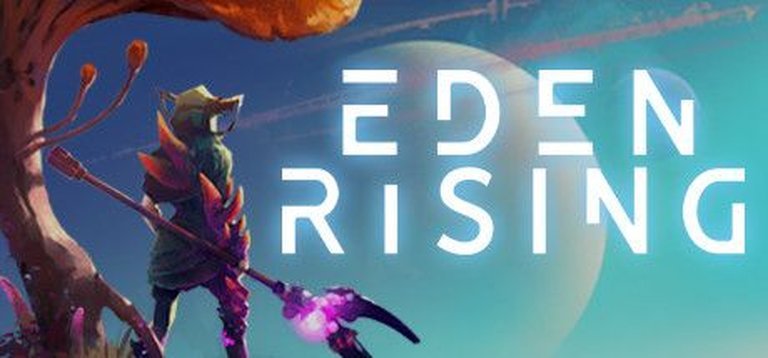
Eden Rising is a free-to-play, sci-fi tower defense game set in a futuristic open world. Players cooperate online in teams of 2-8 to defend strategic outposts from waves of enemies by strategically placing towers and utilizing the sandbox environment, blending real-time strategy with exploration.
Gameplay Videos
Where to Buy Eden Rising
PC
Eden Rising Guides & Walkthroughs
Eden Rising Reviews & Reception
gideonsgaming.com : Eden Rising is a neat hybrid of genres.
spritesanddice.com : This is a game that has moved past just having great ideas; it has become a truly great experience.
Eden Rising: A Critical Analysis of a Co-Op Tower Defense Survival-Craft Hybrid
1. Introduction: The Genesis of a Niche
In the crowded landscape of late-2010s gaming, where battle royales and open-world RPGs dominated discourse, Eden Rising quietly carved out a peculiar and compelling niche. Released in May 2019 by studios Nvizzio Creations and Meridian4—teams with pedigrees in MMORPGs like The Secret World and Age of Conan—the game presented itself not as a singular genre titan, but as a deliberate, almost alchemical, fusion of disparate mechanics. Its core proposition was audacious: marry the tense, strategic planning of tower defense with the resource-gathering loops of survival-crafting, all within a vibrant, open-world sci-fi setting designed for 1-8 player cooperative play. Thesis: Eden Rising is a game of profound contradictions—visually stunning yet mechanically repetitive, deeply social yet often isolating, ambitious in its hybrid design yet hampered by a lightweight combat core. Its legacy is not one of blockbuster success or genre revolution, but of a cultish, co-operative phenomenon that proved a dedicated player base would embrace a complex, grind-heavy hybrid if the social scaffolding was strong enough and the price of entry effectively free.
2. Development History & Context: From MMORPG Veterans to a Hybrid Experiment
Eden Rising emerged from a specific development context. Nvizzio Creations, under CEO Yves Legris, and publisher The Wall Productions Inc. were not newcomers, but veterans of the MMORPG and large-scale online game space. This experience is evident in the game’s foundational design philosophy: a persistent, shared world, a focus on party-based synergy, and a tech-tree progression system that feels distinctly MMO-like in its tiered unlocks. The choice of the Unity engine was a pragmatic one for a small-to-mid-sized studio, enabling a stylized, colorful art direction that could run on a wide range of hardware (minimum specs: GTX 560, 6GB RAM), but also introducing limitations in terms of complex AI, sophisticated physics, and large-scale simulation that are felt in the game’s sometimes simplistic enemy behavior and environmental interactions.
The game launched into Early Access on May 17, 2018, and fully released a year later on the same date. This timeline is crucial. The 2018-2019 period saw a maturation of the “survival-craft” genre (Conan Exiles, Valheim was on the horizon) and a persistent, if niche, interest in tower defense hybrids (Orcs Must Die! franchise, Sanctum). Eden Rising’s innovation was to remove the “map-by-map” structure of traditional tower defense and embed its “sieges” (the tower defense events) as recurring, repeatable challenges within a seamless open world. Its dual-edition business model—a completely free “Explorer Edition” and a paid “Ascendant Edition”—was a bold, player-friendly experiment in a era increasingly skeptical of free-to-play monetization. It prioritized accessibility and friend-group adoption over direct per-unit revenue, betting on a “freemium” model where one purchaser could unlock content for their entire social circle.
3. Narrative & Thematic Deep Dive: The Warden’s Burden
The narrative of Eden Rising is presented through environmental storytelling, scattered logs, and a persistent, vague AI companion, rather than through cinematic cutscenes or dense dialogue. The premise is classic science-fantasy: human “Wardens,” having used a teleporter to flee a dying Earth, arrive on the planet Eden to find a world of breathtaking beauty that is also lethally toxic and populated by aggressive, mutated fauna and flora. They are “saved” and cybernetically enhanced by “The Network,” a planet-spanning AI left by a long-vanished civilization. The deal is simple: restore the Network’s “Crucibles” (massive, ancient archive-fortresses) to full power, and in return, the Network will provide the technology and biological modifications needed to survive and, ultimately, reclaim Eden for humanity.
The themes are explicitly about restoration, cooperation, and the ethics of colonization. The player is not a conqueror but a “Warden,” a restorer. The central, repetitive task—defending a Crucible from waves of native creatures—is framed not as genocide but as a necessary, unfortunate side-effect of reactivating ancient technology that the local ecosystem perceives as a threat. The lore collected across the zones (Warden Rock, the Valley, Fungal Preserve, Searing Coast, Shattered Causeway, Ultima Thule) paints a picture of a world that was a “wildlife refuge” for its creators, now gone feral. The player’s tribe is the last remnant of a desperate human exodus, forging a new society through shared labor and mutual defense. The narrative’s weakness is its hands-off approach; there is little personal character arc or dramatic tension. The story is the context for the gameplay loop, not its driver. This aligns with the game’s design: the “story” is the progression of your tribe’s technology and the gradual unlocking of the map, a meta-narrative written in crafted armors and unlocked turret types.
4. Gameplay Mechanics & Systems: The Crucible Loop
The genius and the grind of Eden Rising reside in its tightly coupled gameplay loop: Explore → Scavenge → Craft & Build → Siege → Upgrade → Repeat.
-
Core Loop & Sieges: The “siege” is the game’s central, climactic event. At a Crucible (or a smaller, capturable Outpost), the player(s) can activate a timed defense against waves of enemies. Waves are pre-determined lanes of creatures with specific behaviors. Success grants “Links” (used to unlock new Crucible technology trees and access new map areas) and “Nanochips” (used for general upgrades, turret unlocks, and perks). Failure means lost time and resources. This loop is structurally similar to Orcs Must Die! but without a pre-match loadout; you must physically gather raw materials (Ore, Wood, Fiber, Fungus, etc.) from the open world and craft your defenses (turrets, traps, buff stations) at the Crucible before the wave begins. This creates a compelling risk-reward: venturing further into dangerous zones for rare materials to build better defenses for the upcoming siege.
-
Crafting & Progression: Progression is bifurcated. There is personal weapon/armor crafting, which follows a “Monster Hunter-lite” philosophy. You kill specific creatures (e.g., Gorgons, Medusae, Scarabs) to harvest parts (Fangs, Carapaces, Organs) and combine them with mined resources to forge new gear. Each weapon type (Hammers, Rods, Blasters, Slings, etc.) and armor set has its own tech tree. The other progression is tribe-wide, tied to each Crucible. By successfully completing sieges at a Crucible, you earn Links to spend in that Crucible’s unique technology tree, unlocking new turret types, global bonuses (like faster resource gathering), and crucible upgrades (more power slots, material farms). This creates a strong cooperative incentive: the whole tribe benefits from one person’s successful siege.
-
Combat & Elemental System: Third-person melee combat is functional but widely cited as the game’s weakest link. It’s described as “lightweight” and “floaty.” Combos are simple, dodge-rolls are the primary evasion tool, and enemy attack tells are often telegraphed but can feel unsatisfying to parry or counter. The game’s tactical depth emerges from its elemental affinity system, a crucial piece of mechanics detailed in the Steam guide. There are five core damage types: Physical, Radiation, Fire, Electric, and Corrosive. Enemies have classifications (Armored/Plated, Irradiated, Mutant, Alkali) with specific weaknesses and resistances. For example, Armored enemies take extra Radiation damage but resist Physical; Mutants take Fire damage but deal Electric. Some elite and story enemies (Thulians, Chimeras) are neutral. This system elevates combat from button-mashing to a puzzle: swap weapons to match the enemy type. However, the UI for checking enemy affinities is clunky (requires opening the bestiary), and the visual feedback on elemental damage is subtle.
-
Systems & Flaws: The “personal power limit” cap on carried turrets (vs. the Crucible’s larger limit) is a smart, portable strategy element. However, the game suffers from repetition and a lack of consequence for death (you drop your bag but can retrieve it instantly at a nearby teleporter), reducing tension. The technology trees, while extensive (as shown in the guide’s “Technologies for resource gathering” list), often show “Coming Soon” placeholders, a legacy of its Early Access phase. The guide’s exhaustive bestiary and map with outpost locations (“Zombiewookie’s Guide”) stand as a testament to the game’s complex, non-intuitive world design that players felt compelled to systematize.
5. World-Building, Art & Sound: The Eden That Captivates
This is Eden Rising‘s undisputed strength. The world of Eden is a masterclass in cohesive, vibrant sci-fantasy art direction. Using Unity, the developers created distinct, lush biomes: the rocky, metallic Warden Rock introduction zone; the sprawling, mushroom-dotted Valley of the Ascendants; the toxic, bubbling fungal swamps; the volcanic Searing Coast; and the crystalline, shattered causeways. The color palette is rich andunnatural—greens, purples, and glowing oranges dominate, reinforcing the alien beauty. The “science-fantasy” aesthetic blends sleek, black Network architecture with organic, pulsating alien life.
The atmosphere is one of awe punctuated by danger. The sound design complements this: ambient, eerie music underscores exploration, while siege music becomes urgent and driving. Creature vocalizations are distinct and often horrifying (the roar of a Gorgon, the chitter of Scarabs). While the graphical fidelity may not match AAA titles, the art style is so consistent and imaginative that it overcomes technical limitations. The world feels alive and worth exploring, which is the primary driver for the sometimes tedious gathering loop. The only consistent criticism is in some enemy designs, which can be visually generic or “floaty” in their animations—an issue partially addressed in post-launch updates where creatures received “more textures and more menacing variations.”
6. Reception & Legacy: The Free-to-Play Success That Could Have Been Bigger
Critical Reception was mixed to lukewarm. MobyGames aggregates critic scores of 54% (Gameplay Benelux) and 70% (overall from 2 critics). Metacritic shows a range from 35% (GamingTrend‘s scathing review citing “awkward combat” and “shoddy network stability”) to 85% (MMORPG.com praising its co-op). The consensus in professional criticism was that the game’s beautiful world and clever hybrid idea were undermined by shallow combat and repetitive core activities.
User Reception paints a more positive picture. On Steam, out of 1,442 reviews, 64% are positive (“Mixed” overall). The gap between critic and user scores here is telling: players who embraced the co-operative loop and the joy of exploration/grinding with friends found a compelling experience that critics, often playing solo or in short bursts, did not. The free-to-play “Explorer Edition” model was universally praised as a smart, risk-free way to sample the game. The Sprites and Dice review, updated after major patches, captures this shift, declaring it “a truly great experience” post-launch, especially highlighting the “sense of teamwork” that was the developers’ stated goal.
Legacy is nuanced. It did not spawn a new genre nor achieve massive commercial success. However, it stands as a successful case study in niche hybrid design and friend-focused monetization. It directly influenced few games, but its DNA can be faintly seen in later co-op survival-craft games that incorporated more structured defense events. Its most significant impact is as a cult co-op favorite. For a dedicated group of 4-8 friends, Eden Rising offered hundreds of hours of structured, goal-oriented play within a beautiful world. Its legacy is that of a “hidden gem” or “underrated co-op experience” in Steam circles—a game whose reputation improved over time due to developer commitment (frequent updates post-launch) and the gravitational pull of its social mechanics. It proved that a free first chapter and a deep, shared progression system could build a lasting, if not massive, community.
7. Conclusion: The Ascendant Verdict
Eden Rising: Supremacy is not a perfect game. Its combat is too thin to carry the experience solo. Its sieges can devolve into repetitive grind. Its narrative is an afterthought. Yet, to dismiss it on these grounds is to miss its fundamental achievement: it works brilliantly as a cooperative social engine. The moment you and seven friends are coordinating weapon swaps to handle armored Gorgons while someone’s turret farm spits out Rad-Bolt Ballistae, the game’s flaws recede. The sublime, alien beauty of Eden provides a backdrop that makes even gathering resources a pleasure.
Its place in video game history is that of a well-executed, under-the-radar hybrid. It did not reinvent tower defense or survival-craft, but it synthesized them with an MMO-like tribe progression system and a generous free-to-play model in a way few others have attempted. For historians, it represents a late-2010s indie experiment in prioritizing social cohesion and accessibility over flashy solo narratives or combat depth. For players, it remains a testament to the enduring power of a well-built virtual sandbox where friends can build, defend, and explore together against a beautiful, hostile world. Its definitive verdict is one of qualified triumph: a flawed, repetitive, yet deeply engaging and socially rewarding experience that found its audience not through hype, but through word-of-mouth and the simple, powerful joy of a well-defended Crucible.