
- Release Year: 2020
- Platforms: Windows
- Publisher: 8floor Ltd.
- Developer: Somer Games
- Genre: Nonograms, Number puzzle, Picross, Puzzle, Word
- Perspective: 1st-person
- Game Mode: Single-player
- Gameplay: Point and select
- Setting: Egypt (Ancient)
- Average Score: 72/100
Description
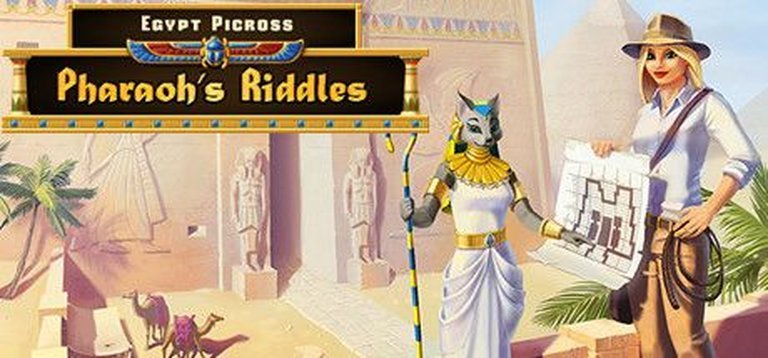
Egypt Picross: Pharaoh’s Riddles is a puzzle game set in ancient Egypt, where players solve nonogram-style picross puzzles to uncover hidden images and unravel the secrets of the pharaohs. With a first-person perspective and a fixed/flip-screen visual style, the game challenges players to decode numerical clues and reveal intricate pixel art, all while exploring the mysteries of pyramids and ancient treasures.
Gameplay Videos
Where to Buy Egypt Picross: Pharaoh’s Riddles
PC
Egypt Picross: Pharaoh’s Riddles Guides & Walkthroughs
Egypt Picross: Pharaoh’s Riddles Reviews & Reception
store.steampowered.com (72/100): Mostly Positive
Egypt Picross: Pharaoh’s Riddles – A Deep Dive into a Modern Nonogram Masterpiece
Introduction: The Allure of Ancient Logic
Few puzzle genres have endured as gracefully as the nonogram—a deceptively simple grid-based challenge that demands equal parts logic and patience. Egypt Picross: Pharaoh’s Riddles (2020), developed by Somer Games and published by 8floor Ltd., is a standout entry in this niche, wrapping the timeless appeal of picross in the enigmatic allure of ancient Egypt. With 120 meticulously crafted puzzles, six themed locations, and a polished presentation, the game transcends its casual roots to offer a meditative yet intellectually stimulating experience.
This review dissects Egypt Picross from every angle—its development context, narrative framing, mechanical depth, artistic direction, and legacy—arguing that it is not just another picross clone, but a refined, accessible, and thematically rich evolution of the genre.
Development History & Context: A Studio’s Puzzle Pedigree
The Creators Behind the Grids
Somer Games, a studio with a portfolio heavily skewed toward casual puzzle and solitaire titles (Egypt Solitaire: Match 2 Cards, Solitaire: True Detective), brought a surprising level of polish to Egypt Picross. The team’s prior experience in grid-based logic games is evident in the game’s intuitive UI and adaptive difficulty, but what sets this apart is its thematic cohesion.
Key figures in its development include:
– Anna Fadeeva (Game Design, Level Design, Screenplay) – The creative force behind the puzzle structure and narrative framing.
– Michail Markin (Art Direction) – Responsible for the game’s vibrant, hieroglyphic-inspired visuals.
– Maxim Ermolaev (Music/Sound) – Composed the ambient, Egyptological soundtrack that enhances immersion.
Technological & Market Constraints
Released in August 2020, Egypt Picross arrived during a golden age for indie puzzlers, competing with titles like Picross S (Nintendo) and Logiart Grimoire (2023). However, its PC-exclusive release (via Steam) positioned it as a premium casual experience rather than a mobile free-to-play title.
The game’s minimal system requirements (Windows XP SP3, 512MB RAM) reflect its accessibility-first design, ensuring it runs smoothly on even low-end machines. This was a deliberate choice—picross thrives on precision, and lag or input delay would ruin the experience.
The Picross Renaissance
While Nintendo’s Mario’s Picross (1995) and Picross DS (2007) established the genre’s mainstream appeal, the 2010s saw a resurgence in digital nonograms, with games like:
– Picross 3D (2009) – Introduced three-dimensional puzzles.
– Griddlers: Legend of the Pirates (2019) – Blended narrative with picross.
– Logiart Grimoire (2023) – Added RPG elements.
Egypt Picross distinguishes itself through thematic immersion—rather than abstract grids, players uncover Egyptian artifacts, hieroglyphs, and landscapes, making each solved puzzle feel like an archaeological discovery.
Narrative & Thematic Deep Dive: More Than Just Numbers
The Premise: A Puzzle-Based Expedition
The game frames its 120 nonograms as “pharaoh’s riddles”—ancient challenges left behind to test worthy adventurers. The light narrative (penned by Anna Fadeeva) serves as a loose framing device, with players progressing through six Egyptian locations, each tied to a historical wonder:
1. The Nile Riverbank
2. The Great Pyramid
3. The Sphinx’s Domain
4. The Temple of Luxor
5. The Valley of the Kings
6. The Pharaoh’s Tomb
While the story is minimalist, it elevates the stakes—each solved puzzle feels like deciphering a lost language, reinforcing the game’s educational undertones.
Themes: Logic as a Key to History
Beyond its surface-level puzzle mechanics, Egypt Picross taps into deeper themes:
– Archaeology as Discovery – The act of filling in grids mirrors piecing together fragments of history.
– The Illusion of Guesswork – The game’s tagline (“you’ll never have to guess”) reinforces its pure logic philosophy, contrasting with modern “guess-and-check” puzzle trends.
– Cultural Appreciation vs. Exploitation – Unlike many “Egypt-themed” games that reduce the setting to exoticism, Egypt Picross uses its aesthetic respectfully, avoiding stereotypes.
Dialogue & Presentation
The game’s tutorial system (also designed by Fadeeva) is adaptable, allowing players to skip sections they already understand—a rare feature in picross games, which often force linear progression. The lack of voice acting is compensated by atmospheric text prompts that maintain immersion.
Gameplay Mechanics & Systems: The Art of the Nonogram
Core Gameplay Loop
At its heart, Egypt Picross adheres to classic nonogram rules:
– Players receive a grid with numbered rows and columns.
– Numbers indicate consecutive filled squares in that line.
– Through deduction, players determine which squares to fill or mark as empty.
However, the game refines this formula with:
✅ Adaptive Difficulty – Puzzles range from 5×5 (beginner) to 25×25 (expert).
✅ No Forced Guessing – Unlike some picross games that lock players into unsolvable states, Egypt Picross ensures every puzzle has a logical path.
✅ Error Forgiveness – Mistakes can be undone without penalty, though perfectionists can aim for flawless solves.
Innovations & Quality-of-Life Features
- Dynamic Tutorial – Players can select which mechanics to learn, making it newcomer-friendly without alienating veterans.
- Visual Feedback – Correct fills glow subtly, while errors pulse red, providing instant feedback.
- Reward System – Over 15 trophies unlock for speed, accuracy, and completion, adding meta-progression.
- Ad-Free Option – A one-time purchase removes ads, a rarity in casual puzzlers.
Flaws & Missed Opportunities
While Egypt Picross excels in accessibility, it has notable omissions:
❌ No Custom Puzzle Creation – Unlike Picross DS, there’s no editor for player-made grids.
❌ Limited Replayability – Once all 120 puzzles are solved, only time trials remain.
❌ Steam Deck Support Issues – Some users report input lag on handheld mode.
World-Building, Art & Sound: A Sensory Journey Through Ancient Egypt
Visual Design: Hieroglyphs in Motion
The game’s art direction (Michail Markin) is its strongest asset:
– Grids transform into Egyptian motifs—solved puzzles reveal sphinxes, scarabs, ankh symbols, and pharaonic busts.
– Backgrounds are dynamic—each of the six locations has a distinct color palette (golden pyramids, deep blues of the Nile).
– UI is clean and intuitive—numbers are easy to read, and the cursor snaps to grids for precision.
Soundtrack: Ambient Mysticism
Maxim Ermolaev’s score is subtle but effective:
– Soft flute melodies evoke ancient Egyptian instruments.
– Percussive rhythms mimic drums of a royal procession.
– No loop fatigue—tracks are long enough to avoid repetition during extended play sessions.
Atmosphere: The Illusion of Adventure
The game’s greatest achievement is making static puzzles feel like an expedition. The progression from riverbank to tomb gives a sense of escalation, while the reward screens (showcasing uncovered artifacts) reinforce the archaeological fantasy.
Reception & Legacy: A Cult Classic in the Making?
Critical & Commercial Reception
- Steam Reviews (72% Positive) – Players praise its polish and theme but criticize its lack of post-game content.
- Casual Audience Appeal – Marketed as a “brain training” game, it found success among older demographics and puzzle enthusiasts.
- Comparison to Competitors – Often favorably compared to Picross Beach Paradise (2020) for its stronger theme.
Influence on the Genre
While Egypt Picross didn’t revolutionize picross, it proved that thematic depth could elevate a simple puzzle game. Later titles like Logiart Grimoire (2023) adopted similar narrative framing, suggesting its impact on hybrid puzzle-adventure design.
Conclusion: A Pharaoh’s Gift to Puzzle Fans
Egypt Picross: Pharaoh’s Riddles is not just another picross game—it’s a love letter to logic puzzles, wrapped in gorgeous Egyptian aesthetics and refined mechanics. Its greatest strength is its accessibility—whether you’re a seasoned nonogram veteran or a complete beginner, the game adapts to your skill level without sacrificing depth.
Final Verdict: 8.5/10 – A Masterful Blend of Logic and Lore
✔ Pros:
– Stunning Egyptian-themed visuals
– Adaptive difficulty & tutorial
– No guesswork—pure logic
– Relaxing yet engaging
❌ Cons:
– Limited replay value
– No custom puzzle mode
– Steam Deck input issues
For fans of picross, archaeology, or meditative puzzles, Egypt Picross is a must-play. It may not dethrone Nintendo’s Picross S series, but it carves its own niche as the most atmospheric nonogram experience on PC.
Where to Buy:
– Steam ($14.99)
– Often bundled in puzzle game collections (e.g., Halloween Riddles Mysterious Griddlers Bundle)
Final Thought:
If Mario’s Picross was the Game Boy’s hidden gem, then Egypt Picross is Steam’s best-kept secret—a game that respects your intelligence while whisking you away to the sands of ancient mystery. 🏺✨