
- Release Year: 2007
- Platforms: Windows
- Publisher: media Verlagsgesellschaft mbH
- Developer: TASK four
- Genre: Action
- Perspective: Top-down
- Game Mode: Single-player
- Gameplay: Arcade
- Setting: Zoo
- Average Score: 100/100
Description
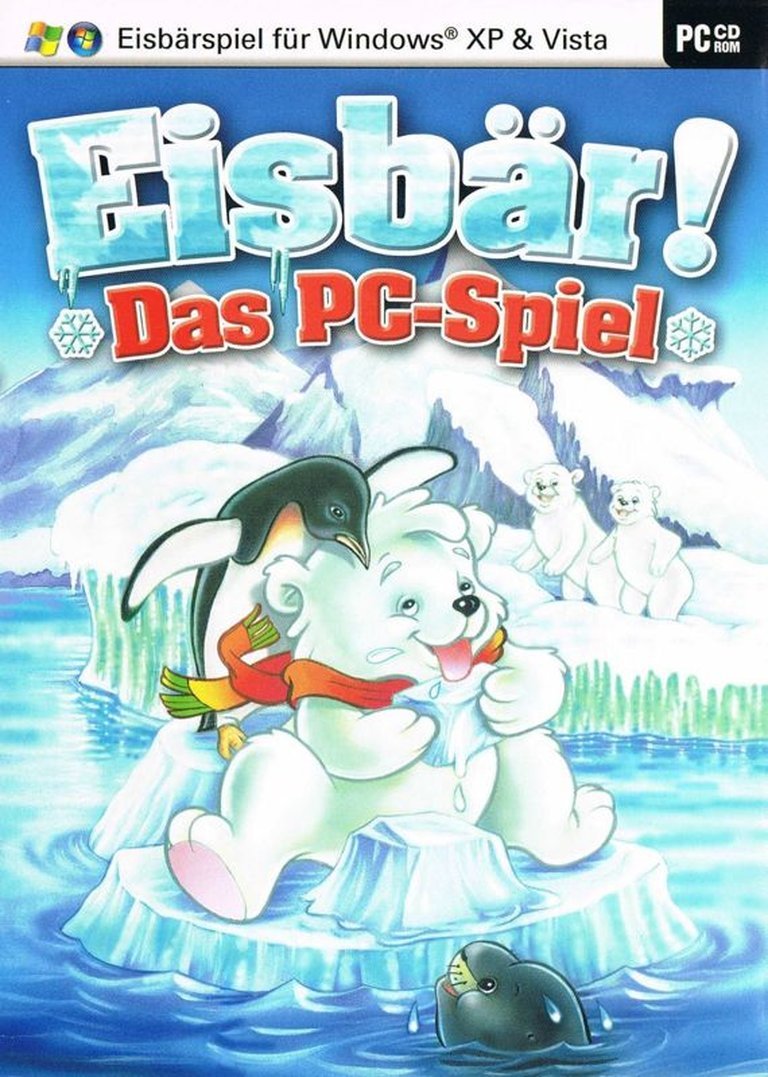
Eisbär! Das PC-Spiel is a Pac-Man clone where a little polar bear has escaped from the zoo, and players must navigate top-down labyrinths across 10 levels, collecting bonuses while avoiding pursuing wardens to earn extra lives and bonus points.
Eisbär! Das PC-Spiel Reviews & Reception
old-games.ru : кривые и совершенно оригинальные “пак-мэны”
Eisbär! Das PC-Spiel: Review
Introduction
Imagine a plucky polar bear, fresh from its zoo enclosure, waddling through neon-lit labyrinths in a desperate bid for freedom—only to find itself trapped in one of the most literal retreads of gaming history. Eisbär! Das PC-Spiel, released in 2007 for Windows by the obscure German developer TASK four and publisher media Verlagsgesellschaft mbH, is a quintessential Pac-Man clone that embodies the budget end of Europe’s casual gaming boom. With zero critical reviews, no MobyScore, and a footprint so faint it’s relegated to abandonware archives, this title whispers rather than roars. Yet, as a historian of video games, I argue that Eisbär! holds a peculiar place: not as innovation, but as a snapshot of mid-2000s shovelware culture—churning out kid-friendly arcade reskins on CD-ROM for the impulse-buy market, proving that even in the shadow of World of Warcraft, simple joys (or lack thereof) persisted.
Development History & Context
TASK four, a diminutive German studio, operated like a digital assembly line in the early 2000s, pumping out nearly identical Pac-Man variants as their modus operandi. Eisbär! Das PC-Spiel marked their seventh such outing, following a trail of forgettable titles where protagonists swapped from mice to frogs to devils, but the core formula never budged. Publisher media Verlagsgesellschaft mbH specialized in low-overhead “Das Spiel” branded cash-ins—think Bruno: Das Spiel (2006) or Sataan: Das Spiel (2004)—targeting families with USK 0-rated (all-ages) CD-ROMs priced for kiosk shelves in supermarkets or media stores.
The 2007 landscape was one of extremes: AAA juggernauts like BioShock and Crysis pushed PC hardware limits with DirectX 10 and sprawling worlds, while casual gaming exploded via portals like PopCap and Big Fish Games. TASK four thrived in the latter’s underbelly, leveraging minimal tech—fixed/flip-screen 2D visuals on standard Windows rigs (likely DirectX 8/9 compatible, given the 6MB install size). Constraints were self-imposed: no need for high-poly models or shaders when recoloring sprites sufficed. This era’s piracy and abandonware rise (evident today on sites like MyAbandonware) doomed physical media like this CD-ROM to obscurity, but it reflects a vision of “quick fun” for non-gamers—parents seeking 10-minute distractions amid the post-The Sims casual wave. Developer creativity? Hand-drawn mazes per a Russian critic’s note on Old-Games.RU, but with only 10 levels, ambition was rationed.
Narrative & Thematic Deep Dive
Storytelling in Eisbär! is as bare-bones as a zoo pamphlet: a “little polar bear” bolts from captivity, pursued by relentless wardens through 10 labyrinthine levels. No cutscenes, voiced dialogue, or lore dumps—just implied stakes via the title (Eisbär! meaning “polar bear!”) and cover art promising arctic adventure. The bear embodies innocent rebellion, collecting “different bonuses” (dots, power pellets?) while dodging foes, earning extra lives or points for high yields. Themes? Superficially, freedom from enclosure critiques zoo ethics or anthropomorphizes animal escape tales, aligning with groups like “Animals: Bears / Pandas” on MobyGames. Yet, betrayal looms: levels lack ice or snow, stranding the bear in generic mazes—”poachers” (per Old-Games.RU speculation) chase amid bland tiles, undermining the Arctic motif confined to menus.
Characters are archetypes: the agile protagonist (cute, white-furred sprite) vs. AI wardens (Pac-Man ghosts reskinned as humans?). No progression arcs, branching paths, or moral choices—just survival loops. Dialogue? Absent, save perhaps on-screen prompts in German (with multilingual support noted: Deutsch, Français, etc.). This minimalism amplifies irony: a game about evasion mirrors its own elusiveness in history, a thematic echo of the bear’s futile flight. In extreme detail, it parodies Pac-Man’s pellet-chasing anonymity, swapping existential dread for kiddie whimsy—escape as Sisyphean collection, where “victory” is high-score bragging rights.
Gameplay Mechanics & Systems
At heart, Eisbär! is faithful facsimile to Pac-Man (1980), its top-down, fixed/flip-screen perspective enforcing maze navigation via arrow-key precision. Core loop: Enter labyrinth, gobble bonuses (standard dots plus specials for lives/points), evade 4-wardens patrolling predictably yet lethally. Collision ends life; power-ups (inferred from “bonuses”) likely reverse pursuits, letting the bear munch foes for multipliers.
Core Loops Deconstructed:
– Collection Phase: Traverse walled mazes, prioritizing clusters for efficiency. 10 levels escalate via tighter layouts, faster enemies—hand-crafted per sources, avoiding procedural generation’s pitfalls.
– Pursuit Evasion: Wardens mimic ghosts’ AI—randomized paths with homing tendencies—demanding spatial awareness. Flip-screen transitions add tension, flipping views mid-chase.
– Progression: No RPG depth; lives from bonuses, scores for leaderboards. Endgame? Clear all 10, loop for highs?
Innovations/Flaws:
– Pro: Smooth arcade controls, all-ages accessibility (USK 0).
– Con: Repetitiveness amplified—only 10 levels for 2007 feels stingy (cf. Pac-Man‘s infinite loops). No modern twists like Pac-Man Championship Edition‘s tunnels. UI? Primitive: score/lives counters, pause/menu basics. Lacks polish—abandonware notes imply setup hassles on modern Windows.
| Mechanic | Strength | Weakness |
|---|---|---|
| Movement | Responsive top-down | No speed boosts |
| Enemies | Classic AI variety | Predictable patterns |
| Levels | Custom mazes | Mere 10 total |
| Scoring | Bonus incentives | No multipliers/variety |
Flawed yet functional, it’s shovelware perfected: 15-30 minutes per session, endlessly replayable for purists.
World-Building, Art & Sound
Setting defies expectations—no frozen tundras, just abstract labyrinths evoking sewers or warehouses, clashing with the polar bear’s zoo-escape premise. Cover art teases snowy charm (8+ backs on MobyGames), but in-game? Pixel art sprites: chibi bear waddles amid basic tilesets—walls, floors, bonuses in primary colors. Flip-screen visuals hark to 1980s arcades, fitting the clone ethos but dated for 2007 (post-Geometry Wars era).
Atmosphere leans whimsical menace: bear’s cuteness tempers warden threat, fostering tension-lite fun. Art direction? Budget-minimalist, reskinned from priors (Das süße Eisbär-Baby, 2007 kin). Sound design undocumented, but genre norms suggest chiptune beeps—munch SFX, waka-waka pursuit cues, death jingles. No orchestral swells; silence between levels amplifies isolation. Collectively, elements craft “cozy arcade” vibe: visuals/sound reinforce loops without distraction, though thematic disconnect (no ice!) dilutes immersion.
Reception & Legacy
Launch reception? Nonexistent—no Metacritic/MobyGames critic/user reviews, no sales charts. MyAbandonware’s lone 5/5 vote feels anomalous; Old-Games.RU’s Wendigo lambasts it as “tiny, identical Pac-Men on CD,” critiquing TASK four’s conveyor-belt output akin to Polish platformer farms. Commercial? Budget hit in German kiosks, but digital deluge buried it—now free on Retrolorean/MyAbandonware (6MB setups).
Influence? Nil directly, but emblematic of 2000s Euro-shovelware (Gefragt Gejagt: Das Spiel lineage). Pac-Man variants proliferated (Pac-Man 256, 2015), yet Eisbär! predates mobile clones, preserving CD-ROM arcadia’s tail-end. Legacy: Preservation artifact—MobyGames ID 94871, added 2017—highlighting animals-in-games trope and clone culture’s unsung role in casual evolution. No industry ripples, but it nods to Pac-Man‘s (1980) eternal DNA, per Museum of Play timelines.
Conclusion
Eisbär! Das PC-Spiel endures not for brilliance, but banality—a polar bear’s pixelated plight encapsulating TASK four’s clone factory amid 2007’s casual deluge. Strengths: Pure, unadorned arcade joy in 10 bite-sized mazes. Flaws: Repetitive, thematically muddled, content-thin. As historian, I verdict it niche curiosity (5/10)—worth emulating for Pac-fans or Euro-obscura hunters, but no pantheon entrant. In video game history, it claims a footnote: proof that even bears can’t outrun Pac-Man’s ghost. Download at your peril; history awaits contributors to flesh it out.