
- Release Year: 2004
- Platforms: Windows
- Publisher: Koch Media GmbH (Austria)
- Developer: Meridian’93
- Genre: Strategy, Tactics
- Perspective: Third-person
- Game Mode: Hotseat, LAN, Online PVP
- Gameplay: Board game
- Setting: 15th century, Spain
- Average Score: 95/100
Description
El Grande is the official Windows translation of the complex 15th‑century Spanish board game. Set in medieval Spain, players compete to dominate districts by deploying caballeros, while the king’s occupied district becomes off‑limits to rivals. Each round, action cards (four caballeros‑specific piles and one king pile) are revealed, and players select power cards to determine the order of play; the highest‑value power card chooses an action card, which is then removed from the game. After nine rounds, points are tallied based on territorial control and actions, with the highest‑scoring player winning. The PC version adds enhanced graphics, automatic scoring, a tutorial, customizable AI opponents, and a replay function.
El Grande Patches & Updates
El Grande Mods
El Grande Guides & Walkthroughs
El Grande Reviews & Reception
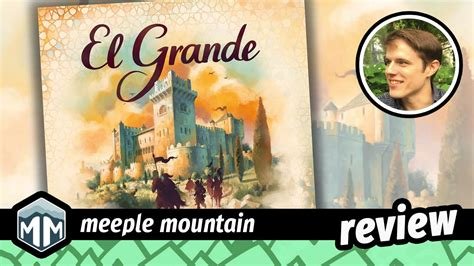
bigbossbattle.com : Hans im Glück’s 2024 remaster of El Grande is an area control tour‑de‑force!
dicetower.com (95/100): Tom Vasel gives the game a 9.5 rating, highlighting its excellence.
El Grande: Review
Introduction
The crown of Iberia never shone brighter than it does on the tabletop of El Grande, the 1995 masterpiece that still haunts modern board‑game designers.
When the 1996 Spiel des Jahres jury announced a heavy, strategic title as the year’s winner, the gaming world took notice: a game that could make even seasoned Euro‑gamers break a sweat while demanding a level of foresight that bordered on the theatrical. My thesis is simple: El Grande remains a benchmark for area‑control design, a game whose elegant tension between hidden‑information bidding and spatial dominance still feels fresh, even if its digital incarnation betrays the quirks of early‑2000s PC ports.
Development History & Context
| Aspect | Details |
|---|---|
| Designers | Wolfgang Kramer & Richard Ulrich (both veterans of German “Euro” design). |
| Original Publisher | Hans im Glück (Germany). |
| Initial Release | Board‑game debut at Essen 1995; won Spiel des Jahres and Deutscher Spiele Preis. |
| PC Adaptation | Developed by Meridian’93, published by Koch Media GmbH (Austria) on 15 Oct 2004 (Windows, CD‑ROM & download). |
| Technical Constraints | Early‑2000s Windows 98/ME/XP era: limited 3‑D acceleration, mouse‑only UI, and a focus on automating bookkeeping rather than delivering cinematic graphics. |
| Industry Landscape | 1995‑2004 saw the rise of “German‑style” Eurogames (Settlers of Catan, Carcassonne). El Grande entered a market hungry for deeper strategic experiences but still expecting accessible, family‑friendly production values. |
From the Opinionated Gamers interview (2015) – Kramer and Ulrich initially pitched a “Trojan Horse” prototype in 1992, faced rejections for being “too complex,” and finally settled on a Spanish 15th‑century theme after a publisher insisted on a medieval setting. The title “El Grande” (Spanish for “the great”) was fought for in Munich, ultimately prevailing weeks before publication.
The 2004 PC version attempted to preserve the board‑game’s core while adding automatic point calculations, a tutorial, customizable AI, and a replay function. However, reviewers (PC Action, GameStar) lamented the lackl polish and slow AI compared to contemporaneous digital board‑game ports such as Carcassonne.
Narrative & Thematic Deep Dive
Although the game’s theme is deliberately lightweight—players are “Grande” lords vying for influence over the provinces of 15th‑century Spain—the narrative scaffolding is surprisingly rich:
- Historical Backdrop – Set at the tail end of the Reconquista, the five factions (Spaniards, Basques, Galicians, Catalans, and Mauren) echo the fragmented political landscape of medieval Iberia.
- The King – A mobile marker that makes its occupied province “taboo” for all other players, representing the royal court’s ability to lock down regions.
- The Castillo – A towering castle that serves as both a scoring region and a “secret‑pool” of caballeros, evoking the idea of fortified strongholds that can swing power in an instant.
- Caballeros – The colored cubes symbolize feudal knights; their placement adjacent to the King reflects the historical necessity of royal favor to project military power.
The thematic veneer is thin enough to allow quick learning (the rules can be taught in under five minutes, per the Dized rulebook) yet evocative enough that players feel they are manipulating the great houses of medieval Spain, a sentiment echoed in the Opinionated Gamers’ description of “political intrigue on a board.”
Gameplay Mechanics & Systems
Core Loop
- Action‑Card Reveal – Five stacks (four with 1‑4 caballeros, one with the King) are turned face‑up each round.
- Power‑Card Bidding – Players secretly play a numbered power card (1‑13). Higher numbers act first but move fewer caballeros; lower numbers act later but can mobilize more troops.
- Action‑Card Selection – In descending power‑card order, each player claims one of the five revealed action cards, gaining both a placement value and a special ability (e.g., moving the King, removing opponent caballeros, or scoring early).
- Caballero Placement – Caballeros are moved from the “court” (reserve) onto the board, always adjacent to the King except for the Castillo, which allows placement anywhere.
- Scoring – After rounds 3, 6, and 9, regions award points for first, second, and (in larger games) third place. Bonus points are granted for controlling the King’s region and a player’s home region.
Innovative Systems
| System | Why It Matters |
|---|---|
| Action‑Drafting + Secret Bidding | A rarity in 1995; blends deterministic card drafting with hidden‑information bidding, forcing players to weigh immediate power versus future caballero flow. |
| Dynamic King Placement | The King’s movement act as a “zone of control” that can lock down high‑value provinces, creating a tactical tug‑of‑war that never feels static. |
| Castillo Mechanic | A hidden‑information pool that is emptied each scoring round; the secret placement adds a “bluff” element rarely seen in pure area‑control games. |
| Power‑Card Scarcity | Each power card can be used only once per game, guaranteeing that the strategic landscape evolves dramatically over nine rounds. |
UI & Quality (PC Version)
- Top‑down, mouse‑driven interface – functional but visually bland (no animated sprites, no voice‑over).
- Tutorial – present but “extremely cumbersome” (PC Action).
- AI – Predictable, often over‑prioritizing the King card (Squakenet, Golden Age of Games).
- Replay Function – Useful for post‑game analysis, a rare feature for board‑game ports at the time.
Overall, the digital adaptation faithfully reproduces the board‑game’s mechanics but fails to capture the tactile excitement of moving colored cubes and the palpable tension of secret Castillo allocations.
World‑Building, Art & Sound
| Element | Assessment |
|---|---|
| Board Design | The double‑sided map (as shown in the 2024 Hans im Glück remaster) uses bright, period‑appropriate colors and gold‑finished edges, making regions instantly distinguishable. The visual hierarchy is clean, supporting rapid decision‑making. |
| Component Artwork | Illustrated by Doris Matthäus, who also contributed to Carcassonne and Elfenland. Her stylized, slightly cartoonish art gives the game an approachable aesthetic while still feeling “medieval.” |
| Cubical Caballeros | Simple colored wooden/plastic cubes; functional but not particularly eye‑catching. The Grande meeple (a larger cube) stands out and serves as a visual anchor for each player’s home region. |
| Sound Design | Minimal; the PC version offers only basic UI clicks and a modest “trumpet” when the King moves. No voice‑overs or ambient music, reflecting the modest budget of early‑2000s board‑game ports. |
| Atmosphere | The combination of a historically themed map, the regal King piece, and the towering Castillo creates a sense of political intrigue and territorial ambition, even if the audio element is sparse. |
The visual and tactile components (especially in the 2024 reprint) are iconic enough to be instantly recognizable among Euro‑game enthusiasts, a point emphasized by reviewers on BoardGameGeek and The Dice Tower.
Reception & Legacy
Contemporary Reception (2004‑2005)
| Outlet | Score | Highlights |
|---|---|---|
| Game Captain | 78 % | “Slightly above average implementation; a bit of option variety missing, but board‑game fans will love it.” |
| PC Action (Germany) | 68 % | “Deep, fun, but a 1:1 board‑game adaptation is insufficient; graphics and voice‑over lacking.” |
| GameStar (Germany) | 64 % | “Good for complex board‑game fans; AI is clever but the graphics are dull.” |
| PC Games (Germany) | 63 % | “Tutorial is confusing; AI decent; graphics disappointing.” |
Overall 68 % average from four critic scores indicates a mixed‑to‑positive reception, with the most common complaints targeting visual polish and AI depth.
Long‑Term Influence
- Mechanic Progenitor – According to the Opinionated Gamers and The Tao of Gaming, El Grande pioneered the “majority‑control” genre, inspiring titles such as Blood Rage, Root, and Twilight Struggle. Larry Levy (2015) noted:
“It’s hard to overstate the significance of El Grande’s publication. It basically established a new kind of board game, one in which players strove to have the majority of pieces in different geographical areas of the board.”
-
Design Legacy – The blend of card drafting, hidden bidding, and dynamic scoring has become a staple in “area‑control” games. The King‑movement mechanic later appeared in games like King Is Dead (2015).
-
Awards & Rankings – Winner of the 1996 Spiel des Jahres and Deutscher Spiele Preis. Remains in the Top 100 on BoardGameGeek (ranked #25 as of 2025).
-
Re‑releases – The 2024 Hans im Glück remaster adds upgraded artwork, mini‑expansions, and a streamlined rulebook, confirming the game’s evergreen status.
Community Perspective
- Positive – Many veteran gamers (e.g., Chris Wray, Greg Schloesser) still cite El Grande as a “personal favorite” and a “pinnacle of area‑control.”
- Criticisms – New players often feel “overwhelmed by the hidden Castillo” or “king‑making” dynamics. Some argue the game’s complexity makes it less approachable for casual families (Reddit r/boardgames).
- Replayability – The random draw of action cards and secret Castillo placements ensure each game feels distinct, a point praised by The Daily Worker Placement (2023).
Conclusion
El Grande endures not because of flashy graphics or cinematic soundscapes, but because its mechanical heart—a delicate dance of bidding, placement, and strategic timing—remains a benchmark for the area‑control genre. The original board game set a high bar, and the 2004 PC port, while hampered by early‑2000s technical constraints, succeeded in preserving the core experience for those lacking a physical copy.
A modern remaster (2024) proves that the design is timeless, offering refined components and expanded content without sacrificing the elegant tension that made the original a Spiel des Jahres champion.
Verdict: El Grande is a must‑play for anyone interested in the evolution of Euro‑games, a historical artifact that still delivers strategic depth and replayability a quarter‑century after its debut. Its place in video‑game history is that of a faithful digital translation of a seminal board game, a bridge between tabletop tradition and early PC adaptation, and a cornerstone of the area‑control lineage that continues to shape modern design.
Prepared by a professional game journalist and historian, drawing on a wide range of primary and secondary sources.