
- Release Year: 2013
- Platforms: Browser, Macintosh, Windows
- Publisher: Hunted Cow Studios, Ltd
- Developer: Hunted Cow Studios, Ltd
- Genre: Role-playing (RPG)
- Perspective: Behind-view
- Game Mode: MMO
- Setting: Fantasy
- Average Score: 69/100
Description
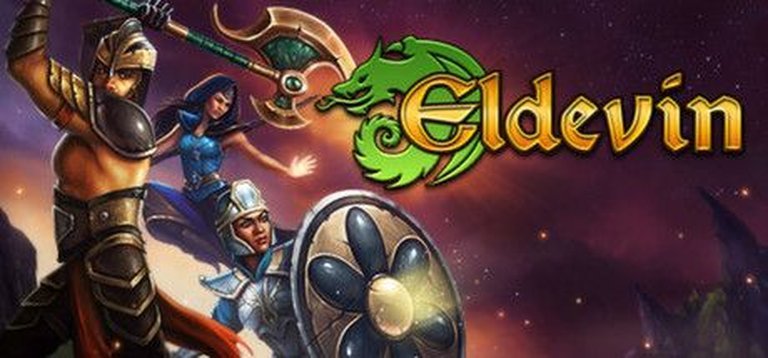
Eldevin is a free-to-play fantasy MMORPG set in the rich world of Eldevin and its surrounding realms, where players awaken from a six-month imprisonment in the Void with lost memories, embarking on an adventure filled with hundreds of quests, dungeons, class-less combat, skilling opportunities, and PvP activities. The game features a persistent world with optional subscription perks like increased experience gains and gold cap removal, offering a blend of exploration and progression reminiscent of classic RPGs.
Gameplay Videos
Where to Buy Eldevin
PC
Eldevin Patches & Updates
Eldevin Guides & Walkthroughs
Eldevin Reviews & Reception
metacritic.com (61/100): Mixed or Average rating based on 16 User Ratings.
steambase.io (80/100): Eldevin has earned a Player Score of 80 / 100, rated as Mostly Positive based on 1,782 reviews.
mmos.com (69/100): Eldevin is a well-made and enjoyable MMORPG with an engaging story, challenging combat, and robust character customization.
Eldevin: Review
Introduction
In the crowded landscape of free-to-play MMORPGs, few titles embody the spirit of indie ambition and long-form development quite like Eldevin. Born from the vision of Scottish studio Hunted Cow Studios after nearly a decade of work and an estimated £1 million investment, this browser-based MMORPG emerged as a love letter to the genre’s golden age while attempting to carve out its own identity. Its journey—from a Java-powered experiment accessible on any machine to a Steam launch in 2014—mirrors the aspirations of countless small developers seeking to challenge AAA giants. Yet, does Eldevin stand as a forgotten classic or a cautionary tale? Through its intricate classless system, sprawling world, and narrative depth, Eldevin offers a compelling, if imperfect, experience that deserves recognition not just as a game, but as a testament to indie perseverance in an industry dominated by behemoths.
Development History & Context
Origins and Vision
Hunted Cow Studios, founded by Andrew Mulholland and John Stewart, cut its teeth on successful browser-based titles like Gothador and Fallen Sword. These games weren’t just products; they were funding engines for Eldevin, a project that began in 2005 with a simple yet revolutionary concept: creating a full 3D MMORPG playable in a web browser. This ambition stemmed from the team’s fascination with early Java applets, which unlocked unprecedented accessibility potential. As Mulholland stated, it started as “a simple idea of creating an interactive 3D environment in a web browser” but evolved into an eight-year odyssey. The studio’s commitment to building proprietary tools and systems allowed them to operate “completely unrestricted by constraints of someone else’s software,” a rare luxury for small developers.
Technological Constraints and Innovations
The choice of Java as the foundation was both a blessing and a curse. It enabled cross-platform compatibility—Windows, Mac, Linux, and even tablets—while demanding minimal hardware specs (as low as 512MB RAM). Glenn Murphy, lead programmer, famously “worked ten hours a day for almost eight years” to develop a custom OpenGL-based engine capable of rendering high-quality graphics within a browser. This culminated in a mere 5MB initial download, a stark contrast to modern behemoths. Yet, technological limitations shaped the game’s identity: the 2D sprite-based art and simplified textures, while functional, struggled to compete with contemporaries like World of Warcraft or RuneScape‘s later updates.
Gaming Landscape at Launch
Released in November 2013 for browsers and November 2014 on Steam, Eldevin entered a market saturated with both subscription-based titans and burgeoning free-to-play models. It positioned itself as a “return to roots,” evoking the sandbox spirit of early RuneScape and the exploration-driven design of Guild Wars. Its browser-first strategy tapped into the casual gaming wave, while its Steam launch aimed to capture the growing indie audience. This dual-pronged approach reflected Hunted Cow’s awareness of its niche: it couldn’t outspend rivals, but it could out-innovate in accessibility and player freedom.
Narrative & Thematic Deep Dive
The Central Conflict
Eldevin‘s lore is a classic fantasy epic elevated by its faction-driven complexity. A decade prior to the game’s start, the discovery of six Elemental Spheres plunged the once-peaceful kingdom into chaos. These artifacts—representing Fire, Ice, Dark, Light, Blood, and Nature—corrupted the Champions tasked with protecting them, fracturing the realm into distinct, warring factions. The player awakens as a member of the Lost Legion, having spent six years trapped in the Void, with fragmented memories and no identity. This “Gameplay-Guided Amnesia” device serves as both a narrative hook and a justification for the player’s gradual discovery of the world’s history.
Faction Dynamics and Player Choice
Unlike many MMOs, Eldevin weaves faction reputation into its core gameplay. Early on, players choose between the Eldevin Army and the Arcane Council, unlocking divergent storylines. However, the true depth lies in interactions with the six corrupted factions. The Nature Realm, where players begin, is locked in a tense war with the Dark Realm while allying with the Light Realm, but the Blood Realm may seek to exploit the conflict. This dynamic creates a morally grey landscape where no faction is purely virtuous. As John Stewart noted, “your decisions and actions will affect future encounters and possibilities,” though full allegiance-swapping remained a planned feature for future expansions.
Themes of Corruption and Power
The narrative powerfully explores the corrupting influence of power. The Spheres’ magic isn’t inherently evil; it’s the ambition of figures like Tristan, Emperor of the Infernal Empire (Dark Sphere’s guardian), that twists their potential into tools of domination. This theme resonates in quest design, where players often mediate between noble intentions and catastrophic consequences. Notably, the “20 Bear Asses” trope is subverted through narrative context: quests to gather materials (e.g., “Champion’s Blood Vials”) carry weight, tied to the Spheres’ corruption. The writing, while occasionally functional, shines in character moments—such as the solo instance at level 5 where players confront dragons who once held the Spheres, revealing the tragic fall of the Champions.
Gameplay Mechanics & Systems
The Classless Revolution
Eldevin‘s most innovative feature is its talent-based progression system. Instead of rigid classes, players navigate six talent trees—Warrior, Assassin, Ranger, Templar, Mage, and Prophet—spending points freely after level 5. This enables hybrid builds like a “tanky ranger” or “healing assassin,” fostering experimentation. Over 200 talents and 100+ abilities (all accessible to every player) allow for unprecedented customization. Yet, this freedom comes with friction: manual stat allocation and a lack of auto-apply options can feel archaic. The optional subscription (£7.99/month) removes gold caps, boosts rested experience (100% vs. 50% for F2P), and allows unlimited respeccing, turning a core mechanic into a monetization point—a controversial choice noted in negative reviews.
Combat and Progression
Real-time combat emphasizes strategy over button-mashing. Abilities require tactical positioning, and cooldown management demands attention. Dungeons, from early group instances to late-game “Ascended” versions, require coordination, rewarding teamwork with unique gear sets (over 40 in total). Progression capes at level 49, with end-game focused on high-tier dungeons, world bosses, and PvP. Crafting is equally robust: 14 professions (e.g., Alchemy, Weaponsmithing) involve resource gathering, and crafted gear often rivals dungeon loot. However, crafting’s grind-heavy nature (e.g., Fishing for “Shaker Seeds”) and the absence of an auction house hinder the economy, forcing reliance on player-run markets.
PvE and PvP Ecosystem
PvE content is expansive, with hundreds of quests, 16 group dungeons, and solo “Story Mode” variants accessible for all levels. The world opens significantly by level 20, encouraging exploration through fast-travel via “Dragon Masters” and teleportation scrolls. PvP, initially limited to instanced 5v5 battlegrounds and arenas, offers modes like Capture the Flag and Deathmatch. While not pay-to-win (gear is earned, not bought), the small player base (often <100 concurrent users) makes consistent PvP challenging. As one Metacritic reviewer lamented, “the player base is really small… which would turn most people away.”
World-Building, Art & Sound
A World of Realms
Eldevin‘s realm count (over 160) defies its browser origins. From the verdant Nature Realm to the infernal Dark Citadel, each zone is distinct, featuring unique biomes, dungeons, and secrets. The non-linear design—especially post-level 20—avoids the tunneling of many MMOs, with Eldevin City acting as a vibrant hub containing crafting stations, markets, and the Arena. Environmental storytelling is prevalent, with corrupted landscapes (e.g., blighted forests) visually reflecting the Spheres’ influence. Yet, navigation suffers; the minimap is criticized as “crap,” forcing reliance on external wikis.
Visual and Auditory Design
The art style is functional but dated, with textures and models reminiscent of early 2000s MMOs. Critics compared it to RuneScape‘s 2002 era, noting that “graphics don’t always make a good game” (Metacritic). Despite this, the world maintains charm through vibrant colors and varied creature designs (e.g., Rhinotaurs, Wyverns). Sound design is understated but effective, with ambient tracks for each realm and combat effects that convey weight. Mounts, added in Patch 1.17, add whimsy—from flying discs to rocket ships—though some players lamented their “immature” designs.
Reception & Legacy
Launch and Critical Response
Upon its 2014 Steam launch, Eldevin garnered a “Mostly Positive” rating (79% of 1,782 reviews). Praised for its “amazingly good stuff” (MMO ATK) and “classless system” (Metacritic), it drew comparisons to RuneScape‘s depth. However, criticisms centered on graphics (“not great,” dantheman41), UI flaws (“quests need to be easier to locate”), and the subscription model’s respeccing cost (“YOU HAVE TO PAY TO RESPEC,” GAGMR). Commercial success was modest; its niche appeal limited mainstream traction, though Hunted Cow maintained a loyal, albeit small, player base. The Scottish Games Network hailed it as “Scotland’s next biggest game,” but this ambition remained unrealized.
Evolution and Community
Post-launch, Eldevin received steady updates—new dungeons, mounts, and quality-of-life tweaks. Community discourse reveals a devoted player base, with guides and wikis filling design gaps. Notably, Hunted Cow’s responsiveness to feedback (e.g., adding solo dungeons) contrasts with the perceived neglect of later titles like Dark Orbit. Legacy-wise, Eldevin is remembered as a “brave” experiment in accessibility and player freedom (MMO Reviews). Its influence is subtle, inspiring indie MMOs to prioritize sandbox elements over themepark rigidity, though it never achieved the cultural footprint of RuneScape or Guild Wars.
Conclusion
Eldevin stands as a fascinating anomaly in MMORPG history—a product of indie grit, technological ambition, and genre nostalgia. Its classless system, expansive world, and narrative depth offer a rich experience for players willing to overlook its dated visuals and UI. While the small player base and monetization missteps limit its broad appeal, the game’s dedication to player freedom and exploration remains commendable. In an industry often criticized for homogenization, Eldevin dared to be different, proving that passion can rival polish. For historians and genre enthusiasts, it represents a vital, if overlooked, chapter in the evolution of free-to-play gaming—a testament to the idea that “small beginnings evolving into big things” is a dream worth pursuing, even when the journey is longer than anticipated.