
- Release Year: 2020
- Platforms: Linux, Windows
- Publisher: Amaxang Games
- Developer: Amaxang Games
- Genre: Action
- Perspective: Side view
- Game Mode: Single-player
- Gameplay: Platform
Description
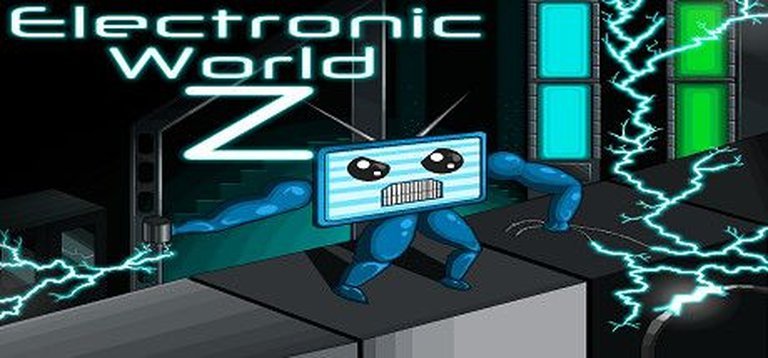
Electronic World Z is a 2D side-scrolling platformer where players control DGIN TV, a robot on a story-driven mission to collect special electronic components from a highly secured electronic world. The objective is to repair a giant power generator that failed and caused a power outage, navigating 26 challenging levels filled with traps and obstacles in this indie game developed with GameMaker.
Where to Buy Electronic World Z
PC
Electronic World Z: A Review of a Digital Ghost in the Indie Machine
Introduction: The Signal from the Static
In the vast, overwhelming library of digital distribution platforms, certain titles exist as almost pure potential energy— games that flicker on the periphery of awareness, known only to a handful of collectors or bundled into obscurity. Electronic World Z is one such title. Released on September 11, 2020, by the solo developer Anamik Majumdar under the Amaxang Games banner, it is a 2D platformer that achieved the rare status of being simultaneously present and profoundly absent from the discourse of its era. Its Steam page, itch.io listing, and MobyGames entry provide a skeletal blueprint: a story-driven, challenging platformer about a robot named DGIN TV collecting electronic components in a “highly secured electronic world.” Yet, it exists in a critical vacuum, with zero critic reviews on Metacritic, a single user review on Steam, and a MobyScore listed as “n/a,” collected by only one user. This review, therefore, is not an analysis of a widely played classic or a notorious flop, but an archaeological excavation of a digital artifact. My thesis is this: Electronic World Z serves as a poignant, microcosmic case study of the solo indie developer’s journey in the 2020s—a game defined less by its gameplay (which we will infer from genre conventions and sparse details) and more by its context, its quiet persistence, and what its near-total obscurity says about the overwhelming noise of the modern indie marketplace.
Development History & Context: One Man, One Engine, One Vision
The development history of Electronic World Z is, in its essentials, the development history of thousands of games released in the late 2010s and early 2020s. The creator, Anamik Majumdar, is a solo developer. The note on the Steam store page is a direct, unvarnished statement: “I am a solo indie game developer and I have done all of the graphics, artwork, programming, animation except for the music.” This is the foundational context. There is no studio narrative, no Kickstarter campaign, no early access saga. There is only a single person’s sustained effort, channeled through the democratizing tool of GameMaker Studio.
GameMaker, having evolved from a simple educational tool to a powerhouse for indie hits like Undertale and Hotline Miami, represents the technological constraint and opportunity of the era. It lowered the barrier to entry for 2D game development to a point where a single individual could produce a technically competent, commercially viable (if minimally so) product. The constraints were not hardware-based—the game’s system requirements (a DirectX 9.0c-capable GPU, 2GB RAM) are almost generically undemanding for 2020—but were constraints of scope, budget, and marketing reach. Majumdar worked within a familiar, self-imposed framework: pixel art (suggested by the “Pixel Graphics” tag), a limited number of levels (26), and a simple, serviceable narrative premise.
The gaming landscape of September 2020 was dominated by next-gen console transitions, the continued COVID-19 pandemic’s boost to digital sales, and a saturated indie market on Steam. Standing out required either exceptional polish, a Viral moment, or significant marketing spend. Electronic World Z entered this arena with none of these. Its name, following a pattern seen in the “Related Games” list on MobyGames (e.g., Electronic Wrestling, Electronic Football), suggests a thematic link to vintage dedicated handheld electronic games, but this connection is more nominal than aesthetic. It is a game born from a personal desire to create a “weird experimental platformer with lots of traps and obstacles,” as stated in the FAQ, built in isolation and released into a cacophony it had no means to pierce.
Narrative & Thematic Deep Dive: A Plot as a Platform
The narrative of Electronic World Z is not deep, but it is functionally precise, serving entirely as a justification for the game’s core loop. The premise, as repeated across all storefronts, is as follows:
A “Giant Power Generator” in the “Z” Power Station abruptly fails, causing regional blackouts. Diagnosis reveals damaged electronic components. These components are “special” and “not easily available.” They have been secured within a “highly secured electronic world,” a digital realm accessible only to the purpose-built robot, DGIN TV. DGIN TV is dispatched on an urgent mission to collect these components—Capacitors, IC chips, Resistors—to repair the generator and restore power.
From this, we can extrapolate a handful of core themes:
1. Techno-Utilitarianism & Specialization: DGIN TV is not a hero; it is a tool, a specialist designed for one environment to fix one machine. The narrative frames the crisis as a technical failure requiring technical solutions, not societal or political ones. The world’s salvation hinges on the acquisition of discrete, commodified parts.
2. The Digital Labyrinth: The “electronic world” is the game’s setting—a metaphorical representation of the inner space of technology. It is “highly secured,” implying a hostile, trap-laden environment designed to protect its contents. This turns the game into a heist or infiltration simulator at a microscopic scale.
3. The Weight of a Single Component: The collectibles are not artifacts of lore or power-ups in a traditional sense; they are specific, real-world electronic components. This grounds the game’s fantastic premise in a tangible, almost educational reality. Each capacitor collected is a step toward a tangible, mechanical repair.
The dialogue and character depth are, by necessity and design, nonexistent. DGIN TV is a silent protagonist; there are no other characters. The story is delivered entirely through the introductory blurb and perhaps sparse in-game text. This is not a narrative-driven game in the RPG sense, but a “Story Driven” game in the way a Super Mario Bros. level is “Story Driven”: the plot is a simple, repeatable loop that provides raison d’être for the action. The theme, then, is not explored through character arcs but through environmental storytelling—if any exists—and the very nature of the gameplay. You are not saving people; you are performing a repair. The “world” you traverse is a puzzle-box representation of a machine’s innards.
Gameplay Mechanics & Systems: The Architecture of Challenge
With no video footage or detailed player reviews, the gameplay must be reconstructed from its “Key Features,” genre tags (“Difficult,” “Puzzle-Platformer,” “Stealth”), and the established conventions of the challenging 2D platformer genre it claims association with (think Celeste, Super Meat Boy, or the precision demands of Kaizo Mario).
- Core Loop: The fundamental unit of play is the level. The player controls DGIN TV (likely with standard move/jump inputs, possibly with a dash or other traversal ability hinted at by “challenging situations”) with the objective of reaching a designated endpoint or collecting all required components within a level. The 26-level structure suggests a progressive difficulty curve.
- Obstacles & Traps: The primary antagonists are environmental. “Lots of Traps and obstacles!” implies a design philosophy centered on player error. These would logically include: spikes, projectiles, moving platforms, disappearing blocks, laser grids, and enemies. The “Stealth” tag is particularly intriguing, suggesting some elements may require avoiding line-of-sight detection, adding a layer of planning to the platforming.
- Collection & Progression: The central mechanic is component collection. Levels likely require finding a certain number or specific types of Capacitors, IC chips, and Resistors. There is no mention of ability upgrades or a skill tree. Progression is purely mastery-based: completing one level unlocks the next. The “6 Lives to begin with!” system is a clear nod to classic arcade and NES-era design, where a limited stock of lives makes each death meaningful and restarts potentially punishing.
- Difficulty & “Hard to Master”: This is the game’s stated selling point. The challenge likely stems from tight physics requiring precise inputs, frame-perfect jumps, complex obstacle sequencing, and potential hidden paths or alternative routes for 100% completion. The “Challenging situations” are the game.
- Innovation & Flaws: There is no evidence of innovative mechanics in the provided material. The innovation, if any, is in the synthesis: the thematic coupling of “electronic components” as collectibles with the platforming challenge. The potential flaws are inherent in solo development: level design may be uneven, hitboxes potentially unfair, and the difficulty curve potentially jagged. The lack of user reviews makes it impossible to gauge if the challenge feels fair or frustrating.
World-Building, Art & Sound: The Aesthetic of the Circuit
The world of Electronic World Z is the “Electronic World.” This is a setting of profound abstraction. From the title and collectibles, we can imagine an aesthetic that is a digital, schematic, or motherboard-inspired landscape. The user-defined Steam tags provide crucial clues: “Pixel Graphics,” “Minimalist,” “Cartoony,” “Cute,” “Anime.” This is not a gritty, cyberpunk Tron; it is a likely colorful, perhaps even whimsical, digital space. DGIN TV is probably a small, cute robot design, contrasting with the sterile, technical purpose of its mission.
The “Minimalist” tag suggests a limited color palette, clean lines, and a focus on clear readability for the player—a practical necessity in a precision platformer. The “Cartoony” and “Anime” influences may impart a slightly exaggerated, expressive quality to the character and perhaps some enemy designs, softening the hardness of the “challenging” gameplay.
Sound design is the great unknown. The developer notes the music was outsourced, but no composer or style is credited. We can only assume it follows the indie platformer trope: an energetic, looping chiptune or synth-wave track to accompany the action, potentially with satisfying, crisp sound effects for jumps, collectibles, and deaths. The atmosphere is likely one of focused, tense energy punctuated by the “clink” of a collected component.
Ultimately, the art and sound must serve the gameplay. In a challenging precision platformer, visual clarity is paramount. Hazards must be immediately readable. The path forward, while difficult, should be discernible. The “Electronic World” is thus a functional theme applied to a functional aesthetic.
Reception & Legacy: The Silence of the MobyScore
The reception of Electronic World Z is its most defining, and most tragic, characteristic. It is a case study in non-reception.
* Critical: Nonexistent. Metacritic shows “tbd” for both critic and user scores. MobyGames has no critic reviews and a single, vague user entry.
* Commercial: Its commercial performance is invisible but can be inferred. It is sold on Steam for $3.99 and on itch.io for $4.00. It is frequently included in massive bundles (the “Amaxang Games – All Games” bundle contains 65 items for €255.35, implying Electronic World Z is one small component in a vast catalog of low-priced, low-profile titles). Its sales are almost certainly minimal, generating perhaps a few hundred dollars at best, a common outcome for solo releases without marketing.
* Community: The Steam community hub has a handful of pinned developer announcements (bug reports, Linux instructions, FAQ) and virtually no organic discussion. The “Found A Bug?” thread is a solitary act of maintenance. There are no guides, no art showcases, no discussion of strategies. The game has no community.
Its legacy, therefore, is not one of influence on major franchises or industry trends. It has left no discernible mark. Its influence is purely anecdotal and micro: it is part of the immense, sprawling catalog of Amaxang Games, a publisher/developer that has released dozens of similarly obscure titles (the Steam bundles list games with titles like The Haunted Exmone Theatre, Smash Halloween Pumpkins: The Challenge, Proxy Air Force). Electronic World Z is a single, brightly colored pixel in a vast, monotonous tapestry of similar indies. It represents the long tail of GameMaker development—the vast majority of games made with accessible tools that, for every Undertale or Hyper Light Drifter, exist in a state of quiet oblivion. Its legacy is as a data point in the statistics of oversaturation, a game that proves the sheer volume of creation possible in the modern era and the corresponding impossibility of any single voice being heard without extraordinary effort or luck.
Conclusion: The Component in the Collection
What, then, is Electronic World Z? It is a functional, no-frills 2D platformer built by a solo developer with a clear, if narrow, vision. Its world is an abstract digital realm, its narrative a thin justification for collect-a-thon gameplay, its mechanics derivative of a well-established genre. By any objective metric of critical or commercial success, it is a failure, a whisper lost in the storm.
And yet, to dismiss it solely on these metrics is to miss its true significance. Electronic World Z is a testament. It is a testament to the enduring urge to create, to build a complete (if small) world and invite others to navigate it. It is a testament to the democratization of development tools that allow a single person in isolation to produce a shippable product. It exists as a digital ghost, a game that haunts the storefronts not with quality or notoriety, but with pure, unadorned existence. Its place in video game history is not on a pedestal but in the archive—a perfect specimen of the “long tail” indie. It is the electronic component itself: small, specialized, necessary for some hypothetical machine of cultural memory, but largely overlooked as the world powers on with more prominent, flashier devices. To play it is not to experience a lost classic, but to perform an act of digital archaeology, to briefly engage with one of the countless, quiet stories of independent creation that form the unseen bedrock of our hobby. Its final, definitive verdict is not a score, but a recognition: it is a complete thought, successfully executed and released, and in that, it has achieved a quiet, unassailable victory.