
- Release Year: 2004
- Platforms: Windows
- Publisher: NStorm, Inc.
- Developer: NStorm, Inc.
- Genre: Action, Sports
- Perspective: 3rd-person
- Game Mode: Hotseat, Single-player
- Gameplay: Physics-based, Turn-based
- Setting: Christmas, Fantasy
- Average Score: 57/100
Description
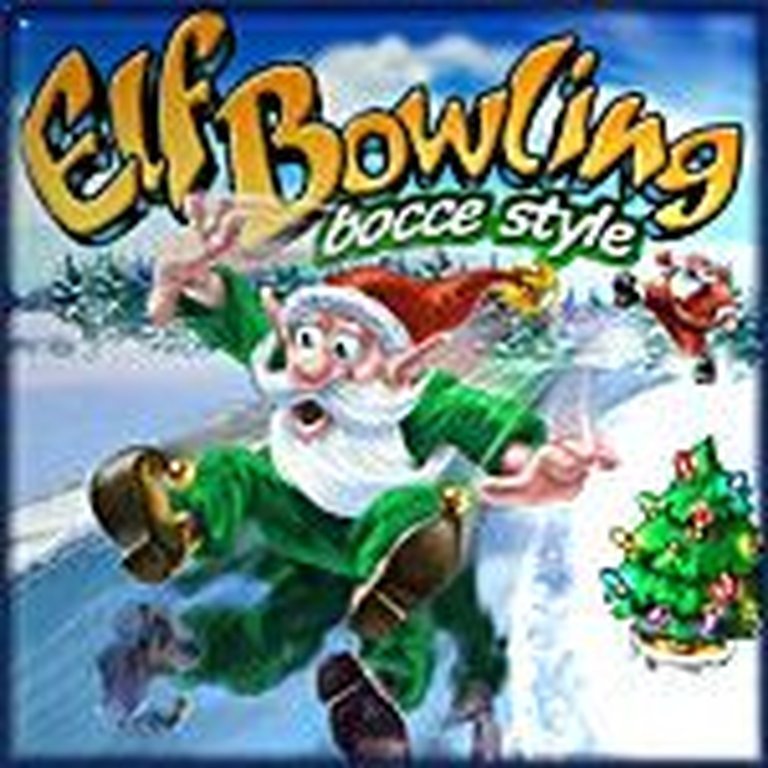
Elf Bowling: Bocce Style is the fifth installment in the Elf Bowling series, blending the classic Italian sport of bocce with the game’s signature comedic Christmas theme. Players take turns launching a penguin (the ‘pallino’) down a lane using a candy cane, then aim to roll elves as close to it as possible. The game features multiple festive locations like the North Pole Sleighport and Santa’s Toy Factory, playable characters including Santa and Mrs. Kringle, and supports both single-player and two-player modes. Rounds continue until one player reaches a set score (4, 7, or 12 points), with the shareware version limiting playtime to 60 minutes.
Gameplay Videos
Elf Bowling: Bocce Style Free Download
Elf Bowling: Bocce Style Guides & Walkthroughs
Elf Bowling: Bocce Style Reviews & Reception
sockscap64.com (57/100): This Game has no review yet, please come back later…
Elf Bowling: Bocce Style Cheats & Codes
PC
Enter codes during gameplay.
| Code | Effect |
|---|---|
| Ctrl + X | Guarantees a strike every time unless the head pin steps to the side |
Elf Bowling: Bocce Style: A Festive Spin on a Classic Sport
Introduction
In the annals of video game history, few franchises have embraced the absurdity of the holiday season quite like Elf Bowling. What began as a viral sensation in the late 1990s—an irreverent, low-budget advergame where Santa Claus used his striking elves as bowling pins—evolved into a series that spanned multiple genres, platforms, and even a direct-to-video film. Elf Bowling: Bocce Style, the fifth entry in this bizarre saga, takes the franchise’s signature blend of holiday cheer and slapstick humor and applies it to the Italian lawn game of bocce. Released in 2004 by NStorm, Inc., this game is a fascinating artifact of early 2000s casual gaming, a time when shareware, viral marketing, and the burgeoning internet culture collided to create something both ridiculous and endearing.
At its core, Elf Bowling: Bocce Style is a simple yet charming adaptation of bocce, where players take turns rolling elves (instead of balls) as close as possible to a penguin (the “jack” or “pallino”). The game retains the series’ trademark humor, with elves taunting players, penguins waddling down the lane, and a festive atmosphere that permeates every aspect of the experience. Yet, beneath its lighthearted exterior, Bocce Style also reflects the broader trajectory of the Elf Bowling franchise—a journey from freeware novelty to commercial product, from viral phenomenon to niche curiosity.
This review will delve deep into Elf Bowling: Bocce Style, examining its development history, gameplay mechanics, narrative (or lack thereof), artistic design, and its place in the larger context of the Elf Bowling series and early 2000s gaming culture. We’ll explore how the game fits into the evolution of casual gaming, the role of shareware in the industry, and the unique legacy of a franchise that began as a marketing gimmick and somehow endured for nearly a decade.
Development History & Context
The Birth of a Viral Sensation
The Elf Bowling series traces its origins to 1999, when Dan Ferguson and Mike Bielinski, co-founders of the Dallas-based web design company NVision Design, created the original Elf Bowling as a promotional tool for their email marketing division, NStorm. The game was a simple, 1MB executable file that could be easily shared via email—a novel concept in the late 1990s, when the internet was still in its dial-up infancy. The premise was as absurd as it was brilliant: Santa Claus, frustrated by his elves going on strike, decides to use them as bowling pins. The game’s crude humor, simple mechanics, and festive theme made it an instant hit, spreading like wildfire through corporate email chains and early internet forums.
The original Elf Bowling was a cultural phenomenon, achieving download rates of up to 900 times per second at its peak. It became one of the first true viral games, predating the rise of social media and demonstrating the power of word-of-mouth marketing in the digital age. However, its success was not without controversy. Rumors quickly spread that the game contained a virus or spyware, a claim that was later debunked by antivirus companies like Symantec. Despite the false alarms, the controversy only fueled the game’s notoriety, cementing its place in internet lore.
The Evolution of the Franchise
The success of the original Elf Bowling led to a series of sequels and spin-offs, each attempting to capitalize on the franchise’s viral appeal while experimenting with different gameplay mechanics. Elves in Paradise: Elf Bowling 2 (2000) abandoned bowling altogether in favor of a shuffleboard-style game, while Elf Bowling 3 (2002) introduced a slingshot mechanic where players launched elves onto ice-bound targets. Super Elf Bowling (2003) returned to the series’ roots with a 3D upgrade, offering more complex ball physics and additional playable characters.
By the time Elf Bowling: Bocce Style was released in 2004, the franchise had firmly established itself as a staple of holiday-themed casual gaming. The shift to bocce—a game that, like bowling, involves rolling balls (or in this case, elves) toward a target—was a natural progression for the series. Bocce’s slower pace and strategic depth provided a refreshing change from the fast-paced action of traditional bowling, while still retaining the core appeal of the Elf Bowling brand: simple, accessible gameplay with a healthy dose of humor.
Technological Constraints and Design Philosophy
Elf Bowling: Bocce Style was developed during a transitional period in gaming history. The early 2000s saw the rise of casual gaming as a distinct genre, driven by the popularity of shareware, browser-based games, and digital distribution platforms. Games like Elf Bowling were designed to be lightweight, easy to download, and accessible to a broad audience—qualities that were essential in an era when many users still relied on dial-up internet connections.
The game’s technical specifications reflect these constraints. Bocce Style was built as a 3rd-person, mouse-controlled experience, with minimal system requirements (a Pentium III processor, 64MB of RAM, and 4MB of VRAM were sufficient to run it). The graphics were simple but effective, using bright, festive colors and cartoonish character designs to create a cheerful holiday atmosphere. The game’s small file size (just 8MB for the full version) made it easy to distribute, whether as a shareware trial or a full purchase.
The development team at NStorm, Inc. clearly understood the appeal of the Elf Bowling franchise and sought to preserve its core elements while introducing new mechanics. The shift to bocce allowed them to experiment with a different type of gameplay while maintaining the series’ signature humor and accessibility. The result is a game that feels both familiar and fresh, a testament to the franchise’s ability to evolve without losing its identity.
Narrative & Thematic Deep Dive
The Absurd Premise
Elf Bowling: Bocce Style does not attempt to tell a complex or meaningful story. Instead, it embraces the absurdity of its premise, using humor and whimsy to create a lighthearted, festive experience. The game’s narrative, such as it is, revolves around the ongoing rivalry between Santa Claus and his elves, who have apparently abandoned their toy-making duties to engage in a bocce tournament. The elves, ever the mischievous troublemakers, serve as both the players and the objects of the game, rolling down the lane in an attempt to get as close as possible to a penguin (the “jack”).
The game’s lack of a traditional narrative is not a flaw but a deliberate design choice. Elf Bowling has never been about storytelling; it’s about quick, accessible fun, and Bocce Style is no exception. The game’s charm lies in its simplicity and its willingness to embrace the ridiculous. The elves’ antics—whether they’re taunting the player, celebrating a successful roll, or comically failing to reach the target—are the real stars of the show, providing a steady stream of humor that keeps the experience engaging.
Themes of Holiday Cheer and Playful Rivalry
While Elf Bowling: Bocce Style may not have a deep or meaningful narrative, it does explore a few recurring themes that are central to the Elf Bowling franchise. The most prominent of these is the idea of holiday cheer, albeit with a subversive twist. The game’s festive setting—the North Pole, Santa’s Toy Factory, an iceberg, and Elf Village—creates a warm, inviting atmosphere that is perfectly suited to the holiday season. The bright colors, cheerful music, and playful character designs all contribute to this sense of festivity, making the game feel like a digital Christmas card come to life.
At the same time, the game’s humor is often irreverent, poking fun at traditional holiday tropes and embracing a more mischievous, rebellious tone. The elves, far from being the dutiful workers of Christmas lore, are portrayed as lazy, insolent, and eager to shirk their responsibilities in favor of a game of bocce. Santa, meanwhile, is depicted as a competitive, slightly grumpy figure who is more than willing to use his elves as playthings. This subversive take on holiday iconography is a key part of the Elf Bowling franchise’s appeal, offering a playful alternative to the saccharine sentimentality of more traditional Christmas media.
Another recurring theme in Bocce Style is the idea of playful rivalry. The game’s mechanics are built around competition, whether it’s between the player and the AI or between two human players in local multiplayer. The elves’ taunts and celebrations add to this sense of rivalry, creating a lighthearted, good-natured competition that is perfect for casual gaming sessions. The game’s various venues—each with its own unique atmosphere and challenges—further enhance this sense of rivalry, offering players a variety of settings in which to test their bocce skills.
Characterizations and Humor
The characters in Elf Bowling: Bocce Style are not deeply developed, but they are imbued with enough personality to make them memorable. Santa Claus, the game’s de facto protagonist, is portrayed as a competitive but good-natured figure, eager to prove his bocce prowess. His brother, Dingle Kringle, is a recurring character in the Elf Bowling series, often serving as a rival or antagonist. In Bocce Style, Dingle is one of the playable characters, offering players the chance to experience the game from his perspective.
The elves, meanwhile, are the true stars of the show. Their exaggerated animations, taunts, and celebrations provide much of the game’s humor, turning what could have been a dry, mechanical experience into something lively and engaging. The game’s use of sound effects—from the elves’ cheerful shouts to the comical “thud” of an elf hitting the ground—further enhances this humor, creating a playful, lighthearted atmosphere that is perfect for casual gaming.
One of the most interesting aspects of Bocce Style’s humor is its willingness to embrace the absurd. The game’s premise—elves playing bocce with a penguin as the jack—is inherently ridiculous, and the developers lean into this absurdity at every turn. The elves’ animations, for example, are deliberately over-the-top, with exaggerated movements and expressions that emphasize the game’s comedic tone. The penguin, meanwhile, waddles down the lane with a comical gait, adding to the game’s playful, whimsical atmosphere.
Gameplay Mechanics & Systems
Core Gameplay Loop
At its heart, Elf Bowling: Bocce Style is a straightforward adaptation of the Italian lawn game bocce. The objective is simple: players take turns rolling their elves (which serve as the “balls”) as close as possible to the penguin (the “jack” or “pallino”). The player whose elf is closest to the penguin at the end of each round scores points, and the first player to reach the target score (which can be set to 4, 7, or 12 points) wins the game.
The game’s core gameplay loop is divided into two phases: the “jack phase” and the “elf phase.” In the jack phase, a randomly selected player (or the computer, in single-player mode) sends the penguin down the lane by positioning it left to right with the mouse and then aiming a candy cane (which serves as the launching mechanism) by moving the mouse up or down. The player must then click the mouse button to “kick” the penguin, sending it rolling down the lane. The goal is to land the penguin beyond the blue line but not all the way to the back of the lane—a simple but effective mechanic that adds a layer of strategy to the game.
Once the penguin is in place, the elf phase begins. The player who sent the penguin closest to the target area gets to roll their first elf, attempting to land it as close to the penguin as possible. The opposing player then takes their turn, rolling their own elf in an attempt to get even closer. The player whose elf is closest to the penguin is considered “in,” while the other player is “out.” The “in” player continues to roll elves until they either send all four of their elves or fail to get closer than the opponent’s closest elf. The player whose elf is closest to the penguin at the end of the round wins the round and scores points for all of their elves that are closer to the penguin than the opponent’s closest elf.
This core gameplay loop is simple but effective, offering a mix of strategy and luck that keeps the game engaging. The need to balance precision and power—getting the elf close to the penguin without overshooting—adds a layer of depth to the experience, while the randomness of the elves’ rolls ensures that no two games play out the same way.
Controls and User Interface
Elf Bowling: Bocce Style is controlled entirely with the mouse, a design choice that reflects the game’s casual, accessible nature. The controls are intuitive and easy to learn, with the mouse serving as the primary input device for both aiming and launching. In the jack phase, players use the mouse to position the penguin left to right and then aim the candy cane by moving the mouse up or down. The green “power indicator” arrows provide visual feedback on the strength of the kick, allowing players to fine-tune their aim before clicking to launch the penguin.
In the elf phase, the controls are similarly straightforward. Players use the mouse to aim their elf, with the power indicator once again providing feedback on the strength of the roll. The simplicity of the controls makes the game easy to pick up and play, even for those who are not familiar with bocce or the Elf Bowling series.
The game’s user interface (UI) is equally minimalist, with a clean, uncluttered design that keeps the focus on the gameplay. The score display is tucked away in the corner of the screen, while the power indicator and other relevant information are presented in a way that is easy to read but not intrusive. The UI’s simplicity is a testament to the game’s casual design philosophy, ensuring that players can focus on the action without being distracted by unnecessary visual clutter.
Game Modes and Customization
Elf Bowling: Bocce Style offers a variety of game modes and customization options, allowing players to tailor the experience to their preferences. The game can be played in single-player mode, where the player competes against the computer, or in two-player mode, where two human players can face off against each other. The ability to play locally with a friend adds a social dimension to the game, making it a great choice for casual gaming sessions with family or friends.
The game also offers a selection of playable characters, each with their own unique personality and taunts. Players can choose to play as Santa Claus, Dingle Kringle, Mrs. Kringle, or Ellyfay Elf, adding a layer of variety to the experience. While the characters do not have any mechanical differences (they all play the same way), their distinct personalities and voice lines help to keep the game feeling fresh and engaging.
In addition to character selection, Bocce Style also offers a variety of venues in which to play. The game features four different locations: the North Pole Sleighport, an iceberg, Santa’s Toy Factory, and Elf Village. Each venue has its own unique atmosphere and visual design, providing players with a variety of settings in which to test their bocce skills. The venues are purely cosmetic—they do not affect the gameplay in any meaningful way—but they do add to the game’s festive, holiday-themed charm.
Finally, the game allows players to customize the winning score, with options to set the target to 4, 7, or 12 points. This flexibility ensures that players can tailor the game’s length to their preferences, whether they want a quick, casual match or a longer, more competitive session.
AI and Difficulty
The AI in Elf Bowling: Bocce Style is competent but not overly challenging, striking a balance that makes the game accessible to casual players while still offering a modicum of challenge. The computer opponent is capable of making strategic decisions, such as attempting to knock the player’s elves away from the penguin or positioning its own elves in advantageous spots. However, the AI is not infallible, and it occasionally makes mistakes that allow the player to gain an advantage.
The game’s difficulty is relatively low, making it a good choice for players who are new to bocce or the Elf Bowling series. The lack of a difficulty setting means that the game’s challenge is consistent throughout, but the randomness of the elves’ rolls ensures that no two games play out the same way. This unpredictability keeps the experience engaging, even for players who have mastered the game’s mechanics.
Multiplayer and Replayability
One of the strengths of Elf Bowling: Bocce Style is its local multiplayer mode, which allows two players to compete against each other on the same computer. This feature makes the game a great choice for casual gaming sessions with friends or family, adding a social dimension that is often lacking in single-player experiences. The competitive nature of bocce lends itself well to multiplayer, and the game’s simple controls and accessible mechanics ensure that even inexperienced players can jump in and have fun.
The game’s replayability is somewhat limited by its lack of depth. While the core gameplay loop is engaging, the absence of unlockable content, progression systems, or additional game modes means that the experience can become repetitive after extended play. However, the game’s charm and humor help to mitigate this issue, making it a fun diversion for short bursts of play. The variety of venues and playable characters also adds to the game’s replayability, offering players different ways to experience the same basic mechanics.
World-Building, Art & Sound
Visual Design and Aesthetic
Elf Bowling: Bocce Style features a bright, cheerful visual design that is perfectly suited to its holiday theme. The game’s graphics are simple but effective, using a cartoonish art style that emphasizes clarity and accessibility. The elves, Santa, and other characters are rendered in a exaggerated, almost caricature-like fashion, with broad smiles, oversized features, and expressive animations that enhance the game’s comedic tone.
The game’s venues are equally well-designed, each offering a unique visual experience that reflects the holiday setting. The North Pole Sleighport, for example, is a snowy landscape filled with twinkling lights and festive decorations, while Santa’s Toy Factory is a bustling workshop filled with conveyor belts, wrapping paper, and half-assembled toys. The iceberg venue, meanwhile, is a stark, icy landscape that contrasts with the warmth of the other settings, while Elf Village is a cozy, storybook-like town filled with quaint cottages and cheerful elves.
The game’s use of color is particularly noteworthy. The bright, festive palette—filled with reds, greens, and golds—creates a warm, inviting atmosphere that is perfectly suited to the holiday season. The contrast between the snowy landscapes and the colorful characters and decorations ensures that the game is visually engaging, even when the action is relatively slow-paced.
Animation and Character Design
The animations in Elf Bowling: Bocce Style are simple but effective, using exaggerated movements and expressions to emphasize the game’s comedic tone. The elves, in particular, are animated with a playful, almost slapstick quality, flailing their arms, tumbling over, and celebrating with exaggerated gestures. These animations are deliberately over-the-top, adding to the game’s lighthearted, humorous atmosphere.
The character designs are equally exaggerated, with Santa Claus depicted as a jolly, rotund figure in his traditional red suit, and the elves as small, mischievous creatures with oversized heads and expressive faces. The penguin, meanwhile, is rendered in a cartoonish, almost cute fashion, waddling down the lane with a comical gait that adds to the game’s playful tone.
One of the most interesting aspects of the game’s animation is its use of physics. The elves’ movements are governed by a simple but effective physics engine, which ensures that their rolls and collisions feel realistic (or at least realistic enough for a game about elves playing bocce). The way the elves tumble and bounce when they hit the ground or collide with each other adds a layer of unpredictability to the gameplay, ensuring that no two rolls play out the same way.
Sound Design and Music
The sound design in Elf Bowling: Bocce Style is minimal but effective, using a mix of sound effects and voice lines to enhance the game’s comedic tone. The elves’ taunts and celebrations are particularly noteworthy, with each character offering a unique set of voice lines that reflect their personality. Santa’s booming “Ho ho ho!” and Dingle Kringle’s mischievous jibes add a layer of humor to the experience, while the elves’ cheerful shouts and comical grunts ensure that the game never feels silent or dull.
The game’s music is equally festive, featuring a mix of cheerful, upbeat tunes that are perfectly suited to the holiday theme. The soundtrack is not particularly complex or memorable, but it serves its purpose well, creating a warm, inviting atmosphere that complements the game’s visual design. The music is looped seamlessly, ensuring that it never becomes repetitive or intrusive, even during extended play sessions.
One of the most interesting aspects of the game’s sound design is its use of ambient noise. Each venue features its own unique set of ambient sounds, from the crunch of snow underfoot in the North Pole Sleighport to the clatter of machinery in Santa’s Toy Factory. These sounds add to the game’s immersive quality, creating a sense of place that enhances the overall experience.
Atmosphere and Immersion
While Elf Bowling: Bocce Style is not a game that prioritizes deep immersion or narrative complexity, it does an excellent job of creating a festive, holiday-themed atmosphere that is both charming and engaging. The combination of bright, cheerful visuals, playful animations, and festive sound design ensures that the game feels like a digital Christmas card come to life, offering players a lighthearted, whimsical escape from the stresses of the holiday season.
The game’s venues play a key role in creating this atmosphere, each offering a unique visual and auditory experience that reflects the holiday setting. The North Pole Sleighport, with its snowy landscapes and twinkling lights, feels like a classic Christmas postcard, while Santa’s Toy Factory is a bustling, chaotic workspace that captures the frenetic energy of the holiday season. The iceberg venue, with its stark, icy landscapes, provides a striking contrast to the warmth of the other settings, while Elf Village is a cozy, storybook-like town that feels like something out of a children’s book.
The game’s humor also contributes to its immersive quality, ensuring that players are constantly engaged and entertained. The elves’ taunts, the penguin’s comical waddle, and the exaggerated animations all work together to create a playful, lighthearted atmosphere that is perfect for casual gaming. While the game may not offer the same level of immersion as a more narrative-driven experience, its charm and humor ensure that it remains engaging and enjoyable throughout.
Reception & Legacy
Critical Reception
Elf Bowling: Bocce Style was released in 2004, a time when the Elf Bowling franchise was already well-established as a staple of holiday-themed casual gaming. The game received mixed reviews from critics, with many praising its charming visuals, accessible gameplay, and festive atmosphere, while others criticized its lack of depth and repetitive mechanics.
One of the most common criticisms leveled at Bocce Style was its simplicity. Reviewers noted that the game’s core mechanics—rolling elves as close as possible to a penguin—were easy to grasp but lacked the depth and complexity of more traditional sports games. The absence of unlockable content, progression systems, or additional game modes also drew criticism, with some reviewers arguing that the game felt more like a tech demo than a fully realized experience.
However, the game’s charm and humor were widely praised. Critics appreciated the game’s bright, festive visuals, playful animations, and lighthearted tone, which made it a fun diversion for casual gaming sessions. The local multiplayer mode was also highlighted as a strength, with reviewers noting that the game was a great choice for playing with friends or family during the holiday season.
Commercial Performance
Elf Bowling: Bocce Style was released as a shareware title, with a free trial version that limited players to 60 minutes of gameplay. To continue playing, users were required to purchase the full version, which retailed for a modest price. The game’s commercial performance was modest, reflecting the niche appeal of the Elf Bowling franchise and the limitations of the shareware model.
The game’s success was likely bolstered by the popularity of the Elf Bowling series, which had already established a dedicated fanbase by the time Bocce Style was released. The franchise’s viral origins and the enduring appeal of its humor ensured that there was a built-in audience for the game, even if it did not achieve the same level of mainstream success as the original Elf Bowling.
Legacy and Influence
The Elf Bowling franchise, including Bocce Style, occupies a unique place in video game history. The series began as a viral marketing gimmick—a simple, shareable game designed to promote NVision Design’s web services—but it quickly evolved into a cultural phenomenon, capturing the imagination of millions of players in the late 1990s and early 2000s.
The franchise’s legacy is closely tied to the rise of casual gaming and the shareware model. Elf Bowling was one of the first games to demonstrate the power of viral marketing in the digital age, spreading rapidly through email chains and early internet forums. Its success paved the way for other casual games, proving that simple, accessible experiences could find a large and enthusiastic audience.
Elf Bowling: Bocce Style, in particular, represents an interesting evolution of the franchise’s core mechanics. By adapting the series’ signature humor and accessibility to a different sport, the game demonstrated the versatility of the Elf Bowling brand. While it may not have been as groundbreaking as the original Elf Bowling, Bocce Style is a testament to the franchise’s ability to innovate and experiment while staying true to its roots.
The Elf Bowling series also had a broader cultural impact, influencing the way that holiday-themed games were perceived and marketed. The franchise’s irreverent, subversive take on Christmas iconography offered a playful alternative to more traditional holiday media, appealing to players who were looking for something a little different. In this sense, Elf Bowling can be seen as a precursor to later holiday-themed games that embraced humor and absurdity, such as Santa’s Rampage and Christmas Night of Terror.
The Franchise’s Decline and Revival
By the late 2000s, the Elf Bowling franchise had begun to lose steam. The series’ later entries, such as Elf Bowling 6: Air Biscuits and Elf Bowling 7 ⅐: The Last Insult, received mixed reviews and failed to recapture the magic of the original games. The franchise’s shift toward more crude humor and gimmicky mechanics alienated some fans, while the rise of mobile gaming and digital distribution platforms made the shareware model increasingly obsolete.
However, the Elf Bowling series has not been entirely forgotten. In recent years, there has been a renewed interest in retro gaming and abandoned shareware titles, with websites like My Abandonware and the Internet Archive preserving the original Elf Bowling games for future generations. The franchise’s unique blend of humor, accessibility, and holiday cheer ensures that it remains a beloved curiosity, a reminder of a time when the internet was a wilder, more unpredictable place.
Conclusion
Elf Bowling: Bocce Style is a charming, lighthearted game that captures the spirit of the Elf Bowling franchise while offering a fresh take on its core mechanics. The game’s simple but effective adaptation of bocce, combined with its festive visuals, playful animations, and humorous tone, makes it a fun diversion for casual gaming sessions. While it may lack the depth and complexity of more traditional sports games, Bocce Style more than makes up for it with its charm and accessibility.
The game’s legacy is closely tied to the broader history of the Elf Bowling franchise, which began as a viral marketing gimmick and evolved into a cultural phenomenon. Bocce Style represents an interesting evolution of the series’ core mechanics, demonstrating the franchise’s ability to innovate and experiment while staying true to its roots. The game’s modest commercial success and mixed critical reception reflect the niche appeal of the Elf Bowling brand, but its enduring charm ensures that it remains a beloved curiosity in the annals of video game history.
In the end, Elf Bowling: Bocce Style is a game that is best enjoyed in short bursts, ideally with friends or family gathered around for a laugh. It may not be a groundbreaking or revolutionary experience, but it is a fun, festive diversion that captures the spirit of the holiday season in all its absurd, irreverent glory. For fans of the Elf Bowling series, Bocce Style is a worthy addition to the franchise, offering a fresh take on its core mechanics while retaining the humor and charm that made the original games so beloved. For newcomers, it is a lighthearted, accessible introduction to a series that remains one of the most unique and enduring phenomena in video game history.
Final Verdict: 7/10 – A charming, festive diversion that captures the spirit of the Elf Bowling franchise, though its simplicity and lack of depth may limit its appeal to casual players.