
- Release Year: 2001
- Platforms: Windows
- Publisher: Sierra On-Line, Inc.
- Developer: MadCat Interactive Software GmbH
- Genre: Strategy, Tactics
- Perspective: Top-down
- Game Mode: LAN, Online PVP, Single-player
- Gameplay: Board game, Resource Management, Turn-based
- Setting: Fantasy
- Average Score: 49/100
Description
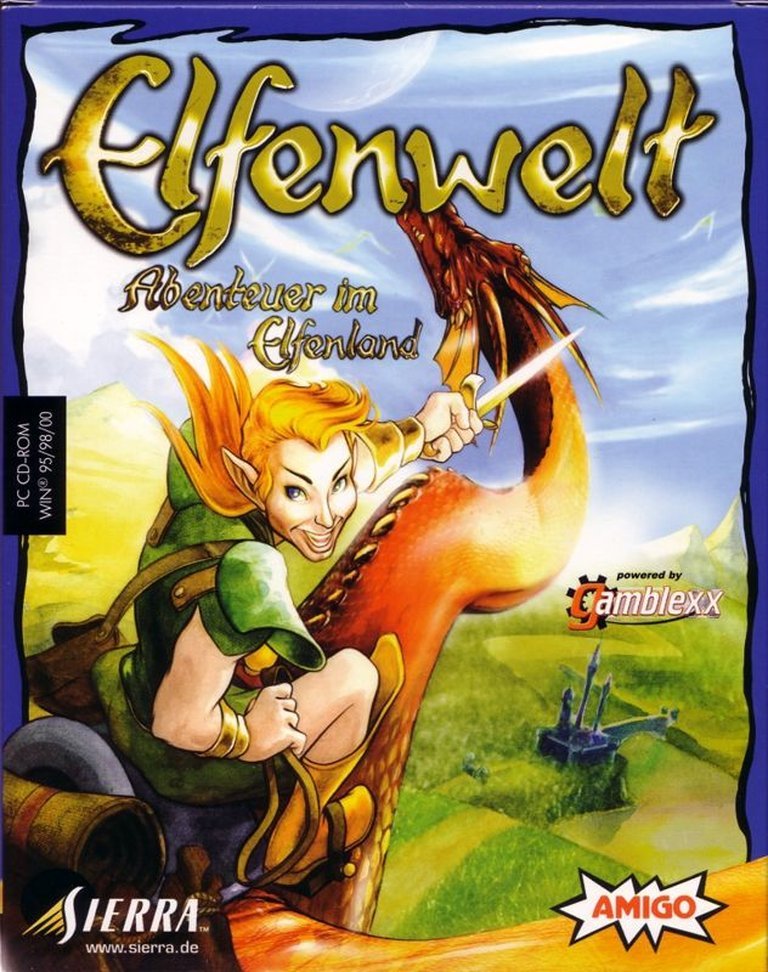
Elfenwelt: Abenteuer im Elfenland is a digital adaptation of the award-winning German board game ‘Elfenland,’ offering three distinct variants: the original ‘Elfenland,’ where players traverse a magical realm to collect stones using unique transportation like dragons or giant pigs; ‘Elfengold,’ which introduces tactical elements, spells, and gold for purchasing new transport and abilities; and ‘Elfenwelt,’ which incorporates mild RPG mechanics and combat against monsters or other players. Set in a whimsical fantasy world of forests, deserts, and rivers, the game blends strategy and adventure with a top-down perspective, supporting both single-player and multiplayer modes.
Elfenwelt: Abenteuer im Elfenland Cracks & Fixes
Elfenwelt: Abenteuer im Elfenland Reviews & Reception
mobygames.com (49/100): Average score: 49% (based on 4 ratings)
retro-replay.com : Elfenwelt: Abenteuer im Elfenland delivers a digital adaptation that remains true to the spirit of the original 1998 German board game of the year, Elfenland.
Elfenwelt: Abenteuer im Elfenland: A Digital Odyssey Through a Forgotten Fantasy
Introduction: The Board Game That Dared to Go Digital
In the annals of video game history, few titles occupy as curious a niche as Elfenwelt: Abenteuer im Elfenland. Released in 2001 by MadCat Interactive and published by Sierra On-Line, this digital adaptation of the 1998 German Spiel des Jahres winner Elfenland stands as a fascinating artifact of early 21st-century gaming—a time when board game translations to PC were still finding their footing. While not a commercial juggernaut, Elfenwelt offers a compelling case study in adaptation fidelity, the challenges of translating physical gameplay to digital interfaces, and the often-overlooked genre of Euro-style strategy games in video game form.
This review will dissect Elfenwelt with surgical precision, examining its development context, narrative and thematic underpinnings, gameplay systems, artistic direction, critical reception, and lasting legacy. Through this analysis, we will argue that while Elfenwelt may not have achieved widespread acclaim, it represents an important, if flawed, milestone in the evolution of digital board gaming—a bridge between analog strategy and the burgeoning world of online multiplayer experiences.
Development History & Context: The Birth of a Digital Elf
The Studio Behind the Magic
MadCat Interactive Software GmbH, the developer behind Elfenwelt, was a German studio that specialized in family-friendly and strategy games during the late 1990s and early 2000s. While not a household name, MadCat was part of a vibrant German gaming scene that produced titles like The Settlers and Anno series. Their portfolio included a mix of original IP and licensed adaptations, with Elfenwelt falling squarely into the latter category.
The studio’s approach to Elfenwelt was one of reverence for the source material. The original Elfenland board game, designed by Alan R. Moon, was a lightweight but strategically rich route-building game where players competed to visit cities across a fantasy landscape using whimsical transportation methods. MadCat’s challenge was to preserve the elegance of Moon’s design while adding digital enhancements that justified the transition from tabletop to screen.
Technological Constraints and Ambitions
Released in December 2001, Elfenwelt arrived at a pivotal moment in PC gaming. The industry was transitioning from 2D sprite-based games to fully 3D environments, with titles like Half-Life and Diablo II setting new standards for immersion. However, Elfenwelt remained firmly rooted in a 2D, top-down perspective—a deliberate choice to maintain the board game’s aesthetic and accessibility.
The game’s technical foundation was modest by contemporary standards:
– Engine: A proprietary 2D engine optimized for turn-based strategy.
– Resolution: Fixed resolution support, with limited scalability for higher displays.
– Multiplayer: LAN and early internet play via direct IP connection, a feature that was still novel for board game adaptations at the time.
– DRM: SecuROM 4.61, an early anti-piracy measure that would later become infamous.
The development team, led by project managers Jan Wagner, Miriam Nau, and Thorsten Kiefer, faced the dual challenge of staying faithful to the board game’s rules while introducing digital affordances like AI opponents, automated rule enforcement, and quality-of-life improvements (e.g., undo buttons, hint systems).
The Gaming Landscape of 2001
Elfenwelt entered a market dominated by real-time strategy (RTS) giants like Age of Empires II and Warcraft III, as well as the burgeoning MMORPG scene with EverQuest and Ultima Online. Board game adaptations were a niche within a niche, often dismissed as “not real games” by hardcore gamers. Yet, the late 1990s and early 2000s saw a slow but steady rise in digital adaptations of classic board games, from Monopoly to Catan, as publishers recognized the potential of bringing tabletop experiences to a broader audience.
In Germany, where Elfenwelt was primarily marketed, the gaming culture was particularly receptive to strategy and simulation games. The success of The Settlers series and the popularity of board games like Carcassonne and Elfenland itself created a fertile ground for Elfenwelt’s release. However, the game’s digital iteration had to contend with the purist sentiment that “the board game is better”—a criticism that would haunt its reception.
Narrative & Thematic Deep Dive: A Journey Through Whimsy and Strategy
The Plot: A Quest for Stones and Glory
Elfenwelt’s narrative is deliberately minimalist, reflecting its board game origins. The premise is simple: players take on the role of elves traversing a fantastical realm to collect magical stones scattered across diverse landscapes—deserts, forests, plains, and rivers. The journey is not about saving the world or defeating a dark lord but about outmaneuvering rivals through clever route planning and resource management.
The game’s three variants—Elfenland, Elfengold, and Elfenwelt—each add layers to this core premise:
1. Elfenland: The purest adaptation, focusing on logistics and transportation.
2. Elfengold: Introduces gold as a resource, allowing players to purchase spells and new transport options.
3. Elfenwelt: The most ambitious variant, incorporating light RPG elements, combat, and monster encounters.
While the overarching narrative is thin, the game’s charm lies in its thematic coherence. The world of Elfenwelt is one of whimsy and wonder, where dragons, cloud demons, and giant pigs serve as viable (and often humorous) modes of transportation. The lack of a traditional story is compensated by the game’s ability to evoke a sense of adventure through its setting and mechanics.
Characters and Dialogue: The Elves Among Us
Elfenwelt’s characters are archetypal but endearing. The player’s elf avatar is a blank slate, allowing for projection, while NPCs—merchants, rival elves, and monsters—are defined by their roles rather than deep personalities. Dialogue is functional, often limited to flavor text that accompanies spells or combat encounters. For example:
– “A grumpy river troll demands toll—pay up or fight!”
– “The storm phoenix swoops low, its wings crackling with arcane energy.”
These snippets, while not Shakespearean, add personality to the game’s interactions and reinforce its fairy-tale aesthetic. The writing carries a light, almost playful tone, befitting a game that doesn’t take itself too seriously.
Themes: Strategy, Exploration, and the Joy of Movement
At its core, Elfenwelt is a celebration of movement and exploration. The game’s central theme is the joy of traversing a fantastical landscape, making strategic choices about how to navigate terrain and outmaneuver opponents. This is not a game about combat or conquest but about the elegance of logistics—the thrill of plotting the perfect route and watching it unfold.
Secondary themes include:
– Resource Management: In Elfengold, gold becomes a critical resource, forcing players to balance spending and saving.
– Adaptation: The game rewards players who can pivot their strategies based on available transport options and opponent moves.
– Whimsy: The absurdity of riding a giant pig or a cloud demon underscores the game’s lighthearted tone.
Elfenwelt’s themes are not delivered through cutscenes or dialogue trees but through its mechanics and art direction. The game’s world is one where strategy and fantasy coexist harmoniously, creating an experience that is both cerebral and charming.
Gameplay Mechanics & Systems: The Engine of Elven Ingenuity
Core Gameplay Loop: From Board to Screen
Elfenwelt’s gameplay is a digital translation of Elfenland’s turn-based route-building mechanics. The core loop involves:
1. Drawing Transport Cards: Players receive cards representing different modes of transportation (e.g., dragon, unicorn, raft).
2. Planning Routes: Using these cards, players plot paths across the game’s map, aiming to visit cities and collect stones.
3. Executing Moves: Players move their elf tokens along the planned routes, with the game automatically resolving movement based on the cards played.
4. Scoring: Points are awarded for visiting cities, with bonuses for efficiency and completing objectives.
The digital adaptation streamlines this process by automating rule enforcement (e.g., ensuring players don’t exceed their movement limits) and providing visual feedback for valid/invalid moves. The UI, while functional, is somewhat clunky by modern standards, with a reliance on mouse-driven interactions that can feel dated.
Combat and Progression: The RPG Lite Experience
The Elfenwelt variant introduces combat and mild RPG mechanics, marking the most significant departure from the board game’s design. Combat is turn-based and simplistic, with players and monsters taking turns attacking until one side is defeated. Victory yields transportation cards, adding a risk-reward dynamic to exploration.
Character progression is minimal but meaningful:
– Transport Cards: Unlocked through combat or purchase, these expand the player’s strategic options.
– Spells: In Elfengold, spells like teleportation or weather manipulation add tactical depth.
– Gold: Earned through gameplay, gold can be spent on new transports or spells, creating a light economic system.
While these additions enrich the gameplay, they also introduce complexity that some players may find at odds with the board game’s elegance. The combat, in particular, feels tacked on, lacking the depth of dedicated RPG systems.
Multiplayer and AI: The Digital Tabletop
Elfenwelt’s multiplayer options were ambitious for 2001, offering both LAN and internet play. The game supports up to six players, with AI opponents filling in for missing human players. The AI is competent but predictable, often prioritizing straightforward routes over creative strategies.
The multiplayer experience is where Elfenwelt shines brightest. The game’s digital format eliminates the physical constraints of the board game (e.g., limited table space, manual rule enforcement), allowing for faster play and easier matchmaking. However, the lack of modern conveniences like matchmaking lobbies or persistent online profiles limits its longevity as a multiplayer experience.
Innovations and Flaws
Elfenwelt’s most innovative feature is its faithfulness to the board game’s design while adding digital enhancements. The automated rule enforcement, hint system, and undo functionality make the game more accessible to newcomers. However, the adaptation is not without flaws:
– UI/UX Issues: The interface can be unintuitive, with some actions requiring multiple clicks.
– Limited Replayability: While the three variants add variety, the core gameplay loop remains similar across modes.
– Technical Limitations: The fixed resolution and lack of modern display support make the game feel dated.
Despite these issues, Elfenwelt’s gameplay remains engaging, particularly for fans of Euro-style strategy games. The game’s strength lies in its ability to distill the essence of Elfenland into a digital format while adding enough bells and whistles to justify its existence.
World-Building, Art & Sound: Crafting a Digital Fairy Tale
The Setting: A Land of Elves and Whimsy
Elfenwelt’s world is a pastiche of classic fantasy tropes, rendered with a storybook aesthetic. The game’s map is divided into distinct biomes—deserts, forests, plains, and rivers—each with its own visual and strategic characteristics. The setting is not meant to be immersive in the way of The Elder Scrolls but rather evocative, conjuring the feeling of a children’s fairy tale.
The game’s art direction leans heavily into this whimsical tone. Cities are depicted as quaint villages, transportation methods are exaggerated for comedic effect (e.g., a giant pig with wings), and the overall color palette is bright and inviting. The world of Elfenwelt is one of charm and simplicity, a deliberate contrast to the darker, grittier fantasy settings that dominated gaming in the early 2000s.
Visual Design: A Digital Board Game
Elfenwelt’s visuals are a direct translation of the board game’s aesthetic. The top-down perspective mimics the overhead view of a physical game board, with hexagonal tiles representing different terrains. Character sprites are simple but expressive, with elves and monsters animated in a way that emphasizes their fantastical nature.
The game’s use of pre-rendered backgrounds is a double-edged sword. On one hand, the hand-painted environments are rich in detail, with lush forests and golden plains that evoke a sense of wonder. On the other hand, the fixed camera angle and lack of zoom functionality can make the game feel static, particularly when compared to the dynamic cameras of contemporary 3D games.
Sound and Music: The Symphony of Elven Travel
The audio design in Elfenwelt is understated but effective. The soundtrack, composed by “the monk & the gambler,” consists of light, melodic tunes that reinforce the game’s fairy-tale atmosphere. Tracks feature instruments like flutes, harps, and soft percussion, creating a soothing backdrop to the strategic gameplay.
Sound effects are minimal but well-implemented. The flap of a dragon’s wings, the snort of a giant pig, and the clink of gold coins all add tactile feedback to the player’s actions. Voice acting is limited to occasional flavor text, delivered in German with a playful cadence that suits the game’s tone.
Reception & Legacy: The Critic’s Verdict and the Test of Time
Critical Reception: A Mixed Bag of Enchantment and Frustration
Elfenwelt’s reception was lukewarm at best, with critics praising its faithfulness to the board game while lamenting its technical and design shortcomings. The game holds a Metacritic score of 49% (based on four reviews), a reflection of its polarized reception.
GameStar (Germany) – 65%
“Originalgetreue Brettspiel-Umsetzungen am PC sind oft langweilig. Elfenwelt basiert auf Elfenland, dem »Spiel des Jahres 1998«, und bildet eine erfreuliche Ausnahme.”
(“Faithful board game adaptations on PC are often boring. Elfenwelt, based on Elfenland, the 1998 Game of the Year, is a pleasant exception.”)
PC Games (Germany) – 54%
“Das Brettspiel Elfenwelt funktioniert nach einem jener genialen Regelwerke, die jeder Neue am Wohnzimmertisch nach wenigen Sätzen begreift. Wie Das verrückte Labyrinth ist es trotzdem kein Leichtgewicht—wer es beherrschen will, muss clever sein und am besten immer zwei Züge vorausdenken.”
(“The Elfenwelt board game operates on one of those brilliant rule sets that any newcomer at the table understands after a few sentences. Like The aMAZEing Labyrinth, it’s still not lightweight—mastering it requires cleverness and thinking two moves ahead.”)
PC Action (Germany) – 44%
“Elfenwelt – Abenteuer im Elfenland nennt sich die PC-Umsetzung des 1998 zum Spiel des Jahres gekrönten Brettspiels. In drei Spielvarianten mit je drei Schwierigkeitsgraden sammeln Sie als ein Bewohner des Elfenlandes Ortssteine, kämpfen gegen allerlei Monstertypen und ersteigern Transportmittel.”
(“Elfenwelt: Adventure in Elfenland is the PC adaptation of the 1998 Game of the Year. In three game variants with three difficulty levels each, you collect town stones as an inhabitant of Elfenland, fight various monster types, and auction transport vehicles.”)
Computer Bild Spiele – 33%
“Schlechte Grafik, Spielspaß gegen Null, armselige Ausstattung: Man könnte meinen, ein paar Fans des Brettspiels hätten sich mit viel Idealismus daran gemacht, Elfenwelt auf den PC zu zaubern—ohne die geringsten Kenntnisse vom Programmieren auf heute gängigem Niveau zu haben.”
(“Poor graphics, zero fun, meager features: One might think a few fans of the board game set out with great idealism to bring Elfenwelt to the PC—without the slightest knowledge of programming at today’s standard level.”)
The criticism was not unwarranted. Elfenwelt suffered from technical limitations, a clunky UI, and a lack of innovation beyond its board game roots. Yet, for those who appreciated the source material, the game offered a competent, if unremarkable, digital adaptation.
Commercial Performance and Cult Status
Elfenwelt was not a commercial success, failing to break into the mainstream gaming consciousness. Its primary audience was German-speaking players and board game enthusiasts, a niche that limited its global appeal. The game’s lack of English localization (despite Sierra’s involvement) further restricted its reach.
Over time, Elfenwelt has gained a modest cult following among retro gaming enthusiasts and fans of Euro-style strategy games. Its status as a digital adaptation of a beloved board game has ensured its place in gaming history, even if it remains a footnote rather than a landmark.
Influence and Legacy
Elfenwelt’s legacy is one of quiet influence. While it did not spawn sequels or imitators, it contributed to the gradual acceptance of board game adaptations as a viable genre in video gaming. Later titles like Carcassonne (2007) and Ticket to Ride (2008) would build on the foundation laid by games like Elfenwelt, proving that digital adaptations could not only replicate but enhance the tabletop experience.
The game’s most enduring impact may be its demonstration of how digital tools can streamline board game mechanics. Features like automated rule enforcement, AI opponents, and online multiplayer—all present in Elfenwelt—are now standard in modern board game adaptations. In this sense, Elfenwelt was ahead of its time, even if its execution was flawed.
Conclusion: A Flawed Gem in the Crown of Digital Board Gaming
Elfenwelt: Abenteuer im Elfenland is a game of contradictions. It is a faithful adaptation that occasionally strays too far from its source material. It is a charming fantasy experience marred by technical limitations. It is a niche product that, despite its flaws, offers a glimpse into the potential of digital board gaming.
Final Verdict: 6.5/10 – A Noble Experiment with Lasting Lessons
Elfenwelt is not a great game by modern standards, but it is an important one. Its strengths—faithfulness to the board game, strategic depth, and whimsical charm—are outweighed by its weaknesses—clunky UI, limited replayability, and technical shortcomings. Yet, for fans of Elfenland or Euro-style strategy games, it remains a fascinating artifact, a digital time capsule of a bygone era in gaming.
In the grand tapestry of video game history, Elfenwelt occupies a small but meaningful thread. It is a reminder that not all games need to be blockbusters to leave a mark. Sometimes, the most enduring legacies are built on quiet innovation, faithful adaptation, and the simple joy of moving a giant pig across a fantasy landscape.