
- Release Year: 2022
- Platforms: Nintendo Switch, Windows
- Publisher: Twin Sails Interactive
- Developer: Doom Turtle
- Genre: Action, RPG
- Perspective: 2D
- Game Mode: Co-op, Single-player
- Gameplay: Action RPG, Roguelite
- Setting: Fantasy
- Average Score: 85/100
Description
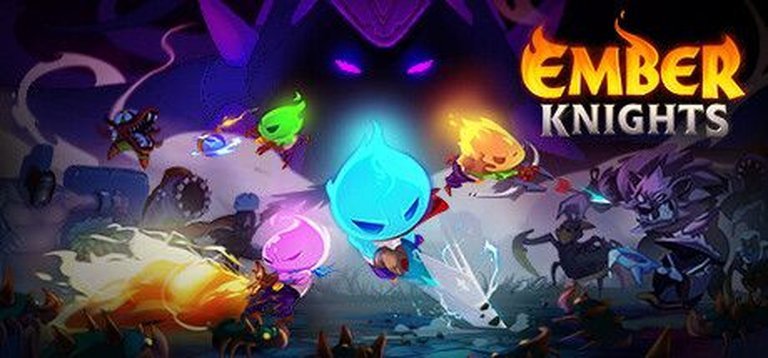
Ember Knights is a fantasy action RPG featuring 2D scrolling and real-time combat, enhanced by rogue-lite mechanics for high replayability. Critics highlight its addictive co-op gameplay, drawing comparisons to Castle Crashers and Hades, with a focus on challenging battles against enemies and bosses in a magical world.
Gameplay Videos
Where to Buy Ember Knights
PC
Ember Knights Guides & Walkthroughs
Ember Knights Reviews & Reception
metacritic.com (85/100): Ember Knights is a wonderful rogue-lite that makes full use of its gameplay to offer a challenge that’ll scratch that itch Hades left behind.
opencritic.com (85/100): Ember Knights is a wonderful rogue-lite that makes full use of its gameplay to offer a challenge that’ll scratch that itch Hades left behind.
thegamingoutsider.com : I know a game is good when I can’t stop thinking about playing it, and that’s exactly what’s happening here.
ladiesgamers.com : Ember Knights absolutely nails this addictive gameplay loop.
Ember Knights Cheats & Codes
Ember Knights (PC)
Open console by pressing tilde key (~) and enter commands.
| Code | Effect |
|---|---|
| ghost | Toggle party invisibility |
| givegold | Replace # with a number to get the same amount of gold |
| giveitem | Replace # with an item index reference number. Be VERY careful with this command. If you don’t know the item number, you will most likely crash your game |
| givexp | Replace # with a number to get the same amount of experience |
| redbull | Infinite Energy! |
| setlevel | Replace # with a number to raise/lower all party members to that level |
| speed | Allows faster movement |
| unlockrecipes | Allows you to learn all recipes! |
| unlockfasttravel | Unlocks all Fast Travel Locations |
| Bloom | Toggle bloom |
| Close | Close command console |
| Compallquests | Completes all quests in the database |
| Compobjectives | Completes all quest objectives without completing tye quest |
| Compquest | Completes quest number # |
| Compquests | Completes all main quests |
| Compsidequests | Completes all side quests |
| Crash | Crashes the game… wtf |
| disableerrors | Toggle the display of on-screen error messages |
| Drawlights | Draw lights as yellow spheres |
| dumpnodes | Dump all ogre nodes to nodes.txt on desktop |
| Exit | Close application/game |
| Footstepdebug | Toggle footstep debug mode |
Ember Knights: A Forged Legacy in Co-op Roguelite Design
Introduction: The Last Spark in a Crowded Field
In the early 2020s, the roguelite genre reached a new zenith of popularity and quality, spearheaded by giants like Hades and Returnal. Into this arena stepped Ember Knights, a 2D action roguelite from the small but ambitious studio Doom Turtle. Championed by publishers Asmodee Digital and later Twin Sails Interactive, the game arrived with a clear proposition: distilled, adrenaline-fueled hack-and-slash combat designed first and foremost for cooperative play. While its narrative framework is thin and its mechanics familiar, a critical consensus of 86% (based on six critic reviews aggregated by MobyGames) and frequent descriptors like “addictive blast” and “wonderfully polished” point to a title that successfully executed its core vision. This review will argue that Ember Knights*’s enduring value lies not in narrative innovation or mechanical revolution, but in its masterful synthesis of accessible controls, deep build synergy, and a compelling social framework that solidifies its place as a premier co-op roguelite of its era.
Development History & Context: Forged in Early Access
Doom Turtle, an indie studio with a team credited at 59 developers, conceived Ember Knights as a passion project aiming to capture the frantic, rewarding gameplay of classic arcade titles like Castle Crashers within a modern roguelite structure. Using the Unity engine, the team operated under the technological constraints typical of a small indie outfit—relying on pixel art for style and performance efficiency, and designing for a manageable scope of weapons, skills, and biomes.
The game launched into Steam Early Access on April 20, 2022, at a promotional price of $14.99. This timing placed it in direct conversation with Supergiant Games’ genre-defining Hades (2020), yet Doom Turtle explicitly differentiated its focus. Whereas Hades wove narrative into every run, Ember Knights prioritized moment-to-moment combat and player synergy from the outset. The Early Access period was crucial; as noted by Set The Tape’s review, developers were “very active on the Steam forums,” implementing patches and community feedback. This iterative development, culminating in a full 1.0 release on July 18, 2023, for Windows and later the Nintendo Switch, allowed the game to expand its weapon roster (from 2 at launch to 7), world count, and content based on player response. Its publishing journey—initially via Asmodee Digital, then transitioning to Twin Sails Interactive for console ports—reflects a common indie path of securing support for wider platform release after establishing a PC foothold.
Narrative & Thematic Deep Dive: A Simple Saga of Cosmic Fire
Ember Knights presents a classic monomyth structure but with a uniquely cosmic-fantasy twist. The Lore, as detailed in the cinematic described by Last Word on Gaming, centers on a profound personal betrayal. Esper, the Keeper of the Nexus, and Praxis, once her best friend, were colleagues until the Architect chose Esper for her sacred role. Consumed by rage and a desire for revenge, Praxis deserted, discovered a “dark spot in the Universe,” and began constructing his own twisted Nexus by siphoning the life from the Ember Tree, the source of all universal energy. With reality collapsing, Esper performs a “final effort” to summon the Ember Knights, legendary warriors who appear only during “immense calamity.”
This backstory establishes potent themes of friendship corrupted by envy, the burden of duty, and the cyclical nature of conflict. However, the game itself delivers this narrative with remarkable economy. In-game dialogue is sparse; players interact with NPCs like Esper primarily for gameplay upgrades, not story beats. The premise is “paper-thin,” as noted by multiple critics (Movies Games and Tech, The Gaming Outsider). There is no branching dialogue, no significant character arcs woven between runs, and Praxis’s motives remain simple spite. This is a conscious design choice: the story is a scaffold, not the destination. Its function is to provide a clear, visceral “why”—you are a spark of hope against a spreading corruption—freeing the player to focus entirely on the “how” of combat and build-crafting. The thematic weight, therefore, lies not in its telling but in its archetypes: the selfless guardian (Esper), the fallen friend turned tyrant (Praxis), and the player as the recurring, resurrectable instrument of cosmic balance. It’s a narrative of function over psychology, which, while disappointing for lore enthusiasts, perfectly serves the game’s repetitive, run-based structure.
Gameplay Mechanics & Systems: The Alchemy of Build Synergy
The heart of Ember Knights is a tightly looped system of risk, reward, and exponential build potential. Its gameplay is a cocktail of established roguelite tropes with a few signature innovations.
Core Loop & Progression: Players delve into the Prime Worlds (5 distinct biomes in the final release), clearing randomly generated rooms of enemies to progress. Each run ends in death, yielding Embers, the persistent currency used at the hub to permanently upgrade the Ember Tree skill tree. This tree is structured in groups of 2-3 mutually exclusive upgrades (e.g., choose one: bonus damage to elites, bonus damage to bosses, or bonus damage to regular enemies). This forces meaningful build decisions on a macro level before each run.
Combat & Build Diversity: The micro-level is where the game thrives. Each run, the player selects:
1. One Weapon (from a pool of 7, including swords, bows, hammers, and a buzzsaw-like “Spinning Blade”), each with a standard attack and a charged attack with a unique bonus if timed perfectly.
2. Two Skills/Abilities (from over 20), such as fireballs, ice walls, or poisons. Crucially, skill cooldowns are replenished by landing regular weapon hits, not by waiting. This creates a constant incentive to stay aggressive, making combat feel fluid and interconnected.
3. Relics (over 60) and Gems, which provide passive bonuses and, most importantly, synergize with skills and other relics.
This third layer is the game’s genius. As described by Set The Tape and Movies Games and Tech, synergies are the core satisfaction. Equipping a “Decayed Sceptre” to poison enemies can be paired with “Lethargic Brew” to slow them. A relic that causes attacks to ignite can be combined with another that spreads fire to nearby foes. The potential combinations create hundreds of viable, feel-good builds, from a tanky, crowd-controlling swordsman to a poison-spreading archer with summons. The “mishmash of skills and power” is the primary reward loop.
Co-op Implementation: The 1-4 player local and online co-op is not an afterthought but a central pillar. As Phenixx Gaming notes, it evokes the spirit of Castle Crashers. The design encourages complementary builds: one player might focus on area denial with ice walls while another exploits the slowed enemies with high-damage single-target attacks. However, as Set The Tape observed, netcode issues (notably attack synchronization lag) could lead to “cheap deaths,” a significant flaw in an otherwise polished experience.
Shortcomings & Frustrations: The system is not without flaws. Critics consistently noted a limited initial weapon selection (only two at true launch) and a tendency for room layouts and enemy sets to feel repetitive after extended play, particularly in the late-game worlds where progression slows (The Gaming Outsider). The story’s absence also means there’s no narrative-driven motivation beyond the abstract goal of “beating the game,” which can sap motivation during the inevitable grind. Furthermore, while boss fights are praised for their patterns and challenge, one late-game boss is cited as approaching “bullet hell levels of hard,” potentially crossing into unfairness.
World-Building, Art & Sound: A Vibrant, Cohesive Tapestry
Ember Knights presents a retro pixel-art universe that is both charming and functionally clear. The art direction, led by Lead Artist Abdullah Durrani, opts for vibrant, saturated colors that pop against dark backgrounds, making enemy attacks, environmental hazards, and pickups instantly legible during hectic combat. The five Prime Worlds (forests, ice fortresses, mechanized areas, etc.) offer distinct visual palettes and enemy designs, from “creepy insects” to “cold-hearted knights,” as LadiesGamers observed.
A standout technical detail is the reflection of character sprites on water surfaces, a subtle touch that adds a layer of polish rarely seen in the genre. Animation is “wonderfully smooth” (Movies Games and Tech), with clear telegraphs for enemy attacks—glowing regions or arrows—that are crucial for the precise dodging the game demands. This visual clarity is a moral imperative in a game where survival depends on reading tells.
The sound design and soundtrack perfectly complement the action. The upbeat, energetic soundtrack drives the pacing, while sound effects are described as “wonderfully simple” and satisfying—the “crashing sound of every fallen foe” providing immediate tactile feedback. The audio does not overwhelm but rather accentuates the “arcade style gameplay” (LadiesGamers), creating a cohesive sensory experience that is both nostalgic and fresh.
Reception & Legacy: The Unassuming Champion
Ember Knights received a strong, consistent critical reception. Its MobyGames critic average of 86% and Metacritic/OpenCritic scores hovering in the mid-80s to low-90s (with outliers like Phenixx Gaming’s 95%) indicate widespread praise for its execution. Critics repeatedly highlighted its addictive “just one more run” hook, excellent controls, and fantastic co-op implementation. The comparison to Hades was inevitable, with God is a Geek explicitly stating it “scratches that itch Hades left behind,” while others (The Gaming Outsider, Movies Games and Tech) felt its story was a significant step down from Supergiant’s narrative masterpiece.
Commercially, its Early Access model and subsequent full release on multiple platforms (Windows, Switch, PlayStation, Xbox) suggest solid, if not blockbuster, performance. The player score disparity is telling: a MobyGames player average of 3.0/5 (based on very few ratings) versus a higher OpenCritic user score of 8.7 hints at a passionate niche audience that may not have broad mainstream appeal, possibly due to the repetitive nature of the genre or the initial scope limitations.
Its legacy is one of refinement and specialization. It did not reinvent the roguelite; it did not attempt a deep, emotional narrative. Instead, it perfected a specific subset of the genre: co-operative, combat-focused, build-crafting hack-and-slash. By making the combat loop intrinsically tied to resource management (hit to recharge skills) and emphasizing tangible build synergies, it offered a clear, satisfying alternative to the more narrative or exploration-heavy giants. Its influence can be seen in a renewed appreciation for pure, systemic combat depth in indie roguelites and the continued viability of local co-op as a core feature. It stands as a definitive “genre-purist” recommendation, a game that knows exactly what it wants to be and executes that vision with remarkable polish.
Conclusion: A Blaze That Burns Steady
Ember Knights is not the most ambitious, story-rich, or mechanically unprecedented roguelite of its generation. Its narrative is skeletal, its worlds can feel repetitive, and its early iterations were undeniably lean. Yet, through its Early Access evolution and steadfast focus on cooperative combat synergy, it emerges as a cult classic of exceptional quality. The sheer joy of discovering a new weapon, combining it with two skills and a constellation of relics to create a build that feels uniquely powerful is unparalleled. Its controls are tight, its art vibrant and clear, and its co-op mode a thrilling social experience.
In the annals of video game history, Ember Knights will not be cited as a paradigm-shifting milestone. Instead, it will be remembered as a masterclass in focused execution—a game that took a well-established formula, stripped away extraneous ambition, and doubled down on pure, exhilarating, synergistic action. It is the perfect “game night” roguelite, a title you can pick up with friends, lose yourself in for hours, and feel a genuine, build-driven sense of accomplishment. For those seeking the purest distillation of “smash things, get cooler smashing things, smash things better with friends,” Ember Knights is an essential, blazing triumph.
Final Verdict: 8.5/10 – A brilliantly polished, co-op focused roguelite whose commitment to synergistic build-crafting and tight combat elevates it above genre conventions, despite a paper-thin story and occasional repetition.