
- Release Year: 2017
- Platforms: Nintendo Switch, PlayStation 4, Windows, Xbox One
- Publisher: Creative Bytes Studios Inc.
- Developer: Creative Bytes Studios Inc.
- Genre: Action
- Perspective: Side view
- Game Mode: Co-op, Single-player
- Gameplay: Dual-stick, Platform, Puzzle
- Setting: Fantasy
- Average Score: 77/100
Description
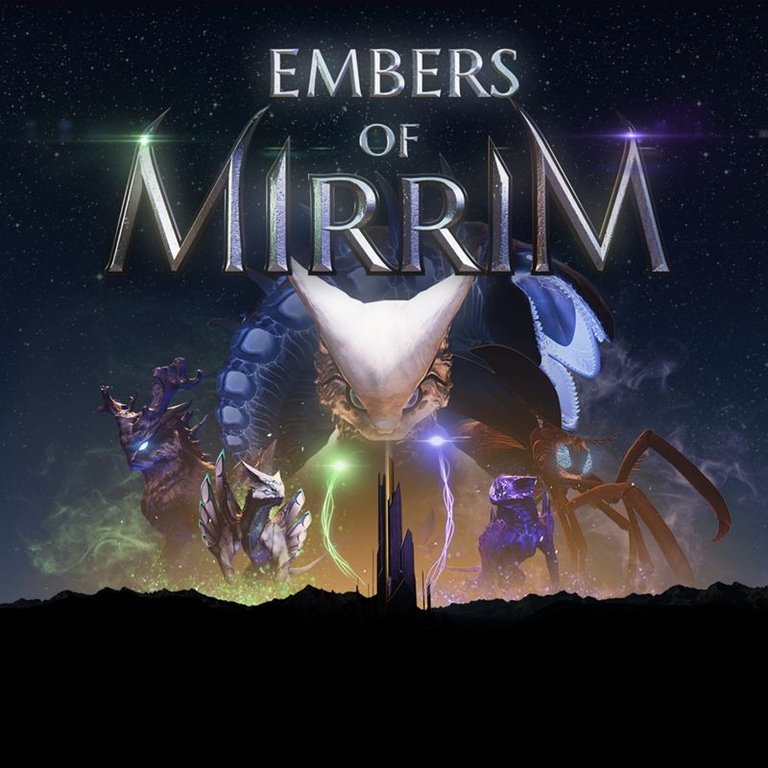
Embers of Mirrim is a fantasy puzzle platformer set in a mystical world, featuring a unique two-stick control mechanic for navigating beautifully rendered 2D scrolling levels. Players solve varied puzzles and overcome challenges in a wordless narrative that combines innovative gameplay with visually striking design, offering a delightful yet demanding adventure.
Gameplay Videos
Where to Buy Embers of Mirrim
PC
Embers of Mirrim Guides & Walkthroughs
Embers of Mirrim Reviews & Reception
metacritic.com (90/100): Abstract and downright mesmerising, Embers Of Mirrim is one of the most impressive platformers this generation.
metacritic.com (85/100): Embers of Mirrim has a fantastic core concept: controlling two characters simultaneously in a 2.5D platformer.
metacritic.com (80/100): Embers of Mirrim is without any doubt a recommended game for any fan of platform games with a strong puzzle component.
metacritic.com (80/100): If you are a fan of platformers or puzzle games, you will most likely enjoy Embers of Mirrim.
metacritic.com (75/100): Embers of Mirrim is a solid puzzle-platformer with atmospheric visuals and storytelling woven into interesting puzzle segments.
opencritic.com (80/100): A fun platformer that offers five to six hours of unique platforming, and a pace that rarely slows
opencritic.com (70/100): All told, Embers Of Mirrim is a delightful fantasy adventure with only a few notable flaws.
opencritic.com (60/100): Like the main character, I’m of two minds about it. Thinking back on it there were pieces I really enjoyed.
opencritic.com (80/100): Embers of Mirrin delivers the best of platforming games and puzzle games in a single fun package.
opencritic.com (80/100): Embers of Mirrin employs a unique approach to the puzzle platformer, a two-stick mechanic that is both innovative and challenging.
opencritic.com (84/100): Mirrim’s puzzles stumped me, left me scratching my head, and then made me feel like an idiot when I figured them out.
opencritic.com (70/100): When the puzzles and chase sequences are pulled off smoothly, they feel incredibly rewarding.
opencritic.com (70/100): When the puzzles and chase sequences are pulled off smoothly, they feel incredibly rewarding.
nintendolife.com : Embers Of Mirrim is one such game, and while it’s only average when it comes to its gameplay, the mark it leaves on you artistically is something much more substantial.
holdtoreset.com : While Embers of Mirrim presents the concept of splitting pretty well at the beginning, things fall apart about the last third.
Embers of Mirrim: A Review Of Duality, Ambition, and Artistic Fracture
Introduction: A Glimmer in the Indie Landscape
In the crowded ecosystem of 21st-century platformers, Embers of Mirrim arrives not with a deafening roar but with a quiet, luminous hum. Released in 2017 by the small Canadian studio Creative Bytes Studios, the game presented a tantalizing proposition: a hand-drawn, cinematic adventure built around a core mechanic of literal and figurative duality. Its premise—a fusion of two warring tribes into a single hero capable of splitting into independently controlled “embers”—promised a fresh cognitive challenge in a genre often defined by inherited tropes. However, a thorough examination reveals Embers of Mirrim to be a game of profound contradictions. It is at once a mechanically innovative feat and a frustratingly inconsistent experience; a visually sumptuous world with a narratively skeletal core; a game that champions player intuition and then betrays it with punitive design. This review will argue that Embers of Mirrim is a significant, if flawed, artifact of the indie platformer renaissance—a title whose ambition frequently outstrips its execution, leaving a legacy defined more by its beautiful ideas and flawed realization than by its cohesive impact.
Development History & Context: A Small Studio’s Grand Vision
Creative Bytes Studios was not a household name in 2017. Founded by brothers Paul (Project/Tech Director) and Lucas Caporicci, along with Art Director Shawn Jackson and Design Director Frank Knezic, the studio had previously delivered the family-friendly puzzle game Monster Assemble 3D. Their experience spanned work on larger titles like Rainbow Six: Vegas and Skylanders SuperChargers, but Embers of Mirrim was their first major independent project, a true passion play.
The game’s development was squarely positioned within the indie boom of the 2010s, a period that saw developers leveraging accessible digital storefronts (Steam, PSN, Xbox Live) to release games with distinct artisticvisions, often in direct conversation with classics from the 16-bit and 32-bit eras. As per an interview with project director Paul Caporicci, the studio’s inspirations were not other games, but the fantasy cinema of the 1980s: The NeverEnding Story, The Dark Crystal, and Labyrinth. This choice is pivotal. It explains the game’s commitment to a wordless, visually-driven narrative and its emphasis on creating a sense of awe and mysterious beauty, rather than witty dialogue or complex lore. The name “Mirrim” itself, a palindrome, was chosen to reflect the core theme of duality and mirroring.
Technologically, the game was built as a 2.5D side-scroller using 3D models for characters and environments to achieve a painterly, dimensional aesthetic without the constraints of pure 2D sprite work. The central challenge—implementing a dual-analog stick control scheme on a platformer—was a deliberate risk. As Caporicci noted, they used Rayman and classic Sonic for the “feel” of platforming, but the dual-stick mechanic required constant, grinding playtesting to teach players how to control two flying orbs simultaneously. This placed Embers of Mirrim in a unique niche: a precision platformer that demanded a skill set more akin to a twin-stick shooter, a fusion of genres that was both its selling point and its potential downfall.
Narrative & Thematic Deep Dive: The Silence of the Spire
Embers of Mirrim’s story is delivered entirely through silent, animated cutscenes, a method it shares with games like * Journey* or Uncharted: The Lost Legacy‘s pivotal opening. The plot, as gleaned from the opening prelude and scattered in-game moments, is archetypal: two proud, animalistic tribes (one light-aligned, one dark-aligned) are warned of an “alien corruption” by a great crystal spire. When two young members of these tribes arrive at the spire independently, they are forcibly merged into a single entity—Mirrim—tasked with healing the world. This fusion, initially violent, becomes a bond of purpose.
Thematically, the game is preoccupied with unity through forced synthesis. The two original creatures are at odds; their merger creates a being that must learn to wield both aspects of its nature (the Light and Dark Embers) to solve environmental puzzles and overcome obstacles. The corruption is a homogenizing, despoiling force, and Mirrim’s dual nature is presented as the key to restoring vibrant diversity. However, this theme is largely implicit. There are no NPCs to converse with, no written lore, no character names revealed outside of the protagonist. The “proud races” mentioned in the official blurb remain abstract concepts. The player is asked to infer motivation from context: the crumbling environments, the trapped/corrupted creatures (the “buddies” to rescue), and the stark contrast between the corrupted wastelands and the vibrant, healthy zones.
This minimalist approach is a double-edged sword. For some, it creates a dreamlike, universal parable where the player’s imagination fills the gaps, aligning with the 80s fantasy inspiration where myths are felt rather than explained. For others, as review after review laments, it results in a hollow, forgettable shell. The lack of character names, the vague nature of the “corruption,” and the absence of any meaningful interpersonal connection leave the player with little emotional investment in the outcome beyond the intrinsic satisfaction of puzzle-solving. The narrative’s strength is its tonal cohesion and visual storytelling; its fatal weakness is its lack of substantive stakes. We are saving a “world,” but that world feels like a series of beautiful backdrops rather than a lived-in place with a history worth saving.
Gameplay Mechanics & Systems: The Genius and Burden of the Split
The soul of Embers of Mirrim resides in its dual-ember system. At any time (with a cooldown/energy limit), the player can hold both triggers to split Mirrim into two separate, floating orbs: a Light Ember and a Dark Ember. These are controlled independently with the left and right analog sticks. This is not a cooperative mode; it is a single-player psychomotor challenge that tasks the player with partitioning their attention and motor control in a way few games demand.
- Puzzle Design: The core loop involves navigating environments where paths are blocked to a solid form but accessible to an ember. Puzzles evolve gracefully: from simple “guide both embs to pads” challenges, to timed sequences where one ember activates a mechanism for the other, to constellation glyphs—hidden, intricate path-tracing puzzles that are among the game’s most demanding and rewarding moments. The puzzles are generally clever and well-paced in the first two-thirds, teaching a new twist (e.g., mushrooms that grow or bounce depending on which ember touches them) and then mastering it before moving on.
- Platforming: Standard movement—run, jump, glide, pounce—is serviceable but frequently criticized as “floaty” or inconsistent, leading to maddening “short hop” failures where a jump seems to lack the needed height. The platforming is rarely the main event but serves to connect puzzle chambers and provide tense chase sequences from giant enemies (the “overgrown monstrosities”).
- The Fatal Flaws: Late-Game Overload and Repetition: This is where the game’s design crumbles. In the final third, puzzle segments become cognitively overwhelming. Reviews from Gaming Nexus and Hold To Reset describe scenarios where the player must simultaneously: control two embers, avoid environmental hazards (swarms, spiders), manage limited ember energy, and interact with multiple object types. The screen becomes a chaotic ballet of inputs, and failure feels less like a learning moment and more like an exercise in impossible multitasking.
Equally damaging are the boss fights. These are almost universally panned. They devolve into repetitive, pattern-based “chase sequences” where the player must run, jump, and split through a gauntlet while a giant enemy fires predictable attacks. There is no strategic variation; success is determined by memorizing a sequence and executing it flawlessly under pressure. The initial challenge of the split mechanic curdles into a gimmicky, tedious requirement. As Hold To Reset bluntly states, “the ember-splitting becomes a crutch,” and the forced repetition strips away the novelty, leaving only frustration.
World-Building, Art & Sound: A Masterclass in Atmosphere
If the gameplay is a contested battleground, the presentation is a unified triumph. Embers of Mirrim is, first and foremost, a cinematic experience. The use of a dynamic camera that frames scenes like a film—pulling back for vast landscapes, zooming in on intimate moments of Mirrim’s face—was a deliberate choice (credited to cinematographer Dave Evans). This creates a constant sense of scale and wonder, whether navigating a thawing mountain cave illuminated by bioluminescent fungi or fleeing through a desolate, corrupted forest.
The art direction is stunning. The 2.5D style allows for rich, layered backgrounds with parallax scrolling, giving depth to the alien world. The design of Mirrim itself—a small, four-legged, cat-dragon hybrid—is immediately endearing, and the two embers, as simple orbs of light, are clear visual anchors even in chaos. The environmental variety (snowy peaks, ancient forests, crystalline spire interiors, ash wastes) is good, though some critics noted a heavy reliance on forest and cave biomes.
The soundtrack, composed by Giancarlo Feltrin, is almost universally lauded as “impeccable” and “tranquil.” It employs pianos, strings, and ambient pads to create a dreamlike, melancholic yet hopeful tone that perfectly complements the visuals. It is the glue that holds the emotional through-line together when the narrative fails to do so. Conversely, sound effects and ambient noise are noted as minimal or underdeveloped—a curious omission in a game so focused on atmosphere.
Reception & Legacy: A Cult Curio, Not a Classic
Upon release in May 2017 for PC, PS4, and Xbox One (with a Switch port in December 2017), Embers of Mirrim met with mixed-to-positive critical reception. Aggregate scores sit in the 70-78% range (MobyGames 72%, Metacritic ~76-77 per platform). The critical consensus is remarkably consistent:
- Praised: Visual artistry, cinematic presentation, innovative core mechanic (in theory), atmospheric soundtrack, satisfying “aha!” moments in early-mid game puzzles.
- Criticized: Short length (~3-5 hours), simplistic/vague story, punitive late-game design, repetitive boss fights, floaty platforming controls, high price-to-length ratio ($14.99-$19.99).
Its legacy is therefore nuanced. It did not achieve the breakout success of Ori and the Blind Forest or Hollow Knight, nor did it spawn a noticeable wave of imitators. Its dual-stick control scheme remains a notable but niche innovation. Games like Boxboy! (also referenced in reviews) explored mechanic-as-metaphor more cohesively, while Embers is remembered as a bold but uneven experiment. It stands as a testament to what a small, passionate studio can achieve artistically, but also as a cautionary tale about the importance of pacing, difficulty tuning, and mechanical integrity. Its influence is likely to be felt more in the spirit of ” daring to try something different” than in any direct design lineage. For achievement hunters and completionists, its 50 Steam achievements (many for collectibles) provide a tidy, if unremarkable,附加价值.
Conclusion: A Beautiful, Flawed Artifact
Embers of Mirrim is a game of two halves, much like its protagonist. Its first two-thirds is a masterclass in atmospheric indie platforming. It lulls the player into a tranquil rhythm of exploration and intellectual engagement, where the simple act of splitting into two orbs feels magically intuitive and the world feels vast and mysterious. The collaboration between its cinematic art direction, its haunting score, and its clever puzzle design creates an experience greater than the sum of its parts.
Its final act, however, reveals the cracks in its ambitious foundation. The game loses faith in its own design, replacing thoughtful puzzles with overwhelming input overload and substituting memorable boss battles with frustrating, repetitive gauntlets. The narrative, always thin, offers no emotional payoff to justify the final mechanical slog. The result is a game that struggles to land its landing, leaving the player with a profound sense of “what could have been.”
In the pantheon of video game history, Embers of Mirrim will not occupy a throne. It will not be cited as a genre-defining masterpiece. Instead, it will be remembered as a significant and sincere curio—a game that pursued a unique artistic and mechanical vision with commendable bravery but failed to fully realize it. For the patient player willing to endure its latter-half stumbles, it offers glimpses of transcendence. For the historian, it serves as a perfect case study in the perils of letting a core mechanic dictate all design, rather than serving it. It is, in the end, an ember that glows brightly for a moment, promising warmth and light, but ultimately flickers out before it can truly ignite.
Final Verdict: 7.1/10 – A beautiful, brain-taxing, and deeply flawed experiment. Worth experiencing for its artistry and innovation, but its flaws are too fundamental to ignore.