
- Release Year: 2021
- Platforms: Windows
- Publisher: 8floor Ltd.
- Developer: GameOn Production
- Genre: Strategy, Tactics
- Perspective: Diagonal-down
- Game Mode: Single-player
- Gameplay: Point and select, Real-time strategy (RTS)
- Setting: Contemporary
- Average Score: 71/100
Description
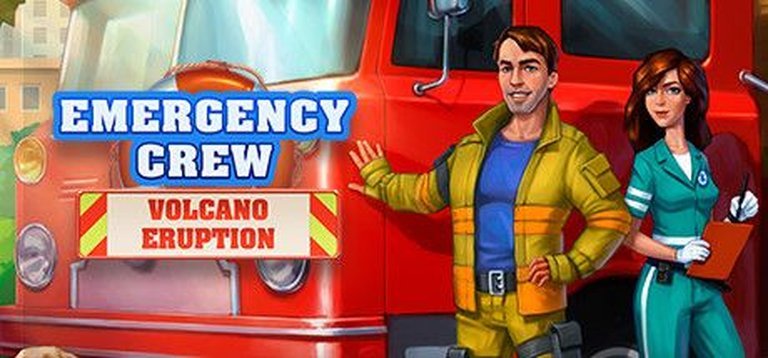
Emergency Crew: Volcano Eruption is a real-time strategy game where players lead a team of rescuers to save people from a series of natural disasters, including earthquakes, fires, and a volcanic eruption. Set in the contemporary city of Coastland and its surrounding areas, the game features 40 levels across four distinct locations, requiring players to manage resources, rebuild infrastructure, and combat threats like marauders. With a mix of tactical decision-making, resource management, and engaging storytelling, the game offers over 20 hours of gameplay, featuring a variety of emergency vehicles, professionals, and production chains to tackle the unfolding crises.
Gameplay Videos
Where to Buy Emergency Crew: Volcano Eruption
PC
Emergency Crew: Volcano Eruption Patches & Updates
Emergency Crew: Volcano Eruption Guides & Walkthroughs
Emergency Crew: Volcano Eruption Reviews & Reception
store.steampowered.com (71/100): Mostly Positive
steambase.io (71/100): Emergency Crew Volcano Eruption has earned a Player Score of 71 / 100.
Emergency Crew: Volcano Eruption – A Heroic Rescue Simulator in the Shadow of Disaster
Introduction: The Call to Duty in a World on Fire
When disaster strikes, who answers the call? Emergency Crew: Volcano Eruption (2021), developed by GameOn Production and published by 8floor Ltd., thrusts players into the boots of first responders battling against the relentless fury of nature. This real-time strategy (RTS) game, set in the contemporary disaster-relief genre, tasks players with coordinating a team of rescuers, firefighters, paramedics, and police officers to save lives amid earthquakes, wildfires, and—most dramatically—a volcanic eruption. With its 40 levels, four distinct locations, and a production-chain-driven resource management system, the game positions itself as a casual yet engaging strategy experience.
But does Emergency Crew: Volcano Eruption rise above the ashes of its genre, or does it collapse under the weight of its own ambitions? This review dissects the game’s development history, narrative depth, gameplay mechanics, artistic direction, and legacy, offering a definitive verdict on its place in the pantheon of disaster-management simulators.
Development History & Context: A Game Forged in the Fires of Casual Strategy
The Studio Behind the Rescue Mission
GameOn Production, a developer with a portfolio spanning casual strategy, hidden-object, and time-management games, is no stranger to creating accessible yet engaging experiences. Their previous works, such as Merchants of the Caribbean and Adventures of Megara, reveal a studio adept at blending narrative-driven gameplay with resource management mechanics. Emergency Crew: Volcano Eruption continues this tradition, albeit with a shift toward real-time disaster response.
The game was built using the Unity engine, a choice that aligns with its 2D diagonal-down perspective and fixed/flip-screen visuals. This technical foundation allowed for a streamlined development process, ensuring the game could launch on August 18, 2021, with minimal system requirements (a mere 512 MB RAM and 1.5 GHz processor).
The Gaming Landscape in 2021: A Niche for Heroes
At the time of its release, the casual RTS and disaster-management genres were not oversaturated, but they were far from dominant. Games like Emergency 20 (2017) and Emergency 5 (2014) had carved out a niche for realistic emergency response simulations, while titles like This War of Mine (2014) explored the human cost of survival in crisis scenarios. Emergency Crew: Volcano Eruption sought to bridge these two approaches, offering a more accessible, family-friendly take on disaster relief without sacrificing strategic depth.
Technological Constraints & Design Philosophy
The game’s low system requirements suggest a deliberate focus on broad accessibility, targeting players who might not have high-end gaming rigs. The Unity engine’s flexibility allowed for cross-platform potential, though the game remained a Windows-exclusive at launch. The fixed/flip-screen perspective and point-and-select interface evoke classic RTS games like Command & Conquer, but with a simplified, casual-friendly control scheme.
The developers’ vision was clear: create a game that feels heroic without being punishing. This philosophy is evident in the tutorial-driven onboarding, colorful comic-style cutscenes, and gradual difficulty curve. However, as we’ll explore later, this approach also leads to some mechanical limitations that may frustrate hardcore strategy fans.
Narrative & Thematic Deep Dive: A Story of Heroes in the Face of Catastrophe
Plot Overview: From Earthquakes to Eruptions
The game’s story begins with a devastating earthquake in Coastland, a fictional city that serves as the primary setting. Players take on the role of Stephen Shepard’s Emergency Crew, a team of rescuers, firefighters, paramedics, and police officers who must evacuate survivors, extinguish fires, and rebuild infrastructure amid escalating chaos.
As the mission progresses, the scope of the disaster expands:
1. Phase 1: The Earthquake Aftermath – Collapsed buildings, trapped civilians, and blocked roads.
2. Phase 2: The Wildfires – Forests ablaze, requiring firefighting units and evacuation routes.
3. Phase 3: The Volcanic Eruption – Lava flows, ash clouds, and a race against time to save the remaining population.
The narrative is linear but episodic, with each of the four locations (Coastland City, suburban forests, canyons, and the volcano itself) presenting new challenges and escalating stakes.
Characters & Dialogue: The Human Face of Disaster
The game’s comic-style cutscenes introduce a cast of archetypal heroes, each with distinct roles:
– Stephen Shepard – The charismatic leader of the Emergency Crew.
– Rescuers – Specialists in urban search-and-rescue (USAR).
– Firefighters – Battling wildfires and structural blazes.
– Paramedics – Providing medical aid to survivors.
– Police Officers – Maintaining order and security amid looting and panic.
While the dialogue is functional rather than profound, the character designs and mood-based interactions add a layer of emotional engagement. The game doesn’t delve into deep personal arcs, but it effectively conveys the urgency and heroism of disaster response.
Themes: Heroism, Sacrifice, and the Fragility of Civilization
At its core, Emergency Crew: Volcano Eruption explores:
– The Value of Teamwork – No single unit can handle every crisis; coordination is key.
– The Cost of Delay – Time is a finite resource, and hesitation leads to more casualties.
– Human Resilience – Even in the face of overwhelming destruction, the crew persists.
– The Thin Line Between Order and Chaos – Marauders and looters emerge as secondary antagonists, forcing players to balance rescue operations with security.
The game’s thematic depth is subtle but effective, reinforcing the real-world stakes of emergency response without becoming overly grim.
Gameplay Mechanics & Systems: The Art of Disaster Management
Core Gameplay Loop: Rescue, Rebuild, Repeat
Emergency Crew: Volcano Eruption is, at its heart, a real-time strategy game with resource management and production chain mechanics. The primary loop involves:
1. Assessing the Disaster – Identifying trapped civilians, fires, and structural damage.
2. Deploying Units – Sending rescuers, firefighters, or paramedics to address specific threats.
3. Managing Resources – Collecting supplies, fuel, and medical kits to sustain operations.
4. Rebuilding Infrastructure – Repairing roads, bridges, and shelters to improve efficiency.
5. Combating Threats – Dealing with marauders, aftershocks, and lava flows.
The game’s 40 levels are divided across four locations, each introducing new mechanics and hazards:
– Coastland City – Urban search-and-rescue (USAR) with collapsed buildings.
– Suburban Forests – Wildfire containment and evacuation.
– Canyons – Terrain-based challenges (e.g., blocked paths, landslides).
– Volcano – Lava flow diversion and ash cloud mitigation.
Unit Types & Specializations
Players command a diverse roster of emergency responders, each with unique abilities:
| Unit Type | Role | Special Equipment |
|---|---|---|
| Rescuers | Extract survivors from rubble | Heavy lifting gear, drones |
| Firefighters | Extinguish fires | Fire trucks, water cannons |
| Paramedics | Treat injured civilians | Ambulances, medical tents |
| Police Officers | Maintain order, fight marauders | Patrol cars, riot gear |
| Engineers | Repair infrastructure | Construction vehicles |
Each unit has limited stamina and requires resources (e.g., fuel for vehicles, medical supplies for paramedics), forcing players to prioritize tasks carefully.
Production Chains & Resource Management
One of the game’s most innovative (and potentially frustrating) mechanics is its production chain system. Players must:
– Gather raw materials (e.g., wood, metal, fuel).
– Process them into advanced resources (e.g., medical kits, construction materials).
– Allocate resources efficiently to avoid bottlenecks.
This system adds strategic depth but can also lead to tedious micromanagement, especially in later levels where multiple disasters unfold simultaneously.
Combat & Secondary Threats: Marauders and Nature’s Wrath
While the primary focus is rescue operations, the game introduces combat elements in the form of:
– Marauders – Looters and criminals who must be apprehended by police units.
– Natural Hazards – Lava flows, aftershocks, and ash clouds that destroy structures and block paths.
Combat is simplified, with police units automatically engaging threats when in range. However, poorly timed engagements can divert resources from critical rescue operations.
UI & Controls: Functional but Uninspired
The game’s point-and-select interface is intuitive but lacks polish:
– Unit selection is straightforward, but pathfinding can be clunky.
– Resource management menus are functional but visually dull.
– Mission objectives are clearly displayed, but lack dynamic updates (e.g., real-time casualty counts).
The fixed/flip-screen perspective limits tactical flexibility, making some levels feel more like puzzles than dynamic battles.
Innovations & Flaws
Innovations:
✅ Production chain mechanics add strategic depth to casual RTS gameplay.
✅ Diverse disaster scenarios keep gameplay fresh across 40 levels.
✅ Family-friendly tone makes it accessible to younger players.
Flaws:
❌ Repetitive mission structure – Some levels feel too similar.
❌ Clunky pathfinding – Units get stuck on terrain.
❌ Underwhelming combat – Marauders feel like an afterthought.
❌ Achievement bugs – Some players report progress not tracking correctly.
World-Building, Art & Sound: A Disaster in Living Color
Setting & Atmosphere: A World on the Brink
The game’s four locations each contribute to a sense of escalating peril:
– Coastland City – A once-thriving metropolis now in ruins.
– Suburban Forests – Lush greenery consumed by wildfires.
– Canyons – Treacherous terrain complicating rescue efforts.
– Volcano – The epicenter of destruction, with lava rivers and ash storms.
The diagonal-down perspective gives a tactical overview but lacks immersive detail. Buildings, vehicles, and characters are colorful and cartoonish, reinforcing the family-friendly aesthetic.
Visual Design: Cartoonish Heroism
The art style is bright, vibrant, and slightly exaggerated, resembling a Saturday morning cartoon. While this lacks the grit of more realistic disaster sims, it suits the game’s accessible tone.
- Character designs are expressive, with distinct uniforms and animations.
- Disaster effects (e.g., fires, collapsing buildings) are visually striking but lack physical impact.
- UI elements are clear but unremarkable, prioritizing functionality over flair.
Sound Design & Music: The Soundtrack of Survival
The game’s audio design is competent but unmemorable:
– Ambient sounds (e.g., crackling fires, distant explosions) enhance immersion.
– Voice acting is minimal, limited to brief radio chatter.
– Music is upbeat and heroic, reinforcing the team’s determination.
The lack of dynamic audio cues (e.g., urgent alerts for new disasters) is a missed opportunity to heighten tension.
Reception & Legacy: A Mixed Rescue Mission
Critical & Commercial Reception
Emergency Crew: Volcano Eruption launched to modest fanfare, with no major critic reviews on platforms like Metacritic. However, Steam user reviews (71% positive from 14 reviews) suggest a generally favorable but niche reception.
Praised Aspects:
✔ Accessible gameplay – Easy to pick up for casual strategy fans.
✔ Varied disaster scenarios – Keeps the campaign engaging.
✔ Family-friendly appeal – Suitable for younger players.
Criticized Aspects:
✖ Repetitive missions – Some players found the gameplay loop stale.
✖ Technical issues – Buggy achievements and pathfinding glitches.
✖ Lack of depth – Hardcore RTS fans may find it too simplistic.
Evolution of the Emergency Crew Series
The game is the first in the Emergency Crew series, followed by:
– Emergency Crew 2: Global Warming (2022) – Expands to climate-related disasters.
– Emergency Crew 5: Blazing Vacation (2025) – Introduces new locations and mechanics.
While the series has not achieved mainstream success, it has carved out a loyal niche among casual strategy enthusiasts.
Influence on the Genre
Emergency Crew: Volcano Eruption does not revolutionize the disaster-management genre, but it refines the formula for a broader audience. Its accessible mechanics and family-friendly tone make it a gateway game for players new to RTS and resource management.
Conclusion: A Noble Effort with Room for Improvement
Emergency Crew: Volcano Eruption is a solid, if unexceptional, entry in the disaster-management genre. It succeeds in delivering an engaging, heroically themed strategy experience that is easy to pick up but occasionally frustrating due to repetitive missions and technical quirks.
Final Verdict: 7/10 – A Worthwhile Rescue Mission with Minor Flaws
Who Should Play It?
✔ Casual strategy fans looking for a lighthearted but challenging experience.
✔ Younger players interested in emergency response themes.
✔ Fans of production-chain mechanics who enjoy resource management.
Who Should Skip It?
✖ Hardcore RTS players seeking deep tactical complexity.
✖ Those who dislike repetitive gameplay loops.
✖ Players frustrated by **buggy achievements and clunky controls.
In the end, Emergency Crew: Volcano Eruption is not a masterpiece, but it is a competent, enjoyable, and occasionally thrilling disaster simulator that honors the heroism of first responders—even if it stumbles along the way.
Final Score: 71/100 (Steam User Score) | Recommended for Casual Strategy Enthusiasts