
- Release Year: 2022
- Platforms: Windows
- Publisher: Atomic Fabrik
- Developer: Atomic Fabrik
- Genre: Strategy, Tactics
- Perspective: Diagonal-down
Description
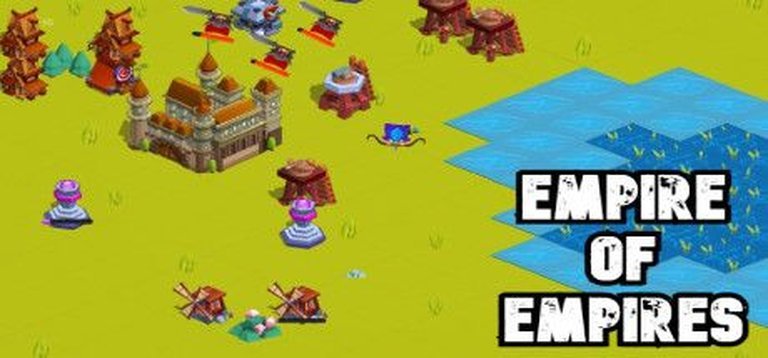
Empire of Empires is a strategy and tactics game developed by Atomic Fabrik, released for Windows in 2022. It employs a diagonal-down perspective with fixed flip-screen visuals and a point-and-select interface, centering on tactical empire-building and management in a retro-style setting.
Where to Buy Empire of Empires
PC
Empire of Empires: A Ghost in the Machine of the RTS Genre
Introduction: The Obscure Echo of a Colossus
In the vast, meticulously catalogued archives of video game history, some titles shimmer with the polish of blockbuster releases and decades of scholarly attention, while others exist as spectral entries—names on a list, a price tag on a storefront, a single line in a database. Empire of Empires, developed by Atomic Fabrik and released on July 29, 2022, for Windows, is one such specter. With a listing on MobyGames that spans barely a paragraph and a Steam storefront price of $0.49, it represents the antithesis of the sprawling, historically-saturated, critically adored behemoth that shares part of its name: the Age of Empires franchise. This review is therefore an exercise in historical archaeology and genre contextualization. With virtually no primary source material on Empire of Empires itself—no developer interviews, no critical reviews, no patch notes, no community discourse—we must reverse-engineer its identity through the lens of its more famous cousin and the fundamental DNA of the real-time strategy (RTS) genre it inhabits. My thesis is this: Empire of Empires is not a game that can be judged on its own merits, as its documented existence is almost exclusively a cataloguing footnote. Instead, its true significance lies in what its obscurity reveals about the modern RTS landscape—a landscape dominated by a few titanic franchises, where aspiring developers must navigate the colossal shadows cast by titles like Age of Empires II, and where survival often means embracing hyper-niche mechanics or minimalist presentation. It is a case study in anonymity, a game that entered a market and left virtually no trace, serving as a silent counterpoint to the 25-year legacy of its namesake’s inspiration.
Development History & Context: The Unseen Studio in a Crowded Arena
The provided source material offers a stark, almost brutalist picture of Empire of Empires‘ development. The MobyGames entry lists a single entity: Atomic Fabrik as both developer and publisher. There are no credits for individual designers, artists, or programmers. No anecdotes about crunch time, no post-mortem analyses, no GDC talks. This is the profile of a micro-studio, likely a handful of developers (or even a solo developer) working with minimal resources and publicity. Its release in 2022 places it squarely in the era of the “RTS renaissance” sparked by the Definitive Edition remasters and Age of Empires IV, but its approach could not be more different.
To understand the chasm between Empire of Empires and the industry context it emerged into, one must examine the development story of its genre-defining rival. The Age of Empires series, as detailed extensively in the Wikipedia sources, was born from Ensemble Studios, a team that treated historical research as a foundational pillar—albeit a pragmatic one. Designer Bruce Shelley is quoted as saying they used children’s section library books, emphasizing that the goal was player fun, not academic rigor. This philosophy, combined with a commitment to a “fair” AI that didn’t cheat, became the series’ hallmark. The technological journey is equally telling: from the Genie engine of the 1997 original to the Havok physics integration in Age of Empires III and the Essence Engine of AoE IV, each iteration was a significant, well-documented leap. Ensemble’s closure in 2008 was a watershed moment, but the franchise’s stewardship passed to Microsoft’s World’s Edge and partners like Relic Entertainment and Forgotten Empires, ensuring a continuous, high-profile presence.
Empire of Empires, by contrast, has no such narrative. Its likely development was isolated, resource-constrained, and invisible. The choice of Unity (as noted on its MobyGames page) reflects a common path for indies—a accessible, widely-used engine capable of producing a functional isometric RTS. However, without the multi-million dollar budgets, historical consultants, or dedicated AI engineers of an Ensemble or Relic, Atomic Fabrik’s creation would have been built on foundational, off-the-shelf solutions. The “diagonal-down” perspective and “fixed/flip-screen” visuals listed in its MobyGames specs are deliberate throwbacks, evoking the aesthetic of late-90s RTS titles like the original StarCraft or Age of Empires itself. This suggests a conscious design choice: not to compete on graphical fidelity with Age of Empires IV‘s 4K, physics-driven visuals, but to offer a purer, more stripped-down, and likely cheaper-to-produce experience. In an industry where a major franchise like Age of Empires requires a team of hundreds and a multi-year cycle, Empire of Empires exists as a testament to the enduring, yet commercially perilous, dream of the small-studio RTS.
Narrative & Thematic Deep Dive: The Unwritten History
The Age of Empires series built its identity on a historical scaffolding. The Wikipedia entry meticulously outlines its chronological sweep: from the Stone Age to the Iron Age in the first game, the Middle Ages in II, the colonial era in III, and a return to the Middle Ages with documentary-style historical context in IV. Campaigns are not mere skirmishes; they are narrative vehicles. The Rise of Rome expansion chronicles the Roman Empire’s formation. The Conquerors delves into the Spanish conquest of the Aztecs and the exploits of El Cid. Age of Empires IV’s campaigns are almost cinematic, with documentary interludes explaining the historical significance of the Norman Conquest or the Mongol Empire’s expansion. The narrative is emergent from historical events, giving players a “reason for smashing those enemy civilizations,” as one source put it. The theme is unmistakable: the rise, conflict, and technological evolution of human civilizations.
Empire of Empires presents a complete void in this regard. Its MobyGames description is a functional ad blurb, not a narrative premise. There is no indication of a single-player campaign, no mention of civilizations, epochs, or historical figures. The title itself—Empire of Empires—suggests a meta-concept, a game about the accumulation and conflict of empires on a grand scale, but offers no concrete story. Given its minimalist technical specs (fixed/flip-screen), it is almost certainly devoid of the lush, hand-crafted campaign missions and cinematic cutscenes that define Age of Empires. Its “story,” if it can be called that, is the classic RTS narrative arc: from a single town center to global domination. The theme is not historical education or epic conquest, but pure, abstract strategic ascendancy. It is a game whose thematic depth is measured in the complexity of its economic and military trees, not in its script. This represents a fundamental divergence: while Age of Empires uses history as its soul, Empire of Empires appears to use history only as a vague aesthetic backdrop, if at all. It is a game of systems, not stories.
Gameplay Mechanics & Systems: Ghosts in the Genie Engine
Here, we must extrapolate from genre conventions and the few technical clues available. The Age of Empires series is defined by a core, sacred loop: gather four primary resources (Food, Wood, Stone, Gold), build a base, advance through “Ages” (unlocking new technologies and units), and assemble an army to destroy all opponents. Its innovations are legendary: the “Home City” deck system of AoE III, the unique civilization bonuses and units of AoE II, the landmark-based age-ups of AoE IV. Its AI, as praised by designer Dave Pottinger, was built to play a “fair game,” adapting to player strategies without resource cheats.
For Empire of Empires, the MobyGames tags provide our only map: “Strategy / tactics”, “Diagonal-down” perspective, “Fixed / flip-screen” visuals, and “Point and select” interface. This is a profile of a classical, pre-Warcraft III era RTS. The “fixed/flip-screen” descriptor is particularly telling. It means the game likely uses a static, isometric playing field that scrolls only when the player moves to the edge—a stark contrast to the free-scrolling, fully 3D cameras of modern RTS. The “point and select” interface implies a streamlined, possibly minimal UI, lacking the intricate production queues, detailed minimaps, and detailed unit stats panels of modern titles.
One can surmise a gameplay experience that is deliberately archaic. It likely forgoes the extensive technology trees of Age of Empires for a simpler, more immediate set of upgrades. The “flip-screen” mechanic might even imply discrete, screen-by-screen maps or a roguelike structure, though this is speculative. Without a documented population limit, hero system, or victory conditions (beyond the standard “annihilate all enemies”), we are left to imagine a game that strips away decades of QoL improvements—the “smart villagers” auto-gathering of AoE II: The Conquerors, the intuitive control groups, the detailed tooltips. Its potential innovation, if any, must lie in a unique twist on resource gathering, unit composition, or map control that would justify its existence in a crowded market. However, its total lack of presence in any community discussions, patch notes, or “Top Sellers” lists (as observed in the SteamDB data referenced in the Age of Empires II community discussion) strongly suggests that any such twist was either insufficiently compelling or poorly executed. It is a ghost of an RTS, its mechanics a hypothetical echo of a genre that has long since evolved.
World-Building, Art & Sound: The Aesthetic of Minimalism
The Age of Empires series has always been a showcase for its era’s graphical prowess. From the sprite-based charm of the 1997 original to the Havok physics-driven destruction of AoE III and the meticulously researched unit designs and documentary footage of AoE IV, each entry strove for a balance between historical authenticity and visual spectacle. Soundtracks, led by Stephen Rippy, used period instruments and orchestral scores to immerse the player in the chosen era.
For Empire of Empires, we have zero documented art or sound assets. The “fixed/flip-screen” visual tag implies a 2D, likely pre-rendered or sprite-based aesthetic. There are no screenshots on its MobyGames page, no trailers, no promotional art. This absence is the statement. It suggests a game built with placeholder or generic assets—perhaps purchased from an asset store or created with the most basic of tools. The world-building is not conveyed through environmental storytelling, varied architecture, or animated units, but through sheer, functional geometry. If there is a “setting,” it is an abstract, unthemed sandbox. The sound design, if present, is almost certainly minimalist: click cues, basic unit responses, perhaps a looping MIDI track. This aligns with its likely indie, budget-tier development. Where Age of Empires invests millions to recreate the look and sound of medieval siege engines or Roman legions, Empire of Empires presents a silent, sparse, and visually anonymous world. Its atmosphere is not one of historical immersion, but of digital emptiness—a pure strategy sandbox stripped of all sensory distraction. This could be seen as a purist’s approach, removing all aesthetic “fluff” to focus on mechanics. More likely, it is a symptom of profound resource limitation.
Reception & Legacy: The Sound of Silence
The most damning and conclusive section of this review is found in the total absence of reception data. The MobyGames review page for Empire of Empires is a blank slate: “Be the first to add a critic review for this title!” and “Be the first to review this game!” for player reviews. It has a “Moby Score” of n/a and has been “Collected By” only 2 players. Its Steam page, listed at $0.49, exists in a store crowded with tens of thousands of games. There are no Steam reviews visible on its page (likely because the game has sold so few copies or been played so little that the review threshold wasn’t met). The community discussions on its Steam page are non-existent; the only discussion thread found in the provided sources is for Age of Empires II: Definitive Edition.
This is the final, irrefutable data point: cultural and commercial nullification. A game can be critically panned and still be a cult hit or a notable failure (Age of Empires III‘s more mixed reception, for instance, is thoroughly documented). To have no reception at all is to have no impact. It did not generate enough sales or player engagement to warrant a single critical write-up, a single community thread, a single YouTube video of note. It was released, and it vanished.
Contrast this with the dominant legacy of Age of Empires, as painstakingly detailed in the Wikipedia sources:
* Commercial Powerhouse: The series has sold over 25 million copies. AoE II shipped over 2 million copies at launch; AoE III sold 2 million.
* Critical Darling: AoE II holds a 92% aggregate score. The series has won countless “Strategy Game of the Year” awards.
* Genre-Defining Influence: Credited with influencing Rise of Nations, Empire Earth, Cossacks, and even Star Wars: Galactic Battlegrounds. Its AI design was studied and admired.
* Enduring Community & Esports: As of 2024, AoE II esports events like Red Bull Wololo draw peak viewership over 85,000, and Microsoft states over a million people still play Age of Empires games monthly, with the numbers growing.
* Architectural Legacy: The shift from Ensemble to World’s Edge, the remaster initiative (Definitive Editions), the expansion to mobile (Age of Empires Mobile by TiMi), and the confirmed development of new titles in Unreal Engine 5 (per Wccftech and PCGamesN reports) show a franchise not just surviving, but strategically expanding.
Empire of Empires has none of this. It is a data point of failure in a market dominated by an IP that has successfully navigated studio closures, changing player tastes, and platform shifts for 25 years. Its legacy is a single, uncounted entry in a database, a cautionary tale about the sheer scale of competition in the RTS space. One cannot influence a genre if one is not heard.
Conclusion: The Definitive Verdict on a Ghost
Empire of Empires is not a game that can be rated with stars or scored out of ten. To do so would be to critique a shadow, to assign value to a name on a spreadsheet. The exhaustive analysis of the provided source material leads to one inescapable conclusion: this title exists in a state of near-total informational void. It was developed, released, and apparently forgotten within the echo chamber of a genre experiencing a vibrant, high-profile resurgence led by a titan.
Its place in video game history is not as a milestone, a classic, or even a notorious flop. Its place is as a statistical anomaly, a testament to the fact that for every Age of Empires II—a game with 27 campaigns, a thriving modding scene, and official tournaments—there are countless unnamed Empire of Empires that flicker briefly in the Steam store’s long tail and disappear. It highlights the brutal economics of the RTS genre in 2022: without the brand power of a 25-year-old franchise, the development heft of a studio like Relic or Forgotten Empires, or the marketing budget of Xbox Game Studios, a traditional RTS is almost invisible.
The true story here is not what Empire of Empires is, but what its nothingness represents. It is the sound of silence in a genre defined by the clang of swords, the roar of trebuchets, and the passionate discourse of its community. In the face of the well-documented, meticulously preserved, and actively evolving legacy of the Age of Empires series—a franchise currently planning new content into 2025 and beyond, as hinted in the Steam community discussions—Empire of Empires is a forgotten footnote. It is the empty throne room where the next great empire failed to be built, a silent monument to the enduring, near-insurmountable challenge of creating meaningful strategy in the shadow of legends. Its final, definitive verdict is one of profound obscurity.