
- Release Year: 2008
- Platforms: Linux, Macintosh, Windows
- Publisher: Lonely Troops
- Developer: Lonely Troops
- Genre: Strategy, Tactics
- Perspective: Top-down
- Game Mode: Single-player
- Gameplay: Cards, Tiles
- Average Score: 73/100
Description
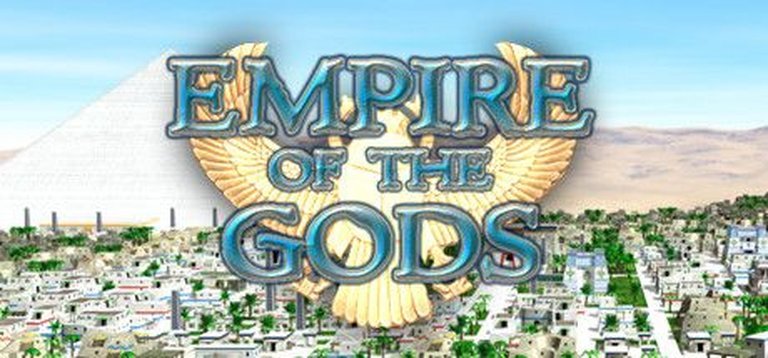
Empire of the Gods is a strategy game set in ancient Egypt, where players build and expand their civilization from a small tribe to a mighty empire along the Nile. Combining city-building with a unique card-based gameplay system, players construct grand monuments like pyramids, manage resources, and earn the favor of the gods to become the most powerful Pharaoh. The game features 12 beautifully designed cities, character progression, and a variety of bonus cards and achievements to unlock.
Gameplay Videos
Where to Buy Empire of the Gods
PC
Empire of the Gods Free Download
Empire of the Gods Patches & Updates
Empire of the Gods Guides & Walkthroughs
Empire of the Gods Reviews & Reception
steambase.io (73/100): Empire of the Gods has earned a Player Score of 73 / 100.
niklasnotes.com (73/100): The reviews for ‘Empire of the Gods’ reveal a mixed reception, with players appreciating its simple mechanics, casual gameplay, and appealing graphics, while also criticizing its lack of depth, weak story, and insufficient tutorial.
Empire of the Gods Cheats & Codes
PC
Enter codes during gameplay.
| Code | Effect |
|---|---|
| ATM OF EREBUS | Grants 1000 gold |
| TROJAN HORSE FOR SALE | Grants 1000 wood |
| JUNK FOOD NIGHT | Grants 1000 food |
| WRATH OF THE GODS | Unlocks lightning, earthquake, meteor, and tornado god powers |
| PANDORA’S BOX | Randomly assigns a god power |
| GOATUNHEIM | Turns all units into goats |
Empire of the Gods: A Hidden Gem of Ancient Egyptian Strategy
Introduction
In the vast pantheon of strategy games, Empire of the Gods (2008) stands as a curious artifact—a blend of card-based mechanics, resource management, and historical grandeur set against the backdrop of Ancient Egypt. Developed by the small but ambitious studio Lonely Troops, this game offers a unique take on empire-building, eschewing traditional real-time or turn-based strategies in favor of a puzzle-like card system. While it may not have achieved the mainstream acclaim of titles like Civilization or Age of Empires, Empire of the Gods carves out its own niche, appealing to players who crave a cerebral challenge wrapped in the mystique of pharaonic ambition.
This review will dissect Empire of the Gods in exhaustive detail, exploring its development history, narrative and thematic depth, gameplay mechanics, artistic and auditory design, reception, and lasting legacy. By the end, we’ll determine whether this game deserves a place in the annals of strategy gaming history or if it remains a forgotten relic of a bygone era.
Development History & Context
The Studio Behind the Game
Lonely Troops, the Czech-based indie studio responsible for Empire of the Gods, is a name that may not ring bells for most gamers. Founded by brothers Jaroslav and Tomáš Kurčík, the studio has a modest portfolio, primarily focusing on casual and strategy games. Their earlier works, such as Romopolis and Townopolis, hint at a fascination with city-building and historical settings, but Empire of the Gods represents their most ambitious foray into blending strategy with puzzle mechanics.
The game’s development was a labor of love, with Jaroslav handling programming and Tomáš overseeing the visual design. The music, composed by A.M.M., adds an atmospheric layer that complements the game’s ancient Egyptian theme. Dan Marshall, known for his work on The Chzo Mythos series, provided English localization, ensuring the game’s narrative and interface were accessible to a broader audience.
Technological Constraints and Design Philosophy
Released in 2008, Empire of the Gods was developed during a transitional period in gaming. The industry was shifting toward more complex 3D engines and online multiplayer experiences, yet Lonely Troops opted for a simpler, more accessible approach. The game’s top-down perspective and card-based mechanics were likely influenced by both technological limitations and a desire to create something distinct.
The decision to use a card-based system rather than traditional RTS or turn-based mechanics was a bold one. It allowed the developers to focus on deep, strategic gameplay without the need for advanced graphics or real-time processing. This choice also set Empire of the Gods apart from contemporaries like Age of Mythology or Rise of Nations, which dominated the strategy genre at the time.
The Gaming Landscape of 2008
The late 2000s were a golden age for strategy games. Titles like Civilization IV (2005), Company of Heroes (2006), and Sins of a Solar Empire (2008) were redefining the genre, offering players unprecedented depth and scale. Amidst this competitive landscape, Empire of the Gods emerged as a quieter, more introspective experience. It didn’t aim to compete with the epics of its time but instead offered a niche experience for players who enjoyed puzzle-like strategy games.
The game’s release on platforms like Steam and Big Fish Games further underscored its indie roots. It was marketed as a casual yet strategic experience, appealing to players who might not have the time or inclination for the more demanding titles of the era.
Narrative & Thematic Deep Dive
Plot Overview
Empire of the Gods casts players as an aspiring pharaoh tasked with building an empire along the Nile. The narrative is minimalistic, serving more as a framework for the gameplay rather than a driving force. Players begin as the leader of a small tribe and, through strategic resource management and monument construction, ascend to godlike status. The ultimate goal is to earn the favor of the gods by building pyramids, temples, and cities that stand as testaments to their power.
The game’s story is told through brief interludes between levels, with each successful city or monument unlocking a new chapter in the player’s rise to power. While the narrative lacks the depth of a Total War or Civilization campaign, it effectively sets the stage for the gameplay, reinforcing the theme of divine ambition.
Characters and Dialogue
Given its focus on gameplay over storytelling, Empire of the Gods features few distinct characters. The player’s avatar is a silent protagonist, and the gods themselves are more symbolic than interactive. Dialogue is sparse, with most communication occurring through tooltips and achievement notifications.
This minimalist approach to narrative allows the gameplay to take center stage. However, it also means that the game lacks the emotional or thematic depth of more story-driven strategy titles. Players looking for rich character development or branching narratives will find little to engage with here.
Underlying Themes
At its core, Empire of the Gods explores themes of power, ambition, and divine favor. The game’s mechanics reinforce these themes, as players must balance their resources (power, wealth, faith, and life) to appease the gods and expand their empire. The idea that “the gods favor the mightiest” is not just a tagline but a central gameplay mechanic—players who fail to manage their resources effectively will find their empire crumbling under the weight of divine displeasure.
The game also touches on the cyclical nature of empires. Each level represents a step in the player’s journey from obscurity to dominance, mirroring the rise and fall of historical civilizations. The emphasis on monument-building—particularly pyramids—highlights the human desire to leave a lasting legacy, a theme that resonates deeply within the context of Ancient Egypt.
Gameplay Mechanics & Systems
Core Gameplay Loop
Empire of the Gods is, at its heart, a puzzle game disguised as a strategy experience. The core gameplay revolves around managing four primary resources: power, wealth, faith, and life. Players are dealt a hand of cards, each of which can convert one resource into another. For example, a card might allow the player to sacrifice wealth to gain faith, or trade power for life.
The objective of each level is to reach a specific resource threshold within a limited number of turns. Early levels are straightforward, but as the game progresses, the challenges become more complex, requiring careful planning and efficient use of bonus cards.
Combat and Conflict
Unlike traditional strategy games, Empire of the Gods does not feature direct combat. Instead, conflict is abstracted through the game’s resource management system. Players must “battle” against the constraints of their hand, making tough decisions about which resources to prioritize. The lack of traditional combat may disappoint fans of military strategy, but it allows the game to focus on its unique puzzle-like mechanics.
Character Progression and Upgrades
As players complete levels, they earn fame, a meta-resource that can be spent on permanent upgrades. These upgrades enhance the player’s starting resources or provide bonuses to specific card types, making subsequent levels easier to manage. The progression system is simple but effective, giving players a sense of growth and accomplishment as they build their empire.
UI and Accessibility
The game’s user interface is clean and functional, though somewhat dated by modern standards. The card-based system is intuitive, with each card clearly displaying its resource conversion effects. However, the lack of a comprehensive tutorial may leave new players struggling to grasp the deeper strategies required for later levels.
The game’s difficulty curve is steep, with later levels demanding near-perfect resource management. This can be frustrating for casual players but rewarding for those who enjoy a challenge. The inclusion of bonus cards—special cards that provide unique resource conversions—adds an extra layer of strategy, though their random distribution can sometimes feel unfair.
Innovative and Flawed Systems
Empire of the Gods’ most innovative feature is its card-based resource management system. By abstracting empire-building into a puzzle, the game offers a fresh take on the strategy genre. However, this same system is also the game’s greatest flaw. The lack of variety in card effects and the repetitive nature of the levels can make the game feel monotonous over time.
The achievement system, while well-intentioned, also feels underdeveloped. Many achievements are tied to reaching arbitrary resource thresholds, which can feel more like grinds than meaningful challenges. The game’s lack of replayability is another notable weakness—once players have completed all levels and unlocked all upgrades, there’s little incentive to return.
World-Building, Art & Sound
Setting and Atmosphere
Empire of the Gods excels in creating a sense of place. The game’s Ancient Egyptian setting is richly detailed, with each level featuring beautifully rendered cities, monuments, and landscapes. The top-down perspective allows players to watch their empire grow in real-time, with pyramids and temples rising majestically as they progress.
The game’s atmosphere is further enhanced by its sound design. The musical score, composed by A.M.M., is a standout feature, blending traditional Egyptian instruments with modern electronic elements. The result is a haunting, immersive soundtrack that perfectly complements the game’s themes of power and divinity.
Visual Direction
The visual style of Empire of the Gods is simple but effective. The game’s art direction leans heavily into its historical setting, with detailed depictions of Egyptian architecture and iconography. The card designs are clear and functional, though they lack the artistic flair of more modern card games.
The animations, while minimal, are smooth and responsive, ensuring that the gameplay remains fluid. The game’s color palette is dominated by earthy tones, reinforcing the ancient, sun-baked aesthetic of the setting.
Sound Design
The sound design in Empire of the Gods is understated but effective. The ambient sounds of the Nile, the distant calls of workers, and the echoing chants of priests all contribute to the game’s immersive atmosphere. The lack of voice acting is noticeable but not detrimental, as the game’s focus is firmly on gameplay rather than narrative.
Reception & Legacy
Critical and Commercial Reception
Empire of the Gods received a mixed reception upon its release. Critics praised its innovative card-based mechanics and atmospheric presentation but criticized its repetitive gameplay and lack of depth. The game’s niche appeal meant that it never achieved mainstream success, though it developed a small but dedicated fanbase.
On Steam, the game holds a “Mostly Positive” rating, with players appreciating its unique take on the strategy genre. However, many reviews also note the game’s steep difficulty curve and limited replayability. The lack of critical reviews on platforms like MobyGames and Metacritic further underscores the game’s obscurity.
Evolution of Reputation
Over time, Empire of the Gods has gained a cult following among fans of puzzle-strategy hybrids. Its unique mechanics and historical setting have earned it a place in discussions about underrated indie strategy games. However, it remains largely unknown outside of niche gaming circles.
The game’s legacy is perhaps best summed up by its influence on later titles. While Empire of the Gods did not spawn a direct sequel, its card-based resource management system can be seen as a precursor to games like Slay the Spire and Monster Train, which blend strategy and deck-building in innovative ways.
Influence on Subsequent Games
Though Empire of the Gods did not revolutionize the strategy genre, its experimental approach to resource management has left a mark. Modern indie developers have drawn inspiration from its puzzle-like mechanics, incorporating similar systems into their own games. The game’s emphasis on minimalist storytelling and atmospheric world-building has also influenced later titles, particularly in the roguelike and deck-building genres.
Conclusion
Empire of the Gods is a flawed but fascinating experiment in strategy gaming. Its card-based resource management system offers a unique challenge, and its Ancient Egyptian setting is richly atmospheric. However, the game’s repetitive gameplay and lack of depth prevent it from achieving true greatness.
For players who enjoy puzzle-like strategy games or have a fascination with Ancient Egypt, Empire of the Gods is worth a look. Its low price point and short playtime make it an easy recommendation for those seeking a brief but engaging experience. However, fans of traditional RTS or turn-based strategy games may find it lacking in complexity and replayability.
In the grand tapestry of strategy gaming, Empire of the Gods is a minor but noteworthy thread. It may not have reshaped the genre, but its innovative mechanics and atmospheric presentation ensure that it remains a memorable, if overlooked, gem.
Final Verdict: 7/10 – A unique and atmospheric strategy-puzzle hybrid that shines despite its flaws.