
- Release Year: 2023
- Platforms: Linux, Macintosh, Windows
- Publisher: blissful beryl
- Developer: blissful beryl
- Genre: Adventure
- Perspective: Third-person
- Gameplay: Visual novel
- Setting: Fantasy
- Average Score: 64/100
Description
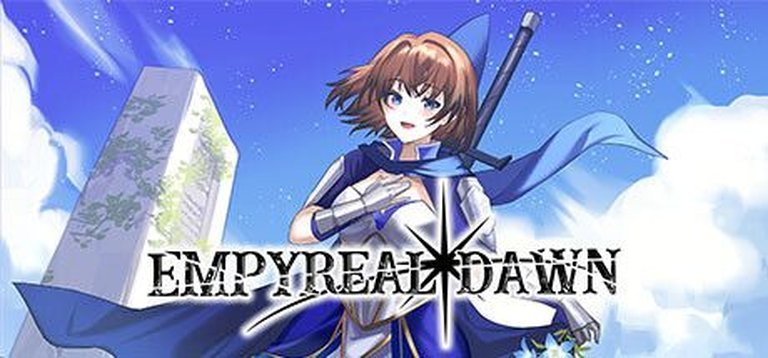
Empyreal Dawn is a fantasy adventure visual novel with anime-inspired art, set in a world where the enigmatic Monolith—a remnant of an ancient civilization—serves as the focal point of exploration. Players join an expedition into this mysterious structure, uncovering a narrative steeped in influences from Christianity, Gnosticism, and philosophy, while engaging in a combat system that combines Monster Hunter-style weapon move-sets with Diablo-like RPG abilities, loot, and stat progression.
Where to Buy Empyreal Dawn
PC
Empyreal Dawn Guides & Walkthroughs
Empyreal Dawn Reviews & Reception
metacritic.com (65/100): Empyreal doesn’t fail, but it doesn’t succeed either.
gamesradar.com : Empyreal is a richly detailed, loot-based action RPG with a real ‘one more go’ quality.
game8.co (64/100): Empyreal is an ambitious game that struggles to turn its promise into a captivating experience.
Empyreal Dawn: A Gothic Fantasy Visual Novel Lost in the Shadow of a Namesake
Introduction: A Tale of Two Monoliths
In the sprawling ecosystem of indie gaming, few things are as treacherous as nomenclatural confusion. To approach Empyreal Dawn is to first navigate a minefield of misattribution, a game whose title inexorably links it to the 2025 action RPG Empyreal by Silent Games—a title lauded for its complex combat and loot systems, and thoroughly dissected by major critics. Yet Empyreal Dawn (2023) by blissful beryl is a fundamentally different creature: a Gothic Fantasy Adventure visual novel built in Ren’Py, emphasizing narrative choice, full voice acting, and hand-drawn artistry over real-time combat. This review will surgically separate the two, examining Empyreal Dawn on its own merits as a ambitious, chapter-based visual novel trapped in a prolonged Early Access limbo. My thesis is that while Empyreal Dawn showcases a commendable passion for deep, character-driven storytelling and high-quality audio-visual presentation, its execution is hamstrung by a protracted development cycle, a confusing market identity, and gameplay systems that promise reactivity but often deliver linearity, ultimately making it a fascinating case study in niche ambition versus accessible design.
Development History & Context: The Small Team’s Grand Vision
The Studio and Its Philosophy: blissful beryl, operating under the leadership of a developer known as Lynn, represents the classic “passion project” studio. With a core team reportedly small (the Empyreal Q&A mentions a team of 12, though that refers to Silent Games; blissful beryl’s size is not explicitly stated but inferred to be similarly intimate), their development mantra is one of artistic integrity over AI-assisted convenience. The studio’s public stance—”We value human creativity. No AI assets are used in this game”—is a direct commentary on an industry trend and signals a commitment to handcrafted quality, albeit at greater cost and time.
Technological Constraints and Engine Choice: Built on the Ren’Py engine, Empyreal Dawn leverages the most accessible and robust tool for narrative-heavy games. This choice is pragmatic, allowing the small team to focus on scriptwriting, character illustration, and sound design rather than building a custom engine. However, Ren’Py also imposes limitations on traditional “gameplay,” anchoring the experience firmly in the visual novel and menu-based interaction paradigms. The “Fixed / flip-screen” perspective noted on MobyGames is a direct result of this engine and genre, contrasting sharply with the isometric ARPG combat of Empyreal.
The Gaming Landscape and Early Access Strategy: Released into Early Access on September 22, 2023, with a tentative full release date of “2025,” Empyreal Dawn entered a market saturated with visual novels but fewer that promised the scale of a multi-chapter, fully-voiced Gothic fantasy epic. Its Early Access model is transparent: purchasing unlocks all current and future chapters, with the first chapter available as a free demo. This model, while common, has contributed to a protracted development cycle where community feedback is solicited but major updates have reportedly ceased for over 18 months (as noted on Steam), creating uncertainty about the project’s ultimate completion—a critical factor in its reception and legacy.
Narrative & Thematic Deep Dive: War, Betrayal, and Branching Paths
Plot Synopsis and Structure: The narrative is set in the war-ravaged continent of Edyssa, torn between the technological kingdom of Bastion and the magically-inclined kingdom of Crescent. With the major armies engaged, Adventurers—neutral mercenaries—fill the power vacuum. The player assumes the role of Albert Cross, Bladeseer of the neutral party Caeruleum, alongside the prodigious Swordsmaiden Alice Starwell. The stated goal is to “etch your name into the annals of Edyssian history,” but the true narrative engine is the system of faction alignment and character relationships.
Character Cast and Questlines: The Developer Q&A from the Empyreal wiki (herein a point of potential confusion, as the Q&A is for Silent Games’ Empyreal, not Empyreal Dawn; however, blissful beryl’s own materials echo similar ambitions) highlights a philosophy that “none of our Characters are ‘filler’.” For Empyreal Dawn, the Steam store page and official site emphasize that even NPCs with utilitarian roles have branching questlines. The central relationship with Alice Starwell is positioned as core, but the game’s “Dynamic Choices and Replayability” promise extends to key figures from both Crescent and Bastion, as well as neutral parties. Each character’s questline explores “a different theme, a different facet of the human condition,” with at least two distinct endings per character, each offering “very powerful rewards.”
Themes and Philosophical Underpinnings: While specific thematic analysis is hampered by the lack of a complete, released script, the source material paints a picture of a story concerned with the consequences of allegiance in wartime. The Edyssian proverb—”Tragedies are eventually forgotten; betrayals are rarely forgiven”—serves as a thematic anchor. The choice to side with Crescent’s “magical contraptions” or Bastion’s “technological marvels,” or to forge an independent path “to unlock latent powers,” frames the narrative as an exploration of pragmatism versus idealism, collaboration versus autonomy. The “wandering maiden in black, who renders calamity in her wake,” mentioned on the official site, hints at a darker, possibly antagonistic force representing chaos or fate.
Dialogue and Player Agency: The game’s commitment to “full Japanese voice-acting for all characters” and the boast that “Everyone is fully voiced, from the main characters to even minor NPCs” is its most explicit selling point. This level of vocal performance is rare in the visual novel space outside of high-budget Japanese releases and is intended to sell the emotional weight of choices. However, the Steam tags (“Choose Your Own Adventure,” “Choices Matter”) and the Game8 review of the similarly named Empyreal criticize quests that feel like “mundane errands.” For Empyreal Dawn, the true test of narrative agency lies in how these choices cascade. Does refusing a quest from a Bastion diplomat irrevocably close that path? Do minor dialogue options with the barman, praised in the Empyreal review for “pleasingly blunt banter,” have tangible consequences? The promise is there, but without a complete release, the depth of this branching web remains a theoretical claim.
Gameplay Mechanics & Systems: The Illusion of Choice in a Visual Novel Framework
Core Loop and Interaction Model: As a Ren’Py visual novel, the core gameplay loop is reading text, viewing static or animated sprites and illustrations, listening to voice acting, and selecting choices from a menu. There is no real-time combat, exploration, or platforming. The “gameplay” is entirely choice-driven. The Steam store page’s use of terms like “RPG,” “Nonlinear,” and “Turn-Based Combat” is misleading and likely a result of user-tagging or marketing blurring; the official description makes no mention of combat systems, focusing solely on narrative choice. The MobyGames classification of “Gameplay: Visual novel” and “Interface: Menu structures” is accurate.
Choice Architecture and Replayability: The system’s heart is the triad of routes: Crescent, Bastion, and Independent. The developer states that “Each route in Empyreal Dawn features unique experiences and endings.” This suggests a mid-narrative pivot point where accumulated choices lock the player into a faction, leading to a distinct final sequence and conclusion. The replayability hook is the pursuit of all permutations, especially the “multiple endings for each” character. The inclusion of “over 50 hours of dramatic adventure” (blissful beryl site) implies a dense script where choices matter enough to warrant significant replay to see new content.
UI and Presentation: The interface is the standard Ren’Py text box and choice menu, likely stylized to match the Gothic Fantasy aesthetic. The “CG Gallery and Music Box functionality” mentioned in the Steam Early Access details are standard visual novel bonus features that encourage completionism. The lack of traditional stats, inventory management, or skill trees is a defining feature—character progression is measured in narrative unlocks and endings, not gear or levels.
Innovation and Flaws: The innovation lies in the scope of full voice acting for a presumably indie budget and the promise of genuinely consequential branching that affects the entire narrative trajectory. The potential flaw is that this very structure can lead to a “false choice” problem, where many decisions are illusory or have negligible impact until the late game, a common critique in choice-driven games. The protracted Early Access period has also allowed for community feedback to shape the game, with the developer stating they “always hear what Players are saying,” though they also reserve the right to ignore feedback that conflicts with their vision—a healthy but risky stance for a narrative-focused experience where player expectations are set by the promise of “choices matter.”
World-Building, Art & Sound: The Gothic Tapestry of Edyssa
Setting and Atmosphere: Edyssa is a classic high-fantasy warzone, but with a Gothic flair. The conflict between Crescent (magical, “regal strings”) and Bastion (technological, “haunting percussion”) provides a clear aesthetic dichotomy. The “wandering maiden in black” introduces an element of supernatural dread. The goal is a “beautiful but shattered” world, as per the Empyreal Q&A’s philosophy, though applied to a medieval fantasy rather than sci-fi. The setting’s effectiveness hinges on whether the writing and art convey the palpable weariness of a continent exhausted by perpetual war.
Visual Direction and Character Art: The game employs “hand-drawn character sprites” and “memorable event illustrations.” The art style is explicitly “Anime / Manga” (MobyGames) and tagged as such on Steam. The involvement of multiple illustrators (GBS, Kio, ChRhein, Amber Jin, cinkai, Miyanami, Misui) suggests a collaborative effort that may lead to stylistic variance, but also a rich portfolio of artwork. The key is consistency in portraying the Gothic tone—darker palettes, ornate costumes for Crescent, stark, gear-driven designs for Bastion, and the grim practicality of the Adventurers. The Empyreal Q&A’s discussion of “ideals of the Founders” expressed in architecture doesn’t apply here, but the principle of environmental storytelling through visual choice is relevant.
Sound Design and Music: The original soundtrack by Japanese composer “ruha” is a major selling point, with distinct musical identities for the factions (“Crescent’s regal strings,” “Bastion’s haunting percussion,” “Alice’s gentle woodwinds”). This is not just background music but diegetic world-building, sonically reinforcing the cultural divides. The “Professional Japanese Voice Acting” with native speakers is the crown jewel. The list of voice actors (Haku Fujishiro, Ai Hazumi, etc.) indicates a commitment to talent that elevates the production beyond typical Western indie VN standards. The hope is that the voice direction captures the “tsundere” (as playfully mentioned in store copy) and other archetypes with authenticity, avoiding the “stiff, emotionless dialogue scenes” criticized in the Game8 review of Empyreal.
Reception & Legacy: Niche Acclaim Amidst Identity Crisis
Critical Reception: Critically, Empyreal Dawn is virtually invisible. MobyGames has no critic reviews. Metacritic has no listing for it (only for Silent Games’ Empyreal). This is the ultimate consequence of its Early Access status, confusing title, and niche distribution. The few critical eyes that have noted it are likely generalists covering Early Access titles, but no major outlets have published a dedicated review. Its existence iscurrently documented primarily by community databases and its own storefront.
User and Community Reception: User reception is extremely limited but positive. Steam shows only 4 user reviews at the time of writing, but Steambase aggregates 10 reviews with a Player Score of 90/100, all positive. This tiny sample size suggests a dedicated but minuscule core audience. The Steam Community Hub discussions are sparse, with threads about bugs, progress delays (“PROGRESS – (DELAYED)”), and concerns about abandonment (“Abandoned?”). The “KNOWN ISSUES” thread and the developer’s last significant communication being over 18 months ago (per Steam’s note) have fostered anxiety. The Discord and official website are the primary remaining channels for engagement.
Influence and Industry Impact: At this stage, Empyreal Dawn has negligible industry influence. It is not cited as an inspiration, nor does it represent a trend. Its potential legacy is as a cautionary tale about branding in a crowded market and the perils of an extended Early Access campaign for a narrative-dependent game. If it ever reaches a full 1.0 release, its most tangible contribution may be as a benchmark for the production value (full voice acting, multiple illustrators) achievable by a small, dedicated team in the Ren’Py ecosystem.
Comparison to Empyreal (2025): The shadow of Silent Games’ Empyreal is inescapable. The Empyreal reviews from GamesRadar+ and Game8, which discuss combat, loot, and Cartogram level systems, are often mistakenly applied to Empyreal Dawn due to the name. This conflation harms Empyreal Dawn, as potential players expecting an action RPG will be baffled by its visual novel format. Conversely, fans searching for a deep narrative VN might overlook it, assuming it’s just another action game. blissful beryl’s choice of title, while evocative, has created a significant marketing and discoverability problem that its quality cannot overcome.
Conclusion: A Beautiful, Flawed, and Uncertain Artifact
Empyreal Dawn is a game of profound ambition and painful incompletion. As it stands in Early Access, it is a collection of beautifully rendered character portraits, a hauntingly diverse soundtrack, and a script promising deep, morally ambiguous choices within a well-realized Gothic fantasy schism. Its commitment to professional Japanese voice acting for every line and its rejection of AI assets mark it as a deeply human-crafted artifact in an increasingly automated medium.
However, its legacy is currently defined by what it is not: it is not a finished product. It is not easily discoverable due to its name. It is not providing the consistent updates that reassure backers in an era of delayed indie projects. The gameplay, stripped to its essence as a choice-driven narrative, must prove that its branching paths are substantive enough to justify the “over 50 hours” claim and the $29.99 price tag. Without a completed Chapter 2 and beyond, the “dynamic choices” remain a promise, not a demonstrated system.
For the patient connoisseur of visual novels, Empyreal Dawn represents a potential future classic—a game to watch for its final release. For the generalist, it is a confusing, unfinished, and overpriced proposition. Its place in video game history, for now, is as a footnote: a lesson in the critical importance of a unique identity and consistent communication. Should blissful beryl ever release a complete, polished Empyreal Dawn, it could be remembered as a small studio’s defiantly artistic triumph. As it stands, it is a haunting monolith of its own—impressive in structure, but a ruin whose full secrets remain frustratingly out of reach. Verdict: A promising but incomplete Gothic visual novel, marred by identity confusion and a development pause that threatens its entire legacy.