
- Release Year: 2015
- Platforms: Macintosh, Windows
- Publisher: Hempuli Oy
- Developer: Hempuli Oy
- Genre: Action, Metroidvania
- Perspective: Side view
- Game Mode: Single-player
- Gameplay: Metroidvania
- Setting: Futuristic, Sci-fi
- Average Score: 76/100
Description
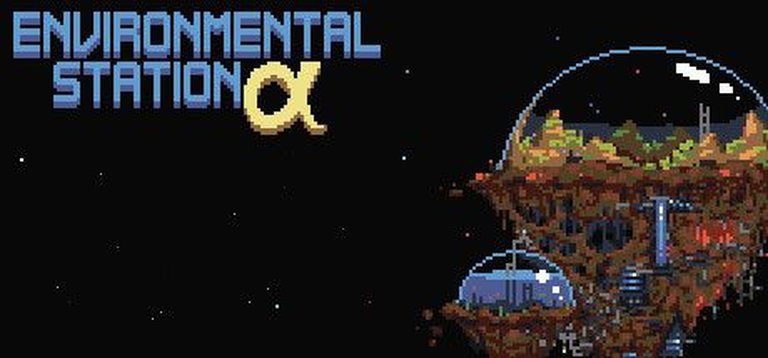
Environmental Station α is a Metroidvania-style action game set in a sci-fi, futuristic world. Players explore a vast, interconnected space station, uncovering secrets and battling enemies in a 2D scrolling environment. The game is known for its challenging boss fights and cryptic post-game content, offering a satisfying experience for fans of the genre.
Gameplay Videos
Environmental Station α Guides & Walkthroughs
Environmental Station α Reviews & Reception
steambase.io (83/100): Environmental Station Alpha has earned a Steambase Player Score of 83 / 100.
metacritic.com (70/100): Environmental Station Alpha didn’t reinvent the wheel when it comes to Metroidvania games, but it certainly helped satisfy my appetite.
honestgamers.com : An unassuming title that is perhaps the greatest game of its kind since Super Metroid itself.
Environmental Station α: A Masterclass in Minimalist Metroidvania Design
Introduction
In the crowded pantheon of modern Metroidvanias, Environmental Station Alpha (ESA) stands as a quiet titan—a game that eschews flashy presentation for razor-sharp design, atmospheric storytelling, and a labyrinthine world brimming with eldritch mystery. Developed largely by Finnish solo creator Arvi Teikari (Hempuli) and released in 2015, ESA synthesizes the exploratory DNA of Super Metroid with cosmic horror and a brutal, precision-tuned challenge. This review argues that while ESA may not have redefined its genre, it represents a near-perfect distillation of the Metroidvania ethos, marrying austere visuals with deeply rewarding gameplay and a haunting narrative that lingers long after the credits roll.
Development History & Context
A Solo Vision in a Collaborative Era
Environmental Station Alpha emerged during an indie renaissance for Metroidvanias, with contemporaries like Axiom Verge and Ori and the Blind Forest leaning into modern graphical flourishes. By contrast, ESA embraced a deliberately primitive aesthetic, built using Clickteam Fusion’s Multimedia Fusion 2 engine—a tool more associated with beginner-friendly game creation than AAA ambitions. This technical constraint became a creative strength: Hempuli’s self-imposed minimalism forced a focus on mechanics over spectacle, resulting in a game that feels like a lost NES classic reimagined through a modern lens.
The Finnish Connection
Hempuli’s Finnish roots permeate ESA’s design. The game’s stark, melancholic atmosphere echoes the country’s frigid landscapes, while its puzzles—often requiring logical deduction akin to Nordic noir—reflect a cultural appreciation for systemic thinking. Collaborators like composer Roope Mäkinen (Noby) and sound designer Joonas Turner (Kissa3) further enriched the project, crafting an audio landscape that oscillates between ambient serenity and industrial dissonance.
Narrative & Thematic Deep Dive
A Ghost Station’s Whispers
ESA’s plot is deceptively simple: a robot is dispatched to investigate an abandoned space station, only to uncover a bio-mechanical nightmare fueled by an alien computer virus. Yet this scaffold supports a narrative tapestry woven through environmental clues, encrypted logs, and haunting imagery. The station’s derelict zones—each a meticulously crafted biome—hint at a hubristic scientific endeavor corrupted by forces beyond human comprehension.
Cosmic Horror Meets Cryptography
The game’s true narrative genius lies in its post-game content, a labyrinth of encrypted puzzles and alien languages that demand communal decryption. Players who brave these challenges encounter Mwyah—an enigmatic, god-like entity—and its even more unfathomable superiors. These sequences transform ESA from a mere platformer into a ritual, blurring the line between player and protagonist as both grapple with incomprehensible truths. The multiple endings (all bleak) reinforce themes of futility and existential dread, culminating in an “Alien Ending” that remakes the protagonist into something… other.
Gameplay Mechanics & Systems
Movement as Mastery
ESA’s controls are a masterclass in frictionless design. The robot’s moveset—a grappling hook, double jump, and dash—feels instantly intuitive yet deepens with skill. The grappling hook, in particular, is a revelation: its physics-based swings enable speedrun-worthy sequence breaks and daredevil escapes, rewarding players who master momentum.
Bosses as Brutal Tutors
ESA’s bosses—such as the screen-filling Overmind and the insectoid Sandworm—are uncompromising trials that demand pixel-perfect precision. Each fight teaches a mechanical lesson (e.g., using the dash to phase through attacks) while escalating the stakes. The post-game Boss Rush and Mwyah’s True Form encounter rank among the genre’s most punishing—and satisfying—challenges.
Flaws in the Wiring
Not all systems shine. Late-game areas like the White Maze test patience with instant-kill hazards, and the 100% completion grind—requiring decryption of alien runes—verges on obtuse. Yet these missteps feel intentional, reinforcing the game’s ethos: ESA is a puzzle about puzzles, unapologetically designed for the obsessives.
World-Building, Art & Sound
Pixel Poetry
ESA’s 8-bit aesthetic belies its artistic sophistication. Every screen is a study in contrast: neon-lit server rooms juxtaposed with bioluminescent fungi, jagged volcanic tunnels against the sterile geometry of alien ruins. The minimalist palette forces players to interpret the environment, turning shadowy corridors into Rorschach tests of dread.
Sound as a Character
Mäkinen’s soundtrack—a mix of ambient drones and melodic minimalism—imbues each biome with personality. The Aquatic Sector’s bubbling synths evoke alien oceans, while the Derelict Ship thrums with discordant, industrial menace. Sound design similarly excels: the grapple’s metallic thunk and boss death screams are visceral punctuation marks.
Reception & Legacy
From Cult Classic to Speedrun Staple
Upon release, ESA polarized critics. Destructoid (7/10) praised its “satisfying boss battles” but balked at its cryptic endgame, while Rock Paper Shotgun lauded its “precision” but deemed late sections “over-complicated.” Players, however, embraced its rigor, propelling it to an 82% Steam rating.
The game’s true legacy lies in its speedrunning community. ESA’s sequence-breaking potential and tight controls made it a staple at events like Games Done Quick, while its modding scene birthed challenges like “No Dash” and “One-Hit-Point Wonder” runs.
Influencing the Invisible
Though less commercially visible than Hollow Knight, ESA’s DNA surfaces in later indies. Its grappling hook inspired A Robot Named Fight!, while its encrypted puzzles prefaced Tunic’s hieroglyphic manuals. The upcoming sequel, Environmental Station Alphalpha 3, suggests Hempuli’s vision continues to evolve.
Conclusion
Environmental Station Alpha is a paradox: a game that feels both ancient and ahead of its time. Its jagged pixels and arcane secrets cloak a work of profound craftsmanship—a Metroidvania that respects the player’s intellect even as it obliterates their patience. While its difficulty and opacity will deter some, those who endure its trials will find one of the genre’s purest expressions: a haunting, hypnotic odyssey into the void. In an era of hand-holding AAA titles, ESA stands as a monument to the beauty of unforgiving design.
Final Verdict: A stone-cold classic for the masochistically inclined, and a benchmark for indie Metroidvanias. 9/10.