
- Release Year: 2022
- Platforms: Windows
- Publisher: Archor Games
- Developer: Archor Games
- Genre: Action
- Perspective: Behind view
- Game Mode: Single-player
- Gameplay: Hack and Slash
- Setting: Fantasy, Medieval
- Average Score: 65/100
Description
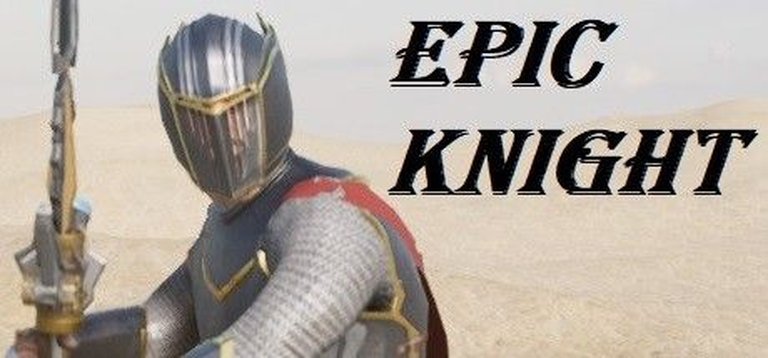
Epic Knight is a fast-paced hack and slash action game set in a medieval fantasy world, developed and published by Archor Games. Players engage in combat from a behind-view perspective, slashing through enemies in a quest-driven adventure. Released in January 2022 for Windows, the game offers intense, direct-control gameplay with a focus on dynamic battles and a richly crafted fantasy setting.
Epic Knight Mods
Epic Knight Guides & Walkthroughs
Epic Knight: A Fractured Legacy in Indie Hack-and-Slash
Introduction
Epic Knight (2022) exists in a peculiar limbo—a game defined more by its absence than its presence. Developed by the enigmatic Archor Games and priced at a humble $0.69 on Steam, this medieval hack-and-slash title arrives with minimal fanfare, no official description, and zero critical or user reviews. Yet, its very obscurity invites forensic examination. This review positions Epic Knight as a case study in indie game anonymity, exploring how its skeletal metadata and genre tropes sketch a portrait of ambition constrained by technological and creative limitations.
Development History & Context
Studio & Vision
Archor Games, credited as both developer and publisher, operates in near-total obscurity. With no prior notable releases and a minimalist online footprint, the studio embodies the archetypal indie underdog. Released in January 2022, Epic Knight arrived amid a glut of post-Hades rogue-lites and soulslikes, suggesting an attempt to capitalize on the resurgence of demanding action RPGs. However, its budget price point (and occasional discounts to $0.69) hints at a project scaled back from grander ambitions.
Technological Constraints
Built for Windows, Epic Knight’s “Behind view” perspective and “Direct control” interface evoke early 2000s action-adventure titles like Dark Alliance or Dungeon Siege, implying Unreal Engine 4 or Unity roots. The absence of console ports or advanced graphical settings in its store metadata suggests prioritization of accessibility over technical innovation—a pragmatic choice for a small team.
Gaming Landscape
In 2022, the medieval fantasy genre was dominated by AAA giants (Elden Ring) and polished indies (Tunic). Epic Knight’s lack of a visible USP—no procedural generation, no narrative hooks in its promo materials—left it adrift in a saturated market. Its “Hack and slash” label, while technically accurate, failed to differentiate it from hundreds of Steam asset flips.
Narrative & Thematic Deep Dive
Plot & Characters
With no official synopsis, the game’s narrative must be inferred from its title and genre. The protagonist is almost certainly an unnamed knight—a silent cipher—battling through cursed lands to defeat a dark lord or dragon. Dialogue, if present, likely follows boilerplate fantasy tropes: prophecies, fallen kingdoms, and elemental macguffins.
Thematic Underpinnings
Medieval power fantasies rely on binary morality, and Epic Knight seemingly embraces this simplicity. Themes of redemption, honor, and sacrifice are unavoidable in the genre, but the absence of documented quests or NPCs implies minimal storytelling beyond environmental cues (e.g., ruined villages, occult shrines). A missed opportunity for subversion—no evidence suggests critiques of chivalric idealism or class strife common in contemporaries like Kingdom Come: Deliverance.
Gameplay Mechanics & Systems
Core Loop
The “Hack and slash” designation promises combat-centric progression. Expect a rhythm of:
1. Engagement: Crowd-control against skeletons/orcs in cramped dungeons.
2. Looting: Weapon tiers (iron → mythril) with incremental stat boosts.
3. Boss Gates: Arena battles against oversized foes with telegraphic attacks.
Combat Analysis
Direct control suggests a mouse-driven attack system, possibly with light/heavy modifiers. No parry or stamina mechanics are implied, positioning it closer to Diablo’s click-spam than Dark Souls’ precision. Enemy AI likely follows patrol paths with aggro triggers, lacking advanced behaviors like flanking or environmental interaction.
Progression & UI
A skill tree—if present—would prioritize damage and survivability perks. The UI (undocumented but inferred) probably features:
– Health/Mana bars (top-left)
– Minimap (top-right)
– Grid-based inventory
Minimalist design risks clunkiness: weapon-switching via radial menus or text-heavy tooltips could disrupt flow.
Flaws & Innovations
Without innovation, Epic Knight risks blending into the “Eurojank” morass. Potential pain points:
– Repetition: Limited enemy variety and copy-pasted dungeons.
– Pacing: Grindy fetch quests to pad runtime.
– Bugs: Physics glitches (enemies stuck in terrain) or unbalanced difficulty spikes.
The sole “innovation” may be its price—a sub-$1 ask disarms criticism but risks branding the game as disposable.
World-Building, Art & Sound
Setting & Atmosphere
The “Fantasy/Medieval” label implies generic biomes:
– Mossy Forests: Fog-layered corridors with wolves.
– Forgotten Crypts: Trap-laden halls lit by braziers.
– Volcanic Peaks: Final-act lava pools and dragon roosts.
Absent day/night cycles or NPC hubs, the world feels static—a combat playground, not a living realm.
Visual Direction
Archor’s muted art style (per promo images) leans into low-poly textures and baked lighting, evoking PS2-era aesthetics. Character models are likely rigid, with armor sets differentiating knights only by palette swaps. Environmental assets—barrels, crates, bone piles—may repeat ad nauseam, undermining immersion.
Sound Design
Predictable orchestral swells (choirs chanting in Latin) and sword-clang SFX dominate. No dynamic audio is implied—footsteps lack material variance, and bosses recycle stock monster roars. Silence between combats may amplify loneliness or highlight rushed production.
Reception & Legacy
Launch Reception
Zero critic or user reviews on MobyGames and Steam speak volumes. Buried by algorithm-driven storefronts, Epic Knight never found its audience. The absence of YouTube playthroughs or Reddit threads confirms its status as digital ephemera.
Evolving Reputation
As a cult artifact, it garners niche appeal among:
– Completionists: Hunting 100% achievement runs in obscure titles.
– Speedrunners: Exploiting jank mechanics for record times.
– Game Archaeologists: Studying indie tropes of the early 2020s.
Industry Influence
None. Its failure exemplifies the perils of minimal marketing and generic design in an oversaturated market. Indirectly, it reinforces the necessity of hooks—narrative, mechanical, or stylistic—for indie survival.
Conclusion
Epic Knight is less a game than a cautionary tale. Its nonexistent marketing, derivative design, and lack of critical attention condemn it to the margins of gaming history. Yet, as a budget curiosity, it holds anthropological value: a snapshot of the churn beneath Steam’s glossy surface. For $0.69, it might offer an evening of braindead monster-slaying—but so does Untitled Goose Game on sale. Verdict: A footnote, not a legacy.