
- Release Year: 2019
- Platforms: Android, iPad, iPhone, Macintosh, PlayStation 4, tvOS, Windows
- Publisher: Yash Future Tech Solutions Pvt Ltd
- Developer: Yash Future Tech Solutions Pvt Ltd
- Genre: Action
- Perspective: Side view
- Game Mode: Single-player
- Gameplay: Platform
- Setting: Fantasy
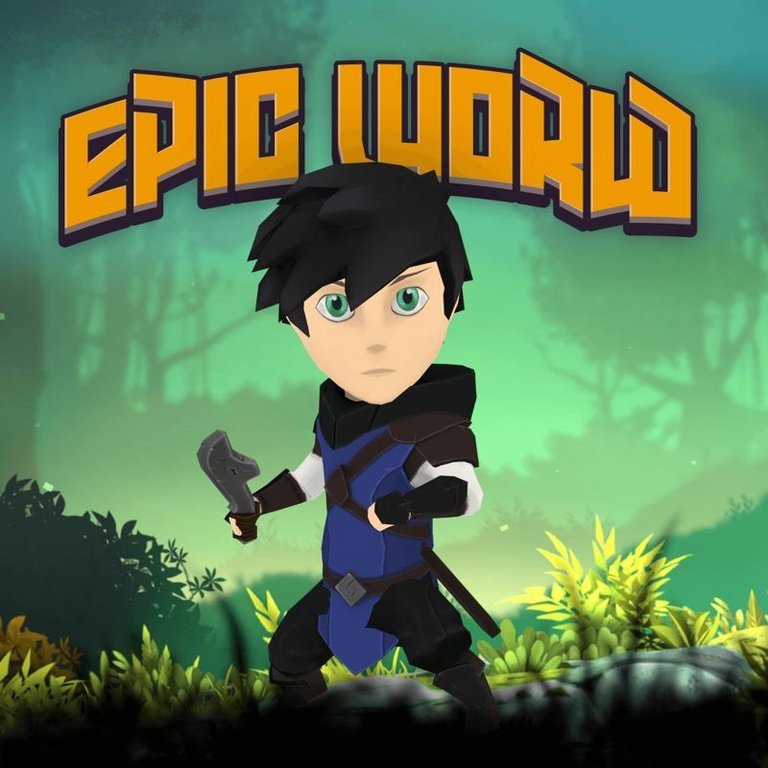
Description
Epic World is a fantasy-themed action platformer featuring 2D scrolling visuals and side-view perspective, where players navigate through imaginative worlds using direct control methods like gamepad, keyboard, or mouse. Released in 2019 by Yash Future Tech Solutions Pvt Ltd across multiple platforms including Windows, PlayStation 4, and iOS/Android systems, the game offers a single-player commercial experience focused on challenging platform-based gameplay.
Where to Buy Epic World
PC
Epic World: Review
Introduction
In an era dominated by sprawling open worlds and photorealistic graphics, Epic World arrives as a modest yet fascinating anomaly. Released in June 2019 by Indian developer Yash Future Tech Solutions Pvt Ltd, this 2D side-scrolling platformer defies contemporary trends with its unassuming ambition. Born from the fertile indie scene of the late 2010s, Epic World represents a valiant attempt to capture the nostalgic magic of classic platformers while pushing for unprecedented accessibility across PCs, consoles, and mobile devices. Its core thesis—that a focused, genre-rooted experience could transcend platform limitations—is both its strength and its ultimate test against a saturated market. This review dissects Epic World not merely as a game, but as a cultural artifact reflecting the democratization of game development in the Unity era.
Development History & Context
Epic World stands as a testament to the global reach of indie development in the late 2010s. Created by Yash Future Tech Solutions Pvt Ltd, a studio operating from India—a region historically underrepresented in mainstream gaming—the project emerged amid a transformative period for the industry. The Unity engine’s maturity in 2019 enabled small teams to build polished, cross-platform experiences at a fraction of traditional development costs. This democratization coincided with the indie renaissance of games like Celeste and Hades, but Epic World diverged by prioritizing breadth over depth. Its simultaneous release on Windows, PlayStation 4, Android, iOS, iPad, macOS, and tvOS (a staggering seven platforms) signaled a deliberate strategy to maximize audience penetration. Technologically, Unity’s versatility allowed the studio to streamline asset creation and optimize performance across diverse hardware, from high-end consoles to mobile phones. However, this multi-platform focus likely constrained design choices, leading to compromises in visual fidelity and control complexity to ensure uniformity across all versions. The game’s release in June 2019 placed it amid a competitive landscape dominated by AAA giants (Apex Legends, Anthem) and acclaimed indies (Katana ZERO), making its quiet arrival all the more intriguing.
Narrative & Thematic Deep Dive
While Epic World’s official description remains elusive, its “Fantasy” classification and generic title suggest a narrative approach steeped in archetypes. The game likely follows a traditional hero’s journey: a protagonist navigating a mythical realm to thwart a looming darkness, armed with magical abilities and platforming prowess. Characters, if present, are probably functional—sidekicks, antagonists, or quest-givers serving mechanical purposes rather than deep development. Dialogue, if any, would prioritize clarity over nuance, fitting the genre’s conventions. Thematically, the game taps into universal fantasy motifs: the triumph of courage over adversity, the discovery of one’s destiny, and the harmony between nature and magic. Yet, without explicit narrative details, Epic World risks being a vessel for gameplay rather than a storyteller. Its potential lies in environmental storytelling—using level design to evoke a sense of wonder or peril—but this remains speculative. The absence of a cohesive narrative arc may leave players adrift in a world rich in potential but poor in substance, a trade-off for its multi-platform accessibility.
Gameplay Mechanics & Systems
At its core, Epic World is a 2D side-scrolling platformer with action elements, emphasizing precision traversal and combat. The “Direct control” interface suggests straightforward mechanics: jumping, attacking, and interacting with the environment. However, the game’s ambition to serve mobile, console, and PC players likely resulted in simplified controls—perhaps touch-friendly button layouts on mobile and analog stick movement on consoles—potentially diluting the precision demanded by hardcore platformers.
Combat, hinted at by the “Action” genre, probably involves basic swordplay or magical projectiles with limited combos, designed for accessibility over depth. Character progression may consist of linear upgrades (e.g., speed boosts, attack power) or collectibles scattered across levels, though specifics are undocumented. A “Platform” gameplay loop implies obstacle courses, enemy encounters, and boss fights, but without innovation, it risks feeling derivative of classics like Castlevania or Hollow Knight.
The UI, designed for cross-platform compatibility, likely prioritizes clarity over immersion. Menus and HUD elements would be minimalist to avoid cluttering smaller screens. Yet, this simplicity may come at the cost of engagement, leaving systems like inventory management or skill trees underdeveloped. Ultimately, Epic World’s mechanics are a double-edged sword: they ensure approachability but lack the refinement or ingenuity to distinguish it in a crowded genre.
World-Building, Art & Sound
The “Fantasy” setting promises a realm of magic and myth, though its execution is constrained by the game’s modest scope. Environments likely include forests, castles, and caves, rendered in 2D scrolling visuals. The Unity engine allowed for vibrant, painterly backdrops, but without artist credits or screenshots, the art style remains a mystery—potentially leaning toward pixel art for authenticity or stylized 2D for broad appeal. Atmosphere hinges on environmental details: crumbling ruins, glowing flora, or ominous shadows that could evoke a sense of adventure, yet the absence of narrative depth may prevent players from emotionally investing in the world.
Sound design, undocumented in the source material, would be crucial for immersion. A fantasy-themed soundtrack with orchestral or choral elements could heighten epic moments, while sound effects for jumps, sword clashes, and spellcasting would reinforce gameplay tactile feedback. However, mobile ports might compress audio fidelity, compromising the intended atmosphere. The game’s visual and auditory potential is vast but unrealized, leaving Epic World as a world of “what-ifs”—a fantasy setting rich in possibility yet thin in execution.
Reception & Legacy
Epic World’s launch met a resounding silence: no critic reviews, no player testimonials, and a Moby Score left unassigned. Its commercial performance remains unrecorded, but the lack of discourse suggests it faded into obscurity amid 2019’s blockbuster releases. This obscurity is telling: in an industry flooded with indie platformers, Epic World’s modest ambitions failed to carve a niche. Yet, its legacy lies in its technical achievement—a multi-platform showcase for Unity’s versatility. For Yash Future Tech Solutions, it was a learning experience, a stepping stone toward more ambitious projects like the 2023 Epic Pandemonium. The game’s release on PlayStation 4 and iOS also reflects the globalization of gaming, proving small studios could target diverse audiences. However, without innovation or a distinct identity, Epic World serves as a cautionary tale: accessibility alone cannot compensate for narrative, mechanical, or artistic depth in a competitive market. Its enduring relevance is purely historical—a footnote in the indie revolution rather than a landmark title.
Conclusion
Epic World embodies the paradox of late-2010s indie development: audacious in its scope yet restrained in its execution. As a 2D fantasy platformer, it offers competent, if unremarkable, gameplay marred by a lack of narrative and artistic identity. Its multi-platform release is a technical feat but a commercial and critical non-starter. For historians, Epic World is a case study in accessibility-over-innovation, illustrating the challenges faced by small studios in an oversaturated market. Yet, its existence underscores the power of tools like Unity, which democratized game creation but also lowered the barrier to entry, leading to titles that, while functional, rarely transcend their genre conventions. In the pantheon of video games, Epic World is a minor curiosity—a reminder that ambition without distinct vision leaves little trace. Its place in history is secured not as a classic, but as a testament to the trials and triumphs of indie developers striving to make their mark on a global stage.