
- Release Year: 2017
- Platforms: Android, iPad, iPhone, Linux, Macintosh, Windows
- Publisher: Nelset
- Developer: Nelset
- Genre: Puzzle
- Perspective: First-person
- Game Mode: Single-player
- Gameplay: Survival horror
- Setting: Cold War, Historical events
- Average Score: 90/100
Description
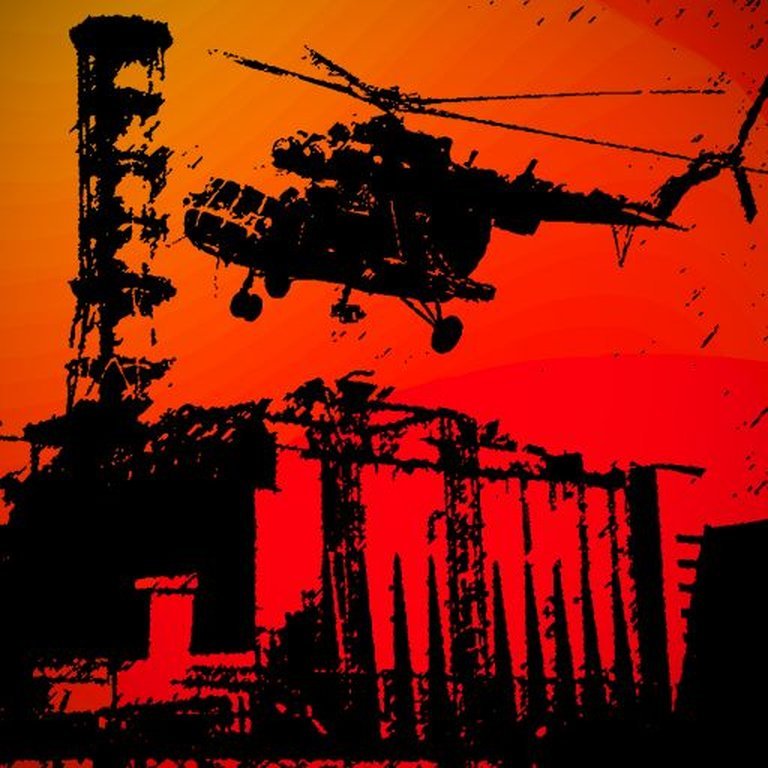
Escape from Chernobyl is a survival horror action-adventure game set in the eerie, post-apocalyptic ruins of the Chernobyl nuclear power plant complex during the Cold War era. Players assume the role of a survivor navigating the faithfully recreated site from the destroyed Unit 4 reactor to its outskirts, unraveling the unsolved mystery of what happened to Lauren amid deadly radiation anomalies, swarming zombies, and experimental abominations, using a variety of weapons and tactical elements to battle horrors in labyrinthine corridors and open-world territories.
Gameplay Videos
Where to Buy Escape from Chernobyl
PC
Escape from Chernobyl Free Download
Guides & Walkthroughs
Reviews & Reception
steambase.io (80/100): Player Score of 80/100 from 46 total reviews, rated Positive.
rapidreviewsuk.com : This game is also a disaster.
Escape from Chernobyl: Review
Introduction
Imagine stepping into the shadowed heart of one of history’s greatest tragedies, where the air hums with invisible radiation and every creak of rusted metal could herald doom. Escape from Chernobyl, released in 2017 by indie developer Nelset (with ports handled by Atypical Games), thrusts players into the forsaken Chernobyl Nuclear Power Plant just after the 1986 disaster. As a survival horror puzzle game, it promises a chilling blend of exploration, combat, and moral quandaries amid a post-apocalyptic nightmare. Yet, beneath its atmospheric premise lies a title that often stumbles in execution, blending moments of tense intrigue with frustrating technical hurdles. This review argues that while Escape from Chernobyl captures the eerie legacy of its namesake through ambitious world-building and narrative branching, its legacy is marred by inconsistent mechanics and polish issues, making it a flawed but intriguing artifact in the survival horror genre—one that evokes the Zone’s dangers without fully escaping its own pitfalls.
Development History & Context
Escape from Chernobyl emerged from the indie scene during a boom in mobile and cross-platform horror games, particularly those leveraging historical tragedies for atmospheric depth. Developed by Nelset, a small studio focused on budget-conscious titles, and published initially as a free-to-play Android release on June 6, 2017, the game was crafted with mobile constraints in mind—touch controls, fixed-screen visuals, and lightweight specs to run on low-end devices. Atypical Games, known for survival adventures like Radiation City (a spiritual predecessor), handled iOS ports in 2018 and expanded to PC (Windows, Linux, Mac) and Nintendo Switch in 2019, signaling an ambition to transcend mobile origins.
The creators’ vision, as gleaned from official descriptions, centered on recreating the Chernobyl Exclusion Zone with historical fidelity, drawing from real events like the Unit 4 reactor explosion. This was the era of smartphones dominating gaming, with titles like The Room series popularizing puzzle horrors on touchscreens. Technological limits—such as fixed/flip-screen perspectives and direct point-and-select interfaces—reflected Android’s hardware realities, prioritizing accessibility over graphical fidelity. The broader landscape in 2017 featured a surge in post-apocalyptic games inspired by S.T.A.L.K.E.R. (2007), which romanticized Chernobyl’s anomalies and mutants. Nelset aimed to fill a niche for bite-sized horror, but development challenges, including translation errors and unoptimized ports (evident in Steam discussions about bugs), suggest a rushed evolution from mobile to consoles. As part of the “Escape from Chernobyl” series—followed by Jailbreak in 2019—it positioned itself as an entry-level thriller in a market increasingly saturated with AAA open-world survivors like The Last of Us Part II (2020), highlighting indie devs’ struggle to compete on scope and stability.
Narrative & Thematic Deep Dive
At its core, Escape from Chernobyl weaves a non-linear tale of survival and revelation, set in 1986 amid the Soviet Union’s veil of secrecy. Players embody a nameless scientist from a clandestine underground lab beneath the Chernobyl plant, awakening to chaos post-explosion. The plot unfolds across six chapters, beginning in the reactor’s bowels and expanding to the plant’s outskirts, unraveling the mystery of “Lauren” (a key figure from the predecessor Radiation City) and the catastrophe’s hidden origins. Through journal entries, voice-acted logs, and environmental storytelling, the narrative probes the human cost of nuclear ambition: themes of guilt, experimentation gone awry, and the fragility of truth under authoritarianism.
The story’s strength lies in its branching paths and three unique endings, driven by player choices—like decoding puzzles that reveal ethical dilemmas (e.g., sacrificing colleagues or unleashing anomalies). Dialogue, sparse but impactful, features mad scientists ranting about “the greater good” and mutants as metaphors for radiation’s dehumanizing toll. Underlying themes echo real Chernobyl lore: the Cold War’s paranoia, cover-ups by figures like Valery Legasov, and the Exclusion Zone’s enduring haunt. Anomalies (glowing energy fields) and mutants symbolize uncontrollable fallout, while puzzles often force moral trade-offs, such as overriding safety protocols that could doom others.
However, the narrative falters in cohesion. Without prior knowledge of Radiation City, Lauren’s backstory feels abrupt, and plot holes abound—why is the lab intact post-explosion? Voice acting, a touted feature, is inconsistent, with accents veering into caricature and missing translations in later chapters (as noted in Steam forums). The thriller elements build tension through escalating horrors—zombies as irradiated victims, swarming abominations as failed experiments—but the non-linear structure can confuse, with chapters looping back illogically. Ultimately, the themes resonate on an intellectual level, critiquing hubris in a historical context, but the delivery feels fragmented, like a reactor core on the brink of meltdown.
Gameplay Mechanics & Systems
Escape from Chernobyl hybridizes puzzle-solving, survival horror, and light action, with a first-person perspective (contradicting some third-person claims in ports) that emphasizes immersion in claustrophobic corridors. Core loops revolve around exploration, resource scavenging, and evasion/combat, starting story-driven in reactor halls before opening to a seamless world blending open spaces and maze-like interiors.
Puzzles form the backbone: point-and-select interfaces demand decoding locks, rerouting power, and manipulating anomalies, often requiring inventory tetris for tools like crowbars or Geiger counters. Character progression ties to radiation management—a depleting bar beneath health that blurs vision and drains vitality when full. Players mitigate this via meds, green orbs (convenient resets), or avoiding blue-glowing hot zones, adding tactical depth. Crafting shines as an innovative system: scavenging parts to build bandages, weapons, or filters encourages deliberate inventory hoarding, echoing Resident Evil‘s tension.
Combat introduces firearms and melee against zombies, monsters, and “experimental abominations,” with improved mobile controls offering aiming and dodging. However, flaws abound—hit detection is unreliable (swings often whiff at point-blank), and AI pathing leads to cheap deaths. UI is minimalist but cluttered on PC ports, with touch-optimized menus feeling awkward on controllers. Checkpoints are jarringly loud, disrupting horror, and bugs like respawn glitches or stuck progress (frequent Steam complaints, e.g., Chapter 2/3 puzzles) break flow. Achievements (100% guides exist) reward exploration, but the loop feels repetitive: scavenge-fight-puzzle-repeat, lacking the roguelike replayability of peers. Innovative radiation visuals (fuzzy screens) heighten urgency, yet overall, mechanics prioritize survival tension over polish, testing patience more than skill.
World-Building, Art & Sound
The game’s setting—a faithfully scaled recreation of Chernobyl’s complex, from Unit 4’s ruins to Pripyat’s edges—immerses players in a tangible historical horror. World-building excels in detail: labyrinthine corridors littered with Soviet-era debris, flickering monitors logging failed experiments, and anomalies warping physics like gravitational tears. This open-world hybrid fosters paranoia; seamless transitions from vast courtyards to claustrophobic vents mirror the Zone’s unforgiving scale, with radiation pockets enforcing cautious navigation.
Art direction leans into gritty realism with physical rendering, dynamic shadows, and post-processing for a hazy, irradiated glow—unprecedented for a mobile title. Textures evoke decay: peeling wallpaper, corroded pipes, and zombie flesh bubbling with tumors. Yet, the fixed/flip-screen visual limits vistas, and ports reveal low-poly models (N64-era avatars in inventory) that undermine terror. Lighting is a double-edged sword—darkness builds dread via flashlight beams, but repetitive assets (endless identical hallways) dilute variety.
Sound design amplifies isolation: creaking metal, Geiger ticks, and distant howls create a symphony of unease, with original scores blending industrial drones and thriller stings. Voice acting adds flavor, but looped zombie moans (just three clips) grate quickly, and clanging checkpoints jolt like false scares. These elements coalesce into a cohesive atmosphere of dread, evoking S.T.A.L.K.E.R.‘s anomaly hunts, but technical hitches—like buggy shadows or silent anomalies—erode the immersion, turning potential masterpieces of mood into missed opportunities.
Reception & Legacy
Upon mobile launch, Escape from Chernobyl garnered mixed buzz as a creepy, accessible horror, but critical reception soured quickly. Digitally Downloaded’s 2018 iPhone review slammed it as “so bad” (1/5), citing patience-testing bugs and repetition. MobyGames aggregates a dismal 20% from one critic, while Pocket Gamer noted “all style, but not enough substance.” Conversely, Steam’s 46 reviews yield an 80/100 positive score (37 favorable), praising atmosphere and puzzles, though negatives echo glitches and translation woes. User sites like vgtimes show outlier 10/10s, but forums (Steam discussions with 16 threads) overflow with pleas for hints on stuck chapters, revealing accessibility issues. Commercially, it sold modestly—$0.59 Steam deals suggest budget appeal—but Switch ports (£8.99) drew ire for unoptimized controls. Rapid Reviews UK (2020) deemed it a “disaster,” highlighting laughable bugs over scares.
Over time, its reputation evolved into cult curiosity, influencing indie Chernobyl games like Chernobyl: Origins (2023) and Chernobyl Trap (2022) by popularizing mobile-to-PC horror hybrids. It paved the way for the series’ Jailbreak sequel and echoes in S.T.A.L.K.E.R. 2 (2024), emphasizing Zone lore. Yet, its legacy is bifurcated: a pioneer in historical survival that exposed indie pitfalls (rushed ports, QA lapses), inspiring cautionary tales for devs tackling sensitive topics. In an industry now dominated by polished horrors like Dead Space remakes, it endures as a raw, if rough, tribute to Chernobyl’s shadow.
Conclusion
Escape from Chernobyl is a bold indie endeavor that captures the Zone’s spectral allure through intricate puzzles, branching narratives, and a haunting recreation of nuclear infamy, but it is ultimately undermined by technical gremlins, repetitive design, and uneven execution. Its themes of catastrophe and consequence linger, offering genuine thrills amid the frustration, yet it falls short of greatness. As a historical footnote in survival horror, it earns a place for ambitious storytellers, but only die-hard fans of the genre—or Chernobyl obsessives—should venture in. Verdict: 5.5/10—a flawed escape that teases more than it delivers, much like the disaster it dramatizes.