
- Release Year: 2018
- Platforms: Macintosh, Nintendo Switch, PlayStation 4, Windows, Xbox One
- Publisher: Sometimes You, Whimsical
- Developer: Whimsical
- Genre: Action
- Perspective: Side view
- Game Mode: Single-player
- Gameplay: Metroidvania, Platform
- Setting: Futuristic, Sci-fi
- Average Score: 64/100
Description
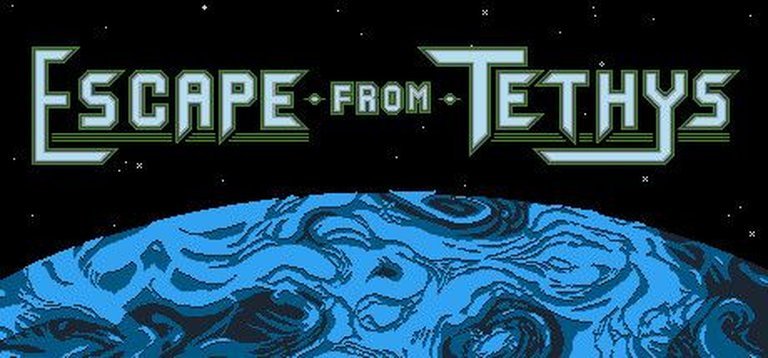
Escape from Tethys is a challenging Metroidvania action-adventure game set on the remote, hostile planet of Tethys in a sci-fi futuristic universe. As a scientist developing new weapons technology, you become trapped, alone, and cold, relentlessly pursued by a killer droid bent on destroying everything; explore the dark 2D side-scrolling environment, uncover secret upgrades and new weapons, and battle your way to escape.
Gameplay Videos
Where to Buy Escape from Tethys
PC
Escape from Tethys Guides & Walkthroughs
Escape from Tethys Reviews & Reception
reddit.com : Just finished Escape From Tethys and I thought it was pretty good overall.
metacritic.com (60/100): While it definitely has issues that have a negative impact on the overall experience, I can’t help but look back on my time with the game positively.
screenrant.com : The game is great on most accounts, but is held back by a handful of well-meaning creative choices.
steambase.io (69/100): Player Score of 69 / 100… rating of Mixed.
Escape from Tethys Cheats & Codes
Nintendo Switch (TID: 010092901203A000, BID: f65f17ea16c29146)
These are AMS/SX OS cheat codes. Paste each code block into a .txt file in the game’s title folder (use TID or BID as needed) and enable via the cheat menu.
| Code | Effect |
|---|---|
| 80000002 580F0000 03563170 580F1000 000000B8 580F1000 00000010 580F1000 000000B8 780F0000 0000010C 640F0000 00000000 41990000 20000000 |
Moon Jump |
| 580F0000 03563170 580F1000 000000B8 580F1000 00000010 580F1000 000000B8 780F0000 00000038 640F0000 00000000 41900000 |
Speed Up |
| 580F0000 03563170 580F1000 000000B8 580F1000 00000010 580F1000 000000B8 780F0000 000000E0 640F0000 00000000 3F800000 80000200 640F0000 00000000 BF800000 20000000 |
SP (Hold ZR) |
| 580F0000 03563170 580F1000 000000B8 580F1000 00000010 580F1000 000000B8 580F1000 00000188 780F0000 00000080 640F0000 00000000 00000064 |
Inf HP |
| 580F0000 03563170 580F1000 000000B8 580F1000 00000010 580F1000 000000B8 580F1000 00000188 780F0000 00000018 640F0000 00000000 00000063 |
Max HP |
| 580F0000 03563170 580F1000 000000B8 580F1000 00000010 580F1000 000000B8 580F1000 00000188 780F0000 00000060 640F0000 00000000 50000000 |
Invincible |
Escape from Tethys: Review
Introduction
Imagine plummeting into the abyssal depths of an alien world, your flashlight beam cutting through inky blackness as grotesque primordial creatures lunge from the shadows, their attacks relentless and unforgiving. This is the visceral hook of Escape from Tethys, a 2018 indie Metroidvania that channels the punishing isolation of early Metroid titles while wrapping it in a compact sci-fi survival tale. Released amid the Metroidvania renaissance sparked by Hollow Knight, the game positions itself as a retro throwback: a lone scientist battling to escape a hostile planet teeming with awakened horrors. As a game historian, I see Tethys as a microcosm of indie ambition—competently evoking 8- and 16-bit nostalgia without reinventing the genre. My thesis: while its tight design and atmospheric tension make it a worthy diversion for genre enthusiasts, clunky mechanics and a lack of bold innovation relegate it to solid B-tier status in video game history, best appreciated as a budget-friendly homage rather than a masterpiece.
Development History & Context
Escape from Tethys emerged from Whimsical, a small indie studio whose passion for retro platformers shines through its solo-developed title (later co-published by Sometimes You for console ports). Launched on July 12, 2018, for Windows via Steam at a modest $4.99, it utilized Unity 2018—a ubiquitous engine for indies constrained by budgets and timelines. Whimsical’s vision was clear: craft a “difficult action adventure Metroidvania” inspired by Super Metroid and early Mega Man, emphasizing nonlinear exploration over sprawling epics. The creator(s)—likely a tiny team given the sparse credits—drew from the post-Hollow Knight (2017) boom, where pixel-art Metroidvanias flooded Steam, capitalizing on nostalgia for side-scrolling isolation.
The era’s technological landscape favored accessibility: Unity enabled quick prototyping of 2D physics, pixel art, and effects like dynamic lighting without AAA overhead. Yet constraints loomed large—no autosave meant deliberate risk-reward design, echoing NES-era limitations. The 2018 gaming market was saturated; indies like Dead Cells and Ori and the Blind Forest dominated with fluid mechanics, pressuring Tethys to stand out via brevity (3-5 hours) and secrets (20+ upgrades across five biomes). Console ports in 2020 (PS4, Xbox One, Switch) via Sometimes You expanded reach amid the portable gaming surge, but pricing critiques (e.g., $9.99 on Switch) highlighted its “mini-Metroidvania” scale against fuller experiences like SteamWorld Dig 2. In context, Tethys reflects indie hustle: a labor of love born from reverence for Metroid‘s lonely dread, released when Steam’s algorithm rewarded quick, achievement-laden bites.
Narrative & Thematic Deep Dive
Tethys opts for minimalist storytelling, a deliberate nod to silent protagonists in classics like Metroid. You play an unnamed scientist tasked with developing advanced weaponry on the remote planet Tethys—a futuristic rock plunged into chaos when “things go awry.” A cataclysmic event awakens ancient evils and a relentless killer droid, stranding you “alone, cold, scared, pursued.” The plot unfolds via environmental cues and scattered data logs, revealing lore about Tethys’s primitive ecosystem, failed experiments, and your desperate bid for the surface. No verbose cutscenes; escape is the sole directive, punctuated by boss encounters symbolizing escalating threats.
Characters are archetypal: your blue-hued protagonist, arm-cannon blazing, embodies human fragility amid cosmic indifference. Foes—fish-like nippers, larval horrors, biomechanical guardians—evoke primordial evolution, hinting at themes of survival of the fittest and hubris in technological overreach. The killer droid pursues with singular purpose, amplifying paranoia; data logs flesh this out, chronicling corporate greed unleashing “the strongest creatures.” Dialogue is absent, replaced by holographic snippets, fostering immersion.
Thematically, Tethys delves into isolation and existential dread. Five biomes (lava pits, underwater chasms, forest warrens) mirror psychological descent: from claustrophobic tunnels to vast voids lit only by your headtorch. Themes echo H.R. Giger’s xenobiology and Alien‘s corporate horror—man versus nature’s raw fury, where upgrades represent adaptive evolution. Subtle nonlinearity allows “aha” moments via logs, uncovering Tethys as a dormant predator world. Critiques note sparse plot (no major twists), but this restraint heightens tension: you’re not a hero, just a survivor clawing upward. In Metroidvania lore, it joins tales like Environmental Station Alpha—brief, lore-rich parables prioritizing mood over melodrama.
Gameplay Mechanics & Systems
At its core, Escape from Tethys loops around exploration-upgrades-combat, distilled into a nonlinear labyrinth demanding pixel-perfect navigation. Direct control handles fluid movement—surprisingly kinetic jumps, dashes (R shoulder), and double-jumps via progression—across side-view 2D scrolling. The map is invaluable, highlighting unexplored pockets, warp stations reduce backtracking, and save rooms heal but enforce permadeath risk (lose progress since last save), amplifying tension.
Combat blends Mega Man shooting with Metroidvania gating: primary arm cannon starts sluggish (slow fire rate, short range), improved via 20+ upgrades like beams, rotating shields, mines, and thrusters. Subweapons (X/A buttons) add variety—shields orbit for defense, mines trap foes—but feel underpowered, encouraging avoidance over aggression. Enemies boast patterns (persistent underwater fish, bullet-spewing primitives), bosses in single-screen arenas demand pattern mastery amid bullet-hell barrages. Clunkiness arises: shallow weapon range frustrates, hit detection lags, and no knockback aids mobility, yet Easy Mode’s 30 HP cushions newcomers.
Progression shines in nonlinearity: mandatory path unlocks biomes, but secrets (health tanks, ammo, armor) reward secrets-hunting. UI is spartan—map, inventory icons suffice, though absent on-screen map irks in open layouts. Achievements (15 Steam) incentivize 100%ing. Flaws: wind puzzles confuse controls, death resets progress irritatingly. Innovative? Warp integration and biome variety, but no genre pushes. Loops satisfy briefly: 5-hour runtime prevents fatigue, echoing compact NES gems.
| Mechanic | Strengths | Weaknesses |
|---|---|---|
| Movement | Kinetic dash/jump; double-jump gating | Wind currents unintuitive |
| Combat | Pattern-based bosses; subweapons | Sluggish fire rate; weak range |
| Progression | 20+ secrets; nonlinear biomes | Frequent backtracking sans autosave |
| UI/Systems | Clear map; warps | No persistent HUD map |
World-Building, Art & Sound
Tethys is a masterful microcosm: five biomes—lava flows, submerged caverns, verdant forests, shadowy depths, surface ruins—form a rabbit-warren labyrinth with multi-exit rooms. Hostile yet cohesive, it evokes Metroid‘s alien dread: chasms swallow unwary explorers, headtorch pans reveal horrors dynamically. Pixel art is crude 8-bit (minimalist sprites, no excess detail), authentic to NES limits, bolstered by effects like torch glow and camera shifts for intimacy.
Atmosphere thrives on subtlety: dim lighting forces caution, biomes transition organically (e.g., forest to lava via tunnels). Secrets lurk in breakables, fostering discovery joy.
Sound design polarizes: atmospheric score—contemporary synths over chiptunes—evokes sci-fi melancholy, soothing amid chaos (praise for underwater ambience). SFX falters: pitiful gun pew-pews, silent enemies undermine menace, leaving ghostly quietude. No voicework; subtitles unnecessary. Collectively, elements forge oppressive immersion—dark, cold, pursued—elevating small scale to haunting effect.
Reception & Legacy
Launch reception was muted: Steam’s “Mostly Positive” (76% of 107 reviews, now ~69% over 449) lauds value/exploration; critics mixed. Seafoam Gaming (7/10): “Fun mini-Metroidvania” but “clunky,” pricey. Games Asylum (6/10): Competent homage, unspectacular. ScreenRant (8/10): “Perfect 8-bit throwback,” weak shooting. XboxHub (60/100): Tedium mars positivity. No Metacritic aggregate; MobyGames lacks score, 9 collectors. Reddit praises as “$5 value” akin to Environmental Station Alpha.
Commercially niche—low ownership, free giveaways boosted visibility—ports expanded to consoles, but no sales boom. Legacy: Minor influencer in indie Metroidvanias, exemplifying “small but dense” design amid giants. Echoes in budget pixel explorers; Unity demoed indie feasibility. Not revolutionary, but preserves retro ethos for post-Hollow Knight era, influencing micro-Metroidvanias craving brevity.
Conclusion
Escape from Tethys distills Metroidvania essence into a potent, 5-hour capsule: evocative isolation, upgrade-driven progression, biome-spanning dread. Whimsical nails retro spirit—kinetic movement, secret-laden maps—bolstered by stellar music and lighting, yet hobbled by clunky combat, sparse sound, and familiar flaws. In history’s canon, it’s no Symphony of the Night landmark but a commendable indie footnote—a gateway for newcomers, palate cleanser for veterans. Verdict: Recommended for Metroidvania diehards at bargain prices (7.5/10). Play it cold, flashlight-ready, and savor the escape.