
- Release Year: 2009
- Platforms: Macintosh, Windows
- Publisher: 21 Rocks, LLC, Avanquest Software Publishing Ltd., Gogii Games Corp., Intenium GmbH
- Developer: Gogii Games Corp.
- Genre: Adventure
- Perspective: 1st-person
- Game Mode: Single-player
- Gameplay: Hidden object, Puzzle elements
- Average Score: 84/100
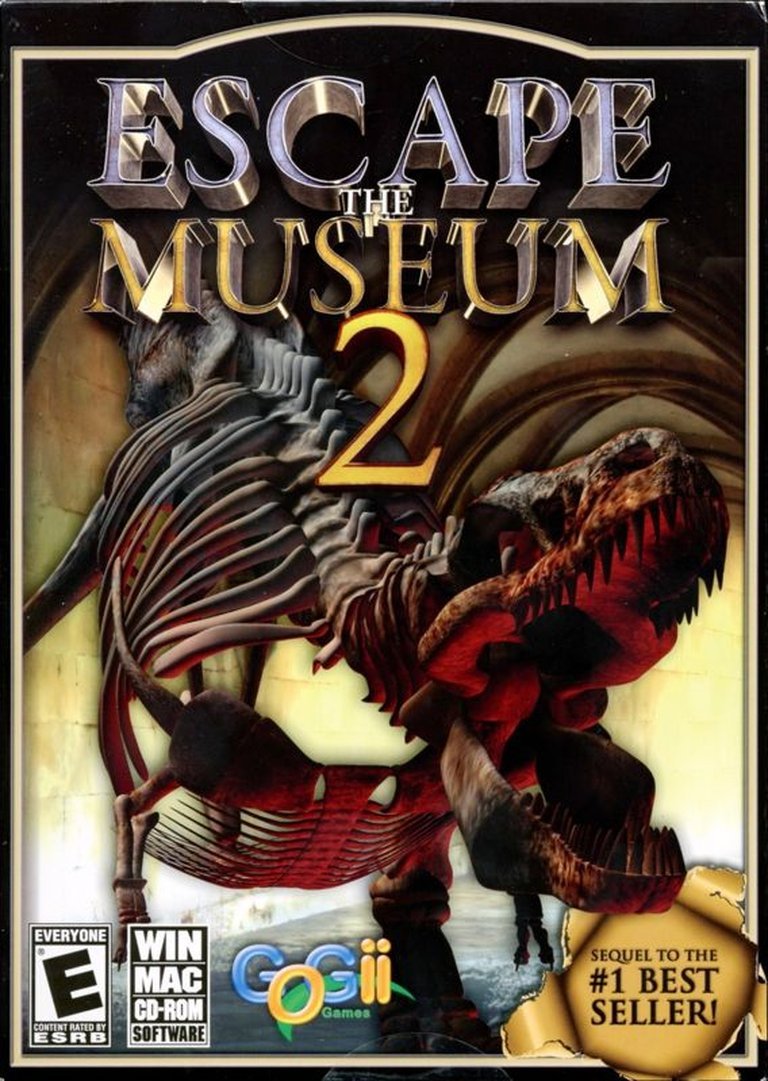
Description
Escape the Museum 2 is a hidden object adventure game where players control David, a father separated from his family after an earthquake devastates the city. Racing against time to reunite with his trapped wife and daughter at the museum, David navigates collapsed streets and ruined buildings, solving puzzles, rescuing victims, and overcoming obstacles like gaps and destroyed staircases. The game blends adventure and hidden object gameplay, with shimmering scenes revealing seek-and-find challenges, inventory-based puzzle solving, optional side missions, and a unique hint system featuring a homeless guide.
Gameplay Videos
Escape the Museum 2 Free Download
Escape the Museum 2 Guides & Walkthroughs
Escape the Museum 2 Reviews & Reception
jayisgames.com (88/100): Best. Hint system. EVER!
Escape the Museum 2: A Detailed Journey Through Disaster and Devotion
Introduction
In the annals of casual gaming, few series manage to blend narrative depth with accessible gameplay as effectively as the Escape the Museum trilogy. Released in 2009 by Gogii Games, Escape the Museum 2 stands as a compelling sequel that shifts perspective from the trapped museum curator Susan to her husband, David. As he races through a quake-shattered city to reunite with his family, the game masterfully combines hidden object puzzles with adventure mechanics. This review delves into every facet of this overlooked gem, arguing that while it refines the formula of its predecessor, its true legacy lies in its innovative hint system and poignant exploration of familial bonds amidst chaos. Through meticulous analysis of its development, narrative, gameplay, and artistry, we uncover how this title carved a unique niche in the crowded casual market.
Development History & Context
Escape the Museum 2 emerged from the creative crucible of Gogii Games Corp., a studio specializing in narrative-driven hidden object adventures. Released in 2009 for Windows and Macintosh, the game was published by a consortium including Avanquest Software Publishing Ltd. and 21 Rocks, LLC, reflecting its shareware distribution model available on CD-ROM and download. This was an era dominated by the rise of casual games on platforms like Big Fish Games, where accessibility trumped complexity. Gogii’s vision was ambitious: to expand the earthquake narrative of the first game (2008) by telling the parallel story of David—a decision that distinguished it from the more common direct sequels.
Technologically, the game operated within the constraints of the time. Its shareware model meant reliance on lightweight assets and scalable difficulty, catering to non-gamers. The team prioritized narrative cohesion over spectacle, as evidenced by George Donovan, Gogii’s President, noting their focus on “variety of locations” to ensure each scene felt distinct. This philosophy aligned with the broader gaming landscape of 2009, where hidden object hybrids were proliferating but often lacked polish. Escape the Museum 2 countered this by refining the genre’s core loop, aiming for a balance between challenge and reward that would appeal to its target audience: “a 35-plus year-old female puzzle solver,” as Donovan described.
Narrative & Thematic Deep Dive
The plot of Escape the Museum 2 is a masterclass in parallel storytelling. While the original game centered on Susan and Caitlin’s escape from the museum, this sequel follows David—a father rudely awakened by a 7.6 magnitude earthquake—as he navigates the ruined streets of Metro City. His mission is simple yet urgent: reach the National Museum before nightfall to save his family. This perspective shift is thematically rich, emphasizing the duality of disaster: while Susan battles internal museum hazards, David confronts societal collapse in the urban labyrinth.
Characters are defined by their resourcefulness. David, a “distressed dude” per TV Tropes, exemplifies everyday heroism, immediately rescuing a trapped woman in a car (Level 2) and a man pinned by an ATM (Level 4). His arc is one of relentless perseverance, underscored by the recurring motif of “resourceful family.” The homeless man, introduced as a guide, evolves from a quirky helper into a symbol of community resilience. His exchanges with David—demanding 10 toy cars for advice or throwing bottles as hints—inject dark humor into the grim setting, humanizing the catastrophe.
Dialogue remains sparse but purposeful. Key revelations, like Susan’s survival conveyed via radio (Level 6), are minimalist yet impactful. The narrative avoids melodrama, instead focusing on thematic motifs: the fragility of infrastructure (“broken bridges” and “fissures”), the triumph of hope (“satisfying ending” as noted by GameZebo), and the quiet courage of ordinary people. David’s final reunion with his family isn’t just a plot beat; it’s a testament to love as the ultimate survival tool.
Gameplay Mechanics & Systems
Escape the Museum 2 operates on a dual-loop structure that alternates between hidden object scenes (HOGs) and puzzle-solving adventures. Each of the 30 levels begins with exploration: players scan environments for shimmering hotspots, triggering HOGs where they find listed items (e.g., “10 toy cars” on Gallant Street). Collected objects populate a drag-and-drop inventory used to overcome obstacles—like using a wrench to fix a hydrant (Level 5) or a diamond to shatter glass (Level 21). This MacGyverian approach is the game’s backbone, requiring players to combine items logically (e.g., shirts + fan = grappling hook in Level 8).
Character progression is driven by side quests and bridge part collection. The 7 optional missions—rescuing lost pets (dog, kitten, puppy) and reuniting families—add depth, while the 20 bridge parts (e.g., gas tank, gears) culminate in a complex final puzzle (Level 28). The hint system is revolutionary: a homeless man throws bottles to reveal hidden items or offers step-by-step guidance via his portrait. This not only aids gameplay but also enriches the world-building.
Innovations include the star-rating system (1–3 stars per level based on completion) and pressure mechanics: rapid misclicks raise David’s heart rate, dimming the screen with a crimson glow. The UI is intuitive, with a map for navigation, inventory for tools, and a backpack for bridge parts. However, the game suffers from occasional logic gaps—like finding a seagull to prevent a gas station explosion (Level 5)—that disrupt immersion. Still, these flaws are outweighed by its tight design, ensuring players feel accomplished without frustration.
World-Building, Art & Sound
The post-apocalyptic urban setting is a character in itself. From shattered streets (Level 2) to a collapsing mall (Level 18), each location is meticulously crafted to reflect the earthquake’s chaos. The art direction showcases significant improvement over the first game: hand-drawn scenes are “bright, clear, and photo-real” (Jay is Games), with vivid colors and sharp details that aid HOG gameplay. Environments like St. James Cathedral (Level 13) and Wong’s Chinese Restaurant (Level 16) blend cultural specificity with disaster realism, creating a believable cityscape.
Sound design heightens tension. Frantic music escalates during perilous moments, like defusing a gas leak (Level 5), while sound effects—cracking glass, dripping water—enhance immersion. The homeless man’s distinct voice and bottle-hinting sounds add levity, balancing the somber tone. The watercolor cutscenes between chapters further enrich the narrative, painting David’s emotional journey with soft strokes. This synergy of art and sound transforms the city into a living, breathing entity, making David’s quest feel epic yet intimate.
Reception & Legacy
Upon release, Escape the Museum 2 garnered moderate acclaim. GameZebo awarded it 80%, praising its “attractive hand-drawn scenes, good pacing, and pleasing story arc,” while players on MobyGames rated it 3/5. Critics highlighted the hint system and character progression as standout features, though some noted its brevity (~5 hours). Commercially, it operated in the shadow of blockbusters like Night at the Museum: Battle of the Smithsonian (2009), which similarly leveraged museum themes but with a major film adaptation.
Its legacy is nuanced. As a hidden object hybrid, it refined mechanics that later influenced titles like Mystery Case Files. The “P.O.V. Sequel” structure—telling a parallel story—was uncommon in 2009, offering a blueprint for narrative experimentation in casual games. Yet, it remains a niche title, overshadowed by more visually ambitious releases. TV Tropes aptly notes its “Artifact Title” (David doesn’t escape a museum but to one), reflecting its identity as a bridge between genres. For historians, it exemplifies the era’s shift toward story-rich casual games, proving that depth and accessibility could coexist.
Conclusion
Escape the Museum 2 is a testament to Gogii Games’ commitment to elevating the hidden object genre. By weaving David’s poignant journey through disaster with innovative gameplay—especially its bottle-throwing hint system—it transcends its casual label to deliver a memorable experience. While its occasional logic flaws and brevity prevent perfection, its strengths—a resonant narrative, beautiful art, and satisfying puzzle loops—ensure its place in video game history. For players seeking a story of family resilience wrapped in accessible, polished gameplay, this sequel remains a hidden gem. As the final scene fades with David’s embrace, the game leaves a lasting message: in the rubble of catastrophe, love is the ultimate survival tool.