
- Release Year: 2008
- Platforms: Windows
- Publisher: Blossomsoft
- Developer: Blossomsoft
- Genre: Role-playing (RPG)
- Perspective: Diagonal-down
- Game Mode: Single-player
- Gameplay: Japanese-style RPG (JRPG), Turn-based combat
- Setting: Fantasy
- Average Score: 90/100
Description
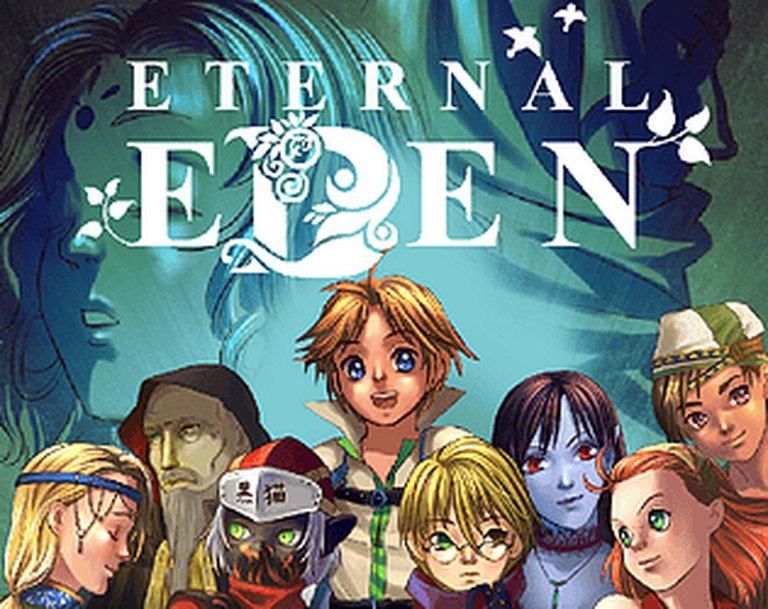
Eternal Eden is a 2.5D Japanese-style RPG set in the utopian paradise of Eden, where all needs are provided by Eden Tower and inhabitants live eternally at their prime. Players control young Noah, who, after a mishap involving the forbidden Wisdom Fruit causes the princess to transform into a monster and flee—unleashing storms and decay—must pursue her through time portals, engaging in turn-based battles against enemies appearing as puffs of smoke in dungeons, discovering hidden items, and unlocking treasure rooms to restore peace.
Gameplay Videos
Eternal Eden Guides & Walkthroughs
Eternal Eden Reviews & Reception
en.wikipedia.org (90/100): RPGFan rates Eternal Eden at 90/100.
gamefaqs.gamespot.com : A tribute to those who grew up playing console RPG’s.
Eternal Eden: Review
Introduction
In the annals of indie RPGs, few titles evoke the golden age of 16-bit console adventures quite like Eternal Eden, a 2008 gem that channels the spirit of early Final Fantasy and Chrono Trigger through the humble lens of RPG Maker VX. Developed and published by the enigmatic Blossomsoft, this freeware-turned-commercial darling thrusts players into a biblical paradise shattered by forbidden knowledge, blending nostalgia with profound themes of guilt and redemption. As a game historian, I’ve pored over its code-like simplicity and narrative ambition, and my thesis is clear: Eternal Eden is a triumphant proof-of-concept for RPG Maker’s potential, a nostalgic beacon for JRPG purists that punches far above its technical weight, even as its rough edges remind us of indie’s raw charm.
Development History & Context
Blossomsoft, a small Canadian studio led by creator Elder (also known as the mind behind the game’s intricate plot), released Eternal Eden on December 11, 2008, for Windows—marking it as the first commercial title built entirely on RPG Maker VX, Enterbrain’s 2007 engine designed for accessible 2D RPG creation. VX was a pivotal tool in the late 2000s indie boom, democratizing JRPG development amid a console landscape dominated by bloated AAA epics like Final Fantasy XII and Persona 4. While the industry chased photorealism and open worlds, Blossomsoft harkened back to the SNES/Genesis era, constrained by VX’s tile-based limits (diagonal-down perspective, pre-rendered anime art) but liberated by its scripting flexibility.
The vision was audaciously retro: a “tribute to console RPGs,” as one reviewer noted, crafted solo or near-solo by Elder amid personal passion projects. Technological hurdles like VX’s rudimentary engine—no native 3D, finicky event scripting—forced innovative workarounds, such as non-respawning enemies and conditional treasure rooms. Released during the post-financial crisis indie surge (pre-Undertale explosion), it navigated a market skeptical of freeware RPG Maker games, yet found footing via word-of-mouth on forums and sites like RPGFan. Now freely available on itch.io as a “prototype” for an ongoing reboot, it underscores Blossomsoft’s evolution, with the canceled sequel Eternal Eden: Ecclesia repurposed into expanded editions.
Narrative & Thematic Deep Dive
Plot Summary and Twists
Eternal Eden‘s story is a masterful retelling of Genesis through a JRPG prism, loosely based on The Bible with nods to Noah’s ark, Eden’s fall, and apocalyptic judgment. Protagonist Noah awakens in utopia: Eden, where Eden Tower sustains eternal youth and abundance, its sole taboo the Wisdom Fruits. On the Princess’s 900th birthday—a sly wink at immortality—Noah’s friend Downey bakes a pie laced with the forbidden fruit, transforming her into a monstrous beast who flees via a time gate. Storms ravage the land, negating magic and ushering mortality; Noah, Downey, and rival Jean pursue her.
Time travel fractures the tale: a millennium-forward wasteland reveals a ruined Eden, priest Dogan as guide (revealed fruit-muncher and antagonist), airships, and temporal loops. Attempts to avert disaster backfire—thunderbolts raze homes—leading to revelations: Downey as Noah’s guilt-manifested split personality, Noah himself a reality-warping architect suppressing his original sin. Allies like dark-skinned, white-haired Fierro (adopted, later revealed Shadow World native and Ruby’s son), amnesia-stricken Josefine (Elvira’s sister), and sexless fairies Joelle/Linette join, pursuing orbs of Courage, Life, etc. The climax confronts Elvira, brainwashed Downey (requiring his sacrificial death for redemption), and the true final boss: Noah’s tutorial dream foe, embodying cosmic retcon.
Characters and Dialogue
Noah is the ultimate Pinball Protagonist—passive vessel for chaos—subverted by his subconscious dominion. Downey and Jean embody headbutting heroes, their romantic rivalry masking deeper wisdom (Jean spots traps). Fierro’s familial loyalty trades orbs for kin; Josefine’s vengeance (“You Killed My Father”) twists into sibling tragedy. Villains like Elvira wield brainwashing; harmlike foes (1-HP Caitsith) add levity.
Dialogue, while awkward (grammatical hiccups, stilted delivery), amplifies themes—religious archetypes (priests, monsters as fallen angels) and redemption arcs. TV Tropes highlights tropes like Death Equals Redemption, Luke, I Am Your Father, and Cosmic Retcon, culminating in an epilogue erasing Downey, affirming paradise restored sans guilt.
Themes
Redemption permeates: heroes atone for Nice Job Breaking It, Hero! folly, echoing Adam/Eve’s expulsion. Guilt warps reality; immortality critiques stagnation. Biblical motifs—Forbidden Fruit, Really 700 Years Old denizens, Crapsack World of Shadows—probe free will vs. utopia, with Magic Music (Joelle’s heals) symbolizing harmony’s fragility.
Gameplay Mechanics & Systems
Core Loops and Combat
A top-down tile-based JRPG, Eternal Eden eschews random encounters for visible “puffs of smoke” enemies in 20+ dungeons (Onyx Cave, Mt. Zachariah, Jericcho Tomb, Tortoise Island, Gomorrah). Touching initiates turn-based battles (up to 4 members), evoking early Final Fantasy: Attack, Skills, Items, Magic. No respawns encourage thorough clears, unlocking Treasure Rooms via conditions (“kill all monsters on this floor”) for EXP/gear. Early-game grinds demand item scavenging (exclamation marks signal hiddens); progression eases post-midgame.
Progression and Puzzles
Character growth mirrors classics: leveling grants stats/skills; equipment upgrades (Fierro’s nunchucks via Bravestones). Required Party Members rotate narratively—no dead weight. Dungeons layer puzzles (new abilities unlock paths), from simple switches to Turtle Island’s day/night hunts (100 turtles, weather-tied). Sidequests shine: Bounty Hunting unleashes keys-locked superbosses (Odin’s buggy 10 HP); backtracking yields missables.
UI is direct-control, menu-heavy (FF7-inspired), swift saves frequent. Flaws: scarce currency, permanent misses, minor bugs (patched iteratively). Yet, addictive loops—dungeon clears, hunts—yield 15-20 hours main path, extended by quests.
World-Building, Art & Sound
Setting and Atmosphere
Eden’s duality—pristine Light World vs. barren Shadow Realm (Gaza Woods, Velvet Castle)—builds immersion via exploration. Areas like Blue Lagoon, Gaia/Ifrit/Efreet Temples, Star Tropics evoke exploratory wonder; airships/Turtle Island add variety. Biblical naming (Jericcho, Gomorrah) reinforces lore.
Visuals
2.5D anime/manga art charms: crisp, vivid tiles outshine some SNES peers, with massive boss sprites intimidating. Flat 2D limits depth, but charm prevails—clear sprites, nostalgic palettes.
Audio
Sound design is functional (standard effects); music steals the show—SNES-esque MIDI tracks, pleasant/hummable, evoking nostalgia without vocals’ detriment. Tunes underscore moods: serene Eden, ominous shadows.
Collectively, they craft a cohesive, atmospheric retro escape.
Reception & Legacy
Launch reception glowed: RPGFan’s 90/100 hailed it “Editor’s Pick #1 of 2008″ (Neal Chandran); Gamertell praised redemption/”religious archetypes,” nostalgic NES/SNES vibes; Game Tunnel lauded “vivid” art, detailed bosses. JayIsGames/GameFAQs noted awkward localization but solid 8/10 averages. No Metacritic aggregate, MobyGames n/a, but player fervor endures—itch.io 4.8/5.
Commercially modest (indie/freeware), its legacy bloomed: cult status among RPG Maker fans, influencing VX titles. Reboot integrates Ecclesia, proving enduring appeal. It pioneered commercial VX viability, bridging retro homage to modern indies like Chained Echoes, affirming basics triumph over flash.
Conclusion
Eternal Eden is a flawed masterpiece—a 8.5/10 testament to indie ingenuity, distilling JRPG essence into RPG Maker’s canvas. Its biblical odyssey, addictive clears, nostalgic sheen cement a hallowed niche: essential for retro enthusiasts, inspirational for creators. Amid reboots, it endures as video game history’s unsung Eden—paradise reclaimed, one forbidden fruit at a time. Final Verdict: Cult Classic, Essential JRPG Revival.