
- Release Year: 2018
- Platforms: Nintendo Switch, Windows
- Publisher: Righteous Weasel Games, LLC, Sedoc LLC
- Developer: Righteous Weasel Games, LLC
- Genre: RPG
- Perspective: Behind view
- Game Mode: Co-op, Online Co-op, Single-player
- Gameplay: Action RPG
- Setting: Fantasy
- Average Score: 45/100
Description
Eternal Edge is an action role-playing game set in a vibrant fantasy world, where players embark on an open-ended adventure filled with exploration, quests, and real-time combat. Supporting both single-player and multiplayer modes for up to four participants, the game offers an ambitious scope but is often criticized for technical flaws, a grindy progression system, and occasional performance issues, though it provides engaging moments for fans of the genre.
Gameplay Videos
Where to Buy Eternal Edge
PC
Eternal Edge Guides & Walkthroughs
Eternal Edge Reviews & Reception
metacritic.com (45/100): Unfortunately two minutes later when the game finally loaded, I’d generally lost this feeling of optimism.
opencritic.com (45/100): Unfortunately two minutes later when the game finally loaded, I’d generally lost this feeling of optimism.
nintendoworldreport.com (45/100): What results is an ambitious title that unfortunately finds itself a little lost when it comes to actual playability.
Eternal Edge: A Ambitious But Flawed Homage to Open-World Adventure
Introduction: The Allure and Agony of an Indie Dream
In the pantheon of video game homages, few titles wear their inspirations as boldly—or as problematically—as Eternal Edge. Released in 2018 for the Nintendo Switch and later expanded as Eternal Edge + for PC, this action-adventure RPG from the two-man studio Righteous Weasel Games represents a quintessential indie dilemma: a passionate, ambitious vision perpetually at war with technical limitations and design missteps. Its core promise is immediately recognizable—a vast, open fantasy world to explore, a simple yet effective combat system, and a clear, reverent debt to The Legend of Zelda: Breath of the Wild. Yet, to play Eternal Edge is to constantly negotiate between moments of genuine, charming discovery and frustrating, immersion-breaking flaws. This review will argue that Eternal Edge is not a failed game, but a profoundly frustrating one—a title whose intriguing systems and heartfelt design are consistently undermined by catastrophic technical execution and archaic design choices, ultimately leaving it as a fascinating case study in indie development’s highest highs and lowest lows.
Development History & Context: Two Brothers, One Kingdom
Eternal Edge was developed by Righteous Weasel Games, LLC, a studio essentially composed of brothers Sean and Morgan Garland, with additional contributions from Scott Garland (character design) and Kevin Garland (world design). This familial, micro-studio context is crucial to understanding the game. It was born not from a corporate mandate but from a personal, almost artisanal desire to craft a specific experience. The developers have stated their aim was to create a “laid-back Action-Adventure RPG” with a vast world, a clear nod to the freedom synonymous with Breath of the Wild, which had released just a year prior and redefined the open-world genre.
Technologically, the game was built in Unity, a powerful but demanding engine for a team of this size. The constraint was not just manpower but scope. The “Little Kingdom” is genuinely large, with a map that promises the scale of AAA titles. This ambition—to create a “vast” world comparable to Nintendo’s flagship—was likely the project’s original spark and its fundamental Achilles’ heel. The game entered a market saturated with Zelda-inspired indies but launched at a time when players’ expectations for open-world polish, seamless traversal, and quality-of-life features had been irrevocably raised by Breath of the Wild. The initial 2018 Switch release was followed by a prolonged, nearly five-year Early Access period for the PC version (Eternal Edge +), suggesting a prolonged struggle to meet its own ambitions.
Narrative & Thematic Deep Dive: A Skeleton of a Story
The plot of Eternal Edge is deliberately simple, echoing the archetypal quests of the 8-bit and 16-bit eras it visually references. Players control Cross, an “ancient warrior” on a quest to defeat the Skeleton King, Lord of the Dead, and awaken his slumbering wife, Evelynn, from an “eternal sleep.” The narrative框架 is a classic damsel-in-distress setup, but with a twist: the damsel is your spouse, and her rescue is tied to the land’s salvation.
Thematically, the game touches on duty, resurrection, and cyclical conflict. Cross is a figure out of time, awakening to a world threatened by the very evil he presumably fought long ago. However, the narrative is almost entirely a skeletal frame for gameplay. It is delivered through sparse dialogue, text-based quest descriptions, and environmental storytelling. There is no voice acting, and character interactions are functional rather than deep. The “theme” is primarily aesthetic and experiential: the feeling of being a lone hero in a big, dangerous world. The story’s primary function is to justify the core gameplay loop—Explore -> Fight -> Find “Matrixes” (the game’s key collectibles/treasures) -> Grow Stronger -> Progress. It succeeds at this minimalism but offers little in the way of narrative depth, surprise, or emotional engagement. The legend of Cross and Evelynn is a motivation, not a developed saga.
Gameplay Mechanics & Systems: Promise Hamstrung by Pain
This is where Eternal Edge’s ambitions and failures collide most violently.
Core Loop & Exploration: The game presents an open world where the main quest—activating four “ancient doohickeys” to weaken the Skeleton King—is gated behind a brutal, unintuitive level grind. This is the game’s most damning structural flaw. Instead of following Breath of the Wild‘s model of scale-independent difficulty (where skill and creativity can overcome any obstacle), Eternal Edge employs a strict, traditional RPG level-gate. Enemies have overt, sky-high level indicators. Venturing five minutes from the starting area can lead to encounters with level 50+ or even 124 monsters that “one-shot” the starting character. The result is not a rewarding challenge but a punitive roadblock. Exploration becomes a census-taking exercise: “Can I fight that?” rather than “What’s over that hill?” The world feels less like a kingdom to save and more like a minefield of premature deaths.
Combat & Progression: Combat is real-time, third-person, with light/heavy attacks, blocking, and dodging. It is simple in concept but clunky in execution. Reviews consistently note it “isn’t actively bad” but lacks the fluidity, impact, or strategic depth of its inspirations. The progression system is a hybrid grind. You gain experience from combat to level up, which increases base stats. More importantly, you collect “Matrixes”—glowing orbs hidden in the world and dungeons—which are used to upgrade weapons and armor at blacksmiths. This dual-path progression (levels for character, Matrixes for gear) is an interesting idea, blending traditional RPG and Zelda-esque item upgrade systems. There is also a Class Master who allows you to switch classes (e.g., Warrior, Mage) upon leveling to boost specific attributes, adding a layer of character customization. However, the sheer volume of grinding required to make meaningful progress drains all excitement from these systems. Progression feels “uninteresting,” as one critic put it, a chore rather than a reward.
User Interface & Save System: This is the game’s most infamous design sin. There is no manual save button and no auto-save. The only way to save is to rest at a campfire. Campfires are not marked on the world map and are “largely indecipherable” on the minimap. Finding one is a treasure hunt in itself. This archaic system, coupled with brutal loading times, creates a nightmare of progress loss. Dying—a frequent occurrence due to level-gating—respawns you at your last save, which could be an hour of gameplay prior. The psychological impact is devastating; the fear of losing progress stifles experimentation and exploration, the very heart of an open-world game.
Technical Performance & Loading: The loading times are catastrophic. Entering the overworld, loading after death, or even transitioning in confined spaces can take up to two minutes. Reviews describe “constant loading pauses” during overworld traversal and even mid-combat in small areas. This points to severe asset streaming problems in the Unity build. These aren’t occasional hiccups; they are fundamental, game-breaking interruptions that destroy pacing and immersion. As one critic noted, they avoided entire optional dungeons because the loading time would exceed the dungeon’s content.
Multiplayer: A notable, if underdeveloped, feature is 4-player local split-screen and online co-op. This is a significant technical achievement for a small studio and allows players to venture into the world together. However, the core gameplay flaws (grind, loading, save system) are not mitigated by company; they are shared.
World-Building, Art & Sound: Charming Vibe, Rough Execution
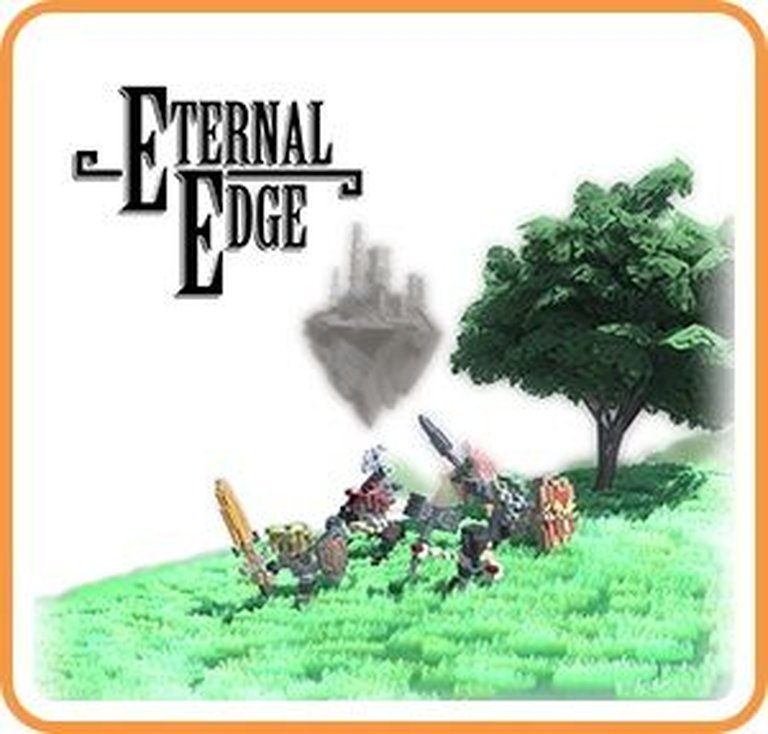
The art direction is the game’s most immediately winsome quality. It employs a stylized, low-poly 3D aesthetic that intentionally mimics 8/16-bit sprites in a 3D space, a concept popularized by 3D Dot Game Heroes. Characters are blocky, colors are bright and saturated, and the overall look is pleasantly retro. The “Little Kingdom” is divided into distinct biomes (forests, deserts, snowy mountains) that are visually diverse and, in screenshots, charming. The cover art and character designs by Shaun Ellis and Sean Garland have a distinct, almost anime-tinged flair that stands out.
However, this charm is consistently eroded by technical execution. The same stylized models contribute to the reported “blurry” and janky visuals, with NPC animations described as particularly awkward. Lighting and FX effects can become “overwhelming,” obscuring the view. The world, while large, is often sparse and empty, lacking the dense interactive ecology or points of interest that make Breath of the Wild‘s landscapes feel alive. It feels big, but not necessarily lived-in.
The soundtrack, composed by Sean Garland and John Leonard French, is serviceable fantasy fare, but reviews note volume control issues and repetitiveness. It does little to elevate the experience and can become grating over long play sessions.
Reception & Legacy: A Cult Curio, Not a Classic
At launch in April 2018, Eternal Edge was met with largely negative to mixed reviews. The two critic scores aggregated on MobyGames are 65% (Switch Era) and 45% (NintendoWorldReport), averaging 55%. Common themes in all critical takedowns were the abysmal save system, interminable loading times, and progress-halting level-gating. The Switch version, due to its portable nature, suffered particularly from long load times breaking the “pick up and play” ethos of the console.
Its commercial performance was modest. By 2024, it had been collected by only 36-38 players on MobyGames, indicating very low visibility. The subsequent Eternal Edge + release on PC (May 2020) saw a prolonged Early Access period and a reappraisal. Steam review analysis (756 reviews) shows a “Mixed” rating (69/100), with the breakdown revealing the same core complaints: Technical Bugs (10% of negative reviews) and Camera/Control Issues (4%) are the top negative tags, while Exploration Potential (3%) is a top positive. This paints a picture of a game with a dedicated niche audience who appreciate its ambition and “chill” vibe enough to endure its flaws, but which fundamentally repels a broader audience.
Influence on the industry is negligible. Eternal Edge did not pioneer mechanics or shift trends. Its legacy is as a cautionary tale and a niche curiosity. It stands as an example of an indie team attempting to capture the scale and feel of a modern AAA open-world game without the resources to execute it technically. It belongs to the cohort of early post-BotW “Zelda-lite” indies, but unlike standouts like Tunic or Eastward, it is remembered more for its failures than its innovations. Its most significant impact might be as a data point in discussions about the importance of quality-of-life features, save system design, and asset streaming optimization—lessons learned from its mistakes.
Conclusion: The Unfulfilled Promise of the Little Kingdom
Eternal Edge is a game of profound contradiction. It is built on a heartfelt, nostalgic love for classic adventure games and a brave, if foolhardy, ambition to replicate a modern masterpiece’s scope. Its world is large and often pretty, its combat functional, its progression ideas (Matrixes, Class system) genuinely interesting on paper. Yet, it is crippled by a cascade of fundamental design and technical errors that transform potential frustration into active hostility.
The save system is arguably one of the worst in modern gaming, a deliberate choice that punishes the player for engaging with the core loop. The loading times are deal-breaking, turning any moment of exploration into a calculated risk. The level-gating renders exploration pointless for the first several hours, the very opposite of an open-world ethos. These are not minor bugs; they are architectural flaws that rot the game from within.
For the extremely tolerant player who can look past “technical flaws” and seeks a “laid-back” experience, Eternal Edge (particularly the more polished Eternal Edge +) might offer dozens of hours of low-stakes wandering and grinding. For the vast majority, it is a masterclass in squandered potential. It is not the heroic victory its developers hoped for, nor the hidden gem some wish it to be. It is, instead, a fascinating and deeply flawed artifact—a testament to the fact that in game development, vision without execution is merely a ghost, no matter how vast the kingdom it seeks to build. Its place in history is not as a classic, but as a potent reminder that the magic of an open world lies not in its size, but in the seamless, respectful, and rewarding experience of being in it.
Final Verdict: 4/10 – A deeply flawed, often infuriating attempt at an epic indie adventure, saved from total condemnation only by its earnest charm and the faint glimmers of a better game buried beneath its many, many problems.