
- Release Year: 2005
- Platforms: Windows
- Publisher: 1C Company, Anuman Interactive SA, CrazyFoot Gamestudio B.V.
- Developer: CrazyFoot Gamestudio B.V.
- Genre: Action
- Perspective: Third-person
- Game Mode: Co-op, Single-player
- Gameplay: Shooter, Tactical, Team-based
- Setting: Europe, Modern
- Average Score: 56/100
Description
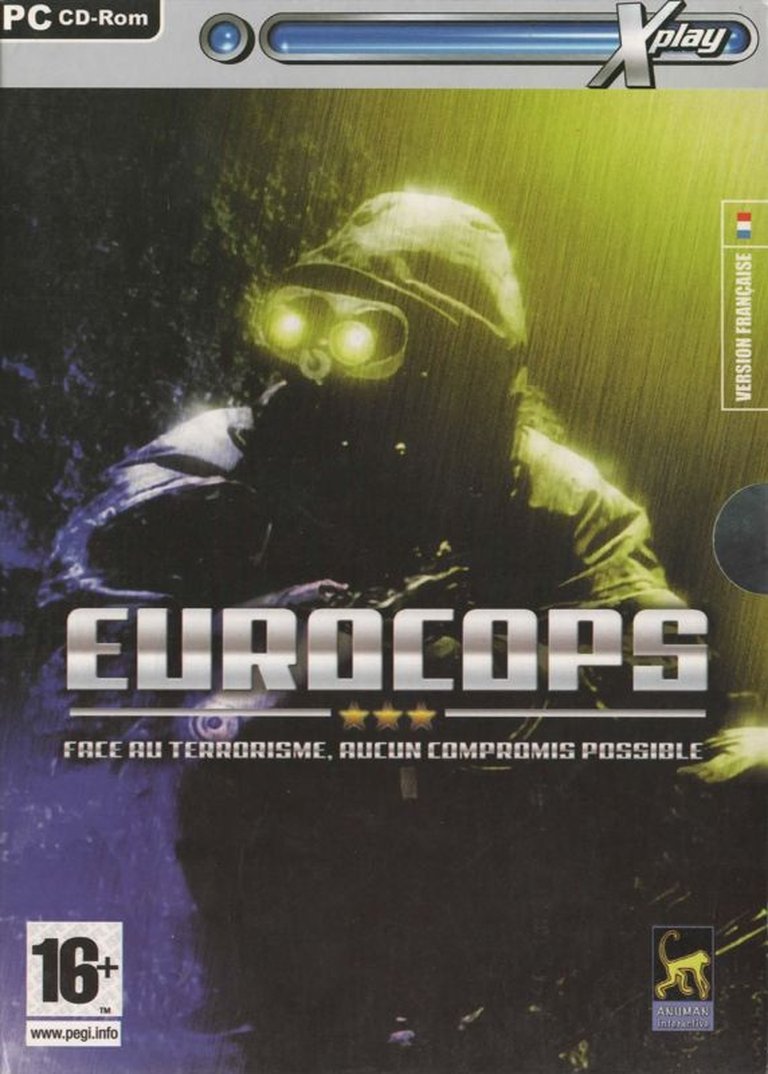
EuroCops is a third-person tactical shooter set across six European countries, where players lead a three-member task force from elite agencies like GSG-9 or SAS to neutralize terrorist threats. The game emphasizes tactical positioning, allowing players to switch control between team members—each with unique weaponry—and issue commands to coordinate attacks. Missions involve securing objectives and eliminating enemies, with a mini-map tracking enemy movements and objectives. The game also features a cooperative multiplayer mode where each player controls a different agent.
Gameplay Videos
EuroCops Patches & Updates
EuroCops Reviews & Reception
mobygames.com (30/100): A third-person shooter where the player takes a task force of three people through six European countries.
myabandonware.com (73/100): A team-based tactical 3D action game dedicated to the fight against terrorism.
gamepressure.com (66/100): A dynamic action game in which the main characters are observed from the third person’s perspective (TPP).
co-op.gg : A third-person shooter where the player takes a task force of three people through six European countries.
EuroCops Cheats & Codes
PC
Use the trainer functions during gameplay.
| Code | Effect |
|---|---|
| F1 | Shotguns Score |
| F2 | Fast Ship Weapons Recharge |
| F3 | Unlimited Brave |
| F4 | Super Weapon Damage |
| F5 | Accumulated Happiness |
| F6 | Can Buy / Give 1000K Resource |
| F7 | Change Sona/Coins |
| F8 | Edit: EXP / Stat Points |
| F9 | Increase Gold |
| F10 | Set Inventory Consumables |
| F11 | Happy People |
| F12 | Set Endurance |
| NUM 1 | Talent Skills in Combat Always Available |
| NUM 2 | Super No Reload |
| HOME | Disable All |
EuroCops: A Flawed but Fascinating Relic of Early 2000s Tactical Shooters
Introduction
In the mid-2000s, the tactical shooter genre was dominated by titans like Rainbow Six, Ghost Recon, and SWAT 4—games that emphasized strategy, teamwork, and realism. Amidst this competitive landscape, EuroCops (2005), developed by the Dutch studio CrazyFoot Gamestudio B.V., emerged as an ambitious but deeply flawed contender. Marketed as a “team-based tactical 3D action game dedicated to the fight against terrorism,” EuroCops promised players the chance to command elite counter-terrorism units across Europe, from the GSG-9 in Germany to the SAS in the UK. Yet, despite its lofty aspirations, the game was met with near-universal criticism, earning a dismal 30% average critic score and a 2.2/5 player rating on MobyGames.
This review seeks to unpack EuroCops not merely as a “bad game,” but as a fascinating artifact of its time—a game that reveals the challenges of indie development in the mid-2000s, the limitations of licensed engines, and the pitfalls of chasing trends without a clear vision. Through an exhaustive analysis of its development, gameplay, narrative, and legacy, we will explore why EuroCops failed to resonate with critics and players alike, while also acknowledging the glimmers of potential buried beneath its many flaws.
Development History & Context
The Studio Behind the Game
CrazyFoot Gamestudio B.V. was a relatively obscure Dutch developer with a modest portfolio. Prior to EuroCops, the studio had worked on titles like Alpha Black Zero: Intrepid Protocol (2004), a futuristic shooter, and Momonga Pinball Adventures (2003), a pinball game. EuroCops was their most ambitious project to date, aiming to capitalize on the post-9/11 surge in interest in counter-terrorism themes. The game was built using the Serious Engine, the same technology behind Serious Sam, a choice that would prove both a blessing and a curse.
The Serious Engine, developed by Croteam, was renowned for its ability to handle large, open environments and hordes of enemies—perfect for Serious Sam‘s chaotic, arcade-style gameplay. However, it was not inherently suited for the tactical, cover-based combat that EuroCops aspired to deliver. This mismatch between engine capabilities and design goals would become one of the game’s most glaring issues.
The Gaming Landscape of 2005
2005 was a pivotal year for tactical shooters. SWAT 4 (released in April 2005) set a new standard for realism and team-based gameplay, while Rainbow Six: Lockdown (March 2005) and Ghost Recon 2 (November 2004) continued to refine the genre. These games emphasized planning, precision, and squad coordination, often featuring complex AI systems, destructible environments, and a strong focus on realism.
EuroCops entered this crowded market with a unique selling point: the ability to play as six different European counter-terrorism units, each with their own weapons and tactics, across missions set in real-world locations like Paris, Berlin, and Moscow. On paper, this was an intriguing premise, offering a fresh twist on the usual American-centric narratives of games like Rainbow Six. However, in execution, EuroCops struggled to differentiate itself meaningfully from its competitors.
Technological Constraints
The Serious Engine, while powerful for its time, was not optimized for the kind of tactical gameplay EuroCops required. Key limitations included:
- Poor AI Pathfinding: Squadmates often got stuck on geometry or failed to respond intelligently to commands.
- Limited Cover Mechanics: Unlike SWAT 4 or Ghost Recon, EuroCops lacked robust cover systems, making tactical positioning feel clumsy.
- Basic Physics: The engine’s physics were designed for fast-paced action, not the weighty, deliberate movement of a tactical shooter.
- Graphical Quirks: The game suffered from excessive bloom effects, awkward animations, and a generally “plastic” visual style that clashed with its serious tone.
These technical limitations were compounded by the game’s short development cycle and small team size (only 27 developers credited). The result was a game that felt rushed, unpolished, and ultimately unable to compete with the genre’s heavyweights.
Narrative & Thematic Deep Dive
Plot Overview
EuroCops casts players as the leader of a three-person counter-terrorism squad, tasked with neutralizing threats across six European countries. The game’s campaign is divided into missions inspired by real-world locations and events, though the narrative is barebones at best. Each mission begins with a briefing—often little more than a text description—outlining the objective (e.g., “neutralize terrorists in a Parisian subway” or “secure a hostage in a Berlin bank”). There is no overarching story, no character development, and no meaningful context for the player’s actions.
This lack of narrative depth is striking, especially when compared to contemporaries like SWAT 4, which featured detailed mission briefings, branching storylines, and even moral dilemmas. EuroCops treats its subject matter—counter-terrorism—as a purely mechanical exercise, devoid of the political or ethical complexities that define real-world anti-terror operations.
Characters and Dialogue
The game’s characters are completely interchangeable, with no personalities, backstories, or even distinct voices. Squadmates are referred to simply by their roles (e.g., “Sniper,” “Assault”), and their dialogue is limited to generic barking commands (“Enemy spotted!” “Taking fire!”). This lack of characterisation makes it difficult for players to form any emotional connection to their team, a critical flaw in a genre that thrives on squad camaraderie (see Rainbow Six or Ghost Recon).
Themes: A Missed Opportunity
EuroCops had the potential to explore fascinating themes—the rise of terrorism in Europe, the ethical challenges of counter-terrorism, the tension between security and civil liberties. Instead, it reduces these complex issues to a simplistic “us vs. them” dynamic, where faceless terrorists are mowed down without consequence. The game’s lack of moral ambiguity is particularly jarring in hindsight, given the controversies surrounding real-world counter-terrorism operations (e.g., extrajudicial killings, civilian casualties).
The game’s Eurocentric focus is one of its few unique selling points, offering players a chance to engage with settings and units rarely seen in mainstream shooters. However, this potential is squandered by the game’s shallow representation of its locations. Missions take place in generic urban environments that could be anywhere, with little effort made to capture the cultural or architectural distinctiveness of Paris, Berlin, or Moscow.
Gameplay Mechanics & Systems
Core Gameplay Loop
EuroCops is, at its heart, a third-person tactical shooter with light squad-based mechanics. Players control one of three squad members at a time, issuing basic commands (“follow,” “hold position,” “attack”) to the others. The game encourages tactical positioning, with squadmates ideally providing cover fire while the player advances. In theory, this sounds like a solid foundation for a tactical shooter. In practice, the execution is deeply flawed.
Combat and Weaponry
Each squad member is equipped with a predefined loadout, including handguns, shotguns, machine guns, and sniper rifles. Weapons can be switched on the fly, and players can zoom, crouch, or go prone to gain tactical advantages. However, several issues undermine the combat:
- No Ammo or Health Management: Unlike most tactical shooters, EuroCops features infinite ammo and auto-regenerating health. This design choice eliminates tension and undermines the need for careful planning.
- Poor Enemy AI: Terrorists behave predictably, often standing in the open or charging directly at the player. There is little attempt at flanking, suppression, or tactical retreat.
- Clunky Controls: Movement feels stiff and unresponsive, and the cover system is barely functional. Players cannot reliably take cover behind objects, making firefights feel more like arcade shootouts than tactical engagements.
- Limited Squad AI: Squadmates frequently ignore commands, get stuck on geometry, or fail to engage enemies effectively. The “tactical positioning” the game encourages is often impossible to execute due to these AI failures.
Mission Design
The game’s missions are linear and repetitive, typically involving:
– Clearing a series of rooms or streets filled with terrorists.
– Securing a hostage or defusing a bomb (though these objectives are often tacked on as afterthoughts).
– Escorting a VIP (a particularly frustrating mechanic, as the VIP AI is prone to running into enemy fire).
There is little variety in mission structure, and the lack of destructible environments or interactive elements makes each level feel static and lifeless. Compared to SWAT 4‘s dynamic, multi-path missions, EuroCops feels rigid and uninspired.
Multiplayer: A Missed Opportunity
EuroCops includes a cooperative multiplayer mode, allowing up to three players to control the squad together. On paper, this is a great idea—tactical shooters thrive on teamwork, and a well-executed co-op mode could have been a saving grace. In practice, the multiplayer is hamstrung by the same flaws as the single-player campaign:
– Poor netcode, leading to lag and desync issues.
– No meaningful teamwork mechanics (e.g., no shared objectives, no specialized roles).
– A lack of dedicated servers or matchmaking, making it difficult to find games.
The multiplayer mode ultimately feels like an afterthought, added to check a box rather than to enhance the experience.
UI and HUD
The game’s user interface is functional but uninspired. The mini-map is useful for tracking enemy positions, but the lack of a proper tactical overview (e.g., no top-down map, no waypoint system) makes squad coordination difficult. The weapon selection wheel is clunky, and the health/ammo indicators are overly simplistic.
World-Building, Art & Sound
Visual Design: A Clash of Styles
EuroCops suffers from a visual identity crisis. The game’s realistic setting (counter-terrorism in Europe) clashes with its cartoonish, arcade-like visuals. Character models are stiff and poorly animated, environments are repetitive and bland, and the excessive bloom effects give the game a hazy, over-saturated look that feels more at home in a Serious Sam spin-off than a tactical shooter.
The game’s level design is particularly weak. Missions take place in generic urban environments—subway stations, banks, streets—that lack the detail and atmosphere of games like SWAT 4 or Rainbow Six. There is little attempt to create a sense of place; a mission in Paris feels indistinguishable from one in Moscow.
Sound Design: A Mixed Bag
The game’s sound design is adequate but unremarkable. Gunfire sounds serviceable, but lacks the punch and weight of better tactical shooters. The voice acting is minimal and forgettable, with squadmates delivering generic, repetitive barking commands (“Enemy down!” “Moving out!”).
The music is largely forgettable, consisting of generic action tracks that do little to enhance the atmosphere. There is no dynamic music system to heighten tension during firefights, a feature that games like Rainbow Six used effectively.
Atmosphere: A Failure of Immersion
EuroCops fails to create a compelling atmosphere. The game’s lack of narrative context, poor visual design, and weak sound design combine to create an experience that feels sterile and disconnected. Players are never given a reason to care about their mission or their squad, and the generic environments do little to draw them into the world.
Reception & Legacy
Critical Reception: A Near-Unanimous Pan
EuroCops was savaged by critics upon release. Reviewers highlighted the game’s poor AI, repetitive missions, clunky controls, and lack of innovation. Here are some key critiques:
- Absolute Games (AG.ru): “Too arcade-like for a tactical shooter, too clumsy for a patriotic ‘shooter’… The authors never decided what kind of game they were making.” (45/100)
- 7Wolf Magazine: “A typical ‘cash grab’ game. No ideas, no plot, no execution.” (4/10)
- Meristation: “EuroCops promised a lot graphically and doesn’t even deliver on that. It’s a simple game with many errors, some of which belong to titles from years ago.” (3/10)
- JeuxVideoPC.com: “Almost non-existent gameplay, short lifespan, lack of leadership, and monotonous missions… EuroCops will struggle to find its place in the world of tactical FPS.” (5/20)
- Jeuxvideo.com: “A title clearly made with the feet, taking people for fools. Poorly finished, riddled with bugs, and as stimulating as a game of checkers against a hard-boiled egg.” (2/20)
The player reception was equally harsh, with an average score of 2.2/5 on MobyGames. Players criticized the game’s bugginess, lack of depth, and poor optimization, with many reporting crashes, AI failures, and unplayable controls.
Commercial Performance
EuroCops was a commercial flop, failing to make a significant impact in the crowded tactical shooter market. The game’s lack of marketing, poor reviews, and technical issues ensured that it quickly faded into obscurity.
Legacy: A Cautionary Tale
EuroCops is remembered today not as a classic, but as a cautionary tale—a game that ambitiously chased trends without the resources, vision, or polish to compete. Its failures highlight several key lessons for game development:
- Engine Choice Matters: The Serious Engine was ill-suited for a tactical shooter, demonstrating the importance of matching technology to design goals.
- Narrative Context is Crucial: Even tactical shooters need a compelling reason for players to care about their missions.
- AI and Polish Are Non-Negotiable: Poor squad AI and clunky controls can ruin an otherwise promising game.
- Innovation Requires Risk: EuroCops tried to differentiate itself with its European setting and squad mechanics, but failed to execute these ideas effectively.
Despite its flaws, EuroCops has a small but dedicated fanbase among retro gaming enthusiasts, who appreciate its quirky charm, co-op mode, and historical curiosity value. The game has also been preserved by abandonware sites, ensuring that it remains accessible to those interested in gaming history.
Conclusion: A Flawed but Fascinating Relic
EuroCops is not a good game by any conventional metric. It is buggy, repetitive, and poorly executed, failing to deliver on its promises of tactical depth, squad coordination, or immersive counter-terrorism action. Yet, it is not without merit. The game’s ambition, its attempt to carve out a niche in a crowded genre, and its unique European focus make it a fascinating artifact of mid-2000s gaming.
In the pantheon of tactical shooters, EuroCops occupies a humble but noteworthy place—not as a classic, but as a reminder of the challenges faced by indie developers in an era dominated by big-budget, polished titles. It is a game that tried to punch above its weight, and while it ultimately fell short, its existence enriches our understanding of how the tactical shooter genre evolved.
For historical curiosity, retro gaming enthusiasts, or those interested in the intersection of game design and technological constraints, EuroCops is worth a look. For everyone else, it serves as a cautionary tale—a game that dared to dream big, but lacked the tools to make those dreams a reality.
Final Verdict: 4/10 – A flawed but fascinating relic of its time.