
- Release Year: 2007
- Platforms: Macintosh, Windows
- Publisher: 1C Company, Cenega Poland Sp. z o.o., CyberFront Corporation, Paradox Interactive AB, Runesoft GmbH, Snowball.ru, Virtual Programming Ltd.
- Developer: Paradox Interactive AB
- Genre: Strategy, Tactics
- Perspective: Top-down
- Game Mode: LAN, Online PVP, Single-player
- Gameplay: Business simulation, Managerial
- Setting: Age of Discovery, Enlightenment, Historical events
- Average Score: 83/100
Description
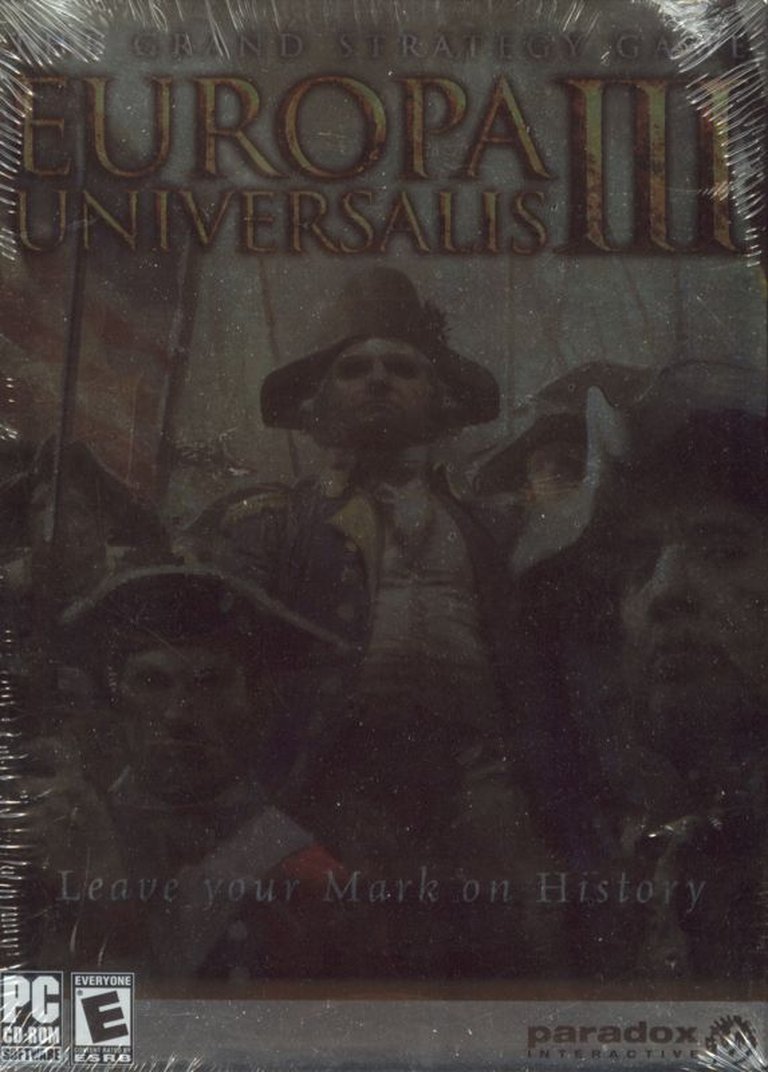
Europa Universalis III is a grand strategy game set in the early modern period from 1453 to 1792, where players assume control of any nation worldwide, managing diplomacy, economy, military, government forms, national ideas, and dynamically generated events in a realistic historical simulation powered by a 3D engine, evolving from its predecessors with improved tutorials and procedural historical flavor.
Gameplay Videos
Where to Buy Europa Universalis III
Europa Universalis III Free Download
Europa Universalis III Patches & Updates
Europa Universalis III Mods
Europa Universalis III Guides & Walkthroughs
Europa Universalis III Reviews & Reception
metacritic.com (83/100): You can do anything you want with this game, the limits being only your time and imagination.
ign.com : Paradox Interactive finally brings some welcome updates to their celebrated series.
retrospectrealm.wordpress.com : Gameplay is fun… if you love history as much as I do then these games are a blast.
Europa Universalis III Cheats & Codes
PC
During gameplay, press the ‘§’ key (or ‘½’ in some regions) or hold Alt + 21 on the numpad to open the console. Then type the case-sensitive code and press Enter.
| Code | Effect |
|---|---|
| cash | Adds money |
| spy | Adds spies |
| colonist | Adds colonists |
| diplomat | Adds diplomats |
| merchant | Adds merchants |
| missionary | Adds missionaries |
| pirate | Pirates roam the seas |
| die native | Natives attack |
| fow off | Turns off fog of war |
| fow on | Turns on fog of war |
| discover [Province ID] | Discovers the specified province |
| undiscover [Province ID] | Undiscovers the specified province |
| revolt [Province ID] | Creates a revolt in the specified province |
| stability | Increases stability |
| prestige | Increases prestige |
| fullscreen | Toggles fullscreen/windowed mode |
| infamy [+/-number] | Changes infamy level |
| invest [technology] [amount] | Invests specified amount in specified technology (e.g., invest land_tech 20000) |
| event [event ID] | Triggers the specified event |
| die [nation ID] | Kills the leader of the specified nation |
| tag [nation ID] | Switches control to the specified nation |
| morehumans | Unknown |
Europa Universalis III: Review
Introduction
Imagine stepping into the shoes of any nation—from the mighty Ottoman Empire at its zenith to the obscure Maldives amid the Age of Discovery—and rewriting 300 years of world history through your own ambitions, blunders, and triumphs. Europa Universalis III (EU3), released in 2007 by Paradox Interactive, isn’t just a game; it’s a living tapestry of the early modern era, where the fall of Constantinople in 1453 marks the dawn of global empires, and the French Revolution in 1789 signals their turbulent evolution. As the third entry in Paradox’s flagship grand strategy series, EU3 builds on its predecessors’ cult following while introducing a revolutionary 3D engine and sandbox depth that captivates historians and strategists alike. This review argues that EU3 stands as Paradox’s pinnacle of accessible yet profound grand strategy, transforming opaque historical simulation into an intoxicating playground of empire-building that influences the genre to this day.
Development History & Context
Paradox Development Studio, a Swedish outfit founded in 2001 under Paradox Interactive AB, had already carved a niche with intricate historical wargames like Hearts of Iron and earlier Europa Universalis titles. EU3 marked a bold pivot: Johan Andersson, serving as both producer and lead designer, envisioned a “grand strategy” evolution unbound by rigid historical scripts. Drawing from Europa Universalis II‘s 2D framework, the team—featuring lead programmer Adam Skoglund, lead artist Marcus Edström, and composer Andreas Waldetoft—introduced the Clausewitz Engine, Paradox’s first proprietary 3D toolset requiring Pixel Shader 2.0 support. This shift addressed prior criticisms of dated visuals while enabling a topographic world map with 1,700 provinces and sea zones.
Launched on January 23, 2007, for Windows (Mac port in November via Virtual Programming), EU3 arrived amid a strategy renaissance. Civilization IV (2005) dominated turn-based 4X with polished accessibility, while Company of Heroes (2006) thrilled with real-time tactics. Yet grand strategy—real-time simulations of geopolitics spanning centuries—remained Paradox’s domain, niche due to steep learning curves. Technological constraints of the mid-2000s, like limited multi-core optimization and modest VRAM, forced compromises: abstract combat over tactical micromanagement, prioritizing simulation breadth. Publishers like 1C Company and Cenega handled global distribution, reflecting Paradox’s grassroots ethos. Post-launch, four expansions (Napoleon’s Ambition, In Nomine, Heir to the Throne, Divine Wind) and compilations (Complete, Chronicles) extended timelines to 1399–1821, embodying Paradox’s “beta tester” model of iterative patching and DLC, which refined AI, added decisions, and boosted replayability.
Narrative & Thematic Deep Dive
EU3 eschews linear plots for emergent historical fiction, thrusting players into a sandbox from 1453 (Fall of Byzantium) to 1789, expandable via DLC. No protagonists or dialogue trees exist; instead, “characters” emerge as semi-random monarchs, generals (over 4,000 historical figures like Tamerlane or Yi Sun-sin), and advisors (e.g., Mozart or Newton as generic bonuses). Events—dynamic, situation-triggered crises like succession wars or revolutions—provide narrative beats, replacing EU2’s scripted history with procedural drama. A Castilian playthrough might spawn a Reconquista event chain, allying with Aragon for Iberian dominance, only for colonial rebels to fracture your New World holdings.
Thematically, EU3 probes empire’s double-edged sword: manifest destiny vs. overreach. Sliders (e.g., centralization vs. aristocracy, free trade vs. mercantilism) embody Enlightenment tensions, while national ideas (e.g., liberté, égalité, fraternité for France) let players philosophically sculpt nations. Cultural/religious diversity—Catholic Papal Curia machinations, Orthodox resilience, Sunni jihads, Confucian mandates—fuels themes of tolerance and clash. Alternate histories abound: Venice colonizing Africa, Byzantium reclaiming Anatolia via “thematic system” decisions. Dialogue is sparse, limited to event popups with flavorful text (“Paris is worth a Mass”), but their procedural nature crafts personal epics—my Mamluk campaign crumbled under Shia revolts, mirroring Safavid Iran’s real ascendancy. This lack of hand-holding elevates player agency, making every realm’s saga a historian’s what-if.
Gameplay Mechanics & Systems
EU3’s core loop—expand, stabilize, exploit—unfolds in pausable real-time across diplomacy, economy, warfare, and tech. Select from 250+ nations (Ming giants to tribal Mutapa), tweak sliders for societal tuning, hire advisors for bonuses, and adopt 50+ national ideas unlocking casus belli or trade perks.
Economy & Trade: Provinces generate tax/production income; merchants steer “centers of trade” (Venice, Lübeck). Inflation from over-minting or gold reliance punishes excess—Holland thrives on trade, but Castile risks colonial overstretch.
Diplomacy & Espionage: Royal marriages, alliances, vassalage, and unions forge blocs. Holy Roman Empire electors/Papal cardinals yield prestige/manpower; spies incite revolts or sabotage. Infamy from aggression limits expansion.
Warfare & Progression: Abstract combat resolves via morale/attrition, factoring terrain, leaders (tied to military tradition), and 100+ unit types (hussars, culverins). No direct battles—stack armies, siege forts. Tech trees (admin/military/finance) gate unlocks; colonists claim Terra Incognita.
UI & Innovations/Flaws: Revamped 3D interface shines—ledger tracks colonies/leaders, trade maps visualize flows, time acceleration idles waits. Tutorials/manuals ease entry vs. EU2, but steep curve persists (e.g., merchant placement opaque). Expansions innovate: In Nomine‘s decisions/rebel AI, Heir to the Throne‘s dynasties/casus belli, Divine Wind‘s Eastern focus (Japan daimyo, Ming factions). Flaws? AI pathing bugs, nomad cheese, Mac performance hiccups. Multiplayer (32 players) fosters co-op domination, but balance nitpicks (e.g., Western tech superiority) emerge in long campaigns.
| Core Systems | Strengths | Weaknesses |
|---|---|---|
| Diplomacy | Dynamic alliances, HRE/Papacy depth | Infamy opacity |
| Combat | Strategic stacking, tradition leaders | Abstract, chase-heavy |
| Economy | Merchant competition, inflation realism | Micromanagement grind |
| Tech/Events | Procedural history, ideas customization | Randomness frustration |
World-Building, Art & Sound
EU3’s world spans a 3D topographic globe—Europe’s fractious patchwork, Africa’s unclaimed wilds, Asia’s mandarin courts—immersing via layers (political, trade, religion). Atmosphere evokes era’s flux: cranes animate builds, soldiers march, cities skyline provinces. Visuals, functional over flashy, prioritize info density; 3D troops/animations add life vs. EU2’s flatness, though close-ups blur units.
Sound design elevates: Waldetoft’s orchestral score—folk marches, tense strings—mirrors moods (war drums for sieges). Effects are utilitarian (clanks, horns), but the soundtrack’s historical flair (baroque swells) sustains marathon sessions, fostering “one more turn” hypnosis.
Reception & Legacy
Critics lauded EU3’s depth: Metacritic 83/100, MobyGames 79% (37 critics), with GameSpot (8.7/10) praising “multiple layers of complex decisions” and 1UP (9/10) calling it Paradox’s “finest achievement.” Players averaged 3.9/5 (28 ratings), hooked by replayability despite “steep curve” gripes (Eurogamer 7/10). Commercially, it fueled DLC ecosystem (Chronicles bundled all), sustaining sales via eBay ($10–15 used).
Reputation evolved: Patches/mods (e.g., Magna Mundi) addressed flaws; it’s #1,465 on Moby Windows. Influence? Cemented Clausewitz’s versatility (EU4, Stellaris), popularized procedural events/national ideas in Civ V, Endless Legend. Spin-offs/mods like MEIOU expanded it; EU4 (2013) refined but never matched EU3’s raw ambition. GameSpy ranked it #24 PC game of 2000s.
Conclusion
Europa Universalis III masterfully distills centuries of geopolitics into a sandbox of infinite what-ifs, where a Byzantine revival or Ming collapse feels earned. Its innovations—Clausewitz’s visuals, dynamic events, idea-driven customization—overcame prior inaccessibility, delivering unmatched historical immersion despite UI hurdles and AI quirks. Flawed yet visionary, EU3 isn’t for casuals but etches a definitive niche in strategy history: the ultimate empire simulator. Verdict: 9/10—Essential for genre aficionados, a timeless monument to Paradox’s audacious craft.