
- Release Year: 2022
- Platforms: Windows
- Publisher: Atomic Fabrik
- Developer: Atomic Fabrik
- Genre: Driving, Racing, Simulation
- Perspective: 1st-person
- Game Mode: Single-player
- Gameplay: Direct control, Vehicle simulation
- Setting: Europe
- Average Score: 74/100
Description
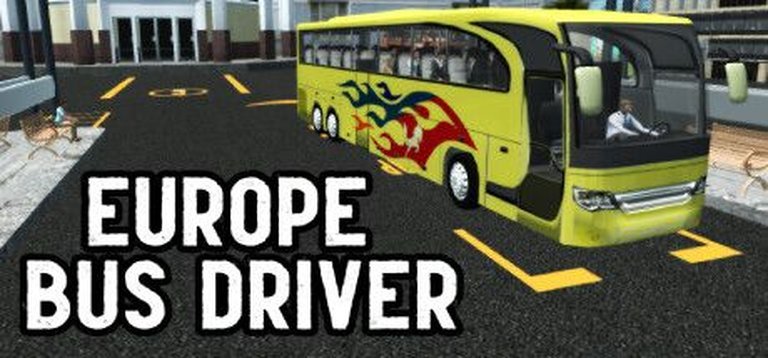
Welcome in this simulation game of Europe Bus Driver. Everything is much simpler if you love the work you do. Europe Bus Driver presents a passenger transport simulator through the largest European capitals. With your help, you will expand your company, participating yourself in some bus rides, such as Madrid-Berlin. If you are in the luxury range, expect fewer customers but higher ticket prices. Time, cleanliness, and safety are paramount for success.
Gameplay Videos
Europe Bus Driver Patches & Updates
Europe Bus Driver Guides & Walkthroughs
Europe Bus Driver Cheats & Codes
PC Version
Enter codes in-game with specified key combinations.
| Code | Effect |
|---|---|
| Shift + Delete | Deletes script progress |
| Shift + F1-F9 | Gradual opening of progress (F9 unlocks everything) |
| C + M | Adds 500 rubles |
| C + F | Drains gasoline from selected bus |
| C + T | Adds one hour of playing time |
| C + N | Subtracts 500 rubles |
| C + R | Resets progress |
Europe Bus Driver: A Nostalgic Yet Underwhelming Simulation Experience in the Age of Grand Simulators
Introduction
Released amidst the golden age of hyper-realistic open-world simulators, Europe Bus Driver (2022) emerges not as a revolutionary force, but as a meticulously crafted, if somewhat modest, spiritual successor to the cult classic Bus Driver (2007). Developed by Atomic Fabrik, this Windows-exclusive simulation game casts players in the role of an international bus entrepreneur navigating a network of European capitals. While ambitious in its geographical scope and nostalgic in its core premise, the title struggles to reconcile its retro DNA with modern expectations for depth, narrative, and technical polish. Its thesis is clear: the charm of early-mid-2000s arcade simulators persists, but its execution reveals the limitations of its vision when placed before a contemporary audience accustomed to richer, more immersive systems.
Development History & Context
Atomic Fabrik, a Romanian studio primarily known for its work on the Bus Driver series, undertook Europe Bus Driver as a passion project following the commercial and critical success of the 2007 original. The studio, comprising developers like Cristian Manolachi, operated with a relatively small footprint compared to giants like Dovetail Games (Euro Truck Simulator 2) or SCS Software (American Truck Simulator). This constrained scale is evident. The game launched on November 18, 2022, directly into a saturated market dominated by premium truck simulators offering sprawling open worlds, dynamic economies, and modding ecosystems. Technologically, it leverages a simpler engine (likely a streamlined Unity build given the specs), targeting accessibility over power. Atomic Fabrik’s vision, as stated in the official description, was nostalgic revivalism: “Well, everything is much simpler if you really love the work you do.” This philosophy prioritized replicating the Bus Driver’s core loop – route completion under time pressure with quality metrics – within a new European setting, rather than pushing the boundaries of simulation fidelity.
Narrative & Thematic Deep Dive
Europe Bus Driver operates on a deceptively simple narrative framework: you are the founder of an international bus company. Success hinges on expanding your fleet (starting with 5 luxury buses) by efficiently transporting passengers between major European capitals like Madrid, Rome, Vienna, Berlin, and London. The narrative is entirely player-driven and consequence-based. There is no traditional story, dialogue, or character development beyond the player’s own actions. Thematic depth emerges through the game’s core mechanics:
- Entrepreneurial Aspiration: The opening blurb (“opening your own international bus driver company”) sets the stage. Progression is tied directly to business acumen – investing in luxury vehicles to attract higher-paying passengers (higher ticket costs) while managing the trade-off of potentially fewer riders. This echoes late-90s/early-2000s business sims.
- The Burden of Responsibility: The repeated emphasis on the “3 qualities” – Time, Cleanliness, and Safety – forms the game’s moral spine. Failure manifests in lost customers and revenue, framing the player’s role as a custodian of passenger well-being and operational standards. The cutthroat finale, “Are you ready to go?” before each route, heightens the stakes.
- Nostalgia and Simplicity: Thematically, the game leans heavily into its predecessor’s DNA. It romanticizes a bygone era of travel – not the vast open roads of Euro Truck Simulator, but focused, high-stakes journeys between iconic cities. The lack of complex narratives or character arcs is a conscious design choice, prioritizing nostalgic arcade satisfaction over epic storytelling.
Gameplay Mechanics & Systems
The core loop is straightforward, nostalgic, and potentially frustrating:
- Route Selection: Choose a preset route (e.g., Madrid-Berlin) and a bus type (varying luxury levels affecting passenger count and fare).
- Time Management: A strict timer dictates the route duration. The primary challenge is efficient navigation and adherence to traffic laws. Collisions, lane departures, or stopping excessively waste time.
- Quality Metrics: Success isn’t solely determined by time. Cleanliness (likely represented by a simple meter affected by passenger disembarkations and perhaps cargo), Safety (minimizing collisions), and Time Performance are the critical triad. The game’s success criteria are not detailed, leaving players to experiment.
- Passenger Dynamics: Higher luxury attracts fewer passengers, but they pay more. Managing passenger load and comfort (implied by cleanliness) is key to profitability.
- Economic Progression: Earning money from successful rides allows vehicle upgrades or expansion of the route network. The economic system is rudimentary, focused purely on revenue vs. route cost.
Strengths:
* Ace Handling: Numerous player reviews praise the bus physics as intuitive and satisfying, especially in city environments. It captures the weight and responsiveness of a large vehicle effectively for its genre.
* Atmospheric Ambiance: The period-correct, slightly stylized European cityscapes provide a distinct, nostalgic vibe.
* Clear, Focused Challenge: The triad of Time, Cleanliness, and Safety offers a relatable, if narrow, set of goals.
Weaknesses:
* Opaque Success Criteria: The lack of clear, consistent metrics for success makes mastery difficult. Does a delayed arrival penalize you more than a minor collision? Is cleanliness critical for passenger count or solely for reputation?
* Minimal Feedback & Progression: Beyond earning credits, the sense of advancement is limited. No branching narratives, complex character development, or deep economic systems to explore.
* UI & Information Gaps: The available UI, based on specs, likely lacks advanced diagnostics (fuel level, tire pressure, detailed map), adding to the challenge in a potentially unforgiving way.
* Limited Content: While featuring 5 routes, the diversity feels constrained. The “open world” tag is misleading; it’s a series of discrete, linear routes.
World-Building, Art & Sound
* Setting & Atmosphere: Europe Bus Driver excels in its world-building through mood and isolation. The European capitals are rendered in a slightly stylized, period-appropriate aesthetic – clean lines, classic architecture, and a generally quiet, almost desaturated color palette. The focus is intimate: the view from the bus driver’s seat, the unfamiliar cityscapes seen only through the windshield. This creates a strong sense of place and era (uncertain, but likely contemporary to the 2007 original’s setting), prioritizing atmosphere over exhaustive detail. It feels like a stylized travelogue of Europe, not a living, breathing world.
* Visual Direction: The 1st-person/Behind-the-view perspective is consistent and functional. The visuals are competent but not cutting-edge. The emphasis is on clarity for driving, with European cityscapes rendered in a clean, approachable style rather than photorealistic detail. The buses themselves are the focus, with distinct designs for each luxury tier.
* Sound Design: Specific details are scarce, but the official description emphasizes clean driving and safety. Expect functional sound effects: engine hum, tire squeals, the clack of doors closing, perhaps ambient city sounds. Music, if present, likely serves as subtle background ambiance. The sound design supports the focused driving challenge without adding significant narrative or emotional weight.
Reception & Legacy
Upon release, Europe Bus Driver garnered mixed-to-positive player reviews on Steam, reflected in its Steambase Player Score (74/100, Mostly Positive from 50 reviews). Critic reviews are notably absent from major aggregation sites like Metacritic. Player feedback highlights the strengths (handling, atmosphere, nostalgic appeal) but frequently laments the opaque mechanics, lack of clear progression, and relatively modest scope compared to premium truck sims.
Its legacy is currently ambiguous and niche:
- Spiritual Successor Confirmation: It solidifies Atomic Fabrik’s commitment to the Bus Driver legacy, proving the core concept still has a dedicated audience. It serves as a direct bridge for fans of the 2007 original.
- Niche Appeal: It occupies a distinct, smaller space within the transportation simulation genre. It appeals strongly to those seeking a focused, nostalgia-driven bus experience rather than expansive open-world trucking.
- Technical & Design Reference: For indie developers, it represents a viable approach to creating a polished, niche sim with limited resources, focusing on a core loop rather than exhaustive simulation depth.
- Limited Industry Influence: Unlike Euro Truck Simulator 2 or American Truck Simulator, which spawned entire sub-genres, Europe Bus Driver hasn’t demonstrably influenced broader industry trends. Its impact remains confined to the bus sim niche and as a testament to the enduring (if niche) appeal of its predecessors.
- Potential for Expansion/Sequel: Its existence, coupled with the known passion of Atomic Fabrik, leaves the door open for a significantly expanded and refined sequel that could address the current game’s perceived shortcomings and potentially elevate the genre.
Conclusion
Europe Bus Driver is a polished, atmospheric, and nostalgically potent simulation that honors its 2007 predecessor but ultimately feels like a slightly refined arcade experience rather than a deep, modern simulation. Its strengths lie in its focused driving mechanics, evocative European backdrop, and the simple, relatable challenge of managing time, cleanliness, and safety on high-stakes routes between iconic cities. However, its weaknesses are substantial: opaque success criteria, minimal player feedback and progression, a rudimentary economic system, and limited content.
In the pantheon of video game history, Europe Bus Driver occupies a modest but specific niche. It is not a landmark title, but rather a well-crafted, affectionate tribute to a bygone era of simulation gaming and a testament to the enduring appeal of its spiritual forebears. It will be remembered primarily by fans of the original Bus Driver and those seeking a concise, nostalgic bus-driving experience. For its ambitious scope and technical execution, it deserves recognition, but its limitations prevent it from achieving broader historical significance. It is a good game for its intended audience and purpose, but not a great one in the context of modern simulation standards.