
- Release Year: 2018
- Platforms: PlayStation 4, Windows
- Publisher: Archiact Interactive Ltd.
- Developer: Archiact Interactive Ltd.
- Genre: Action
- Perspective: 1st-person
- Game Mode: Co-op, Single-player
- Gameplay: Motion control, Shooter
- Setting: Futuristic, Sci-fi
- Average Score: 69/100
- VR Support: Yes
Description
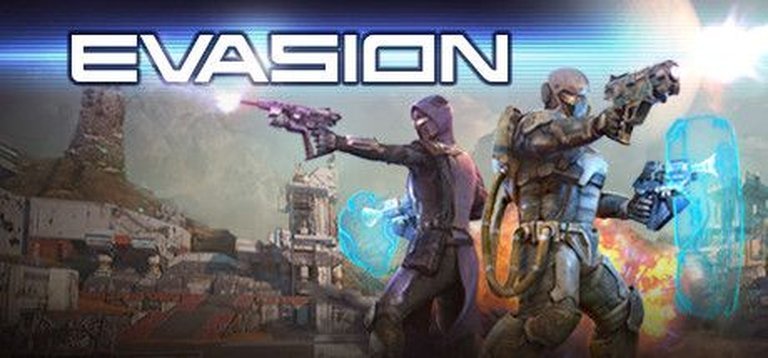
Evasion is a first-person sci-fi shooter designed for virtual reality, drawing inspiration from games like Doom and Borderlands. Players take on the role of elite Vanguard forces defending a human colony from relentless alien invaders called Optera. The game features multiple character classes, bullet-hell mechanics, and both single-player and co-op modes, offering full motion control and immersive VR gameplay. With its arcade-style action and unique mechanics, Evasion delivers a fast-paced, chaotic experience tailored for VR enthusiasts.
Where to Buy Evasion
PC
Evasion Patches & Updates
Evasion Guides & Walkthroughs
Evasion Reviews & Reception
metacritic.com (76/100): Evasion is another example of a fast-paced VR game that doesn’t seem like it could work in theory, but has been executed with a care and precision befitting of a developer that has a lot of expertise in the VR field.
roadtovr.com : While it’s a technically competent game that looks and feels well polished, some lackluster enemy types and repetitive gameplay left me feeling pretty ambivalent about moving forward through the off-world colony.
explosionnetwork.com (60/100): Unfortunately, if you can’t find someone to play with, it’s a rather repetitive shooting gallery that leaves you wishing you had a co-op partner.
monstercritic.com (71/100): Evasion offers a competent and entertaining shoot ‘em up campaign for those looking to bring devastation to the next alien race.
Evasion: A Flawed but Ambitious VR Shooter That Pushed Boundaries
Introduction
In the crowded landscape of VR shooters, Evasion (2018) stands as a bold, if imperfect, experiment—a game that dared to blend the frenetic energy of bullet-hell shooters with the immersive potential of virtual reality. Developed by Archiact Interactive, a studio with a pedigree in VR experiences, Evasion sought to redefine what a first-person shooter could be in VR, emphasizing free movement, cooperative play, and class-based combat. Yet, despite its ambitions, the game struggled to fully realize its potential, leaving behind a legacy that is as much about its shortcomings as its innovations.
This review will dissect Evasion in exhaustive detail, exploring its development history, narrative and thematic depth, gameplay mechanics, world-building, and its reception and legacy. By the end, we’ll determine whether Evasion was a pioneering step forward for VR shooters or a missed opportunity that highlights the challenges of the medium.
Development History & Context
The Studio Behind the Game
Archiact Interactive, based in Vancouver, Canada, was no stranger to VR development when it embarked on Evasion. The studio had previously worked on titles like Hidden Fortune and Trials of the Damned, but Evasion represented its most ambitious project to date. The game was built using Unreal Engine 4, a choice that allowed the team to leverage cutting-edge graphics and physics to create a visually impressive VR experience.
Archiact’s vision for Evasion was clear: to craft a VR shooter that felt like a natural evolution of classic arcade and console shooters, drawing inspiration from games like Doom (2016), Borderlands, and even Galaga. The studio wanted to create a game that wasn’t just a tech demo but a full-fledged, narrative-driven experience with depth and replayability.
Technological Constraints and Innovations
Developing a VR shooter in 2018 came with significant challenges. Motion sickness was (and remains) a major hurdle for VR games, particularly those involving free movement. Archiact tackled this by implementing multiple locomotion options, including smooth movement, dash teleportation, and jog-in-place mechanics, allowing players to choose the method that suited their comfort level.
Another innovation was the game’s use of IKinema’s inverse kinematics technology, which enabled full-body avatars that moved realistically in response to player actions. This was a notable step forward in VR immersion, as it allowed players to see their virtual bodies react naturally to their movements.
However, the game’s most ambitious feature was its emphasis on cooperative play. Evasion was designed from the ground up as a two-player co-op experience, with class-based mechanics that encouraged teamwork. This was a risky move, as VR games at the time often struggled with multiplayer due to the relatively small player base.
The Gaming Landscape in 2018
When Evasion launched in October 2018, the VR market was still in its infancy. The Oculus Rift, HTC Vive, and PlayStation VR had been on the market for a couple of years, but VR gaming was far from mainstream. Most VR shooters at the time were either wave-based shooters (Arizona Sunshine, Raw Data) or on-rails experiences (Farpoint).
Evasion arrived at a time when developers were still experimenting with what VR could do. The game’s focus on free movement and cooperative play set it apart from its peers, but it also meant that it was entering uncharted territory. Would players embrace a VR shooter that required teamwork and coordination, or would they prefer the simplicity of solo experiences?
Narrative & Thematic Deep Dive
Plot Overview
Evasion is set in the 23rd century, where humanity has expanded into the stars thanks to FTL drives powered by a rare resource called chloragen. The richest source of chloragen is found on a moon called Faro Colony, which humans have colonized under a fragile truce with the Optera, a highly advanced and xenophobic alien race.
The game begins with the Optera suddenly breaking the truce and launching a full-scale assault on Faro Colony. Players take on the role of a member of the Vanguard, an elite special forces unit tasked with defending the colony and uncovering the reason behind the Optera’s sudden aggression. The story unfolds through a series of missions that take players across the colony, from mining outposts to crater towns, as they battle waves of Optera forces.
Characters and Dialogue
The narrative is minimalistic, with most of the story delivered through brief mission briefings and in-game dialogue. The characters are archetypal, with little in the way of depth or development. The Vanguard members are divided into four classes—Striker, Surgeon, Warden, and Engineer—each with their own distinct abilities and roles, but their personalities are largely defined by their functions rather than any meaningful backstory.
The game’s AI companion, A.D.E.L.E. (Autonomous Deep Learning Entity), serves as the player’s guide and mission coordinator. A.D.E.L.E. is reminiscent of Portal’s GLaDOS, with a dry, sarcastic wit that provides occasional levity. However, unlike GLaDOS, A.D.E.L.E. lacks the depth and complexity to become a memorable character.
Themes
At its core, Evasion is a game about survival and teamwork. The Vanguard’s mission is not just to defend the colony but to work together to overcome overwhelming odds. The game’s emphasis on cooperative play reinforces this theme, as players must rely on each other’s strengths to succeed.
The conflict with the Optera also touches on themes of resource scarcity and territorial expansion. The Optera’s sudden attack is motivated by their desire to protect their territory and resources, a reflection of humanity’s own history of colonialism and exploitation. However, these themes are never explored in depth, leaving them as little more than a backdrop for the action.
Missed Opportunities
The narrative’s biggest weakness is its lack of depth. The story is serviceable but forgettable, with little in the way of twists or emotional stakes. The Optera are presented as a faceless, relentless enemy, with no exploration of their culture or motivations beyond their desire to reclaim their territory. This lack of depth makes the conflict feel hollow, as players are given little reason to care about the outcome beyond the immediate thrill of combat.
The game’s dialogue is similarly underwhelming. While A.D.E.L.E. provides some humor, the rest of the dialogue is functional at best, with little in the way of memorable lines or character interactions. This is a missed opportunity, as a stronger narrative could have elevated Evasion from a mere shooter to a more immersive and engaging experience.
Gameplay Mechanics & Systems
Core Gameplay Loop
Evasion is, at its heart, a bullet-hell shooter. Players are constantly under fire from waves of enemies, requiring quick reflexes, strategic movement, and precise aiming to survive. The game’s core gameplay loop revolves around shooting, dodging, and using class-specific abilities to turn the tide of battle.
The game’s missions are varied, with objectives ranging from defending a position to hacking terminals and escorting NPCs. However, the underlying structure remains the same: fight through waves of enemies, complete the objective, and move on to the next area. This repetition can make the game feel monotonous, especially in solo play.
Combat and Movement
Combat in Evasion is fast-paced and chaotic. Players must constantly move to avoid enemy fire, using cover and their energy shields to block incoming attacks. The game’s physics engine allows for destructible environments, adding a layer of strategy as players can blow up obstacles to create new paths or take out enemies hiding behind cover.
The game’s movement system is one of its strongest features. Players can choose from multiple locomotion options, including smooth movement, dash teleportation, and jog-in-place. This flexibility allows players to find a movement style that suits their comfort level, reducing the risk of motion sickness.
Class System
Evasion’s class system is one of its most innovative features. Players can choose from four classes, each with unique abilities and playstyles:
- Striker: A high-damage, low-health class focused on precision marksmanship. The Striker’s abilities include a gravity well tether that pulls enemies together and a powerful homing shot.
- Surgeon: A support class that specializes in healing and buffing teammates. The Surgeon’s tether can heal multiple teammates at once, and their blaster fires homing shots that seek out enemies.
- Warden: A tank class with high health and a large shield. The Warden’s abilities include a tether that can pull enemies toward them and a powerful shotgun blast.
- Engineer: A versatile class that can manipulate the battlefield. The Engineer’s tether can sling enemies into walls or other obstacles, and their blaster can fire bouncing shots that ricochet off surfaces.
The class system encourages teamwork, as each class has strengths and weaknesses that complement the others. For example, a Striker’s high damage output is balanced by their low health, making them reliant on a Surgeon’s healing abilities. Similarly, a Warden’s large shield can provide cover for a Surgeon or Engineer, allowing them to focus on supporting the team.
Progression and Customization
One of Evasion’s biggest weaknesses is its lack of progression. Unlike many shooters, Evasion does not feature any form of character or weapon upgrades. Players are stuck with the same abilities and weapons throughout the game, with no way to customize or improve their loadout. This lack of progression can make the game feel stale, as there is little incentive to replay missions beyond achieving a higher score.
The game does feature a Survival Mode, which challenges players to survive as long as possible against increasingly difficult waves of enemies. However, even this mode lacks depth, as there are no unlockable rewards or upgrades to strive for.
UI and Controls
Evasion’s UI is functional but unremarkable. The game’s HUD provides essential information, such as health, shield status, and ammo count, but it lacks the polish and clarity of more modern shooters. The game’s controls are similarly adequate but not exceptional. Players can use either motion controllers or the PlayStation Aim Controller, with the latter providing a more traditional shooter experience.
One notable feature is the game’s tether mechanic, which allows players to pull health packs, power-ups, and even enemies toward them. This mechanic is used for both healing and combat, adding a layer of strategy to the game’s fast-paced action.
Multiplayer and Co-op
Evasion’s cooperative multiplayer is where the game truly shines. Playing with a friend transforms the experience, as players can combine their abilities to create powerful synergies. For example, a Striker can use their gravity well to pull enemies together, allowing a Warden to unleash a devastating shotgun blast.
However, the game’s multiplayer is limited to two players, a decision that has drawn criticism. Many players have expressed a desire for four-player co-op, which would allow for more complex team strategies and a greater sense of camaraderie.
The game’s matchmaking system is also flawed, with many players reporting difficulty finding a partner. This is a common issue in VR games, where the player base is often small and fragmented. As a result, many players are forced to rely on friends or online communities to find a co-op partner, limiting the game’s accessibility.
World-Building, Art & Sound
Setting and Atmosphere
Evasion’s setting is a mix of sci-fi tropes and original ideas. The game takes place on Faro Colony, a mining outpost on the edge of human-controlled space. The colony is a stark, industrial environment, with rocky deserts, mining facilities, and crater towns providing the backdrop for the game’s battles.
The Optera, the game’s alien antagonists, are a fascinating but underdeveloped enemy. Their design is reminiscent of insectoid creatures, with exoskeletal bodies and glowing eyes. However, the game provides little information about their culture or motivations, leaving them as little more than cannon fodder.
Visual Design
Evasion’s visual design is one of its strongest aspects. The game’s use of Unreal Engine 4 allows for detailed environments, realistic lighting, and impressive particle effects. The game’s art style is a mix of Destiny’s sci-fi aesthetic and Mass Effect’s grounded realism, creating a world that feels both futuristic and believable.
The game’s character models are similarly well-designed, with each class having a distinct look and feel. The Vanguard’s armor is sleek and functional, while the Optera’s designs are alien and menacing. The game’s use of IKinema’s inverse kinematics technology ensures that the characters move realistically, adding to the immersion.
Sound Design
Evasion’s sound design is competent but unremarkable. The game’s weapons have satisfying sound effects, and the Optera’s chittering and screeches create a sense of unease. However, the game’s soundtrack is forgettable, with little in the way of memorable themes or tracks.
The game’s voice acting is similarly adequate. A.D.E.L.E.’s dry, sarcastic delivery is a highlight, but the rest of the dialogue is functional at best. The lack of emotional depth in the voice acting reflects the game’s overall narrative weaknesses.
Immersion and Atmosphere
Evasion’s greatest strength is its ability to immerse players in its world. The game’s fast-paced combat, combined with its detailed environments and realistic movement, creates a sense of presence that is rare in VR shooters. The game’s cooperative play further enhances this immersion, as players must communicate and coordinate to survive.
However, the game’s lack of narrative depth and progression can break this immersion. Without a compelling story or meaningful rewards, the game’s world can feel hollow, as players are left with little reason to care about the outcome of their actions.
Reception & Legacy
Critical Reception
Evasion received mixed reviews upon release, with critics praising its innovative gameplay and cooperative mechanics but criticizing its lack of depth and repetitive mission structure. The game holds a Metacritic score of 76 for the PlayStation 4 version, indicating “generally favorable” reviews, but user scores are lower, with a 5.8 average on Metacritic.
Critics highlighted the game’s fast-paced combat and class-based mechanics as standout features. UploadVR praised the game’s cooperative play, stating that “with a friend by your side, Evasion not only becomes one of VR’s best shooters, but you’ll be hard-pressed to find any other VR game that’s as purely fun on a moment-to-moment basis.” Similarly, PlayStation Lifestyle called the game “another example of a fast-paced VR game that doesn’t seem like it could work in theory, but has been executed with a care and precision befitting of a developer that has a lot of expertise in the VR field.”
However, critics also noted the game’s shortcomings. Road to VR criticized the game’s repetitive mission structure and lack of weapon variety, stating that “Evasion is more of a ‘bullet-heck’ flavored substitute” rather than a true bullet-hell shooter. Digital Chumps echoed this sentiment, calling the game “a decent FPS for the PSVR, but it needed just a bit more variety to make it fun and engaging.”
Commercial Performance
Evasion’s commercial performance was modest, reflecting the challenges of the VR market at the time. The game’s $40 price point and lack of a strong marketing campaign likely limited its appeal, and its reliance on cooperative play may have alienated solo players.
The game’s player base has remained small but dedicated, with a core group of fans continuing to play and support the game. However, the lack of post-launch content or updates has limited the game’s longevity, and it has largely faded from the public consciousness.
Influence and Legacy
Despite its flaws, Evasion has had a lasting impact on the VR shooter genre. The game’s emphasis on free movement and cooperative play has influenced subsequent VR shooters, such as After the Fall and Population: One. Its class-based mechanics have also become a staple of the genre, with many modern VR shooters adopting similar systems.
Evasion’s legacy is ultimately one of ambition and innovation. While the game failed to fully realize its potential, it pushed the boundaries of what a VR shooter could be, paving the way for future titles to build on its ideas.
Conclusion
Evasion is a game of contradictions—a bold, innovative shooter that ultimately falls short of its ambitions. Its fast-paced combat, class-based mechanics, and cooperative play make it a standout title in the VR shooter genre, but its lack of narrative depth, repetitive mission structure, and limited progression hold it back from greatness.
The game’s greatest strength is its ability to immerse players in its world, creating a sense of presence and teamwork that is rare in VR shooters. However, its weaknesses—particularly its lack of depth and variety—make it difficult to recommend to anyone but the most dedicated VR enthusiasts.
In the end, Evasion is a game that is worth experiencing, if only to see what could have been. It is a testament to the potential of VR shooters, but also a reminder of the challenges that developers face in creating a truly compelling VR experience. For those willing to look past its flaws, Evasion offers a glimpse of the future of VR gaming—a future where teamwork, immersion, and innovation come together to create something truly special.
Final Verdict: 7/10 – A flawed but ambitious VR shooter that pushes boundaries but fails to fully realize its potential.