
- Release Year: 2015
- Platforms: Android, iPad, Linux, Macintosh, Nintendo Switch, PlayStation 4, Windows Phone, Windows, Xbox One
- Publisher: Artifex Mundi sp. z o.o.
- Developer: House of Fables sp.j., The
- Genre: Adventure
- Perspective: 1st-person
- Game Mode: Single-player
- Gameplay: Collectibles, Hidden object, Inventory management, Map navigation, Puzzle
- Setting: Contemporary, Fantasy
- Average Score: 76/100
Description
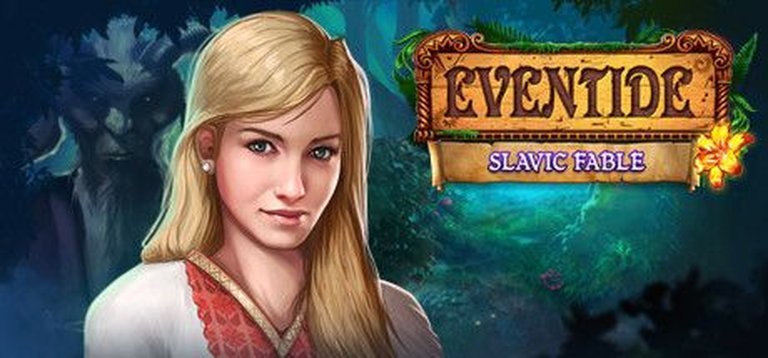
Eventide: Slavic Fable is a hidden object adventure game centered on botanist Mary, who visits her grandmother Baba at a Slavic mythology-themed park after receiving a distressed letter about the endangered mythical Fern Flower. Upon arrival, Mary is thrust into a mystical crisis when her grandmother is kidnapped by a legendary creature, unraveling the park’s true nature as a haven for Slavic folklore beings. Combining inventory puzzles, logic challenges, and collectible lore, players explore a contemporary fantasy world with fast-travel maps, optional puzzle skips, and hints to aid their quest.
Gameplay Videos
Eventide: Slavic Fable Cracks & Fixes
Eventide: Slavic Fable Guides & Walkthroughs
Eventide: Slavic Fable Reviews & Reception
metacritic.com (73/100): As far as hidden object puzzle adventures go, Eventide: Slavic Fable is a quality product.
opencritic.com (60/100): Eventide: Slavic Fable offers a solid story with pretty hand-drawn graphics and a decent variety of puzzles.
gameramble.com (80/100): The charming visuals and interesting locations will also appeal to veterans.
Eventide: Slavic Fable: Review
A Mythological Hidden Object Odyssey That Shines Brightly—Yet Stumbles Into Familiar Woods
Introduction
Hidden Object Games (HOGs) have long been dismissed as casual curiosities, yet titles like Eventide: Slavic Fable challenge this perception by weaving folklore, artistry, and earnest storytelling into their fabric. Released in 2015 by Polish studio House of Fables and published by Artifex Mundi—a titan of the genre—Eventide invites players into a lush, Slavic-mythology-inspired amusement park where botanical peril and familial urgency collide. While the game adheres to genre conventions, its commitment to Slavic lore and painterly beauty elevates it beyond mere formula. This review argues that Eventide is a visually sumptuous but mechanically safe entry that succeeds as an accessible gateway to HOGs, even as it struggles to innovate within a crowded field.
Development History & Context
The House of Fables’ Folklore Foray
Developed during a resurgence of interest in Eastern European mythology within gaming (The Witcher 3: Wild Hunt launched the same year), Eventide: Slavic Fable emerged from House of Fables’ ambition to celebrate Poland’s cultural heritage. Led by Creative Director Adam Robaszyński-Janiec and art lead Agata Droga-Bazan, the team prioritized hand-drawn environments and creature designs rooted in Slavic tales, departing from the Gothic or Victorian settings typical of HOGs.
Technological Constraints and Genre Conventions
Built with the proprietary Artifex Mundi engine—optimized for 2D point-and-click adventures—Eventide leveraged modest specs (512 MB RAM, 128 MB VRAM) to ensure accessibility. This technical pragmatism mirrored the genre’s target demographic: casual players seeking bite-sized, story-driven experiences. Yet, 2015’s gaming landscape was shifting toward narrative depth (Life is Strange) and open worlds, leaving HOGs perceived as relics. Eventide responded by doubling down on accessibility, offering skippable puzzles and a hint system—a design ethos that drew both praise and criticism.
Narrative & Thematic Deep Dive
A Botanical Rescue Mission
Players assume the role of Mary, a botanist summoned by her grandmother Baba (a curator of a Slavic mythology-themed park) to save the mythical Fern Flower from extinction. The plot escalates when Baba is kidnapped by Boruta, a devilish figure from Polish folklore scheming to harness the park’s magic for world domination. Mary allies with creatures like Leshy (a forest spirit) to thwart Boruta—a straightforward “rescue the mentor” arc.
Themes of Heritage and Guardianship
Eventide’s core themes revolve around preserving cultural and natural legacies. The park serves as a metaphor for endangered folklore, with Mary’s botanical expertise symbolizing stewardship. Boruta’s greed—a corruption of Slavic myth into destructive ambition—echoes real-world anxieties about commodifying tradition. However, the narrative falters in pacing and depth. Secondary characters like Lilacus, a squirrel-like imp, feel whimsical but incongruous with authentic lore, diluting the mythological rigor.
Dialogue and Voice Acting
While the script embraces folklore terminology (e.g., “Fern Flower,” “Baba”), dialogue leans toward exposition, rarely exploring character interiors. Voice acting is uneven: Bob Walter’s Boruta drips theatrical malice, but supporting roles veer into melodrama. Notably, Karen Hayman’s Mary delivers lines with stoic determination, though emotional beats—such as her desperation to save Baba—lack nuance.
Gameplay Mechanics & Systems
The HOG Framework: Accessibility Over Challenge
Eventide follows genre standards: players scour 38 hand-drawn scenes for inventory items, solve logic puzzles (e.g., tile-matching, pipe-connecting), and complete 43 hidden-object sequences. The latter alternates between traditional lists (“Find a comb, lantern, dagger”) and fragmented hunts (assembling a key from scattered pieces)—a clever but underused innovation.
Progression and Player Aid
A map enables fast travel, flagged with active objectives—a boon for casual players. Puzzles can be skipped, and hints point to next steps, reducing friction. Three difficulty modes tweak hint cooldowns and interactive feedback, though even “Expert” feels lenient. Collectibles—30 Sparkling Flowers and 30 Bestiary Cards—reward exploration but lack integration into core gameplay.
Weaknesses: Derivative Design
Critics noted recycled mechanics from Artifex Mundi’s prior titles (Enigmatis 2, Grim Legends), such as archery puzzles stripped of timing challenges. The linear structure and predictable solutions (“Use matches on candle”) cater to newcomers but bore veterans. Combat is absent, reducing stakes, while the 4–5 hour runtime (plus a 45-minute bonus chapter) leaves little room for narrative expansion.
World-Building, Art & Sound
A Mythopoeic Playground
Eventide’s triumph lies in its setting: a heritage park blending cobblestone paths, ethereal forests, and crumbling castles adorned with Slavic motifs. Each scene thrums with detail—fluttering leaves, luminescent flora, and creatures like the bird-like Raróg—crafted with warm, saturated hues that evoke storybook illustration.
Soundscape and Musical Identity
Composer Arkadiusz Reikowski (Observer, Blair Witch) suffuses the game with folk-inspired melodies, using balalaikas and choral chants to evoke otherworldliness. Ambient sounds—rustling grass, distant whispers—heighten immersion, though sparse voice acting and uneven line delivery undermine emotional moments.
Artistic Inconsistencies
While backgrounds are painterly masterpieces, cutscenes use stiff, limited animation. Characters’ lip-syncing is often misaligned, breaking immersion. This dissonance between static beauty and clumsy motion epitomizes the game’s struggle to marry ambition with budget constraints.
Reception & Legacy
Launch and Longevity
Upon release, Eventide earned “Very Positive” Steam reviews (93% of 569 ratings), praised for its art, accessibility, and folklore novelty. Critics were kinder to its Xbox One port (Metascore 73), with outlets like Brash Games applauding its “carefully crafted atmosphere” while lamenting its “too easy” puzzles (PS4Blog.net). The 2017 Collector’s Edition added wallpapers and a bonus chapter but faced critiques for retreading the main story.
Cultural Impact and Genre Influence
Eventide solidified Artifex Mundi’s reputation as HOG specialists. While not groundbreaking, its Slavic focus inspired successors like Blackenrock: A Slavic Folklore Card Tale and Thea: The Awakening. The game’s legacy lies in proving niche markets crave culturally specific narratives—a lesson embraced by indie studios exploring regional myths.
Modern Reappraisal
Today, Eventide remains a staple of bundle sales and genre retrospectives. Its Switch port (2023) introduced it to new audiences, though contemporary reviews note its dated design. For historians, it exemplifies mid-2010s HOG trends: lush aesthetics, streamlined mechanics, and a bridge between casual and narrative-driven gaming.
Conclusion
Eventide: Slavic Fable is a paradox: a game that dazzles with artistry yet retreats into formula. Its Slavic mythology lens offers freshness, and its hand-drawn worlds enchant, but repetitive puzzles and a thin narrative prevent timelessness. For genre newcomers, it remains a jewel—a gateway to folklore-rich adventures. For veterans, it’s a comfortable yet forgettable relic. In video game history, Eventide shines not as a revolution but as a testament to the power of cultural specificity in a genre often accused of homogeneity. Final Verdict: A beautiful, if fleeting, stroll through mythic woods—best suited for casual botanists of the digital realm.