
- Release Year: 2018
- Platforms: Macintosh, Windows
- Publisher: Itch Corp.
- Genre: Adventure
- Perspective: 3rd-person
- Game Mode: Single-player
- Gameplay: Graphic adventure, Point and select
- Average Score: 92/100
Description
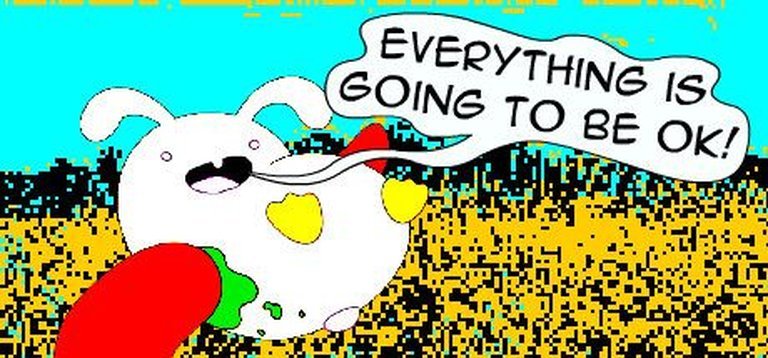
‘Everything is going to be OK’ is an experimental interactive art game and digital zine created by independent developer Nathalie Lawhead (alienmelon). Released in 2017, it explores themes of trauma, survival, and emotional resilience through non-linear vignettes, dark humor, and surreal mini-games presented via an operating system-style interface. Players navigate abstract animations, cryptic tools, and dialogue-driven interactions featuring cartoon characters enduring existential struggles, blending vulnerability with playful experimentation to subvert traditional narratives about victimhood.
Where to Buy Everything is going to be OK
PC
Everything is going to be OK Free Download
Everything is going to be OK Guides & Walkthroughs
Everything is going to be OK Reviews & Reception
steambase.io (92/100): Very Positive
Everything is going to be OK Cheats & Codes
PlayStation 4
Starting a new game and entering the following as the new game’s name will produce the listed effect.
| Code | Effect |
|---|---|
| Fool | Unlock everything in Everything |
Everything is Going to Be OK: Review
Introduction
In a digital landscape dominated by blockbuster franchises and algorithmic design, Nathalie Lawhead’s Everything is Going to Be OK (2017) emerges as a defiant cry of existential catharsis—a work less a “game” than a fragmented, interactive manifesto on trauma, survival, and the quiet rebellion of simply enduring. Described by its creator as an “interactive zine,” this surrealist desktop labyrinth challenges conventions of play, artistry, and emotional vulnerability. Its legacy lies not merely in its awards—including the Independent Games Festival’s Nuovo Award and a permanent place in MoMA’s collection—but in its unflinching refusal to sanitize the messiness of human pain. This review posits that Lawhead’s masterpiece transcends gaming to become a seminal work of digital humanities, redefining how interactive media can confront darkness through humor, chaos, and radical empathy.
Development History & Context
Studio & Vision
Developed solo under the pseudonym alienmelon, Everything is Going to Be OK was born from Lawhead’s year-long “non-stop, completely focused” labor following their earlier work, Tetrageddon Games (2016). Emerging from California’s indie net-art scene, Lawhead aimed to dismantle the “veil of shame” surrounding trauma survivors, framing the project as a “cathartic” collage of personal and abstract experiences. Rejecting the “game” label, they aligned it closer to riot grrrl zines and net-art provocations, sourcing distorted stock imagery and DIY shaders to create a “pixelated, glitch-y effect” evocative of a “fever dream.”
Technological & Cultural Landscape
Built with custom tools in Adobe AIR, the game deliberately mimics early Windows UIs—a nostalgic yet alienating aesthetic that subverts player expectations. Released in 2017, it arrived amid a wave of introspective indie titles (e.g., Night in the Woods, Hellblade) yet stood apart for its rejection of traditional mechanics. Its fragmented structure reflected Lawhead’s critique of mainstream gaming’s “consumer medium” limitations, where monetization and entertainment often overshadow artistic risk. At a time when streaming culture began flattening nuanced experiences into content, Everything is Going to Be OK dared to be inaccessible—a digital wounded healer.
Narrative & Thematic Deep Dive
Structure as Metaphor
The game abandons linear storytelling for vignettes accessed via a mock desktop interface: players click icons to open windows housing animations, text-based interludes, and grotesque mini-games. A recurring cartoon bunny endures existential absurdity—strung up by balloons, dissected by drones—while dialogue choices oscillate between bleak resignation (“I can’t win”) and gallows humor (“My kink is microwaves”). This chaos mirrors the dissonance of trauma, where coherence fractures into spirals of memory and coping mechanisms.
Themes of Survival & Performativity
Central to Lawhead’s thesis is the “circus performance of being all right” (PC Gamer). Characters—often victims of comic violence—parody societal demands to mask suffering. One segment forces players to assemble a smiling emoji from dismembered parts; another exports a faux suicide note to the user’s actual desktop. These moments critique the toxic positivity ingrained in capitalist culture, framing survival not as triumph but as a daily act of defiance. As Lawhead articulated, the work seeks to normalize “brokenness” and challenge power dynamics that silence victims—a manifesto clad in surrealism.
Dialogue & Subversion
Text oscillates between poetic introspection (“I am a museum of feelings”) and jarring non-sequiturs (“AAAAAAAAAA”—a direct lift from player comments). By integrating “outward rudeness” faced at expos into the narrative, Lawhead weaponizes harassment as thematic texture, blurring art and reality.
Gameplay Mechanics & Systems
Deconstructed Interactivity
The core loop rejects progression in favor of exploration: clicking through a corrupted OS reveals
– Mini-games: e.g., guiding a rabbit through a collapsing world via dialogue trees
– Tools: A “Friend.exe” companion spewing nihilistic affirmations
– Meta-disturbances: Forcing connections to the player’s Twitter account or littering their PC with exported files
Innovations & Flaws
The UI-as-commentary—cluttered windows, fake system crashes—brilliantly mirrors mental overwhelm but risks alienating players seeking clarity. Some interactions (e.g., Twitter integration) feel underdeveloped, yet their inclusion underscores Lawhead’s ethos: rejecting polish to prioritize raw expression. The lack of “fun” is not a flaw but a provocation.
World-Building, Art & Sound
Visual Dissonance
Lawhead’s collage style layers pixelated abstractions, cut-out stock photos, and hand-drawn horrors. The palette veers from neon assault to desaturated grays, evoking MySpace-era maximalism and Anna Oppermann’s installations. Characters resemble mutated webtoons, their exaggerated suffering contrasting with banal backdrops (offices, void spaces).
Sound & Atmosphere
While less documented, ambient tones oscillate between ASMR whispers and glitch noise. Silence dominates key moments, amplifying tension. This anti-soundtrack reflects the game’s ethos: discomfort as pedagogy.
Reception & Legacy
Critical Acclaim & Backlash
Hailed as “beautifully bizarre” (Mashable) and “potent” (Wired), it won IndieCade’s Innovation Award and A MAZE’s Digital Moment prize. However, Lawhead faced harassment at events like Day of the Devs, where attendees dismissed the work as “weird”—a reaction critiqued as symptomatic of streaming culture’s reductionism. This backlash spurred industry debates on exhibiting “difficult” games (Game Developer).
Enduring Influence
MoMA’s 2022-2023 exhibition solidified its place in art history, while indie devs cite its boundary-breaking as inspiration for titles like Hylics and Psychonauts 2’s metaphorical realms. Its greatest legacy, however, is validating games as vessels for vulnerability—a torchbearer for the “altgames” movement.
Conclusion
Everything is Going to Be OK is not merely a game but an act of resistance—a digital wunderkammer where trauma is dissected with unsettling candor and dark humor. Lawhead’s rejection of industry norms, from polished mechanics to capitalist optimism, redefines interactivity as a space for collective healing. Its flaws—uneven pacing, intentional abrasiveness—are inextricable from its genius. Five years later, it remains a lighthouse for creators daring to ask: What if a game’s purpose isn’t to entertain, but to witness? In the pantheon of video game history, it is less a title than a timestamp—proof that even in entropy, art persists. Final Verdict: A watershed moment in interactive expression, essential as both artifact and anthem.