
- Release Year: 1999
- Platforms: Windows
- Publisher: 1C Company, Chaos Works, Iridon Interactive AB, Piko Interactive LLC, Snowball.ru, TopWare CD-Service AG
- Developer: Chaos Works, Ganymede Technologies S.C., Iridon Interactive AB
- Genre: Driving, Racing
- Perspective: Diagonal-down
- Game Mode: Co-op, Single-player
- Gameplay: Direct control, Power-ups, Track racing, Weapons
- Setting: 2D scrolling, Top-down view
- Average Score: 79/100
Description
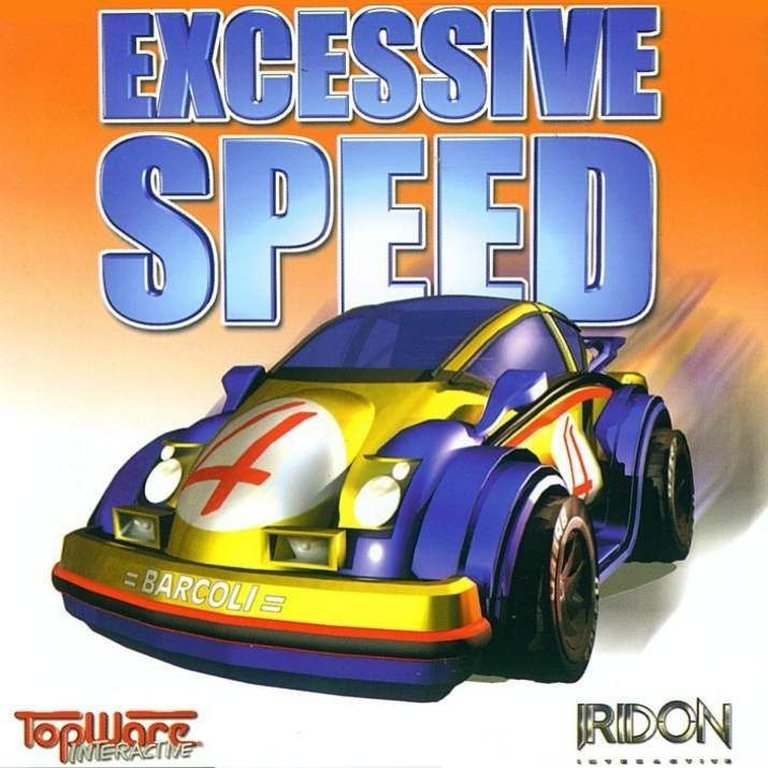
Excessive Speed is a 1999 top-down 2D racing game where players control one of seven distinctive bitmap-style cars across 14 compact tracks. The game emphasizes chaotic vehicular combat with 17 different power-ups and weapons to disrupt opponents, aiming for first place. Designed for local multiplayer mayhem, it supports up to four players on a single computer but lacks online functionality. Its blend of frenetic action, colorful visuals, and accessible mechanics evokes the spirit of arcade racers like Micro Machines, offering fast-paced competition in a lighthearted package.
Where to Buy Excessive Speed
Excessive Speed Free Download
Excessive Speed Cracks & Fixes
Excessive Speed Patches & Updates
Excessive Speed Reviews & Reception
gamepressure.com (60/100): A top-down racing game inspired by classic Micro Machines style titles.
mobygames.com (67/100): Excessive Speed is a top-down view 2d racing game featuring 17 different power-ups.
gog.com (92/100): Very fun racing game with power-ups.
Excessive Speed Cheats & Codes
PC
Enter these cheats at the main menu, and if you do it right you will hear a noise.
| Code | Effect |
|---|---|
| allcars | All Cars |
| alltracks | All Tracks |
| addmissile | Full Missile |
| addturbo | Full Turbo |
| addlife | Full Life |
| addshield | Full Shield |
| addearthquake | Little earthquake |
| addenergy | Full Energy |
| addmine | Full Pack |
| addghost | GhostCar |
PC
Enter this cheat during the game.
| Code | Effect |
|---|---|
| winrace | You Win |
| winflygame | You Fly |
Excessive Speed: Review
Introduction
In the golden age of arcade-style racing games, Excessive Speed emerged in 1999 as a spirited contender—a love letter to top-down chaos and couch multiplayer mayhem. Developed by the Polish studio Chaos Works in collaboration with Ganymede Technologies and Iridon Interactive, this bite-sized racer mixed whimsical vehicular combat with a feverish pace, evoking comparisons to Micro Machines while carving its own lane. Though overshadowed by flashier contemporaries and hampered by technical quirks, Excessive Speed built a cult following among players drawn to its unapologetic simplicity and weaponized antics. This review argues that the game, while imperfect, represents a time capsule of late-’90s indie ingenuity—a flawed but earnest experiment in blending speed, strategy, and split-screen rivalry.
Development History & Context
Excessive Speed was born during a transitional era for PC gaming. The late ’90s saw 3D acceleration and online multiplayer redefine expectations, yet Chaos Works leaned into a retro-friendly 2D aesthetic, repurposing the engine from their earlier title Fire Fight (1996). This reuse of technology imposed constraints: tracks were small, cars were minimalist bitmap sprites, and online play was absent. However, these limitations fueled creativity. The team focused on maximizing local multiplayer fun, a nostalgic choice in an increasingly internet-driven landscape.
The game’s development spanned Poland and Sweden, with publishers like TopWare Interactive and 1C Company handling distribution. Notably, many developers—including programmers Paweł Kunstman and Rafał Trznadel—had credits on niche titles like Akimbo: Kung-Fu Hero (2001), reflecting a studio ethos rooted in quirky, accessible gameplay. Released amid a glut of racing games (Speed Devils, Speed Punks), Excessive Speed stood out not through polish but sheer personality, targeting players who craved pick-up-and-play immediacy over realism.
Narrative & Thematic Deep Dive
Narrative ambition was never Excessive Speed’s focus. The game’s “story” is threadbare: players compete in the “Grand Bitmap Circuit,” unlocking tracks and vehicles across 14 lo-fi environments. Yet its thematic charm lies in its absurdist flavor. Cars resemble cartoonish hot rods and UFO hybrids, while tracks weave through lava-filled caves, alien-infested deserts, and underwater realms dotted with fish. Dialogue is minimal, but the game winks at its own silliness—one unlockable vehicle is literally named “Elvis.”
Underneath the chaos, however, lies a subtle critique of racing-game excess. The title itself—Excessive Speed—hints at satire, framing reckless driving and weaponized power-ups as the norm. This irreverence mirrors the late-’90s trend of games like Twisted Metal, where destruction trumped sportsmanship.
Gameplay Mechanics & Systems
At its core, Excessive Speed is a top-down racer with a combat twist. Players select one of seven vehicles, each with distinct stats (speed, acceleration, armor), and battle across 14 tracks littered with 17 power-ups, including:
– Offensive tools: Homing missiles, oil slicks, machine guns.
– Defensive aids: Shields, speed boosts, “earthquake” traps.
Three single-player modes add variety:
1. Track Hunter: Unlock tracks by earning stars in races, time trials, and “bomb runs” (survival challenges).
2. Grand Prix: Earn cash to buy new cars.
3. Championship: A gauntlet of all tracks with limited lives.
The four-player split-screen mode shines brightest, evoking Mario Kart-style bedlam. However, the lack of online play or LAN support—a glaring omission even in 1999—limited its longevity.
Flaws:
– Repetitive tracks: Despite thematic variety, layouts feel undersized and repetitive.
– Floaty controls: Cars lack weight, leading to frustrating collisions.
– Unbalanced power-ups: Some weapons (e.g., freezing rays) feel overpowered.
World-Building, Art & Sound
Excessive Speed’s visual identity is a paradox: crude yet endearing. The 2D sprites and isometric tracks scoff at 3D trends, instead embracing a retro arcade vibe. Each environment bursts with personality—jungle courses teem with animated foliage, while space stages feature UFOs buzzing overhead. The artists (notably Michał Doniec and Rafał Trznadel) packed details into every pixel, even if textures appear jagged by modern standards.
Sound design amplifies the frenetic energy. Engine roars and explosion effects are crisp, while the synth-heavy soundtrack channels Wipeout-style techno. However, the lack of voice acting and limited track-specific music undercuts immersion.
Reception & Legacy
Upon release, Excessive Speed earned a 66% average critical score (MobyGames), praised for its chaotic fun but criticized for technical shortcomings:
– Positive reviews (e.g., Game Over Online’s 90%) lauded its “Micro Machines but with rockets” appeal.
– Negative takes (Attack Games’ 40%) derided its “ugly” graphics and shallow progression.
Player reviews were warmer (6.7/10), with fans cherishing its local multiplayer as a party-game staple. Yet its commercial impact was muted, overshadowed by competitors like Re-Volt.
Legacy:
– Cult nostalgia: Rediscovered by retro enthusiasts for its “so bad it’s good” charm.
– Indie influence: Modern titles like Bleeding edge and Horizon Chase Turbo echo its focus on accessibility over realism.
– Preservation: Now available on GOG and Steam, albeit with lingering compatibility issues.
Conclusion
Excessive Speed is neither a masterpiece nor a failure—it’s a time capsule. Its janky controls and repetitive design clash with modern sensibilities, yet its heart remains undeniable. For those seeking a window into late-’90s indie experimentation or a weekend of couch-based vehicular chaos, it’s a flawed gem worth revisiting. In the pantheon of racing games, Excessive Speed occupies a quirky middle lane: unpolished, unloved by critics, but unforgettable to those who embraced its excessive spirit.