
- Release Year: 2024
- Platforms: Android, Linux, Macintosh, Nintendo Switch, Windows
- Publisher: Ducky Dev Games
- Developer: Ducky Dev Games
- Genre: Adventure
- Perspective: 1st-person
- Game Mode: Single-player
- Gameplay: Puzzle elements
- Setting: Fantasy
- Average Score: 95/100
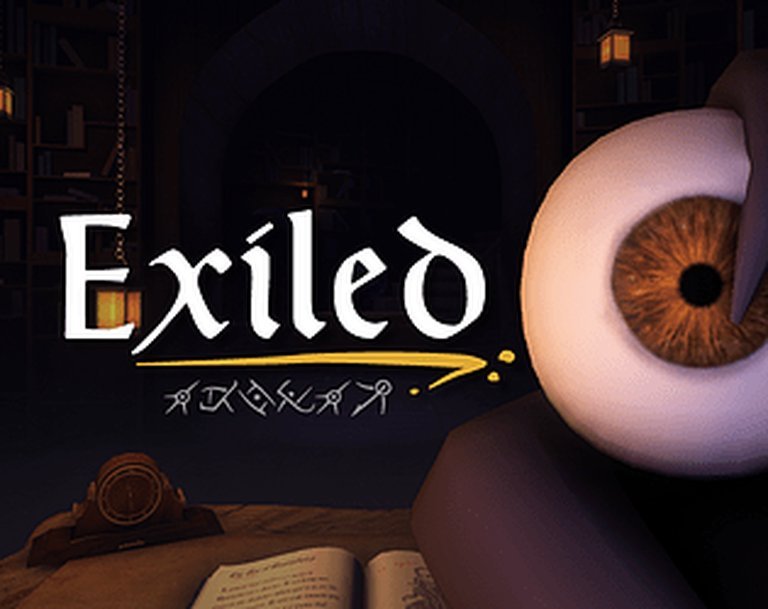
Description
Exiled is a dark exploration game with elements of horror, where players take on the role of an exiled refugee embarking on a perilous 2000-meter pilgrimage to a new home. Along the way, they must scavenge for resources, fend off monsters, and manage their fuel supply while navigating a treacherous, open-world environment. The game supports solo or cooperative play for up to six players, blending survival mechanics with combat and resource management in a Lovecraftian-inspired setting.
Where to Buy Exiled
PC
Exiled Guides & Walkthroughs
Exiled Reviews & Reception
store.steampowered.com (90/100): A triumphant return to form for the series.
mobygames.com (100/100): A compact, detailed puzzle thriller similar to The Room and Myst.
Exiled: A Compact Masterpiece of Cosmic Horror and Puzzle Design
Introduction
In the vast, often bloated landscape of modern gaming, Exiled (2024) stands as a rare gem—a tightly crafted, 45-minute experience that delivers more tension, atmosphere, and intellectual engagement than many games ten times its length. Developed by John Szymanski, the creative mind behind My Friendly Neighborhood, Exiled is a first-person puzzle thriller that channels the eerie, cerebral vibes of The Room and Myst, while infusing them with Lovecraftian dread and a narrative urgency that keeps players on the edge of their seats. This review will dissect Exiled in exhaustive detail, exploring its development, narrative depth, gameplay mechanics, and lasting impact on the puzzle-adventure genre.
Development History & Context
The Studio and Creator’s Vision
Exiled is the brainchild of John Szymanski, a developer known for his ability to blend horror, humor, and intricate gameplay mechanics. His previous work, My Friendly Neighborhood, showcased his talent for creating unsettling yet engaging experiences, and Exiled continues this tradition with a sharper focus on puzzle-solving and atmospheric storytelling. The game was initially released as part of the Dread X Collection 2, a horror anthology that allowed Szymanski to experiment with compact, high-impact narratives. The standalone release in January 2024 refined and expanded upon this foundation, offering a more polished and immersive experience.
The game’s development was driven by a desire to create a “compact, detailed puzzle thriller” that could be completed in a single sitting. Szymanski drew inspiration from classic puzzle games like The Room and Myst, but sought to differentiate Exiled with its tense atmosphere and Lovecraftian themes. The result is a game that feels both nostalgic and fresh, appealing to fans of classic adventure games while offering modern sensibilities in its design and storytelling.
Technological Constraints and Design Choices
Exiled was built using the Unity engine, a choice that allowed for efficient development and cross-platform compatibility. The game’s minimalist approach—set entirely within a single desk in a foreboding library—was not just a creative decision but also a practical one. By limiting the player’s movement to a confined space, Szymanski could focus on deepening the interactivity and complexity of the puzzles without the need for expansive level design.
The game’s short runtime (approximately 45 minutes) was another deliberate choice. In an era where many games prioritize length over depth, Exiled proves that a tightly scripted, focused experience can be just as memorable, if not more so, than a sprawling open-world epic. This brevity also aligns with the game’s themes of urgency and impending doom, as players race against time to decode an ancient language and uncover the fate of the missing Charlotte.
The Gaming Landscape at Release
Exiled arrived at a time when the puzzle-adventure genre was experiencing a resurgence, thanks in part to the success of games like The Room series and Return of the Obra Dinn. However, it also entered a market saturated with horror games, many of which relied on jump scares and gore rather than psychological tension and intellectual engagement. Exiled carved out its niche by blending these elements—offering a horror experience that is as cerebral as it is unsettling.
The game’s release on multiple platforms, including Windows, Nintendo Switch, and mobile devices, ensured that it reached a broad audience. Its affordability ($4.99) and short runtime made it an easy sell for players looking for a quick but memorable gaming experience.
Narrative & Thematic Deep Dive
Plot Summary
Exiled begins with a simple yet chilling premise: Charlotte, the protagonist’s wife, has vanished. The only clues to her disappearance are a cryptic note mentioning “the ancient evil” and “banishment to a different realm,” along with an eldritch tome and an untranslated scrap of paper. The player assumes the role of an unnamed scholar (or perhaps Charlotte’s husband) tasked with deciphering the tome’s secrets to uncover her fate.
The narrative unfolds entirely within the confines of a desk in the Great Library, a setting that evokes the isolated, claustrophobic atmosphere of Lovecraft’s The Statement of Randolph Carter. As the player translates the ancient language and solves the puzzles embedded within the tome, they gradually piece together the story of Charlotte’s disappearance and the sinister forces at play. The game’s multiple endings add replayability, encouraging players to revisit the experience to uncover all possible outcomes.
Characters and Dialogue
While Exiled is a solitary experience, its characters are vividly realized through environmental storytelling and voice acting. The protagonist’s wife, Charlotte, is never seen but is deeply felt through her notes and the artifacts she left behind. Her absence drives the narrative forward, creating a sense of urgency and emotional stakes.
The game’s voiceover, performed by Tom Schalk, adds a layer of immersion, guiding the player through the puzzles while maintaining the eerie, foreboding tone. The dialogue is sparse but effective, with each line serving to deepen the mystery or heighten the tension.
Themes: Cosmic Horror and the Unknown
Exiled is steeped in Lovecraftian themes, exploring the terror of the unknown and the insignificance of humanity in the face of ancient, incomprehensible forces. The eldritch tome at the center of the narrative is a classic Lovecraftian artifact—a relic of a forgotten civilization that holds secrets too dangerous for mortal minds to comprehend.
The game also delves into themes of isolation and obsession. The protagonist’s single-minded focus on deciphering the tome mirrors the obsessive behavior of many Lovecraftian protagonists, who often drive themselves to madness in their pursuit of forbidden knowledge. The confined setting of the library amplifies this sense of isolation, creating a pressure-cooker environment where the player’s every action feels charged with tension.
Symbolism and Subtext
The tome itself is a powerful symbol, representing both the allure and the danger of forbidden knowledge. Its pages are filled with cryptic symbols and arcane language, reflecting the incomprehensibility of the cosmic horrors it describes. The act of translating the tome is not just a gameplay mechanic but a metaphor for the protagonist’s descent into the unknown—a journey that may ultimately lead to their undoing.
The game’s multiple endings further explore these themes, offering different interpretations of the protagonist’s fate. Some endings suggest a triumphant resolution, while others hint at a more sinister outcome, where the protagonist becomes another victim of the ancient evil they sought to understand.
Gameplay Mechanics & Systems
Core Gameplay Loop
Exiled’s gameplay revolves around solving a series of interconnected puzzles to translate the eldritch tome and uncover the truth behind Charlotte’s disappearance. The game’s confined setting—limited to a single desk—belies its depth, as the desk itself is a treasure trove of interactive objects and hidden clues.
The core gameplay loop involves:
1. Examining Objects: Players must meticulously inspect every item on the desk, from books and notes to strange artifacts, to gather clues.
2. Decoding the Language: The tome’s language is entirely fictional, requiring players to cross-reference symbols and patterns to translate its contents.
3. Solving Puzzles: The puzzles range from simple cipher-breaking to more complex spatial reasoning challenges, all of which are seamlessly integrated into the narrative.
4. Avoiding the Lurking Horror: While the game is primarily a puzzle experience, it also features moments of tension where the player must evade an unseen horror, adding a layer of survival horror to the mix.
Combat and Character Progression
Exiled is not a combat-heavy game, but it does feature elements of survival horror that keep players on edge. The “lurking horror” is an ever-present threat, manifesting in sudden, jarring moments that disrupt the otherwise quiet atmosphere of the library. These moments are not scripted jump scares but rather dynamic events that can occur at any time, depending on the player’s progress and actions.
Character progression is tied to the player’s ability to decode the tome and solve puzzles. As they uncover more of the language, they gain access to new sections of the tome, which in turn reveal more of the story and unlock additional puzzles. This progression is nonlinear in the sense that players can choose which sections of the tome to focus on first, but the overall narrative unfolds in a structured manner.
UI and Interaction Design
The game’s UI is minimalist and intuitive, designed to immerse the player in the experience without overwhelming them with information. The desk serves as the primary interface, with each object clearly labeled and interactive. Players can pick up, rotate, and examine items with ease, and the game’s controls are responsive and precise.
One of the standout features of Exiled’s design is its high level of interactivity. Nearly every object on the desk can be manipulated in some way, whether it’s flipping through the pages of a book, rotating a strange artifact, or deciphering a cryptic note. This interactivity extends to the environment as well, with the library itself reacting to the player’s actions in subtle but meaningful ways.
Innovative and Flawed Systems
Exiled’s most innovative feature is its language-decoding mechanic. Unlike many puzzle games that rely on familiar cipher systems (e.g., Caesar shifts, substitution ciphers), Exiled introduces a completely fictional language that players must learn from scratch. This mechanic is both challenging and rewarding, as it requires players to think critically and make connections between symbols, patterns, and context clues.
However, the game’s brevity and linear structure may be a double-edged sword. While the short runtime ensures a tight, focused experience, it also limits the game’s replayability for some players. The multiple endings mitigate this to some extent, but those seeking a longer, more expansive adventure may find Exiled lacking in depth.
World-Building, Art & Sound
Setting and Atmosphere
Exiled’s setting is deceptively simple: a single desk in the Great Library. Yet within this confined space, the game creates a rich, immersive world that feels vast and ancient. The library is filled with towering bookshelves, flickering candles, and eerie shadows, all of which contribute to the game’s oppressive atmosphere. The sense of isolation is palpable, as the player is left alone with their thoughts and the ever-present threat of the lurking horror.
The game’s art direction is a masterclass in minimalism. The library is rendered in a stylized, almost painterly fashion, with muted colors and soft lighting that evoke a sense of timelessness. The eldritch tome, with its intricate symbols and arcane illustrations, is a visual centerpiece, drawing the player’s eye and inviting them to delve deeper into its mysteries.
Sound Design and Music
The sound design in Exiled is subtle but effective, using ambient noise and sudden silences to create tension. The flickering of candle flames, the creaking of old wood, and the distant echoes of unseen horrors all contribute to the game’s unsettling atmosphere. The voiceover work by Tom Schalk is particularly noteworthy, delivering a performance that is both calming and ominous, guiding the player through the puzzles while hinting at the horrors that lie beneath.
The game’s soundtrack is sparse but impactful, with a focus on ambient drones and dissonant chords that heighten the sense of dread. The music swells during key moments, such as when the lurking horror makes its presence known, but otherwise remains in the background, allowing the player to focus on the puzzles and the narrative.
Contribution to the Overall Experience
The combination of art, sound, and setting in Exiled creates a cohesive and immersive experience that draws players into its world. The game’s minimalist approach ensures that every detail serves a purpose, whether it’s a cryptic symbol on the tome or a flickering shadow in the corner of the screen. This attention to detail makes the world of Exiled feel alive and dynamic, even within the confines of a single desk.
Reception & Legacy
Critical and Commercial Reception
Exiled was met with overwhelmingly positive reviews upon its release, with critics praising its tight gameplay, immersive atmosphere, and innovative puzzle design. The game holds a 100% critic score on MobyGames (based on one review) and a “Very Positive” rating on Steam, with 90% of user reviews recommending the game.
Critics highlighted the game’s ability to deliver a compelling narrative and challenging puzzles within a short runtime. The Elite Institute review, in particular, praised the game’s tension and Lovecraftian themes, calling it “an extraordinary amount of tension in its half-hour runtime” and noting that it is “well worth the €5 asking price.”
Commercially, Exiled performed well, thanks in part to its affordable price point and cross-platform availability. While it may not have achieved blockbuster status, it found a dedicated audience among fans of puzzle games and cosmic horror.
Evolution of Reputation
Since its release, Exiled has maintained a strong reputation as a hidden gem in the puzzle-adventure genre. Its inclusion in the Dread X Collection 2 helped it gain initial traction, but the standalone release solidified its status as a must-play experience for fans of the genre.
The game’s legacy is further bolstered by its influence on subsequent titles. Szymanski’s work on Exiled has inspired other developers to explore similar themes and mechanics, particularly in the realm of compact, narrative-driven puzzle games. The game’s success also demonstrates the viability of short-form gaming experiences, proving that a game does not need to be lengthy to be memorable.
Influence on the Industry
Exiled’s impact on the industry is twofold. First, it has contributed to the resurgence of puzzle-adventure games, showing that there is still a strong appetite for cerebral, story-driven experiences. Second, it has challenged the notion that games must be long to be valuable, paving the way for more developers to experiment with short-form storytelling.
The game’s use of a fictional language as a core gameplay mechanic has also inspired other developers to explore similar systems, leading to a wave of games that prioritize linguistic and cryptographic puzzles. This trend is particularly evident in the indie scene, where developers are increasingly looking for innovative ways to engage players beyond traditional combat and exploration.
Conclusion
Exiled is a masterclass in compact game design, delivering a tense, immersive, and intellectually engaging experience within a 45-minute runtime. Its blend of Lovecraftian horror, intricate puzzles, and atmospheric storytelling sets it apart from other games in the genre, making it a standout title in John Szymanski’s oeuvre.
While its brevity may deter some players, Exiled’s tight focus and high replayability (thanks to its multiple endings) ensure that it remains a memorable experience long after the credits roll. The game’s influence on the puzzle-adventure genre is already evident, and its legacy as a hidden gem is secure.
For fans of cosmic horror, cerebral puzzles, and tightly crafted narratives, Exiled is an essential play. It proves that sometimes, less is more—and in the case of Exiled, that “less” is an unforgettable journey into the heart of the unknown.
Final Verdict: 9/10 – A compact masterpiece that punches far above its weight.