
- Release Year: 2018
- Platforms: Windows
- Publisher: Ammobox Studios, TheGamewall Studios
- Developer: Ammobox Studios
- Genre: Action, Strategy, Tactics
- Perspective: 1st-person
- Game Mode: Online PVP
- Gameplay: Direct control, Point and select, Real-time
- Setting: Futuristic, Sci-fi
- Average Score: 68/100
Description
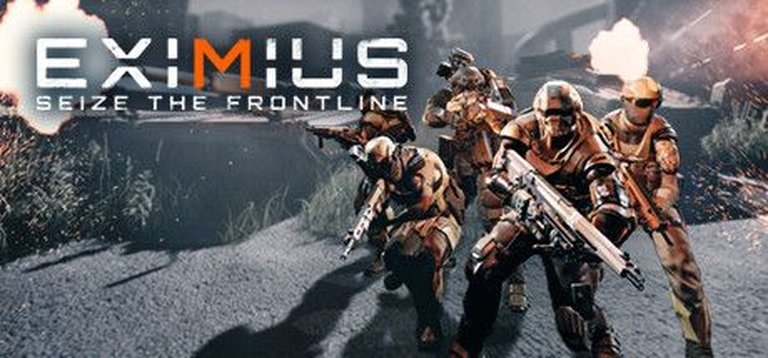
Eximius: Seize the Frontline is a unique hybrid game blending first-person shooter (FPS) action with real-time strategy (RTS) mechanics, set in a post-apocalyptic sci-fi world. Players engage in intense 5v5 squad-based battles, where tactical decision-making and direct combat intertwine, offering a dynamic and strategic multiplayer experience.
Gameplay Videos
Where to Buy Eximius: Seize the Frontline
PC
Eximius: Seize the Frontline Free Download
Eximius: Seize the Frontline Cracks & Fixes
Eximius: Seize the Frontline Guides & Walkthroughs
Eximius: Seize the Frontline Reviews & Reception
metacritic.com (60/100): For an unconventional mashup of genres, Eximus is a pretty solid game.
steambase.io (74/100): Eximius: Seize the Frontline has earned a Player Score of 74 / 100.
primagames.com : The concept of a hybrid-genre game is interesting.
3rd-strike.com (70/100): Fun hybrid combining FPS and RTS gameplay, Even more fun with friends.
mkaugaming.com : Eximius: Seize the Frontline is a unique cross between first-person shooters and strategy-like tactical games.
Eximius: Seize the Frontline: A Bold Hybrid Experiment in a Niche Genre
Introduction: The Ambitious Fusion of FPS and RTS
Eximius: Seize the Frontline is a rare and audacious experiment in video game design—a real-time fusion of first-person shooter (FPS) and real-time strategy (RTS) mechanics. Developed by Malaysian indie studio Ammobox Studios, the game emerged from a crowded Early Access period in 2018 before its full release in 2021. It stands as a testament to the studio’s ambition, blending two historically distinct genres into a cohesive, if flawed, multiplayer experience. While its reception has been mixed, Eximius carves out a unique niche, offering a fresh take on team-based combat that demands both tactical foresight and reflexive skill.
This review will dissect Eximius in exhaustive detail, examining its development history, narrative context, gameplay systems, artistic direction, and legacy. We will explore how it succeeds in merging genres, where it stumbles, and what its existence means for the future of hybrid gameplay experiences.
Development History & Context: A Malaysian Studio’s Vision
The Studio Behind the Game
Ammobox Studios, based in Malaysia, is a small but determined indie developer. The studio’s journey with Eximius began in 2015, with the game entering Steam Early Access in September 2018. The development process was fraught with challenges, including publisher disputes that nearly derailed the project. At one point, Ammobox was forced to issue a DMCA takedown of their own game on Steam due to financial mismanagement by their then-publisher, TheGamewall Studios. This tumultuous period delayed the game’s full release, which finally arrived on March 16, 2021.
The studio’s vision was clear from the outset: to create a game that seamlessly blended the immediacy of FPS combat with the macro-level decision-making of RTS games. This was not a new concept—titles like Natural Selection 2 (2012) and Savage: The Battle for Newerth (2003) had explored similar hybrid designs—but Eximius aimed to refine and modernize the formula.
Technological Foundations
Built on Unreal Engine 4, Eximius leverages the engine’s robust capabilities to render detailed urban environments and futuristic weaponry. The game’s technical backbone supports its dual-perspective gameplay, allowing players to switch between first-person and top-down RTS views fluidly. However, the engine’s power also highlights some of the game’s performance issues, particularly in optimization. Players with mid-range hardware have reported stuttering and frame drops, even on lower settings, suggesting that the game’s technical implementation could have been more polished.
The Gaming Landscape at Launch
Eximius entered a market dominated by established FPS franchises like Call of Duty and Battlefield, as well as RTS giants like StarCraft II and Company of Heroes. The hybrid genre it occupies is a niche within a niche, appealing primarily to players who enjoy both strategic depth and fast-paced action. This dual appeal is both the game’s greatest strength and its most significant hurdle. While it offers something unique, it also struggles to attract a large, dedicated player base, a challenge exacerbated by its mixed critical reception.
Narrative & Thematic Deep Dive: A Post-Apocalyptic Power Struggle
The World of Eximius
The game is set in a post-apocalyptic future where humanity is divided into two factions: the Global Security Force (GSF) and the Axeron Corporation (AXR). The backstory, while minimal, paints a picture of a world ravaged by war and pandemic, where governments have failed, and private military forces have risen to fill the void.
-
Global Security Force (GSF): A traditional military faction, the GSF represents order and reconstruction. They are the “good guys” in the classic sense, with a focus on conventional warfare and large-scale military operations. Their aesthetic is grounded in realism, with standard-issue rifles, armored vehicles, and a utilitarian design philosophy.
-
Axeron Corporation (AXR): In contrast, AXR is a private research organization turned security contractor. They embody the cold, calculating efficiency of corporate militarism, deploying advanced drones, cybernetic enhancements, and futuristic weaponry. Their design language is sleek and high-tech, reminiscent of Destiny’s futuristic armor sets.
The conflict between these factions is framed as a struggle for dominance in a fractured world. However, the narrative is largely incidental to the gameplay. Eximius is not a story-driven experience; instead, it uses its lore as a backdrop for its competitive multiplayer battles. This lack of narrative depth is not necessarily a flaw—many competitive multiplayer games thrive without intricate plots—but it does mean that Eximius relies entirely on its gameplay to carry the experience.
Themes: Teamwork, Adaptation, and Asymmetry
At its core, Eximius explores themes of teamwork, adaptation, and asymmetrical warfare. The game’s hybrid design forces players to think both tactically and strategically, blending the micro-management of an FPS with the macro-management of an RTS.
-
Teamwork: Success in Eximius hinges on coordination between the Commander and Officers. The Commander must listen to the Officers’ needs, while the Officers must execute the Commander’s directives. This interdependence creates a dynamic where communication is key.
-
Adaptation: The game’s tech tree and unit customization allow teams to adapt their strategies on the fly. If the enemy deploys heavy armor, the Commander can research anti-tank weapons or call in air support. This adaptability is one of Eximius’s strongest suits, rewarding players who can read the battlefield and respond accordingly.
-
Asymmetry: The two factions, while balanced in theory, offer distinct playstyles. GSF’s conventional military approach contrasts with AXR’s high-tech, drone-heavy tactics. This asymmetry adds variety to matches, though some players have noted balance issues, particularly in the early game where AXR’s drones can feel overpowered.
Gameplay Mechanics & Systems: The Hybrid Experience
Core Gameplay Loop
Eximius is a 5v5 multiplayer game where each team consists of four Officers (FPS players) and one Commander (RTS player). The objective is to control victory points scattered across the map or destroy the enemy’s headquarters. Matches are fast-paced, with an emphasis on territorial control and resource management.
The Officer Role (FPS)
As an Officer, players engage in first-person combat, capturing objectives, gathering resources, and fighting enemy forces. The FPS mechanics are serviceable but not groundbreaking. Gunplay lacks the weight and precision of modern shooters like Call of Duty or Rainbow Six Siege. Weapons feel generic, with little differentiation between them. The absence of aim-down-sights animations and the instant transition between hip-fire and aimed shots contribute to a dated feel.
However, the Officer role is not just about shooting. Players can:
– Command AI Squads: Officers can be assigned AI-controlled soldiers by the Commander. These squads follow the Officer’s lead, taking cover and engaging enemies autonomously.
– Upgrade Equipment: Resources collected on the battlefield can be spent on weapons, armor, and battlesuits. Battlesuits are the game’s equivalent of hero abilities, granting powerful buffs and unique skills.
– Capture Resources: Controlling resource points accelerates the team’s income, allowing the Commander to build more units and structures.
The Commander Role (RTS)
The Commander’s role is where Eximius shines. From a top-down perspective, the Commander:
– Builds Structures: Constructing barracks, factories, and defensive turrets to support the team.
– Trains Units: Deploying infantry, vehicles, and drones to reinforce Officers or launch attacks.
– Researches Upgrades: Unlocking advanced technologies like artillery strikes, EMP blasts, and elite soldiers.
– Manages Resources: Balancing income from controlled points to fund the war effort.
The Commander’s ability to switch between RTS and FPS modes is seamless. With the press of a button (default: Q), the Commander can drop into first-person view to join the fray or retreat to safety to issue orders. This duality is the game’s defining feature, allowing the Commander to be both a strategist and a frontline warrior.
Combat and Progression
Combat in Eximius is a mix of traditional FPS gunplay and RTS unit management. Officers and their AI squads engage in firefights, while the Commander orchestrates larger-scale maneuvers. The game’s unit variety is impressive, with:
– Infantry: Basic soldiers, medics, and engineers.
– Vehicles: Tanks, gunships, and armored transports.
– Drones: AXR’s signature units, capable of scouting and harassing enemies.
– Battlesuits: Powerful exo-suits that grant Officers enhanced abilities, such as cloaking, shielding, or area-of-effect attacks.
Progression is tied to the team’s collective effort. As resources are gathered, the Commander can unlock higher-tier units and abilities, turning the tide of battle. This shared progression system encourages cooperation, as Officers must secure resources for the Commander to spend.
UI and Controls
The game’s UI is functional but unremarkable. The RTS interface is clean, with clear unit icons and build menus, while the FPS HUD is standard fare, displaying health, ammo, and objectives. The controls are intuitive, though the transition between FPS and RTS modes can be jarring for new players.
One notable flaw is the lack of a comprehensive tutorial for the Commander role. While Officers receive a basic training mission, Commanders are left to learn through trial and error or by watching video guides. This oversight can make the role daunting for newcomers.
Innovations and Flaws
Eximius’s greatest innovation is its seamless integration of FPS and RTS mechanics. Few games have attempted this hybrid approach, and even fewer have executed it as well as Eximius. The ability to switch between perspectives on the fly is a technical and design achievement that sets the game apart.
However, the game is not without its flaws:
– Performance Issues: As noted earlier, optimization is a persistent problem. Frame drops and stuttering can disrupt the flow of combat.
– Balancing Concerns: Some players have criticized the balance between factions, particularly in the early game where AXR’s drones can dominate.
– AI Behavior: The AI-controlled units, while functional, can be unpredictable. They sometimes fail to take cover or respond to threats, leading to frustrating moments.
– Player Base: The game’s niche appeal has resulted in a small player base, making it difficult to find matches outside of peak hours.
World-Building, Art & Sound: Crafting a Post-Apocalyptic Battleground
Setting and Atmosphere
Eximius’s world is a grim, post-apocalyptic urban landscape. The maps are designed to reflect the devastation of war, with crumbling buildings, debris-strewn streets, and makeshift fortifications. The art direction leans heavily into a desaturated, industrial aesthetic, with a palette dominated by grays, blacks, and muted blues. This visual style reinforces the game’s themes of decay and conflict, though it can also make the environments feel monotonous.
The two factions’ designs further enhance the world-building:
– GSF: Their equipment is rugged and practical, with a military-green color scheme and conventional weaponry. Their structures are utilitarian, reflecting their role as a peacekeeping force.
– AXR: Their gear is sleek and futuristic, with glowing blue accents and advanced technology. Their drones and cybernetic units emphasize their corporate, high-tech identity.
Visual Design
The game’s character and weapon models are detailed, though not groundbreaking. The battlesuits, in particular, are a highlight, with intricate designs that evoke Destiny’s armored heroes. The animations, however, are a weak point. Unit movements can feel stiff and robotic, particularly for AI-controlled soldiers, which detracts from the immersion.
The maps, while well-designed for tactical play, lack visual variety. Most are set in urban environments, and the repetitive architecture can make them blend together. A greater diversity of settings—such as rural outposts or industrial complexes—could have added more flavor to the gameplay.
Sound Design
The audio design in Eximius is functional but unmemorable. Weapon sounds lack punch, and the ambient noise of battle can feel generic. The voice acting for unit commands is serviceable, though the lack of in-game chatter between Officers and the Commander is a missed opportunity for immersion.
The soundtrack, composed of tense, electronic tracks, fits the game’s futuristic military theme. However, it is sparse, with most of the audio landscape dominated by gunfire and explosions. A more dynamic score could have elevated the game’s atmosphere.
Reception & Legacy: A Niche Game in a Crowded Market
Critical Reception
Eximius: Seize the Frontline received mixed reviews upon release. Critics praised its ambitious hybrid design but noted its technical shortcomings and lack of polish.
- Metacritic: The game holds a Metascore of 53, indicating “mixed or average” reviews. Critics highlighted the game’s innovative mechanics but criticized its performance issues and underwhelming FPS gameplay.
- Steam Reviews: Player reception has been more positive, with a 74% “Mostly Positive” rating based on over 700 reviews. Many players appreciate the game’s unique blend of genres and its strategic depth, though complaints about optimization and balance persist.
Commercial Performance
As a niche title, Eximius has not achieved mainstream success. Its player base remains small, with peak concurrent players on Steam rarely exceeding a few hundred. This limited audience has made it difficult for the game to sustain a vibrant competitive scene, though the developers have hosted tournaments to keep the community engaged.
Influence and Future Prospects
Eximius’s legacy lies in its proof of concept. It demonstrates that a well-executed FPS/RTS hybrid can work, even if it doesn’t achieve mass-market appeal. The game’s design could serve as a blueprint for future titles in the genre, particularly if a larger studio were to refine and expand upon its mechanics.
The game’s post-launch support has been commendable. Ammobox Studios has continued to release updates, including new units, maps, and balance patches. The studio’s commitment to improving the game suggests that Eximius may yet evolve into a more polished experience.
Conclusion: A Flawed but Fascinating Hybrid
Eximius: Seize the Frontline is a game of bold ambition and notable execution. It successfully merges two disparate genres into a cohesive, if imperfect, whole. Its greatest strength is its hybrid gameplay, which offers a fresh and engaging experience for players willing to invest in its steep learning curve. The Commander role, in particular, is a standout feature, providing a level of strategic depth rarely seen in FPS games.
However, the game is held back by technical issues, underwhelming FPS mechanics, and a small player base. Its performance problems and lack of polish make it difficult to recommend unreservedly, particularly to players accustomed to the refinement of AAA shooters.
Final Verdict: 7/10 – A Niche Gem with Room to Grow
Eximius is not a game for everyone, but for those who enjoy strategic depth and team-based gameplay, it offers a unique and rewarding experience. Its flaws are significant, but its innovations are even more so. With continued support and refinement, Eximius could yet become a classic of the hybrid genre. For now, it stands as a fascinating experiment—a testament to the creativity of indie developers and the untapped potential of genre-blending design.
Recommendation: If you’re a fan of RTS games and enjoy FPS combat, Eximius is worth a look, especially if you can gather a group of friends to play with. However, if you’re seeking a polished, mainstream shooter, you may find its rough edges and small community frustrating. For the adventurous gamer, Eximius is a hidden gem waiting to be discovered.