
- Release Year: 2016
- Platforms: Windows
- Publisher: SIXNAILS
- Developer: SIXNAILS
- Genre: Action, Puzzle
- Perspective: Diagonal-down
- Game Mode: Single-player
- Average Score: 87/100
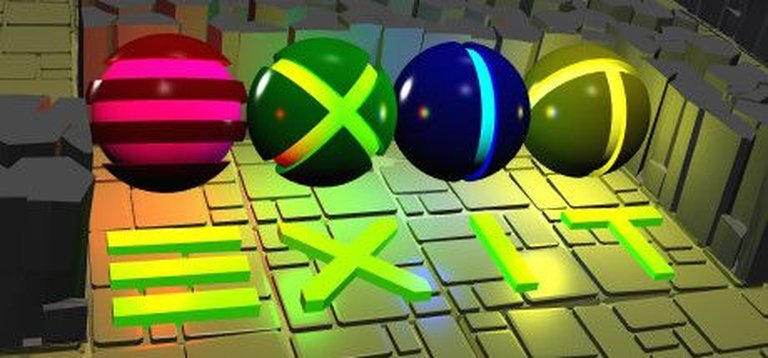
Description
In ‘Exit’, players take on the role of Mr. ESC, a professional escapologist, who must navigate disaster-stricken environments like collapsing buildings, flooded facilities, and burning hospitals within strict time limits. The game challenges players to rescue diverse trapped individuals—including agile youth, vulnerable children, sturdy adults, and injured patients—each requiring unique strategies to overcome obstacles like fires, earthquakes, and structural hazards. Combining puzzle-solving with action elements, success hinges on careful planning, character coordination, and efficient use of tools to guide everyone to safety.
Where to Buy Exit
PC
Exit Free Download
Exit Patches & Updates
Exit Reviews & Reception
store.steampowered.com (87/100): Exit is a good way to give your marbles a bit of a work out! Fun and addictive puzzle game!
meeplelikeus.co.uk : TL;DR: It’s excellent! You should make every possible effort to try it!
Exit (2016): A Labyrinth of Logic in the Indie Puzzle Pantheon
Introduction
In an era dominated by bombastic AAA titles and live-service juggernauts, Exit (2016) by SIXNAILS stands as a testament to the enduring allure of cerebral purity. This minimalist puzzle game strips away narrative pretense and reflexes-based gameplay, instead offering a gauntlet of 100 fiendishly designed levels that demand logic, patience, and spatial ingenuity. While its name is shared with earlier titles—including Taito’s 2005 Exit series and the Exit: The Game board game franchise—this 2016 iteration carves its own legacy as a digital Sokoban-like experience. This review posits that Exit is a masterclass in minimalist design, marrying austere mechanics with devilish complexity to create a puzzle game that is both punishing and profoundly satisfying.
Development History & Context
Developed and self-published by Hungarian studio SIXNAILS, Exit emerged during a renaissance for indie puzzle games. The mid-2010s saw titles like Baba Is You and The Witness redefining player expectations, but Exit leaned into an even more niche corner of the genre: pure logic puzzles devoid of narrative or aesthetic distraction.
SIXNAILS’ vision was clear—create a game where “pure logic rather than luck or dexterity” reigns supreme. The studio’s constraints were evident: budget limitations resulted in simple 3D environments and a fixed, diagonal-down perspective reminiscent of early 2000s mobile games. Yet these technical “limitations” became strengths, focusing players solely on the puzzles themselves. Released on Steam in December 2016, Exit targeted a niche but dedicated audience of puzzle enthusiasts, offering a staggering 50+ hours of content for completionists.
Narrative & Thematic Deep Dive
Exit (2016) is thematically sparse, opting for abstraction over narrative. The goal is simple: guide colored balls into their corresponding slots. This antiseptic premise belies a deeper thematic thread—the Sisyphean struggle against one’s own cognitive limits. Each level is a self-contained battle of wits, with progress measured not by story beats but by the quiet triumph of solving a seemingly impossible puzzle.
Contrast this with Taito’s 2005 Exit, which featured escapologist Mr. ESC rescuing civilians from disasters. While SIXNAILS’ Exit lacks characters or plot, its thematic core—perseverance through systematic thinking—echoes the spirit of its namesake.
Gameplay Mechanics & Systems
At its heart, Exit is a spatial logic game with Sokoban-inspired mechanics. Key systems include:
Core Loop
- Objective: Place all balls into their target slots.
- Tools: Push mechanics, environmental triggers, and multi-step sequencing.
- Difficulty Modes:
- Casual (no time pressure),
- Normal (strict timers),
- Pro (precision-based challenges).
Innovations & Flaws
- Multiple Solutions: Levels often allow for creative, non-linear solving.
- Survival Mode: A roguelike twist where players tackle randomized puzzles under time constraints.
- UI/UX Critique: The fixed camera occasionally obscures critical angles, leading to trial-and-error frustration.
Progression
- Campaign: 60 levels, escalating from tutorial-like simplicity to mind-bending complexity.
- Post-Launch Updates: 30 additional levels via the SEASON1 and EXTRA packs.
Despite its strengths, Exit’s lack of undo functionality and occasional reliance on pixel-perfect precision drew criticism. Yet these quirks arguably heighten the game’s old-school charm.
World-Building, Art & Sound
Exit’s aesthetic is utilitarian—3D grids rendered in muted tones, with balls and slots as the only splashes of color. The visuals evoke early mobile puzzle games, yet this austerity focuses attention on the puzzles themselves.
The sound design is equally minimalist:
– Ambient Tracks: Lo-fi electronic beats that blend into the background.
– SFX: Satisfying clicks and clunks punctuate successful moves.
While not groundbreaking, these elements create a zen-like atmosphere ideal for prolonged puzzle-solving sessions.
Reception & Legacy
Critical & Commercial Reception
- Steam Reviews: “Very Positive” (87% of 41 reviews), praised for its “addictive” challenge.
- Critics: No Metacritic aggregate, but niche outlets like The Cpt Froggy Club lauded its “best-in-class puzzle experience.”
Legacy
Exit cemented SIXNAILS’ reputation as a developer of hardcore puzzle games. Its success spawned sequels (Exit 2: Directions, Exit 3: Painter), though none achieved mainstream breakout. Indirectly, it influenced later indie puzzlers like A Monster’s Expedition with its emphasis on player ingenuity over hand-holding.
Conclusion
Exit (2016) is a diamond-cut puzzle game—unyielding in its demands but radiant in its rewards. While it lacks the polish and narrative depth of contemporaries like The Talos Principle, its devotion to pure logic secures its place in the pantheon of great indie puzzlers. For those seeking a cerebral challenge, Exit is not just a game but a rite of passage. Its legacy endures not in AAA accolades, but in the quiet satisfaction of players who’ve muttered, “Just one more level.”
Final Verdict: A cult classic for puzzle purists, Exit (2016) is a masterwork of minimalist design, deserving of recognition alongside the genre’s giants.