
- Release Year: 2017
- Platforms: Linux, Windows
- Publisher: team BitClub
- Developer: team BitClub
- Genre: Action
- Perspective: Side view
- Game Mode: Single-player
- Gameplay: Platform
- Setting: Fantasy
- Average Score: 78/100
Description
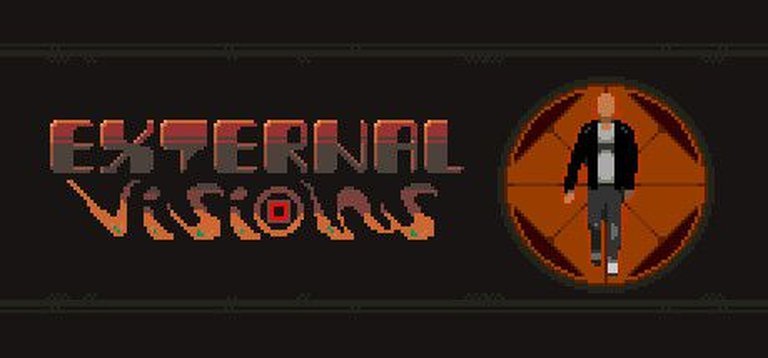
External Visions is a 2D side-scrolling metroidvania platformer set in a surreal, otherworldly environment that unfolds within the mind of its protagonist. Players navigate a sprawling, interconnected map filled with diverse enemies—ranging from robots in decaying offices to aliens in alien jungles—while utilizing a unique gun mechanic that allows for both combat and environmental manipulation, such as creating or moving platforms. The game blends action, puzzle-solving, and exploration, featuring precise combat inspired by classic SNES titles, challenging boss fights, and a variety of creative weapon abilities that encourage emergent gameplay.
Where to Buy External Visions
PC
External Visions Patches & Updates
External Visions Guides & Walkthroughs
External Visions Reviews & Reception
steambase.io (79/100): A triumphant return to form for the series.
saveorquit.com : A metroidvania with gun shooting platforms.
store.steampowered.com (78/100): An artistic metroidvania with a classic NES era gameplay.
External Visions: A Metroidvania of Mind and Machine
Introduction
External Visions is a game that dares to explore the labyrinthine corridors of the human psyche through the lens of a classic metroidvania. Released in 2017 by the indie studio team BitClub, this title stands as a testament to the enduring appeal of the genre while attempting to infuse it with a deeply personal narrative. At its core, External Visions is a game about escapism—both for its protagonist, who grapples with depression, and for the player, who is invited into a world where rusty office buildings coexist with alien jungles, and where every enemy encounter is a manifestation of inner turmoil.
This review will dissect External Visions in exhaustive detail, examining its development history, narrative depth, gameplay mechanics, artistic direction, and its place in the broader context of video game history. By the end, we will determine whether this game is a hidden gem, a flawed experiment, or something in between.
Development History & Context
The Studio Behind the Vision
External Visions was developed by team BitClub, a small indie studio with a modest but passionate portfolio. Prior to External Visions, the team had released Spaceport Hope, a game that garnered a niche following for its unique blend of exploration and narrative. The transition from Spaceport Hope to External Visions marks a shift in focus—where the former was a sci-fi adventure, the latter is a deeply introspective journey.
The development of External Visions was driven by a desire to merge classic metroidvania mechanics with a modern, psychological narrative. The team drew inspiration from the golden age of 16-bit platformers, particularly the Metroid and Castlevania series, while also incorporating elements of puzzle-solving and environmental storytelling. The result is a game that feels both nostalgic and fresh, a balancing act that is as ambitious as it is risky.
Technological Constraints and Design Choices
Released in 2017, External Visions was developed during a period when indie games were flourishing, thanks in part to platforms like Steam and the accessibility of game development tools. However, the team faced several challenges:
- Engine Limitations: The game was built using a proprietary engine, which, while flexible, lacked some of the polish and optimization of more established engines like Unity or Unreal. This led to occasional technical hiccups, particularly around controller support and performance stability.
- Artistic Vision vs. Execution: The team aimed for a retro aesthetic reminiscent of SNES-era games, but with modern sensibilities. This meant balancing pixel art with fluid animations and responsive controls—a task that proved difficult given the team’s size and resources.
- Narrative Ambition: The decision to set the game within the mind of a depressed protagonist was bold, but it also required a level of symbolic coherence that the team struggled to maintain. The surrealism of the setting often clashed with the gameplay’s need for clarity, leading to moments where the metaphor felt more confusing than profound.
The Gaming Landscape in 2017
2017 was a banner year for metroidvanias. Games like Hollow Knight, Ori and the Blind Forest, and Axiom Verge had already set a high bar for the genre, blending tight gameplay with rich storytelling and atmospheric world-building. External Visions entered this crowded field with a unique premise but faced stiff competition.
The indie game scene was also becoming increasingly saturated, with hundreds of new titles releasing on Steam every month. Standing out required not just quality, but also a distinct identity. External Visions attempted this by focusing on its psychological themes and innovative weapon mechanics, but whether it succeeded is a question we’ll explore in the sections to come.
Narrative & Thematic Deep Dive
Plot Summary
External Visions follows the journey of an unnamed protagonist—a seemingly ordinary man trapped in the monotony of his daily life. His mind, however, is anything but ordinary. As the game progresses, it becomes clear that the protagonist is battling depression, and the world he inhabits is a manifestation of his inner struggles.
The game is set in a sprawling, surreal office building that serves as a metaphor for the protagonist’s psyche. Each floor represents a different facet of his mental state, populated by enemies that embody his fears, regrets, and anxieties. Along the way, he encounters allies—fragments of his own personality or memories of people who have helped him in the past. These allies provide quests, upgrades, and occasional moments of respite in an otherwise hostile world.
The ultimate goal is to confront and overcome the “bosses” of each section—physical manifestations of the protagonist’s deepest traumas. By defeating these bosses, the protagonist gradually reclaims his sense of self, culminating in a final battle that represents his struggle to break free from the cycle of depression.
Characters and Dialogue
The protagonist is a silent cipher, a deliberate choice that allows players to project their own experiences onto him. His allies, however, are more defined:
- The Janitor: A gruff but kind figure who represents the protagonist’s resilience. He provides upgrades and advice, serving as a grounding force in the chaos.
- The Receptionist: A more nurturing presence, symbolizing the protagonist’s desire for connection. She offers quests that often involve helping others, reinforcing the theme of mutual support.
- The Scientist: A more analytical character, representing the protagonist’s intellectual side. He provides tools and information, often in the form of cryptic hints.
The dialogue in External Visions is minimal but effective. Characters speak in short, evocative lines that hint at deeper meanings without over-explaining. For example, the Janitor might say, “You’ve been carrying that weight for too long. Time to put it down,” a line that resonates with the game’s themes of burden and release.
Themes: Depression, Escapism, and Self-Discovery
External Visions is, at its heart, a game about depression. The office setting is a brilliant metaphor for the mundanity and oppression that often accompany mental illness. The enemies—ranging from grotesque monsters to malfunctioning office equipment—represent the protagonist’s internalized fears and societal pressures.
The game also explores the concept of escapism. The protagonist’s mind creates fantastical landscapes (like alien jungles) as a way to cope with his reality. This duality is reflected in the game’s art style, which juxtaposes drab, realistic office environments with vibrant, surreal vistas.
However, the game’s handling of these themes is not without its flaws. While the symbolism is often striking, it can also feel inconsistent. Some areas of the game are rich with metaphorical depth, while others rely too heavily on abstract imagery without clear meaning. This inconsistency can make the narrative feel disjointed, particularly for players who are not already familiar with the language of surrealism.
Strengths and Weaknesses of the Narrative
Strengths:
– Bold Thematic Ambition: Few games tackle mental health with such directness, and External Visions deserves credit for its willingness to explore difficult subject matter.
– Atmospheric Storytelling: The game’s environments and enemy designs do a lot of the heavy lifting when it comes to narrative. The office setting, in particular, is a masterstroke of symbolic world-building.
– Subtle Character Development: The protagonist’s growth is conveyed through gameplay mechanics (e.g., unlocking new abilities as he overcomes challenges) rather than exposition, which makes his journey feel more personal.
Weaknesses:
– Inconsistent Symbolism: The game’s surrealism sometimes works against it, with certain areas feeling arbitrary rather than meaningful.
– Underdeveloped Allies: While the supporting characters are interesting, they lack depth. Their roles are largely functional (e.g., providing upgrades or quests) rather than emotional.
– Lack of Narrative Payoff: The ending, while thematically appropriate, feels abrupt. After investing hours into the protagonist’s journey, players may find the conclusion underwhelming.
Gameplay Mechanics & Systems
Core Gameplay Loop
External Visions follows the classic metroidvania formula: explore a sprawling map, unlock new abilities, and backtrack to previously inaccessible areas. However, it distinguishes itself with a unique twist—weapon-based progression.
Unlike traditional metroidvanias, where progression is tied to permanent upgrades (e.g., a double jump or grappling hook), External Visions ties progression to temporary weapons. These weapons are obtained from terminals scattered throughout the world, and each has a distinct function:
- Weapon 1 (Standard Gun): A basic projectile weapon that can also destroy certain blocks, creating platforms.
- Weapon 2 (Control Gun): Allows the player to take control of movable boxes, which can be used to solve puzzles or reach new areas.
- Weapon 3 (Solidify Gun): Fires projectiles that solidify into temporary platforms, enabling the player to traverse gaps.
The catch? You can only carry one weapon at a time. This means that players must constantly backtrack to terminals to swap weapons, a design choice that has significant implications for the game’s pacing and difficulty.
Combat and Enemy Design
Combat in External Visions is deliberately retro, evoking the feel of SNES-era shooters. The protagonist’s movements are precise, with a double jump that adds a modern touch to the otherwise classic controls. Shooting is limited to horizontal and diagonal angles, which adds a tactical layer to encounters.
Enemies are diverse and creatively designed, each with unique attack patterns and behaviors. Some examples include:
- Office Drones: Small, fast enemies that charge at the player. They represent the protagonist’s feelings of being overwhelmed by work.
- Shadow Beasts: Larger, more aggressive creatures that lurk in dark areas. These embody the protagonist’s deeper fears and insecurities.
- Malfunctioning Machines: Enemies that resemble broken office equipment, symbolizing the protagonist’s frustration with his environment.
Boss fights are the highlight of the combat system. Each boss is a towering, grotesque representation of a specific trauma or fear. For example, one boss is a massive, screaming face that fires projectiles in erratic patterns—a clear metaphor for anxiety. These fights are challenging but fair, requiring players to master the game’s combat mechanics and weapon-swapping system.
Puzzle-Solving and Exploration
The puzzle-solving in External Visions is where the game truly shines. The weapon-swapping mechanic forces players to think creatively about how to navigate the environment. For example:
- Platform Creation: Using Weapon 1 to destroy blocks and create new paths.
- Box Manipulation: Using Weapon 2 to move boxes onto switches or as stepping stones.
- Temporary Platforms: Using Weapon 3 to cross gaps that would otherwise be impassable.
This system encourages experimentation and rewards players who take the time to explore. However, it also has a major drawback: the constant need to backtrack. Since weapons are tied to terminals, players often find themselves retracing their steps to grab a different weapon, which can disrupt the flow of exploration.
Progression and Upgrades
Progression in External Visions is tied to two main systems:
- Orbs: Scattered throughout the world, these can be used to upgrade the protagonist’s weapons, increasing their power or adding new functionalities.
- Quest Items: Obtained from NPCs, these items unlock new areas or provide temporary buffs.
The upgrade system is straightforward but effective. However, the lack of permanent abilities (outside of weapon upgrades) can make progression feel slower compared to other metroidvanias. This is a deliberate choice—External Visions is more about overcoming mental blocks than gaining physical power—but it may frustrate players accustomed to the genre’s typical power fantasies.
UI and Quality of Life
The game’s UI is functional but unremarkable. The map is clear and easy to read, with icons indicating the locations of terminals, save points, and unexplored areas. However, the lack of a fast-travel system can make backtracking tedious, especially in the later stages of the game.
Save points are plentiful, which is a mercy given the game’s difficulty. The checkpoint system is well-balanced, ensuring that players never lose too much progress after a death.
World-Building, Art & Sound
Setting and Atmosphere
External Visions takes place in a surreal, ever-shifting office building that serves as a metaphor for the protagonist’s mind. The game’s environments are a mix of the mundane and the fantastical:
- Office Floors: Drab, fluorescent-lit corridors filled with cubicles and filing cabinets. These areas feel oppressive, reinforcing the theme of depression.
- Alien Jungles: Vibrant, otherworldly landscapes that represent the protagonist’s escapist fantasies. These areas provide a stark contrast to the office environments.
- Industrial Zones: Dark, mechanical areas filled with pipes and machinery. These symbolize the protagonist’s feelings of being trapped in a system beyond his control.
The juxtaposition of these environments is one of the game’s strongest aspects. The shift from a dreary office to a lush alien jungle is jarring in the best way, reinforcing the game’s themes of escapism and internal struggle.
Visual Direction
The art style of External Visions is a love letter to 16-bit era games, with a modern twist. The pixel art is detailed and expressive, with a color palette that shifts dramatically depending on the environment. Office areas are dominated by grays and blues, while alien jungles burst with greens and purples.
Enemy designs are particularly impressive. Each creature is uniquely grotesque, with exaggerated features that emphasize their symbolic roles. For example, one enemy resembles a twisted, screaming face—a clear representation of anxiety.
However, the game’s visuals are not without their flaws. Some of the level designs feel repetitive, particularly in the office areas. The blocky, tile-based layouts can make exploration feel monotonous, especially when compared to the more visually dynamic alien jungles.
Sound Design and Music
The sound design in External Visions is minimal but effective. The game’s soundtrack is atmospheric, with ambient tracks that shift depending on the environment. Office areas feature eerie, droning synths, while alien jungles are accompanied by more melodic, almost dreamlike compositions.
The lack of a standout musical score is one of the game’s weaker points. While the ambient tracks are competent, they rarely elevate the experience in the way that, say, Hollow Knight’s haunting melodies do. The sound effects, too, are functional but unremarkable.
Reception & Legacy
Critical and Commercial Reception
External Visions received a Mostly Positive rating on Steam, with 78% of its 61 user reviews being positive. Critics, however, were more muted in their praise. The game’s ambitious themes and innovative mechanics were widely acknowledged, but its execution was often criticized.
Positive Aspects Highlighted by Players and Critics:
– Innovative Weapon System: The weapon-swapping mechanic was praised for adding a fresh twist to the metroidvania formula.
– Creative Enemy Design: The variety and symbolism of the enemies were frequently cited as highlights.
– Thematic Depth: Many players appreciated the game’s willingness to tackle mental health in a meaningful way.
Common Criticisms:
– Pacing Issues: The constant backtracking required by the weapon system was a frequent point of frustration.
– Inconsistent Level Design: Some areas felt repetitive or poorly designed, particularly the office sections.
– Underwhelming Narrative Payoff: The ending was criticized for being abrupt and lacking emotional resonance.
Commercially, External Visions was a modest success. It initially released as a paid title but later became free-to-play, which likely expanded its audience. However, it never achieved the breakout success of contemporaries like Hollow Knight or Ori and the Blind Forest.
Influence and Legacy
External Visions is not a game that redefined the metroidvania genre, but it did contribute to the ongoing evolution of the form. Its focus on psychological themes and innovative weapon mechanics has inspired other indie developers to experiment with narrative and gameplay in similar ways.
The game’s legacy is perhaps best described as that of a cult classic—a title that resonates deeply with a niche audience but fails to achieve mainstream recognition. For players who connect with its themes and mechanics, External Visions is a memorable and meaningful experience. For others, it may feel like a missed opportunity.
Conclusion: A Flawed but Fascinating Journey
External Visions is a game of contradictions. It is ambitious yet uneven, innovative yet flawed, deeply personal yet occasionally opaque. Its greatest strength lies in its willingness to tackle difficult themes and experiment with gameplay mechanics, but its execution is inconsistent, leading to moments of brilliance interspersed with frustration.
Final Verdict:
– For Fans of Psychological Narratives: External Visions is a must-play. Its exploration of depression and escapism is rare in the gaming landscape, and its surreal world-building is often striking.
– For Metroidvania Enthusiasts: The game offers a fresh take on the genre, particularly with its weapon-swapping mechanic. However, the constant backtracking may test the patience of even the most dedicated fans.
– For Casual Players: The game’s difficulty and pacing issues make it a tough sell for those looking for a more relaxed experience.
Score: 7.5/10 – A Bold Experiment with Mixed Results
External Visions is not a perfect game, but it is an important one. It stands as a testament to the power of indie games to explore complex themes and innovate within established genres. While it may not have achieved the critical or commercial success of its contemporaries, it remains a fascinating and deeply personal journey—one that is well worth experiencing for those willing to engage with its challenges and imperfections.
In the pantheon of metroidvanias, External Visions may not be a titan, but it is a worthy footnote—a game that dared to look inward when so many others were content to gaze outward. For that alone, it deserves to be remembered.