
- Release Year: 2022
- Platforms: Windows
- Publisher: Screambox Network Co., Ltd.
- Developer: Screambox Network Co., Ltd.
- Genre: Action, Strategy, Tactics
- Perspective: 3rd-person
- Game Mode: Single-player
- Average Score: 85/100
Description
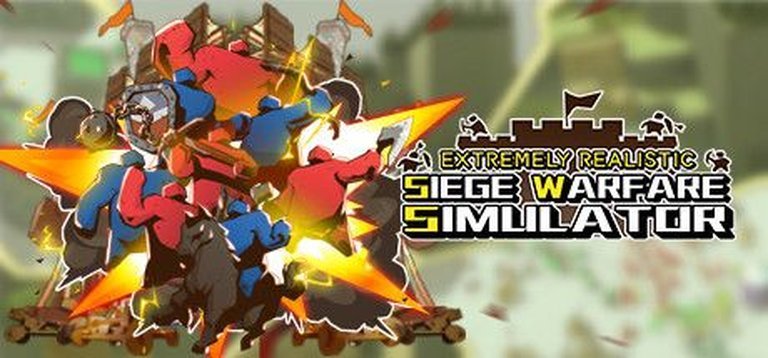
Extremely Realistic Siege Warfare Simulator is a physics-based tactical strategy game set in a fantasy medieval world, developed by Screambox Studio. Players lead military forces, construct siege engines, and orchestrate large-scale battles using realistic mechanics. Currently in Early Access, the game emphasizes strategic army-building, siege equipment customization, and chaotic warfare simulations in a vibrant 3D environment.
Gameplay Videos
Where to Buy Extremely Realistic Siege Warfare Simulator
PC
Extremely Realistic Siege Warfare Simulator Mods
Extremely Realistic Siege Warfare Simulator Guides & Walkthroughs
Extremely Realistic Siege Warfare Simulator Reviews & Reception
taptap.io (85/100): ItS good but it literally take me 1 to 2 hours I think to open…..i know that some will disagree on me but really it’s take hours
playtested.net : With its physics-based combat, humorous tone, and challenging scenarios, Extremely Realistic Siege Warfare Simulator offers a combination of strategy, puzzle solving, and sandbox entertainment
Extremely Realistic Siege Warfare Simulator: Review
Introduction
In an era where “simulator” games oscillate between deadpan realism and absurdist satire, Extremely Realistic Siege Warfare Simulator (SWS) stakes its claim as both a tactical playground and a physics-driven slapstick comedy. Developed by the Beijing-based Screambox Studio—known for the shoot-’em-up AngerForce and the dungeon crawler Ancient Abyss—this 2022 Early Access title masquerades as a medieval strategic epic while winking at its own tongue-in-cheek premise. Beneath its deliberately oxymoronic title lies a bold experiment: a real-time tactics (RTT) game that merges Totally Accurate Battle Simulator’s whimsical chaos with Bad North’s bite-sized strategic puzzles. This review unpacks SWS’s ambitions, execution, and paradoxical identity as a “realistic” farce that captures the anarchic joy of childhood toy-soldier warfare.
Development History & Context
Screambox Studio’s trajectory reveals a studio fascinated by niche genres and tactile gameplay. Speaking to GamingonPhone, producer Guo Xing cited his 10-year-old son’s preference for accessible games as a catalyst for SWS’s design: “I wanted to create a game that was easier to play, allowing kids to have fun as well.” Developed over three years in Unity, the game emerged during a resurgence of physics-based sandboxes (Teardown, People Playground) and a glut of irony-laden simulators (Goat Simulator, Surgeon Simulator). Its Early Access launch in September 2022 strategically targeted a market hungry for experimental, community-driven projects.
Technologically, SWS leverages CRI middleware for audio and Unity’s physics engine to simulate everything from trebuchet trajectories to cavalry charges. Initial development hurdles centered on balancing cross-platform play (PC, later mobile) with performance optimization—issues that plagued early builds, particularly on lower-end devices where loading times could stretch to “1 to 2 hours” (per TapTap reviews). Screambox’s transparency in their Steam Early Access roadmap—promising a fully featured level editor, procedural generation, and unit diversity—reflects a commitment to iterative, player-informed design reminiscent of indie darlings like Unexplored 2.
Narrative & Thematic Deep Dive
SWS’s narrative framework is deliberately skeletal: a “fantasy medieval world” where players lead a rebellion against an unnamed tyrant. This minimalist setup—echoing Mount & Blade’s anarchic factionalism—serves as a canvas for emergent storytelling. The game’s true “narrative” unfolds not through cutscenes or dialogue, but through physics-driven vignettes: a ladder collapsing under the weight of climbers, a castle wall crumbling after a mistimed trebuchet strike, or a lone spearman routing a cavalry charge through sheer luck.
Thematically, SWS interrogates the tension between order and chaos inherent in siege warfare. Players embody both strategist and spectator, issuing commands only to watch them unravel via Game of Thrones-esque absurdity. A mission titled “Surprise Raid” might devolve into a Benny Hill-esque chase when your troops pathfind into a lake, while “King of the Hill” modes highlight how unit morale and collisions yield unpredictable outcomes. This tonal juxtaposition—somber tactical planning undercut by ragdoll slapstick—elevates SWS beyond parody into a meditation on warfare’s inherent unpredictability.
Gameplay Mechanics & Systems
At its core, SWS is a real-time tactics sandbox with three pillars: unit deployment, siege engineering, and battlefield improvisation.
-
Unit Deployment & Command:
Players select from 12+ unit types—archers, swordsmen, cavalry, engineers—each with distinct stats, active abilities (e.g., volley fire, shield walls), and passive traits (e.g., morale bonuses). Deploying units triggers a Super Hot-style time dilation, allowing meticulous positioning on grid-based maps. However, command inputs are brittle: ordering a charge might send troops veering into environmental hazards due to pathfinding glitches (a noted pain point in Steam forums). -
Siege Engineering:
Constructing siege equipment—ladders, battering rams, trebuchets—requires assigning engineers and defending them during multi-minute build phases. Success hinges on map awareness: flanking archers can devastate exposed crews. The physics-driven destruction system shines here, with debris altering terrain and creating emergent choke points. -
Unit Possession & Multiplayer:
The game’s trump card is Unit Possession Mode, allowing players to assume direct control of a soldier mid-battle. This shifts gameplay from RTT to third-person action, where a well-aimed arrow or timely retreat can swing battles. Combined with cross-platform PvP/co-op, this creates moments of Totally Accurate Battle Simulator-esque camaraderie, though performance inconsistencies plague sustained engagements.
Flaws persist: the UI’s unit cards lack tooltips, and controller support—critical for mobile ports—feels underbaked (Steam users lament “sludge-turtle camera” sensitivity). Yet, SWS’s “simplified controls, complex tactics” mantra mostly holds, rewarding adaptability over micromanagement.
World-Building, Art & Sound
SWS’s world is a stylized medieval diorama—think Kingdom Rush meets Claymation. Castles resemble painted cardboard cutouts, forests sway in exaggerated loops, and units sport chibi-proportioned armor that undercuts the grim subject matter. This deliberate toybox aesthetic amplifies the game’s thematic absurdity while ensuring visual clarity during chaotic battles.
Sound design oscillates between functional and comedic: clanking swords and crumbling masonry anchor the physics simulation, while Wilhelm screams punctuate troop deaths. Notably, early builds lacked music—a void later filled by jaunty, Stronghold-esque lute tracks that further underscore the game’s irreverence. Performance remains contentious, however; mobile versions struggle with texture pop-in, and the PC build’s frame drops during 200+ unit battles betray Unity’s limitations.
Reception & Legacy
Upon release, SWS garnered Mixed (55%) Steam reviews (336 total), praised for creativity but critiqued for technical instability. Players lauded its sandbox potential and emergent humor (“Physics chaos at its finest!”) but lambasted bugs like infinite loading screens and unresponsive AI (Steam user The Maned Wolf noted allies “gawking at walls” instead of attacking). Post-launch, its win at TapTap Pocket Playfest 2023 signaled mobile potential, though port issues (“stuck at 90% loading”) persist.
Legacy-wise, SWS sits at a crossroads. Its modding tools—though incomplete—evoke nostalgia for Warcraft III’s custom map renaissance. The developers’ vision of “player-driven content” via Steam Workshop remains unfulfilled, but community blueprints like “黎明前夜” (Dawn Before Night) showcase promise. As a spiritual successor to TABS’s physics-first combat and Ravenfield’s sandbox leanings, SWS could influence a subgenre of “tactical slapstick” games, though its Early Access limbo—no major updates since 2023—casts doubt on its longevity.
Conclusion
Extremely Realistic Siege Warfare Simulator is a paradox: a game whose title mocks its own absurdity while delivering a genuinely inventive tactical experience. When its physics sing and units collide in balletic chaos, it captures the childlike wonder of orchestrating toy-soldier battles. Yet, technical shortcomings—performance hiccups, half-baked UI, and an inactive developer—prevent it from achieving greatness.
For now, SWS remains a flawed gem—a proof-of-concept for a style of warfare where “realism” means embracing pandemonium over precision. If Screambox Studio revitalizes development, it could ascend to cult classic status; if abandoned, it will linger as a bittersweet ode to ambition outpacing execution. In either case, its legacy is secure: a reminder that sometimes, the best-laid siege plans go awry, and that’s precisely where the fun begins.
Final Verdict:
A promising, physics-rich tactics sandbox hamstrung by Early Access growing pains. Approach with tempered expectations—and a love for delightful disarray.