
- Release Year: 2020
- Platforms: Windows
- Genre: Adventure
- Perspective: Diagonal-down
- Game Mode: Single-player
- Gameplay: Puzzle elements, RPG elements
- Setting: Detective, Fantasy, Mystery
- Average Score: 100/100
Description
Eyes of The Mirror is a philosophical mystery-adventure game set in a dark, atmospheric world where players awaken as ‘The Conscious One’ in utter nothingness. The game blends puzzle-solving with deep narrative exploration, featuring excerpts from famous authors and thought-provoking texts that players must interpret to progress. With no combat mechanics, the experience focuses on existential themes, multiple endings, and choices that shape the story, all accompanied by an original soundtrack and references to renowned philosophers.
Eyes of The Mirror Guides & Walkthroughs
Eyes of The Mirror Reviews & Reception
steambase.io (100/100): Eyes of The Mirror has earned a Player Score of 100 / 100.
Eyes of The Mirror: A Philosophical Journey Through the Looking Glass
Introduction: The Mirror as Metaphor
Eyes of The Mirror (2020) is not merely a game—it is an existential meditation disguised as interactive fiction. Developed by solo creator Fatih Mert, this enigmatic adventure dares to ask: What does it mean to exist? With its stark, minimalist presentation and dense philosophical underpinnings, the game carves a niche in the indie landscape, blending detective mystery with metaphysical inquiry. While its obscurity and lack of mainstream recognition might relegate it to the shadows, Eyes of The Mirror is a hidden gem for those who crave narrative depth over mechanical spectacle. This review will dissect its themes, mechanics, and legacy, arguing that it stands as a bold, if flawed, experiment in interactive storytelling.
Development History & Context: A Solo Odyssey
The Vision of Fatih Mert
Fatih Mert, the sole developer behind Eyes of The Mirror, is no stranger to introspective game design. His previous works, such as The Mournmore Killings and Keywords of A Life, explore themes of memory, identity, and human fragility. Eyes of The Mirror distills these preoccupations into a singular, haunting experience. The game’s development was a solitary endeavor, reflecting its themes of isolation and self-reflection.
Technological Constraints & Aesthetic Choices
Released in 2020, Eyes of The Mirror embraces a deliberately retro aesthetic, with 2D scrolling environments and a diagonal-down perspective reminiscent of classic adventure games. The minimalist visuals are not a limitation but a deliberate choice—stripping away distractions to focus on text and atmosphere. The game’s modest system requirements (compatible with Windows 98 onward) ensure accessibility, prioritizing narrative over graphical fidelity.
The Gaming Landscape of 2020
The year 2020 was dominated by blockbuster titles like The Last of Us Part II and Cyberpunk 2077, but indie games like Hades and Spiritfarer proved that smaller, more personal experiences could resonate deeply. Eyes of The Mirror arrived in this climate, offering a counterpoint to the industry’s obsession with spectacle. Its lack of combat, emphasis on text interpretation, and philosophical weight set it apart from mainstream trends.
Narrative & Thematic Deep Dive: The Labyrinth of Self
Plot Overview: A Descent into the Unknown
The game begins with a simple yet unsettling premise: “You are The Conscious One. You wake up in nothingness, utter The Word only to wake up again…” From this void, players navigate a fog-drenched city, uncovering fragments of poetry, philosophical excerpts, and cryptic narratives. The story unfolds non-linearly, with multiple endings shaped by player choices.
Themes: Existence, Perception, and the Mirror Motif
- The Nature of Consciousness
- The game’s central question—What does it mean to exist?—is explored through surreal encounters and textual analysis. Players are not just solving puzzles but interrogating their own perceptions.
- The Mirror as Symbol
- Mirrors recur as both literal objects and metaphors for self-reflection. The title itself suggests a duality: the “eyes” observing and the “mirror” reflecting.
- Isolation and Loneliness
- The protagonist’s solitude is palpable. The city is empty, the dialogue sparse, reinforcing the theme of existential aloneness.
Characters & Dialogue: The Absence of Presence
- The Conscious One (Player Character): A cipher, devoid of backstory, forcing players to project their own interpretations.
- NPCs (If Any): The game’s cast is nebulous, often manifesting as disembodied voices or textual echoes. Dialogue is poetic, allusive, and open to interpretation.
Philosophical References: A Literary Tapestry
The game weaves in references to philosophers (Nietzsche, Sartre) and authors (Borges, Kafka), rewarding players who engage with its intellectual underpinnings. Puzzles often require interpreting these texts, blurring the line between gameplay and literary analysis.
Gameplay Mechanics & Systems: The Puzzle of Interpretation
Core Gameplay Loop: Reading as Interaction
- No Combat: Unlike traditional RPGs, Eyes of The Mirror eschews combat entirely, focusing on exploration and textual engagement.
- Puzzle Design: Puzzles are not about dexterity but interpretation. Players must analyze poems, riddles, and philosophical passages to progress.
- RPG Elements: Light role-playing mechanics (choices, multiple endings) add replayability, though the game is far from a “hardcore” RPG.
UI & Navigation: Minimalism as Design
- The interface is sparse, with direct control and menu-driven interactions. The diagonal-down perspective evokes classic adventure games, reinforcing the game’s retro sensibilities.
Innovations & Flaws
- Strengths:
- A rare game that treats players as active readers, not just passive consumers.
- The fusion of narrative and gameplay is seamless—puzzles feel like natural extensions of the story.
- Weaknesses:
- The lack of guidance may frustrate players accustomed to more structured experiences.
- Some puzzles rely too heavily on obscure references, risking alienation.
World-Building, Art & Sound: The Atmosphere of the Void
Setting: A City of Shadows
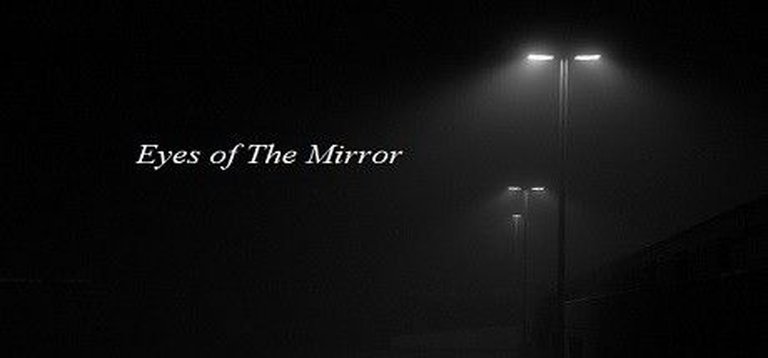
The game’s world is a liminal space—neither fully real nor entirely dreamlike. The foggy streets and empty buildings evoke a sense of existential dread, reinforcing the theme of isolation.
Visual Design: Less Is More
- The 2D scrolling environments are simple but effective, using darkness and negative space to create tension.
- The “diagonal-down” perspective (a rarity in modern games) adds a disorienting, almost voyeuristic quality.
Sound & Music: The Silence Speaks
- The original soundtrack is ambient and sparse, enhancing the game’s meditative tone.
- Sound design is minimal, with silence often serving as a narrative device.
Reception & Legacy: A Game Ahead of Its Time?
Critical & Commercial Reception
- Lack of Mainstream Attention: With no Metacritic reviews and minimal coverage, Eyes of The Mirror remains a cult curiosity.
- Player Reactions: The few reviews on Steam are overwhelmingly positive (100/100 on Steambase), praising its depth and originality.
Influence & Legacy
While not a commercial success, the game’s bold narrative experimentation may inspire future indie developers to prioritize philosophical depth over mechanical complexity.
Conclusion: A Mirror Held Up to the Player
Eyes of The Mirror is not for everyone. It demands patience, intellectual engagement, and a willingness to embrace ambiguity. Yet, for those who seek games as experiences—not just entertainment—it is a masterpiece of interactive storytelling. Its legacy lies in its refusal to conform, offering a mirror to the player’s own consciousness.
Final Verdict: 8.5/10 – A Philosophical Triumph
A game that transcends its medium, Eyes of The Mirror is a testament to the power of indie development. It may not have the polish of AAA titles, but its intellectual ambition and atmospheric depth make it unforgettable.
For fans of: The Stanley Parable, Kentucky Route Zero, SOMA