
- Release Year: 2023
- Platforms: Windows
- Publisher: Frontier Developments plc
- Developer: Frontier Developments plc
- Genre: Driving, Racing, Simulation
- Perspective: 1st-person, 3rd-person
- Game Mode: Single-player
- Gameplay: Business simulation, Managerial
- Setting: 2020s
- Average Score: 79/100
Description
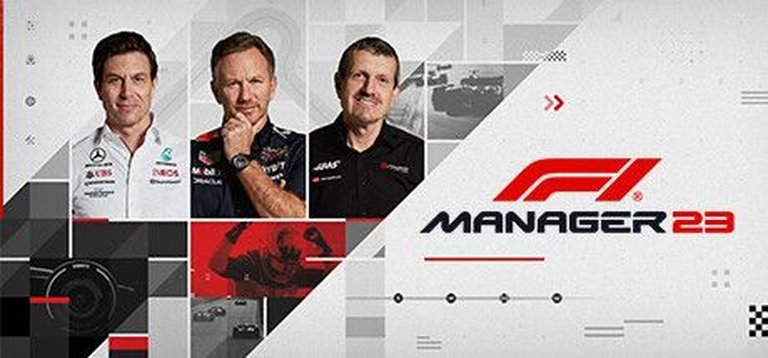
F1 Manager 2023 is a detailed managerial simulation game where players take on the role of a Formula 1 team principal, overseeing all aspects of team operations including driver management, car development, and race strategy within the licensed setting of the 2023 FIA Formula 1 World Championship. Building on its predecessor, it offers enhanced features like pit crew training and a Race Replay mode for immersive, strategic gameplay.
Gameplay Videos
Where to Buy F1 Manager 2023
PC
F1 Manager 2023 Mods
F1 Manager 2023 Guides & Walkthroughs
F1 Manager 2023 Reviews & Reception
ign.com : Frontier’s management sim not only avoids the sophomore slump, it fights for the podium.
metacritic.com (79/100): F1 Manager 2023 takes a good management simulator and makes it better.
pcgamer.com : The sequel brings welcome enhancements, but the on-track racing simulation is a let down.
F1 Manager 2023: The Paddock’s Pupil – A Year of Refinement, Replays, and Residual Rough Edges
Introduction: The Torch of a Dormant Genre
For over two decades, the niche but devout subgenre of grand prix racing management sims lay largely fallow after EA Sports’ F1 Manager (2000) faded from view. Into this void stepped Frontier Developments, the studio renowned for its meticulously detailed Planet Coaster and Planet Zoo, announcing an exclusive, multi-year licensing deal with Formula One. Their debut, F1 Manager 2022, was a credible if uneven first attempt—a game that grasped the immense complexity of Formula 1 team management but stumbled in its translation of on-track action. F1 Manager 2023, then, represents the critical sophomore season. It is a game not of revolutionary reinvention, but of attentive iteration, seeking to solidify a foundation, address community feedback, and prove this annualized model could yield genuine year-on-year progress. It succeeds in many of these aims, offering the most polished and feature-rich entry in the short-lived series, yet it remains tethered by the same fundamental limitations that would ultimately contribute to the franchise’s commercial underperformance and eventual cancellation.
Development History & Context: An Annualized Ascent on Unreal Engine 5
Studio & Vision: Frontier Developments, under the leadership of President David Braben and CEO Jonny Watts, leveraged its established expertise in deep simulation to tackle the holy grail of licensed motorsport management. The vision was clear: create an authentic, accessible, and visually presentable team principal simulator that could appeal to both the “Drive to Survive” generation and veteran F1 strategists. With F1 Manager 2022 establishing the core loop—factory management, R&D, staff/driver dynamics, and race weekend strategy—the goal for the 2023 sequel was refinement and expansion.
Technological Constraints & Iteration: The most obvious technical shift was the migration from Unreal Engine 4 to Unreal Engine 5. This promised, and delivered, graphical enhancements, particularly in lighting and car model fidelity. However, this was not a ground-up rebuild. The 16-month development window (from August 2022 to July 2023) guaranteed an iterative approach. Much of the UI, menu structure, and core simulation logic remained visually and functionally identical to its predecessor, a point repeatedly noted by critics. This annualized cadence, while ensuring roster updates and new circuit additions (notably the Las Vegas Strip Circuit and Qatar’s Losail International Circuit), inherently limited the scope for deep mechanical overhauls. Resources were focused on new features like the Race Replay mode, expanded pit crew training systems, the visor cam perspective, and more nuanced tire temperature simulation, rather than a complete systems overhaul.
The Gaming Landscape: F1 Manager 2023 entered a crowded field. On one side were the arcade/simulation hybrids like Codemasters’ F1 23, which dominated the pure racing experience. On the other lay the deep, but unofficially licensed, Motorsport Manager series. Frontier’s unique selling proposition was the official FIA license—real drivers, teams, circuits, and even commentary from Sky Sports’ David Croft and Karun Chandhok. The game’s success depended on leveraging this authenticity to make its management depth compelling, not a chore.
Narrative & Thematic Deep Dive: The Unwritten Saga of Your Team
F1 Manager games lack a traditional narrative, instead generating emergent storytelling through the career mode. The theme is unequivocally authenticity through consequence. Every email from your engineers, every board meeting demand, every driver’s radio complaint constructs a narrative of pressure, ambition, and micro-triumph. The 2023 edition deepens this by making driver confidence a tangible, fluctuating stat directly impacted by your strategic decisions—a spin, a botched pit stop, or a failed overtake can send morale plummeting, affecting on-track performance. This creates a tangible emotional through-line: nurture a driver’s confidence, and they deliver; break it, and they fracture.
The Race Replay and Scenario modes introduce a fascinating meta-narrative layer. They are structured narratives based on real 2023 season events (“Fernando’s Gamble” at Monaco) or hypothetical “what-if” scenarios (“Tactical Masterclass” at Interlagos). These modes transform the player from a long-term architect into a tactical historian, tasked with rewriting specific chapters of F1 lore. This appeals directly to the fan’s desire for alternate history, framing each session not as a blank slate, but as a puzzle with a known historical endpoint to defy. The absence of a deeper interpersonal narrative—no team orders based on intra-team relationships, no evolving driver rivalries beyond rudimentary “is faster than you” messages—remains the series’ most significant thematic blind spot. The world feels like a network of functional assets, not a living, squabbling paddock.
Gameplay Mechanics & Systems: The Strategy Stack
The core gameplay loop is a three-tiered pyramid of decision-making:
-
The Strategic Layer (Between Races): This is the game’s strongest suit. Players juggle a strict cost cap, manage a sprawling R&D tree for car components (each part affecting specific stats like drag, cooling, or reliability), balance facility upgrades, conduct staff recruitment (from Sporting Directors to Junior Mechanics), and scout the F2/F3 grids for future talent. The 2023 addition of aged driver regression and the ability to sign drivers at season’s end (instead of instant teleportation) adds crucial long-term planning depth. Pit crew training is a standout new system, where scheduling drills affects fatigue and proficiency, directly impacting the dreaded “pit stop error” and the coveted “Fastest Pit Stop” award.
-
The Tactical Layer (Race Weekend): This is where F1 Manager most virtuosically simulates F1’s unique pressures. Each Grand Prix weekend involves Practice (tweaking car setup via a satisfying micro-game of slider balancing), Qualifying (managing tire prep and slipstreams), and the Race. The race itself is a real-time ballet of resource management: Tire temperatures and wear are now more granular, Fuel cannot be topped up (mimicking real regulations), and the ERS (battery) deployment is a critical, depletable boost. The introduction of Driver Tactics commands (Aggressive/Defensive, Push/Conserve) adds direct intervention, though their implementation is basic.
-
The Reactive Layer (In-Race): This is the most problematic tier. While the menu-driven strategy is robust, the 3D race simulation that visualizes your decisions is the game’s Achilles’ heel. The “multiple lines” AI update, intended to create more realistic, sustained wheel-to-wheel battles, instead produces chaotic, unrealistic pack formation where cars routinely run two-abreast through corners like Monaco’s Fairmont Hairpin, rarely creating clean passes. Overtakes feel fluid and reversible rather than decisive. AI decision-making in qualifying remains erratic, and collision physics are still janky, with cars clipping barriers unnaturally. The much-touted visor cam is a visually stunning, immersive addition that ironically highlights the poor racing line discipline below.
The Race Replay mode is a masterstroke of design. By presenting preset scenarios—full “Starting Grid” recreations or pivotal “Race Moments”—it strips away the career mode’s financial and developmental burdens, forcing pure, high-stakes tactical problem-solving. It’s an ideal tutorial sandbox and a compelling bite-sized challenge, effectively gamifying the sport’s history.
World-Building, Art & Sound: The Broadcast Sheen
F1 Manager 2023 excels in creating the surface sheen of an F1 broadcast. The presentation, inherited and slightly refined from 2022, is the game’s greatest atmospheric asset. The team garage interface is cluttered with authentic-looking data pads, strategy monitors, and team radio panels. Driver and principal likenesses are uncannily accurate, and the inclusion of real voice lines from figures like Toto Wolff and Guenther Steiner (and drivers for team radios) is transformative, lending immense authenticity to key moments. The soundtrack features the official F1 theme, and the ambient paddock noise, car engine roars (using the F1 23 audio asset library), and pit crew shouts all contribute to a convincingly immersive “behind the wall” experience.
However, this broadcast illusion cracks during the 3D sequences. While car models are beautifully detailed with sponsor liveries, animations are stiff. Pit crews move with a robotic, overlapping lack of fluidity. Driver gestures in the cockpit are limited. The graphical “pop” is inconsistent; the game can look stunning in static shots or replays but feels flat and low-poly during frantic race footage. The persistent Monaco tunnel rain glitch—where precipitation appears inside the tunnel but not outside—became a infamous symbol of the game’s unfinished visual polish, a bug so iconic it was openly acknowledged by developers and players alike.
Reception & Legacy: A Critical Success, A Commercial Stumble
Critical Reception: Aggregated scores (Metacritic: 79 PC, 76 PS5, 81 Xbox Series X) indicate “generally favorable” reviews, matching or slightly exceeding its predecessor. Critics universally praised the depth of management simulation, the broadcast-quality presentation, and the innovative Race Replay mode. The consensus, reflected in reviews from IGN (8/10), PC Gamer (72/100), and outlets like Gazettely and Sportskeeda, was that F1 Manager 2023 was a worthy, iterative successor that fixed minor flaws and added meaningful, if not revolutionary, features.
The core criticisms formed a consistent pattern:
* On-Track Simulation: The new AI lines and persistent physics quirks made races feel unrealistic and frustrating.
* Lack of Depth in Social Dynamics: The absence of meaningful team orders, driver relationships, and multi-season narrative arcs.
* Annualization Fatigue: The perception that the game was a $55 DLC pack for 2022, with too much carry-over content.
* Technical Bugs: The Monaco tunnel glitch and occasional crashes marred the polish.
Commercial Performance & Series Fate: This is where the review takes a historical turn the developers could not have desired. Despite critical acclaim for its management systems, F1 Manager 2023 significantly underperformed commercially. As documented on Wikipedia, sales for F1 Manager 2022 were already modest (~600,000 copies), but 2023 failed to meet Frontier’s expectations. This triggered a 40% drop in Frontier’s share price in early 2023 and led to layoffs at Frontier Foundry, the company’s publishing arm. The financial shortfall meant the planned F1 Manager 2025 was reportedly cancelled in late 2024, officially ending the series after three installments (F1 Manager 2024 was released in a downshifted state with a “Create-a-Team” mode and a Nintendo Switch port, but sold poorly).
Thus, F1 Manager 2023‘s legacy is dualistic:
1. As a Game: It represents the pinnacle of the series’ design—the most feature-complete, mechanically deep, and authentically presented F1 management sim ever made.
2. As a Product: It was the last gasp of a failed commercial model. Its iterative nature, while appreciated by a niche fanbase, was insufficient to drive the massive sales needed to justify the costly F1 license and annual development cycle against the juggernaut of EA’s F1 series.
Conclusion: A Flawed Final Pit Stop
F1 Manager 2023 is a paradox. It is simultaneously the best game in its short-lived franchise and a clear artifact of the constraints that doomed it. For the dedicated strategist, it offers an engrossing, detail-rich simulation of the logistical and tactical ballet of Formula 1. The Race Replay mode is a stroke of genius that should be studied by other sports sims. The feeling of successfully managing tire deg across a wet-dry race, or piloting a driver confidence boost to a surprise podium, is uniquely satisfying.
Yet, to dismiss its flaws is to whitewash the very real reasons for its market failure. The on-track action remains a weak link, breaking the spell of authenticity just as you’re about to be fully immersed. The lack of dynamic team politics and deep driver relationships leaves the world feeling sterile. And the feeling of paying full price for a significantly updated, but not fundamentally rethought, experience was a proposition many fans and casual observers rejected.
Its place in history is thus assured, but bittersweet. F1 Manager 2023 is the definitive swan song of the modern, licensed F1 management sim attempt. It proved the genre could be executed with immense depth and love for the source material, but also that the audience for such a niche, annually updated product was not large enough to sustain it against the more accessible, driving-focused competition. It is a game for the purist, the tactician, the fan who wants to live in the spreadsheets and team radios. It is, in the end, a brilliant and deeply flawed testament to a passion project that, against the cold calculus of the market, simply ran out of time and fuel. The chequered flag fell not on the track, but in the boardroom.