
- Release Year: 2014
- Platforms: Windows, Xbox 360, Xbox Cloud Gaming, Xbox One
- Publisher: Microsoft Corporation
- Developer: Lionhead Studios Ltd.
- Genre: Role-playing (RPG)
- Perspective: Behind view
- Game Mode: Single-player
- Gameplay: Action RPG, Aging, Arena fighting, Armor, Brothels, Fishing, Gambling, House ownership, Multiple endings, weapon sets
- Setting: Fantasy
- Average Score: 68/100
- Adult Content: Yes
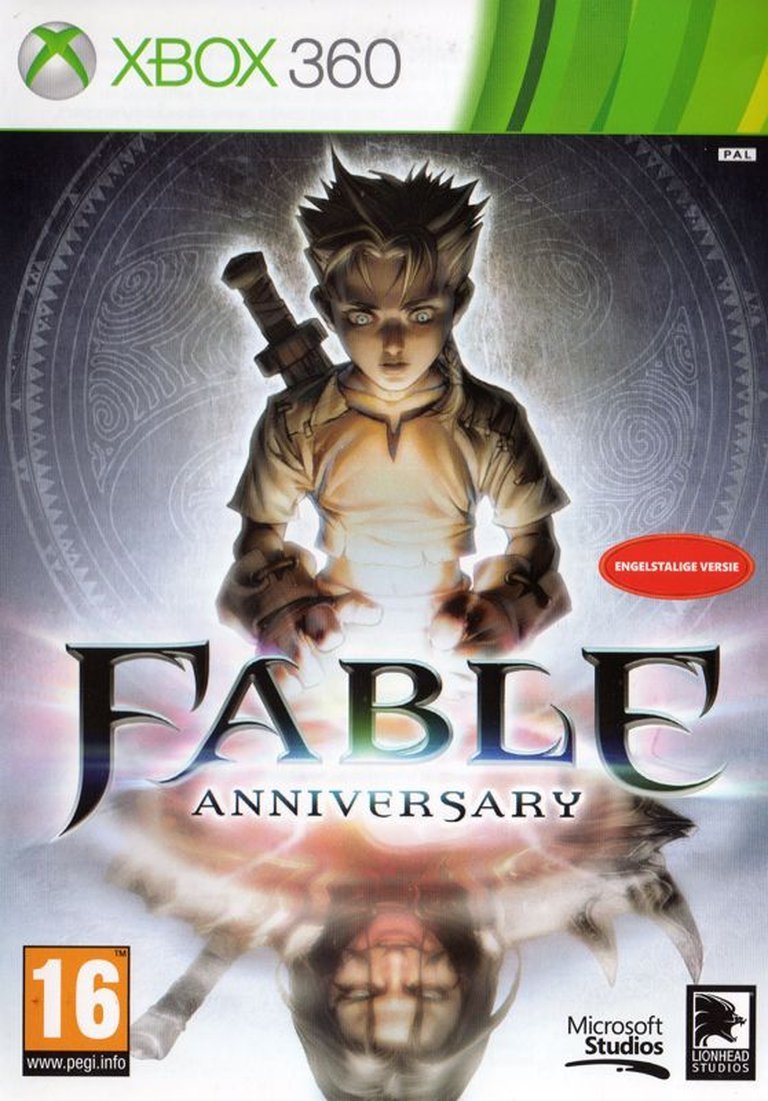
Description
Fable: Anniversary is a graphically enhanced remaster of the 2005 action RPG Fable: The Lost Chapters, set in a fantasy world where players guide a hero through an epic journey involving real-time combat, moral choices that influence appearance and reputation, character aging, arena fighting, exploration, and activities like fishing, gambling, house ownership, and brothels, all powered by an updated engine with remastered audio and new features such as achievements.
Gameplay Videos
Where to Buy Fable: Anniversary
PC
Fable: Anniversary Free Download
Fable: Anniversary Cracks & Fixes
Fable: Anniversary Mods
Fable: Anniversary Guides & Walkthroughs
Fable: Anniversary Reviews & Reception
metacritic.com (68/100): Even with its imperfections, Fable Anniversary is still the best available way to replay this classic.
ign.com : Fable Anniversary gently retouches Lionhead’s original action-RPG without doing unspeakable violence to its memory.
gamespot.com : this remastered, visually buffed version of it retains the proper charm and rollicking spirit that made the game so delightful.
gamertechau.com : While it’s a decent remaster of Fable, there are a lot of cut corners and shortcomings with the game.
fantasy-faction.com : I can’t recommend it enough!
Fable: Anniversary: Review
Introduction
Imagine a world where your every heroic flex or villainous belch reshapes not just your destiny, but your very flesh—horns sprouting from evil deeds, a saintly halo crowning acts of valor. This is the whimsical yet profound promise of Fable: Anniversary, Lionhead Studios’ 2014 remaster of the groundbreaking 2004 Xbox exclusive Fable (expanded as Fable: The Lost Chapters in 2005). A decade after Peter Molyneux’s hype-drenched fairy tale first captivated gamers, Anniversary polishes Albion’s emerald hills and moral mazes for modern hardware, blending nostalgia with fresh sheen. As a historian of interactive epics, I return to this remaster not as a mere port, but a time capsule of ambition: a game that dared to make RPGs feel like living fables. My thesis? Fable: Anniversary endures as a charming, influential artifact—flawed by its era’s tech but timeless in its playful fusion of consequence, caricature, and consequence-free chaos—proving why it birthed a franchise and why it still enchants today.
Development History & Context
Lionhead Studios, founded by industry visionary Peter Molyneux after his Bullfrog triumphs (Dungeon Keeper, Populous), birthed Fable as a bold Xbox exclusive amid Microsoft’s aggressive push into premium gaming. Conceived in 2001 under the working title Project Ego, Molyneux promised an RPG revolution: a dynamic world reacting to player morality, aging protagonists, and emergent storytelling. Technological constraints of the original Xbox—64MB RAM, limited processing—forced segmented zones with loading screens, linear paths, and simplified AI, yet Lionhead innovated within bounds, drawing from British folklore for Albion’s fairy-tale vibe.
The 2014 Anniversary edition, developed by a post-Molyneux Lionhead team (lead designer Ted Timmins, producer Craig Oman), rebuilt the game on Unreal Engine 3 for Xbox 360 and PC. This enabled HD textures, remastered audio, dynamic lighting, and SmartGlass integration (maps, screenshots on mobile). New features like anytime saves, a book-like UI, Fable II/III-inspired controls, achievements (1,000 Gamerscore, including fan-designed ones), and PC-exclusive Heroic mode (tougher foes, scarcer resources, slowed aging) addressed original gripes. Modding DLC unlocked art/animation editing, nodding to community passion. Released February 7, 2014 (Xbox 360), amid a remaster boom (The Last of Us, Tomb Raider), it targeted nostalgia while introducing newcomers via Xbox One backward compatibility (2017) and Cloud Gaming (2021). Commercial context: post-Fable III‘s mixed reception and amid Lionhead’s decline (closed 2016), Anniversary preserved the series’ roots before Playground Games’ reboot.
Narrative & Thematic Deep Dive
Fable: Anniversary weaves a personal epic across Albion’s medieval-inspired patchwork of city-states, rooted in the Hero of Oakvale’s journal-like tale. It opens idyllically: a boy in Oakvale forgets sister Theresa’s birthday, earns gold via good deeds (helping neighbors) or mischief, only for Jack of Blades’ bandits to raze the village. Rescued by mentor Maze, the orphan trains at the Heroes’ Guild, graduating into quests unveiling family secrets and ancient vendettas.
Plot Structure (no major spoilers):
– Childhood Raid & Guild Training: Tutorial via tragedy; learn basics amid loss.
– Early Quests: Infiltrate bandit camps, duel rival Whisper, meet seeress Theresa (revealed family).
– Arena & Recognition: Face Jack of Blades; learn mother’s survival.
– Mid-Game Twists: Prison escape, Maze’s betrayal, Hook Coast siege for Septimal Key.
– Climax: Chamber of Fate showdown; choose Sword of Aeons’ fate (six endings via alignment/choice).
– Lost Chapters Epilogue: Northern Wastes vs. Jack’s return (Dragon form), soul-harvesting for Archon’s Folly, mask dilemma.
Characters shine via eccentric dialogue: Theresa’s prophetic wisdom, Whisper’s rivalry-turned-camaraderie, Twinblade’s bandit bravado, Jack’s serpentine menace. Maze embodies mentor betrayal; Guildmaster drones health warnings. Villagers quip in thick accents—”Oi, Chicken Chaser!”—reacting to renown.
Themes probe morality’s mirror: Actions warp appearance (horns/butterflies), renown, and endings, satirizing heroism. Good/evil binary critiques absolutism—evil yields power, good admiration—yet lacks nuance (e.g., no gray fallout). Aging & Legacy underscore time’s toll; free will vs. destiny via bloodline prophecy (Archon descent). Fairy-tale motifs (Sword in Stone, Demon Doors) blend whimsy with horror (Oakvale massacre). Dialogue sparkles: boasts like “naked completion” inject humor; multiple endings ensure replayability, cementing Fable as moral fable, not grimdark slog.
Gameplay Mechanics & Systems
Core loop: Quest > Boast > Execute > Level/Align > Repeat, orbiting Guild quests amid side hustles (fishing, gambling, brothels, house ownership).
Combat Deconstruction:
– Triad System: Melee (X; strength XP), Ranged (Y; bows/crossbows; skill XP), Will (B; 15+ spells like Fireball, Force Push; will XP). General orbs for augmentation (health, physics).
– Combat Multiplier: Chain hits sans damage for XP bonus—thrilling risk, frustrating loops.
– Controls: Updated single-button scheme fixes original clunk; lock-on improved but finicky (strays to allies/summons).
Flaws: Animation locks, poor dodging, mob swarms cause stuns; Arena drags.
Progression:
| Discipline | Effects | Playstyle |
|---|---|---|
| Strength | Bulkier build, health/melee power | Tanky brawler |
| Skill | Taller, stealth/speed/archery | Agile sniper |
| Will | Glowing runes, baldness | Spell-slinging nuker |
Morality jars fill via deeds (kill bandits: good; civilians: evil), altering looks/renown. Innovations: Expressions (fart/belch/hero poses) woo NPCs; boasts wager gold for multipliers (e.g., “no hits”); silver keys/Demon Doors unlock gear.
UI/Systems: Book menus intuitive; anytime saves/Heroic mode shine. Flaws: Segmented world (load screens), dated pathing, obesity exploits. Replayable via alignments/endings/mods.
World-Building, Art & Sound
Albion evokes mythic Britain: late-medieval (1240-1320) forests (Barrow Fields), bandit camps, prisons (Bargate), wastes (Necropolis). Segmented but dense—villagers bustle, traders hawk, children mock. Demon Doors/Temples (Avo/Skorm) add lore; real estate yields income.
Visuals: Unreal Engine 3 upgrade stuns—1080p textures, dynamic lights/sunrays, foliage/models refreshed. Yet pop-ins/tearing/scary faces persist; dimmer lighting trades glow for realism.
Sound: Russell Shaw’s remastered score tinkles fairy-like, swells epic. Cockney banter (“Blimey, guv’nor!”) charms; combat shrieks (balverines, hobbes) horrify. Guildmaster’s echoes grate but iconic.
Atmosphere: Playful menace—hobbe caves with teddy shrines evokes lost childhoods. Immersive reactivity elevates segmented design.
Reception & Legacy
Launch: Solid but mixed—MobyGames 7.6 (#6,168/26K), Metacritic 68 (Xbox 360). Critics lauded charm/graphics (IGN 8.0: “ageless personality”; Game Informer 8.0: “best way to replay”), panned tech (pop-ups, framerate; Games TM 6/10: “plods”). Players: 4.3/5 (17 ratings). Sales strong via Fable Trilogy bundle.
Evolution: Initial hype backlash (Molyneux’s overpromises) softened; Anniversary hit 203 collections. Influenced ARPGs (Mass Effect morality, The Witcher reactivity, Dragon Age expressions). Series timeline: 500 years pre-Fable II (Enlightenment), 550 pre-III (Industrial). Cemented Lionhead’s fable formula; post-closure, inspires Playground’s 2026 reboot.
Conclusion
Fable: Anniversary masterfully revives a flawed gem: enchanting Albion, morality mirrors, and boastful bravado outweigh dated combat/UI. As historian, I affirm its pivotal role—inventing player-avatar synergy amid Xbox’s golden age. Verdict: Essential 8.5/10. Play for fairy-tale joy; history buffs, witness RPG evolution. A swan’s song for Lionhead, eternally heroic.