
- Release Year: 2008
- Platforms: Windows
- Publisher: Facepunch Studios Ltd.
- Developer: Facepunch Studios Ltd.
- Genre: Action
- Perspective: Side view
- Game Mode: Single-player
- Gameplay: Arcade, Shooter
- Setting: Zombies
- Average Score: 88/100
Description
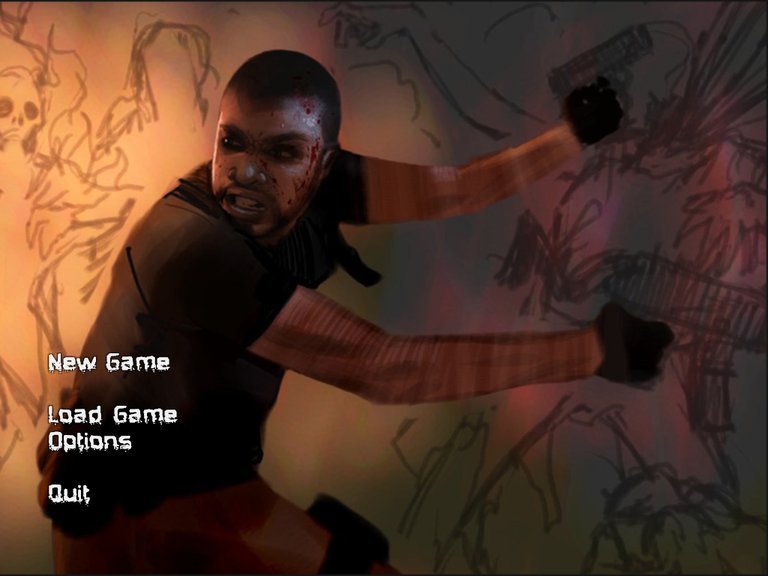
Facewound is a side-scrolling shooter set in a zombie-infested city, where players walk through urban streets, using a mouse to aim and shoot enemies like zombies, attacking birds, and mutant bugs with an initial 9mm pistol, while collecting plutonium drops to buy better weapons and ammo via a shop menu. Players must stay alert for acid-spitting zombies, dropping birds, and jumping mutants as they progress through levels to glowing endpoints in this arcade-style horror game developed by Facepunch Studios.
Facewound: Review
Introduction
Imagine a time when indie developers dared to blend the raw simplicity of classic 2D side-scrollers with the bleeding-edge visual wizardry of 3D engines, birthing a gore-soaked spectacle that felt like Contra had been dipped in the Source engine’s particle effects. Facewound, the long-abandoned prototype from Facepunch Studios—the same minds behind Garry’s Mod—is that fever dream made real. Released for free in 2008 after years in development limbo, this unfinished side-scrolling shooter endures as a cult artifact, a testament to unbridled ambition in an era dominated by polished blockbusters. My thesis: Facewound is not just a relic of what could have been; it’s a pioneering proof-of-concept that revolutionized 2D visuals through 3D acceleration, delivering addictive run-and-gun chaos that punches above its incomplete weight, cementing Facepunch’s legacy as innovators who prioritized tech demos over traditional releases.
Development History & Context
Facepunch Studios emerged in the early 2000s as a loose collective of hobbyist developers, adopting the name to lend professionalism to their online forum presence. Led by Garry Newman (known simply as “garry”), the team kicked off Facewound around 2003-2005, aiming to drag 2D platformers into the modern age. Their vision was audacious: craft a side-scroller harnessing 3D hardware acceleration—pixel shaders, ragdoll physics, and particle systems—to rival the fidelity of titles like Counter-Strike: Source. As Newman described on ModDB, it was “a 2D game with all of the effects of something like Counter-Strike:Source and more,” featuring water refraction, explosion shockwaves, heat distortion, and dynamic sparks from bullet impacts.
Technological constraints were a double-edged sword. Built on a custom Direct3D 9 engine requiring shader model 2.0 support (think NVIDIA GeForce 6-series or ATI Radeon X1000 GPUs), Facewound demanded mid-2000s hardware but ran windowed by default on modest Windows XP rigs. Config files like system.cfg allowed tweaks for widescreen or fullscreen, but no saves or polish reflected its prototype status—early builds were “functional programming exercises,” per ModDB archives.
The 2008 gaming landscape was unforgiving for indies. Garry’s Mod exploded in popularity post-2004, shifting Facepunch’s focus and disbanding the original team by 2005. Forums pivoted to GMod discussions, and Facewound stalled. In April 2008, Newman zipped the last build (Dev10c-era) and uploaded it gratis via garry.tv, warning: “Don’t bother to bitch if it crashes… If it doesn’t work then it doesn’t work.” Source code followed in 2011 on Facepunch forums, included in 2015’s Facepunch Prototypes pack. This freeware ethos mirrored the modding scene (Half-Life 2 mods thrived), but amid Portal, Spore, and Crysis, an unfinished zombie shooter felt like a defiant middle finger to commercial expectations.
Narrative & Thematic Deep Dive
Facewound‘s “story” is as minimalist as its gameplay loop: you’re an anonymous survivor traversing derelict urban sprawl, blasting anything that moves to reach glowing endpoints. No cutscenes, voice acting, or dialogue exist—narrative emerges from environmental storytelling and enemy variety. Zombies shamble from alleyways, dropping plutonium cores like radioactive loot piñatas; acid-spitting variants and jumping mutant bugs escalate threats, while birds rain corrosive droppings from smoggy skies. Levels evoke a post-apocalyptic city—crumbling buildings, rain-slicked streets, bunkers—hinting at a zombie plague amplified by sci-fi absurdity (plutonium economy? Spacebrains? Ghosts?).
Thematically, it’s pure id-driven horror arcade: violence as catharsis in a surreal, grotesque world. Gore is the star—headshots decapitate foes, whose ragdolling torsos claw futilely; blood sprays in pixel-perfect arcs, pooling realistically. Reviews like Clubic’s (“terriblement addictif… un brin dégoutant”) and Freegame.cz’s praise for “stříká krev na všechny strany” (blood spraying everywhere) underscore this. No deep lore, but undertones critique mindless consumption (plutonium upgrades as capitalism’s glow) and survival’s brutality. Characters? You’re a silent everyman with a 9mm starter pistol; enemies are archetypes—shambling undead, flying pests—devoid of personality, amplifying horror through sheer, endless hordes. It’s thematic nihilism: shoot or die, no questions asked. Unfinished status leaves plot threads dangling (e.g., puke monsters glimpsed in comments), but this sparsity fuels replayability, inviting mods like Gunwound: Military Meets Zombies to fill voids.
Gameplay Mechanics & Systems
At its core, Facewound is a taut run-and-gun loop: WASD/arrow keys for side-view movement (with vertical jumps), mouse for intuitive 3D-FPS-style aiming/shooting. Levels scroll horizontally, demanding constant vigilance—zombies lunge, bugs leap, birds dive—while plutonium pickup fuels a “Buy” menu for arsenal upgrades (pistols to heavy machine guns, ammo refills). Progression is arcade-pure: die, respawn at checkpoints, grind currency for power spikes. No RPG depth, but weapon variety shines—explosives trigger shockwaves, shotguns shred crowds.
Innovations abound: 3D acceleration elevates 2D. Ragdolls flop convincingly (headless zombies flail), particles simulate sparks/shells/water splashes, shaders distort heat/rain. Cheats (V=noclip, P=all weapons, N=100 credits, per ModDB comments) nod to dev roots. UI is spartan—minimal HUD (health, ammo, plutonium)—but flawed: tiny crosshair irks reviewers (VictoryGames.pl), no remapping (config.cfg binds dev commands), absent saves force short bursts. Bugs plague the build (crashes, no warranty), yet hratelnost (gameplay) is “výborně hraje” (excellent), per Hrej!. Mods like Neo_minigan’s Weapons Pack (32 guns) and SuperMOD (100x enemies) extend life, proving robust systems. Flaws? Repetitive after levels repeat; unfinished maps cut short. Still, it’s “addictif” precision, blending Metal Slug pace with Source flair.
World-Building, Art & Sound
The world is a gritty, rain-lashed urban hellscape—dirty alleys between shambling-infested houses, bunkers, watery hazards—rendered in sprite-based 2D with 3D post-processing. Visuals dazzle: water reflects/refracts dynamically, explosions warp air, gore particles linger. Freegame.cz lauds “graficky jde totiž o výtečnou záležitosť” (excellent graphics), Hrej! calls movements “brilantně” (brilliant). Atmosphere builds via constant peril—dark, filthy locales amplify horror, rain/heat shaders immerse.
Art direction favors visceral realism: hyper-detailed blood, twitching corpses, fiery/water effects showcase shader prowess. Unpolished edges (repetitive backgrounds) betray abandonment, but mods enhance (Halo Edition skins).
Sound design lags: dynamic music loops quickly tire (VictoryGames.pl), lacking zombie moans (“no strun głosowych”—no vocal cords). SFX impress—gunshots, splats, particles—but sparse. No speech/subtitles. Collectively, audiovisuals craft a hypnotic, disgusting allure: visuals pull you in, sound underscores frenzy, forging an atmosphere of relentless, sloppy apocalypse.
Reception & Legacy
Launched free in 2008, Facewound garnered niche acclaim. MobyGames aggregates 76% from five critics: Clubic (90%, “âmes sensibles s’abstenir”), PlnéHry.cz (80%, original despite stereotypes), Freegame.cz (78%, gore spectacle), Hrej! (70%, fun visuals), VictoryGames.pl (60%, great audiovisuals, unfinished). No commercial metrics (freeware), but ModDB/IndieDB downloads (20K+), Steam group (87 members), Facepunch forums buzz show cult following. Player comments pine for completion (“R.I.P Facewound”), praise free access.
Reputation evolved from “leaked alpha” to preserved prototype. Source release (2011) spawned mods (Neo_minigan’s Weapons, Teddy Wars), community patches. Influences Facepunch Prototypes (2015), echoes in Garry’s Mod‘s physics/gore. Industry impact: proved 2D+3D hybrids viable pre-Braid/Limbo, inspired shader-heavy indies (Super Meat Boy). In zombie genre, prefigures Dead Nation‘s top-down gore. Today, PCGamingWiki fixes ensure playability; it’s a historiographical gem, ranking #4,301 on Moby Windows amid 9K+ titles.
Conclusion
Facewound is raw, unfiltered genius—an unfinished symphony of gore, tech, and arcade bliss that captures Facepunch’s punk ethos. Its 3D-amped 2D mechanics, addictive loops, and visual spectacle outweigh bugs and brevity, while free release/source code ensures immortality via mods. In video game history, it claims a vital niche: the prototype that birthed a studio legend, reminding us indies thrive on bold failures. Verdict: 9/10—essential for historians, a bloody thrill for shooters. Download it, frag zombies, honor the wound.